
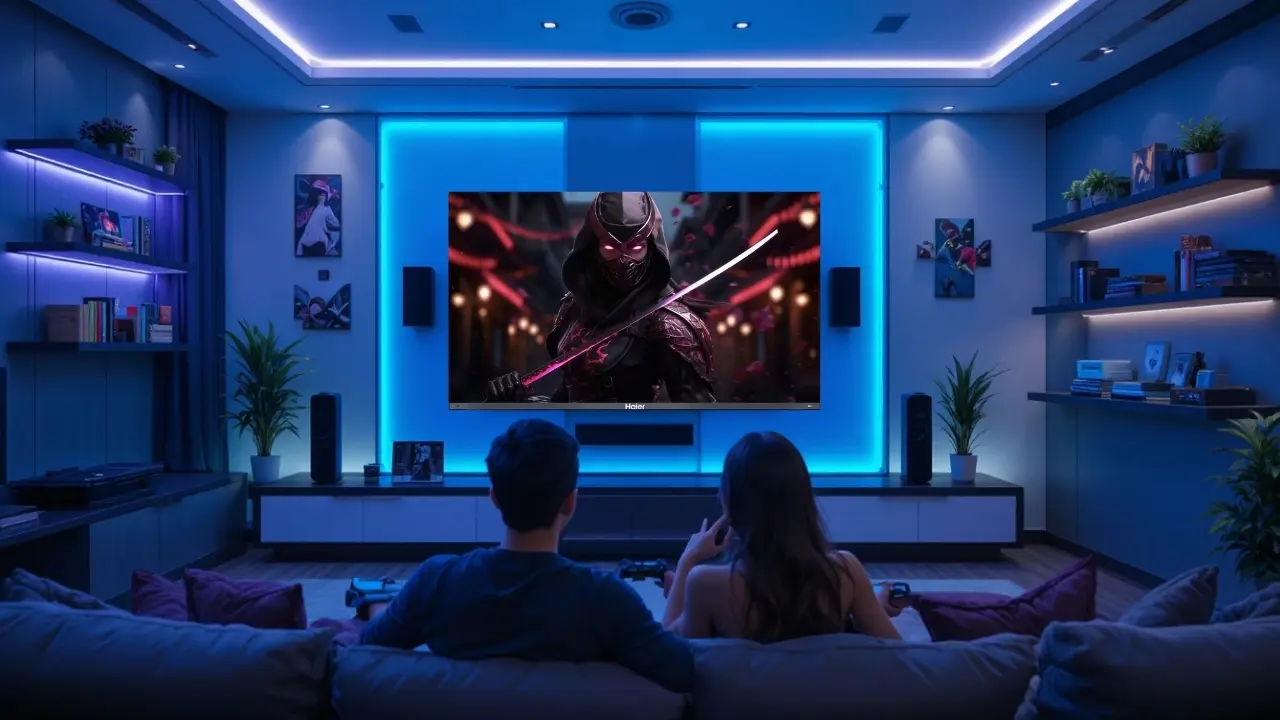

A 144Hz TV doesn’t just make your games look smoother it changes how your body feels while playing. Movements sync faster, reactions feel sharper, and visuals glide instead of stutter.
It’s the difference between watching the game and being inside it.
Why Frame Rates Feel Like Reflexes
There’s a reason gamers talk about “frames per second” as if it’s a sixth sense.
Because it is.
When your TV refreshes at 144 times a second, every movement the swing of a sword, the flick of a car drift, the recoil of a gun feels immediate. There’s no lag between your hand and what your eyes see. You stop watching pixels and start feeling momentum.
At 60Hz, the action is watchable.
At 144Hz, it’s instinctive.
That split-second difference often decides whether your free kick curls into the top corner or hits the post.
The Science Behind Smooth
Your TV’s refresh rate tells you how many frames it can display per second.
- A 60Hz TV shows 60 frames per second.
- A 120Hz or 144Hz TV can display up to 144 frames per second.
The higher the number, the smoother the transition between frames, especially crucial for fast-paced content like Call of Duty, FIFA, Valorant, or Asphalt 9.
Gamers call this motion clarity. Scientists call it reduced motion blur.
You’ll just call it finally hitting every headshot.
Where Every Millisecond Counts
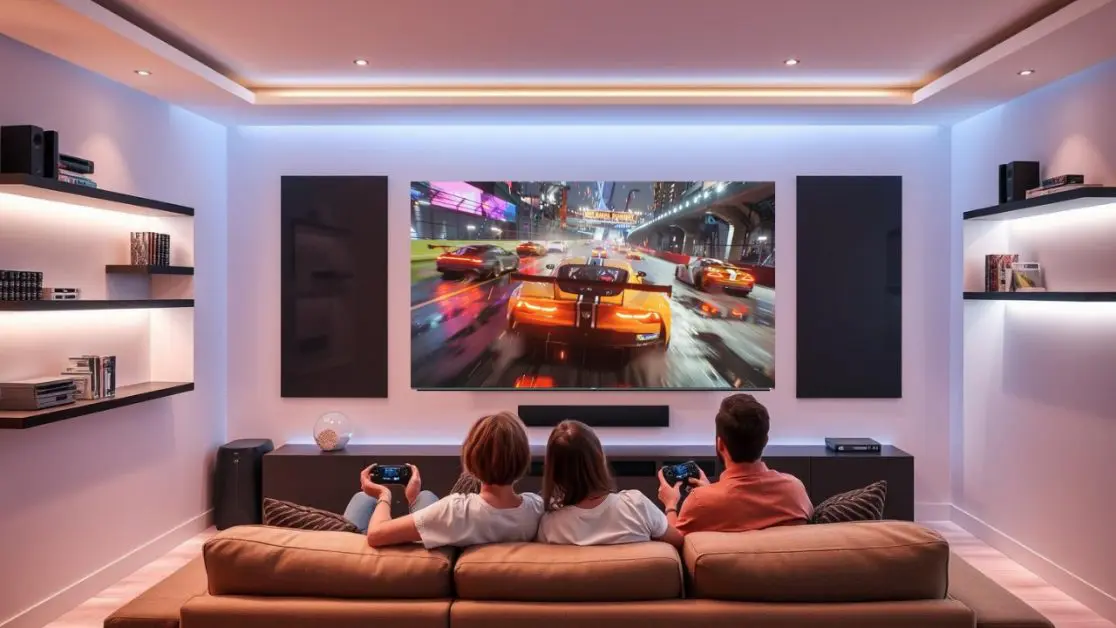
Think of gaming like driving in rain.
At 60Hz, the wipers work fine. But at 144Hz, they move faster than the raindrops giving you total visibility.
In competitive games, that clarity means survival. You spot enemies quicker. You aim faster. Your reaction time feels naturally ahead of others, because it is.
According to tests by PC Gamer and DisplayNinja, players on 120Hz+ displays react up to 10% faster than those on standard 60Hz screens. That’s milliseconds but in eSports terms, milliseconds win matches.
The 144Hz Experience Feels Different Because It’s Designed Differently
Haier’s latest Mini-LED TV brings that ultra-smooth magic to your living room with DLG 120Hz motion technology, optimized for real-time action.
Here’s what it quietly does behind the scenes:
| Feature | What It Means While Gaming |
| DLG 120Hz Motion Enhancement | Smoother gameplay with reduced blur and ghosting |
| MEMC Technology | Artificially inserts extra frames for lifelike movement |
| HDMI 2.1 eARC Port | Handles higher bandwidth from consoles like PS5 and Xbox Series X |
| Mini-LED Display | Pin-sharp contrast, no light bleed in dark scenes |
| Dolby Vision HDR | Vibrant color details in every map, battlefield, or open world |
In short: the TV thinks faster than your game console.
The Hidden Upgrade: Eyes That Don’t Tire
Gaming sessions rarely end when they should.
Two rounds become five. Five become midnight.
The biggest unspoken enemy isn’t lag, it’s eye fatigue. Low refresh rates force your eyes to constantly adjust to stuttering motion. A 144Hz panel removes that strain by presenting fluid, stable visuals. Your eyes can finally relax while your brain stays in overdrive.
It’s one of those upgrades you don’t realise you needed until you go back to 60Hz and it feels broken.
Why Weekend Gaming Deserves the Big Screen
Weekend gaming isn’t just about scores. It’s a ritual.
It’s unwinding after a long week. Reconnecting with old friends over voice chat. Sometimes even introducing your parents to Mario Kart.
And the right TV turns that ritual into an experience worth looking forward to.
Mini-LED backlighting ensures deeper blacks and brighter highlights so when you explore neon cities or dark caves, every detail shines. Add Dolby Vision HDR and Sound by KEF Audio with Dolby Atmos, and the living room becomes an arena.
You hear footsteps behind you. The thunder in a racing tunnel. The low rumble of a boss fight before it even appears.
That’s not sound. That’s spatial awareness.
Gaming Meets Cinema – And It Works Both Ways

What’s interesting about a 144Hz TV is that it doesn’t only serve gamers.
Movies, sports, and even YouTube content benefit from the same precision.
When you switch from Valorant to Virat Kohli, motion handling stays just as crisp. The 2.1 channel, 50W Sound by KEF speakers with Dolby Atmos surround you like a small home theatre. And thanks to Google TV’s AI curation, your next binge recommendation waits before you even search.
This is how one screen replaces three devices:
- A gaming monitor for clarity
- A soundbar for immersion
- A smart hub for convenience
One system. Zero compromises.
When Performance Meets Design
Good hardware should disappear when you use it.
Haier’s Mini-LED design does just that: sleek bezels, subtle stand, and a solar-powered remote that feels both futuristic and eco-conscious.
It’s rare to find sustainability baked into entertainment, but Haier pulls it off with quiet confidence. No disposable batteries, no constant recharging. Just light from your window, powering your remote indefinitely.
Smart tech shouldn’t just be smart. It should be considerate.
The Role of Google TV in the Gaming Flow
Imagine pausing your game, saying “Hey Google, open YouTube”, and instantly pulling up a walkthrough for the mission you’re stuck on.
That’s hands-free control at work.
The Haier Mini-LED runs Google TV OS, integrating:
- Google Assistant for commands
- Chromecast Built-in for streaming from your phone
- Google Play Store for all your entertainment apps
Your TV becomes a seamless command center for everything game strategy, fitness breaks, or late-night playlists.
Why This Matters in the Indian Home
In Indian households, the TV isn’t a gadget. It’s the common ground.
Parents watch cricket. Kids play FIFA. Couples stream K-dramas. Guests binge Shark Tank India.
A 144Hz screen with adaptive refresh rates means everyone gets what they want, no lag, no compromise. You can switch between console, set-top box, and OTT app without replugging anything.
And because Haier’s ecosystem connects through AI voice and Google TV, even parents who “don’t understand these gadgets” can navigate easily.
That’s technology done right, invisible, intuitive, inclusive.
144Hz vs 60Hz: The Feel-Good Difference
| Experience | 60Hz TV | 144Hz TV |
| Motion Clarity | Slight blur during fast action | Crystal-smooth transitions |
| Input Lag | Noticeable delay between controller and screen | Near-instant feedback |
| Eye Comfort | Strain after long play sessions | Relaxed, flicker-free viewing |
| Competitive Edge | Standard | Noticeably faster reaction time |
| Immersion | Good | Unbelievable |
The takeaway? Once you experience 144Hz, it’s impossible to go back.
A Note on Real-World Usage
Let’s be honest not every game outputs 144 frames per second.
Many run at 60fps or 90fps, depending on console capability.
But here’s the magic: a high-refresh-rate TV like Haier’s uses MEMC (Motion Estimation, Motion Compensation) to interpolate frames in between meaning you see smoother motion even when the game itself doesn’t push those numbers.
It’s like the TV adds grace to your reflexes.
The Invisible Advantage
Gamers often talk about specs, refresh rate, HDR, and latency.
But what really defines a great setup isn’t numbers. It’s a feeling.
A 144Hz Mini-LED TV creates an environment where you lose track of the barrier between player and screen. You stop thinking about performance and start living inside performance. That’s the invisible advantage most buyers overlook.
It’s not about playing faster.
It’s about feeling present.
When the Weekend Turns into a World
Here’s the pattern every gamer knows:
You start with “just one round.” Then hours disappear. The sun rises. And you’re somehow still in that same virtual world.
That’s what immersive display tech does: it turns ordinary weekends into micro-vacations. No flights. No planning. Just presence.
And when you finally pause, your living room looks different to calmer, sharper, somehow more alive. Because once you see color the way a Mini-LED with Dolby Vision shows it, reality feels upgraded.
So, What Does a 144Hz TV Really Do?
It doesn’t just upgrade your games.
It upgrades your attention.
You notice details. You react quicker. You feel less drained. You share the screen more easily. And suddenly, your weekend setup isn’t just entertainment, it’s flow engineering.
Haier’s 55-inch Mini-LED with Dolby Vision and Sound by KEF Audio is built exactly for that rhythm where sharp visuals, powerful sound, and smarter control merge seamlessly into your lifestyle.
Because great tech doesn’t ask for attention.
It gives it back.
In Summary
Benefits of a 144Hz TV for Gamers:
1. Smoother motion with less blur and ghosting
2. Sharper reaction time during fast gameplay
3. Reduced eye strain for longer sessions
4. Better synchronization with next-gen consoles
5. Doubles up as a cinematic display for OTT streaming
Haier Mini-LED 55-inch Highlights:
- Mini-LED Display with Dolby Vision & HDR10
- 2.1 Channel Sound by KEF Audio (50W, Dolby Atmos)
- DLG 120Hz + MEMC Motion Enhancement
- Google TV with Voice Assistant
- Solar Remote for sustainability
The Bigger Picture
Technology used to be about features.
Now it’s about fit.
A 144Hz Mini-LED TV fits into the rhythm of modern Indian life where the same screen hosts cricket, console marathons, and late-night movie rewatches. It brings families together through shared sensory experiences, not just shared content.
Because the real upgrade isn’t in pixels per inch.
It’s in moments per weekend.