
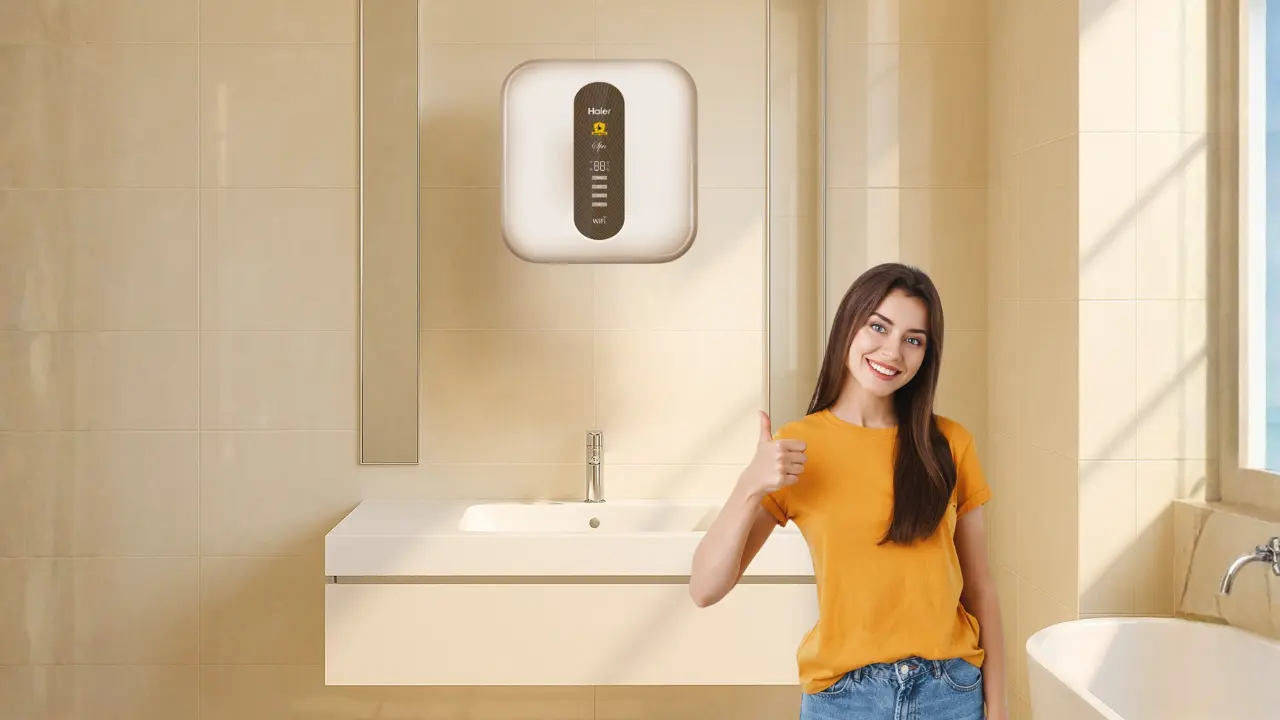

High-rise apartments create high water pressure. An 8 bar rated water heater is built to withstand that pressure, deliver safer performance, and ensure a consistent hot water supply without leaks or stress on internal components.
It is the only sensible choice for modern towers with 10, 20 or 30 floors.
That is the answer.
Now the story that helps it land.
High-rise living changes how we use hot water
Picture a typical morning in a 22nd-floor Mumbai or Gurgaon apartment.
The lift queue is long. Breakfast needs to be quick. Someone else is already knocking on the door to ask if the water has warmed up. Hot water cannot take its time when mornings run on tight choreography.
But here is the hidden system.
The higher you live, the more pressure your building’s plumbing pushes into your bathroom lines. What feels like a simple shower experience is actually a pressure equation happening behind the wall.
A regular water heater struggles in that equation.
An 8 bar rated one does not.
What exactly does “8 bar” mean and why does it matter?
Water pressure is measured in bars.
One bar is roughly equal to the pressure of water at sea level.
In high-rise buildings, water has to be pushed upwards through vertical pipes. That requires pumping systems that naturally increase pressure. On the 10th or 20th floor, it becomes significantly higher than what a ground floor home experiences.
Here is what that means in everyday terms.
- More pressure enters your bathroom pipeline.
- More stress hits your water heater tank.
- More force acts on every valve, joint and connection.
A heater with a lower pressure rating is like a scooter carrying the load of a truck.
It works until it does not. And when it does not, the consequences are expensive.
An 8 bar rated water heater is designed precisely for this environment. It absorbs the extra pressure without strain. It handles sudden pressure surges when multiple taps open at once. It stays stable when building pumps restart at night.
Where failure actually happens
Most people assume a water heater fails because the heating element stops working. Often, that is not the real culprit.
In high-rise apartments, two common failure points show up again and again.
1. Internal tank stress
High pressure pushes against the tank walls.
A low-rated heater begins to deform internally.
The enamel lining cracks.
Rust begins its slow work.
2. Valve strain
The safety valve becomes the silent hero. It constantly corrects the extra pressure.
A low-rated heater overuses this valve.
It begins leaking.
Small drips turn into bigger issues.
An 8 bar system solves both by design.
It is built with stronger internal linings.
Its safety valve is engineered for heavier loads.
Its structure is meant to stay stable for years, not months.
A simple rule for modern apartments
The taller the building, the stronger the water heater needs to be.
Here is a quick guide based on usage patterns in Indian metros.
| Building height | Minimum pressure rating needed |
| 1 to 3 floors | 6 bar is often adequate |
| 4 to 8 floors | 6 or 8 bar recommended |
| 9 floors and above | 8 bar is compulsory |
Most new residential towers in Delhi NCR, Mumbai, Hyderabad, Chennai and Bengaluru comfortably cross 12 floors. Some exceed 25.
Choosing an 8 bar rated heater is not an upgrade. It is essential.
The hidden benefit: temperature consistency
Pressure does not just affect safety.
It also affects how steady your hot water flow feels.
High pressure can:
- Make hot water fluctuate when someone opens another tap.
- Push cold and hot water into uneven mixing.
- Lead to unpredictable shower experiences.
An 8 bar rated heater stabilises flow better because it is built to manage pressure without internal turbulence. You get a calmer, more predictable bathing experience.
Little detail.
Big difference at 7.30 am.
Why Haier’s 8 Bar Water Heaters work especially well in high-rise homes
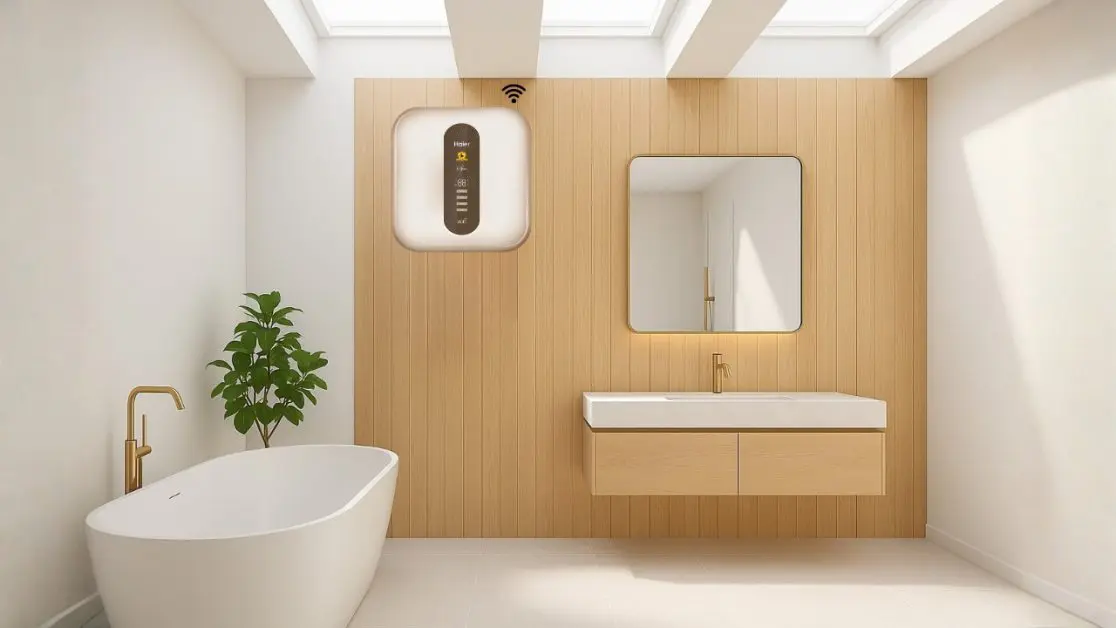
While pressure rating is the headline, the supporting ecosystem inside the heater is what makes the real difference.
Take Haier’s ES15V SD WiFi model as an example.
Its specification sheet shows a strict 8 bar rated working pressure for high-rise buildings, plus additional internal protections that matter in Indian water conditions.
Three features stand out.
1. Glass lined tank for corrosion resistance
Glass lining reduces the chance of rust even when municipal water has high mineral content. Water pressure accelerates corrosion. Stronger lining slows it down.
2. Incoloy 800 heating element
This stainless steel element resists scale and heat stress.
High pressure means more internal turbulence.
A weaker element ages quickly.
This one lasts longer.
3. Multi-safety valves and shock proof design
High-rise homes also face power fluctuations.
The voltage protection and dual thermostat help maintain safety even when pressure and electricity interact unpredictably.
This is not about selling a product.
It is about showing how the right engineering quietly improves everyday life.
A bigger pattern: appliances evolve with the cities they serve
Our homes are growing vertical.
Our lives are becoming faster.
Our routines demand reliability without negotiation.
Appliances that once solved basic tasks now solve for pressure, water quality, corrosion, and efficiency.
The 8 bar rating is not a luxury feature.
It is a response to how India lives today.
And that is the insight behind smart home design.
As cities rise, so must the strength of what supports them.
Final thought
A water heater is never the hero of a home story.
It is the quiet facilitator of everything else.
The warm bucket of water for your child’s early morning bath.
The peaceful shower after a long commute.
The winter morning that does not feel impossible.
An 8 bar rated water heater ensures that all of it works smoothly in the high-pressure environment of high-rise apartments.
It is not about buying bigger.
It is about choosing wiser.
If there is one principle modern homes keep teaching us, it is this.
Invisible systems shape visible comfort.
And a water heater built for pressure is one of the most invisible, most essential systems of them all.