

It’s raining cats and dogs. You’ve just returned home, feeling a bit chilled and completely drenched. All you want is a piping hot shower. You flick on the geyser, then step back while the geyser warms up, and after a few minutes, you can step in, feeling pure bliss.
But have you ever paused to think.
How hot is too hot?
Typically, we rely on modern-day geysers to control the heating evenly, but very few of us understand the mechanisms involved once we flip the switch. If truth be told, especially in Indian households, during monsoon, this is the kind of blind faith that can be misplaced.
That’s where 95°C overheat protection comes in. But what does that even mean? More importantly, does it really matter?
Yes, it does, and it matters quite a lot. Let me share why.
Wait, What Even Is Overheat Protection?

Overheat protection is like that friend who taps your shoulder when you’re about to do something stupid.
Water heaters have a job to heat water and stop at a safe temperature. In most cases, this “safe” range is around 60 to 75 degrees Celsius. But when your thermostat fails or there’s a voltage fluctuation (which happens all the time during Indian monsoons), things can spiral quickly.
Without proper safety controls, your geyser keeps heating until the water inside is almost boiling.
Not safe. Not smart.
Now here’s where 95°C overheat protection becomes a real hero. It’s a second line of defence. When the first temperature control gives up, this one kicks in, cutting the power off automatically when water hits 95°C.
It’s like a thermal emergency brake. And trust me, you want that brake.
Why This Matters More in Monsoon
Let’s be honest. The rainy season in India does not come alone. It brings along power cuts, voltage jumps, short circuits, and damp walls.
Now combine that with a metal tank full of hot water and you can already see the problem.
Your water heater works harder in the monsoon. Everyone at home wants warm water. Sometimes two, three, four back-to-back showers. That’s a lot of stress on the heating system.
Without a backup thermal cutoff, even a small sensor glitch could mean the water turns dangerously hot before anyone notices. One slip of your child’s hand under the tap and you could be facing real burns.
So if you’re wondering whether this is just a marketing feature or a real necessity, well, it’s very real.
Think of It Like a Pressure Cooker Without a Whistle
Would you ever use a pressure cooker without a whistle to release the steam? Of course not. That’s a recipe for disaster.
A geyser without 95°C overheat protection is exactly that pressure building up with no fail-safe in place. It’s not just about hot water. It’s about controlling what happens when things go wrong.
So What Happens at 95°C?
Here’s some kitchen science you already know.
Water boils at 100°C. At 95°C, you’re right at the edge. It’s hot enough to:
- Burn your skin in seconds
- Damage the inner walls of your water tank
- Increase the internal pressure to a dangerous level
- Lead to potential leakage, cracks, or worse explosions
That last one might sound dramatic, but it’s not unheard of. Search online for “geyser burst due to overheating” and you’ll find horror stories from Indian homes.
All this, because the heater had no backup plan.
So How Does a Smart Water Heater Handle This?
Let’s take a quick tour inside a smarter, safer water heater like the ones Haier makes.
Here’s what happens:
- Regular heating begins. The water reaches 60°C or 70°C depending on your setting.
- First safety switch at 75°C. If the system senses overheating, it shuts off here.
- Second shield at 95°C. If the first one fails for any reason, this one cuts power completely.
This means even if something goes wrong in your wiring or your main sensor is acting up, the heater knows not to go beyond danger level.
That’s not just safe engineering. That’s peace of mind.
What Else Should You Look for in a Geyser Besides 95°C Cutoff?
Okay, so now you know why 95°C protection is important. But should you stop there? Not really.
A truly smart water heater should also have:
1. Shockproof Design
Let’s face it. Not every bathroom in India has perfect wiring or grounding. A shock-proof heater ensures that even if something goes wrong, you won’t feel a jolt while touching the tap.
Haier models physically reduce high voltage to below 5 volts in case of leakage. That’s safer than your phone charger.
2. Water Resistance (IPX4 Rated)
Indian bathrooms get wet. Steam, splashes, and leaks are part of life. IPX4 water resistance means your water heater’s circuits won’t short because of moisture.
3. Anti-Bacterial Heating
Bacteria like to grow in lukewarm water. Good geysers heat water above 80°C to kill common bacteria. BPS function heats at 80°C specifically to do this. Healthier for your skin, your hair, and your family.
4. Titanium-Coated Inner Tanks
Regular steel tanks rust. Fast. Especially with hard water. Titanium-coated tanks (like Haier’s TitanGuard) last longer, resist corrosion, and keep water clean.
Let’s Talk Models That Actually Offer This
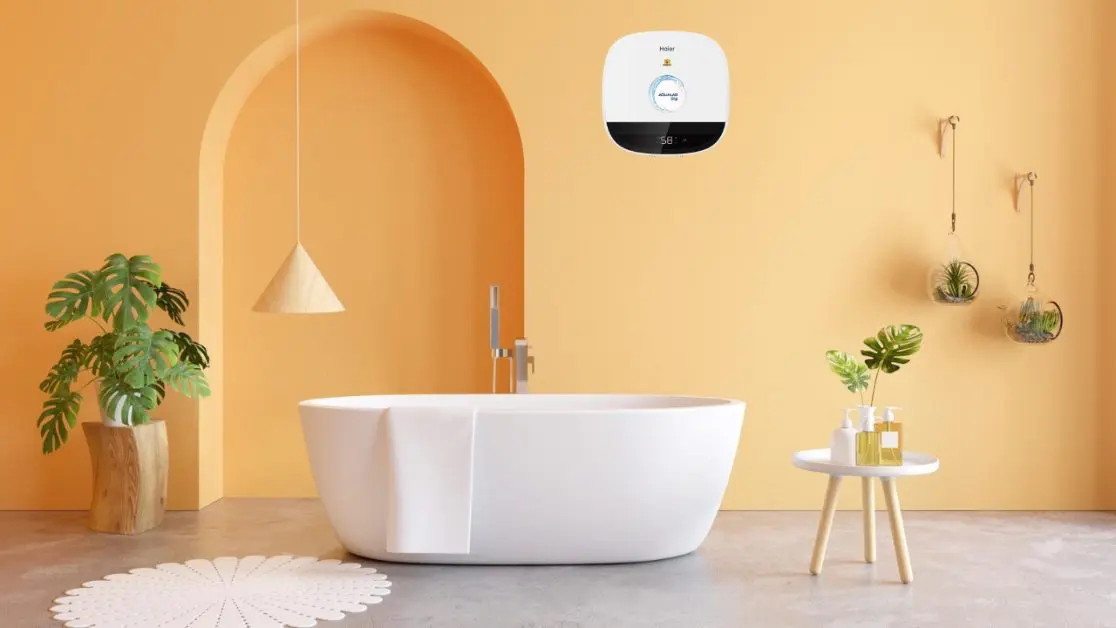
Now that you know what matters, here are a few heaters from Haier that nail the checklist.
Molten Series
- 3D Smart HotBoost for quick heating
- Dual overheat protection up to 95°C
- Remote control and memory features
- Shock-proof and TitanGuard tank
Ideal for: Big families with back-to-back shower needs
Aqualad Pro/Digi
- 95°C overheat cutoff
- IPX4 water resistance
- Anti-bacterial function
- U-Turn flow for fresh water every time
Ideal for: Apartments with hard water or small kids at home
Regenta Digi
- Touchscreen panel
- Smart LED with fault detection
- Incoloy 800 heating element
- Full thermal protection system
Ideal for: Tech-savvy users who want control and safety
Real Talk: Why This Isn’t Just a Spec, It’s a Lifestyle Feature
You wouldn’t drive a car without seatbelts. So why use a geyser without a thermal backup?
This isn’t about fancy tech. This is about daily comfort that doesn’t risk your safety. In cities like Delhi, Mumbai, Bangalore, or Kolkata where both water quality and wiring vary home to home, these features are no longer optional.
They’re the difference between:
- A warm relaxing shower and an emergency trip to the hospital
- A long-lasting appliance and one that breaks every other season
- Confidence in your appliances and constant “jugaad” fixes
Final Word: This Monsoon, Think Safety Before Steam
Geysers are like silent companions. They don’t make noise. They don’t remind you when something’s off. But that’s the exact reason you need them to be smart enough to handle the unexpected.
If your current water heater doesn’t offer dual protection, you’re living on borrowed time.
The smarter move? Choose a system that comes with 95°C overheat protection and everything else we talked about.
For Indian homes that value comfort and caution this is what safe looks like.
Explore Haier’s Safe Water Heaters for Indian Homes
From the Molten Series to Regenta and Aqualad Pro, Haier India offers water heaters built for Indian weather, voltage, and usage habits. Every model comes with real safety features, not just fancy words.
Browse Haier’s 2025 Water Heater Collection at Haier india
Stay warm. Stay safe. Shower smarter.