


Entertainment has always been a mirror.
Once it was the neighbourhood cinema. Then it became the living room TV. Today, it’s the smart screen that listens to you, curates your favourites, and turns every episode of Bigg Boss 19 into a front-row experience.
The story is no longer about television alone. It’s about how life in Indian households is changing and how technology is quietly keeping pace.
Why Bigg Boss feels different on a smart screen
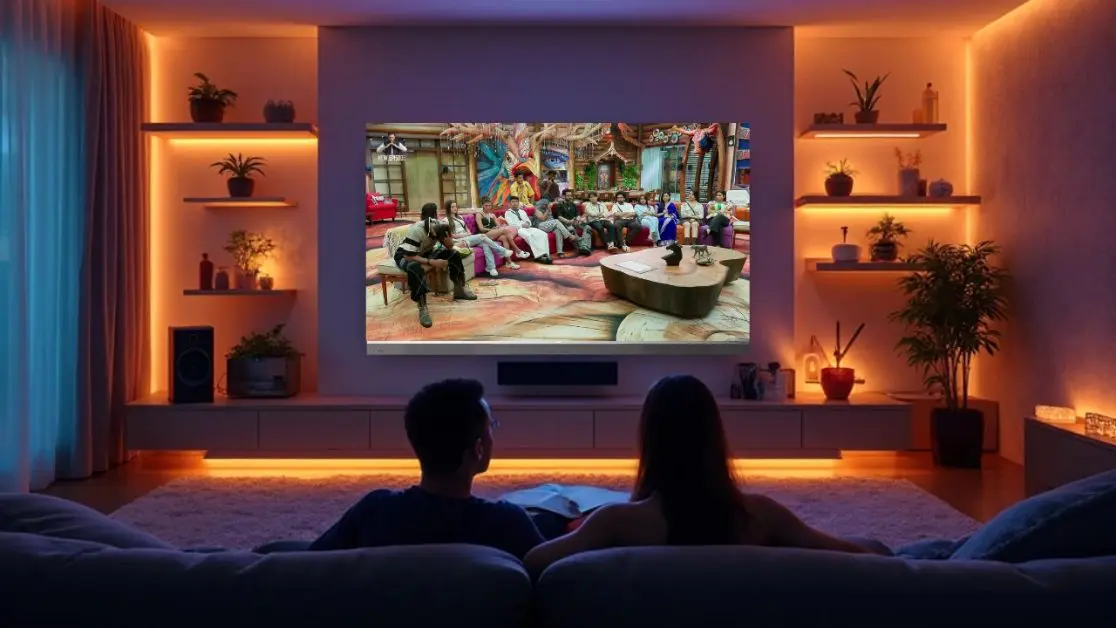
If you’ve ever tried watching Bigg Boss on your phone during dinner, you know the compromise. The drama feels smaller, the reactions get lost, and family commentary from the sofa doesn’t quite land. But shift the same scene to a 215 cm (85) Mini LED Google TV, and suddenly it’s not just viewing its participation.
The wider angles, Dolby Vision contrast, and Sound by KEF-powered sound mean every argument, laugh, and secret alliance lands with theatre-like intensity. Watching on the big screen is no longer about scale alone. It’s about immersion.
What makes a Smart TV truly smart?
The word “smart” gets thrown around casually. But when it comes to TVs, three things make the difference:
1. Voice at the centre : With hands-free voice control, you don’t need to fumble for remotes in the middle of a task. Just say, “Play Bigg Boss 19,” and the screen responds. Parents juggling chores, or bachelors balancing dinner plates, all know the value of convenience that listens.
2. OTT-first thinking : Entertainment in 2025 is about having everything from JioCinema to SonyLIV to Netflix in one place. Google TV interface brings curated recommendations, tailored to your tastes, instead of endless scrolling.
3. Immersion that matches cinema : Mini LED technology with 360 dimming zones, Dolby Atmos 3D sound, and 2.1 channel woofer ensure that the audio-visual experience feels whole, not fragmented.
Smart isn’t just connected. Smart is seamless.
The Indian household test: Does it fit real life?

Think about who watches TV at home:
- The Indian Dad who follows news, cricket highlights, and Bigg Boss eliminations with equal passion.
- The Indian Mom who wants serials, reality shows, and easy controls without extra gadgets.
- The bachelor or millennial couple who need their OTT subscriptions to be a single, fuss-free hub.
- The Gen Z sibling who is as likely to cast YouTube playlists as they are to binge a weekend season.
A smart TV that adapts to all four profiles is more than a device; it’s a peace treaty in the living room.
Bigg Boss 19 and the culture of communal streaming
Reality TV is about collective experience. The show thrives on watch parties, WhatsApp debates, and live reactions on X (Twitter). But when the stage is your living room and the canvas is 215 cm wide, the collective becomes physical again.
Families argue in real time about nominations. Friends gather for weekend eliminations. Even solo viewers feel part of a larger stadium, thanks to Dolby Atmos placing sound around you.
This is why Bigg Boss on a Smart TV feels less like “watching television” and more like being inside the house itself.
How voice control changes the rhythm of viewing
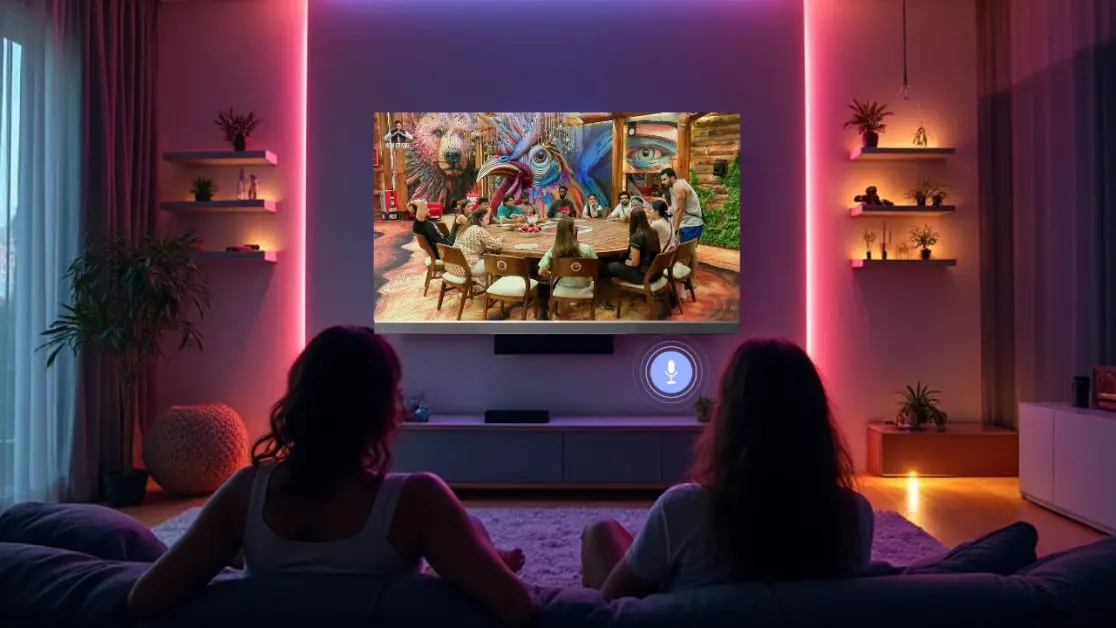
Here’s the hidden shift: remote-based browsing slows you down. By the time you’ve typed “Bigg Boss” into the search bar, the excitement dips.
With AI-enabled voice control, commands are immediate. Switch from Bigg Boss to cricket highlights. From a Raksha Bandhan playlist on YouTube to Netflix stand-up specials. No lag, no typing. Just talking to the screen like it’s part of the family.
The aphorism here: The best interface is the one that disappears.
Why Haier’s approach feels different
A few hidden details in the M80 series show how the brand is thinking ahead of its time:
- Solar-powered remote : No more chasing batteries. Sustainable, practical, and always ready.
- Future-ready HDMI 2.1 and MEMC : Sports, gaming, and action scenes flow without blur.
- Design built for India : Durable build, efficient power consumption, and Google TV remote app for those who live on their smartphones.
Haier isn’t just shipping a product. They’re building around the rhythms of Indian life.
The bigger principle: Why screens are the new social spaces
Every era has its heart. Once it was the fire. Then it was radio. For decades, it was the television in the corner of the room.
Today, the smart TV has reclaimed that role not as a corner piece, but as the centrepiece. When it’s this immersive, this intuitive, and this attuned to our lifestyle, the TV becomes more than hardware. It becomes a cultural anchor.
Smart viewers don’t just want screens. They want spaces. And that’s what a Smart TV creates: a shared cultural space for India’s next generation of entertainment.
Bigg Boss 19 deserves more than a scroll
You could watch Bigg Boss on your phone. You could even catch it on a laptop. But ask yourself: when the show is built on drama, colour, and human energy why shrink it?
A Smart TV turns every episode into an event. Not because of pixels or decibels alone, but because it meets the Indian household where it lives in chaos, in laughter, in debates, and in togetherness.
And that’s the hidden promise of smart viewing. It’s not about screens getting bigger. It’s about life feeling fuller.