

The hidden genius inside your monsoon comfort zone
Let’s start with a real-world scene
It’s a sticky July evening in Mumbai. The fan’s just circulating warm air, and the windows are sealed shut to keep the rain out. You switch on the AC not just for cool air, but for relief. And for the next few hours, the room transforms. Crisp. Dry. Comfortable.
But here’s what you don’t see: behind the scenes, your AC is quietly fighting off two invisible enemies: humidity-induced fungus and power-hungry cooling cycles.
And all that’s happening because of one deceptively simple, but brilliant feature:
Self Clean Technology
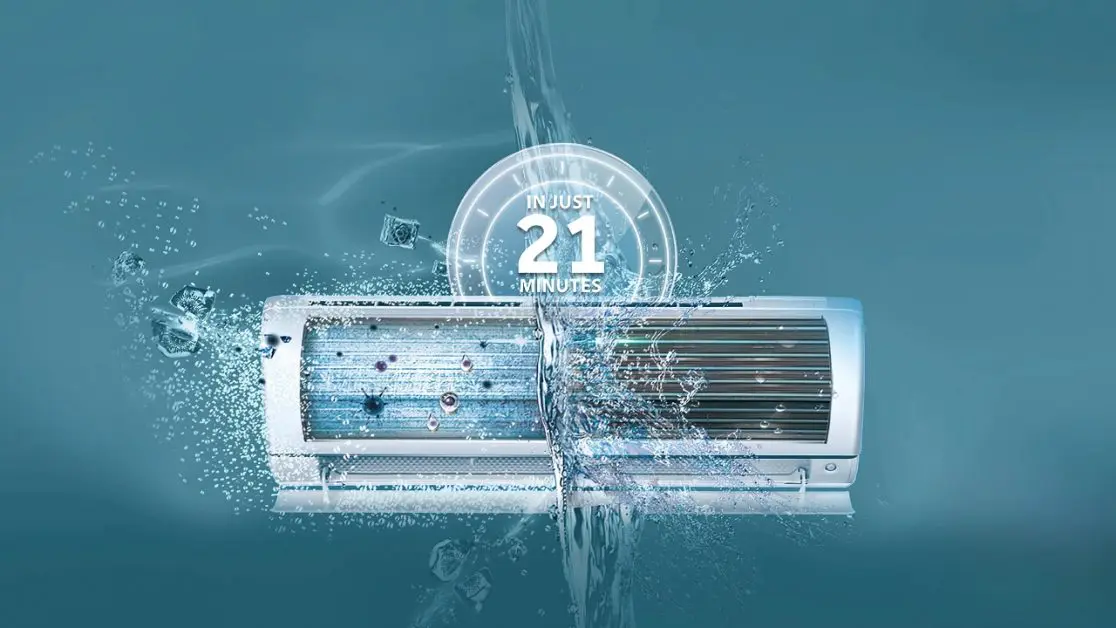
One setting. Two major wins.
There are AC features, and then there are systems. Self Clean is the latter. It’s not a button you press. It’s a design philosophy, a rethinking of how ACs work in the Indian context, especially during the monsoon.
Here’s what it does:
It stops fungal growth at the source.
Every time you switch off a regular AC, moisture remains inside the unit. In monsoon, that’s a buffet for fungus and bacteria. Self Clean blows residual water off the coils by running a high-speed fan mode after shutdown. It dries itself.
It improves efficiency every time you use it.
Clean coils = better airflow = less energy needed to reach your set temperature. That’s not a theory. That’s thermodynamics.
So you’re not just preventing smells and allergens. You’re also saving power, every single day.
Why this matters more during monsoon
Humidity doesn’t just make you uncomfortable. It tricks your AC into working harder.
When the coils inside the AC are damp and dirty, the system has to run longer and more often to achieve the same cooling. The result?
- Higher electricity bills
- Weaker cooling
- Fungal buildup that affects your respiratory health
Self Clean flips that script.
Instead of reacting to problems after they show up mouldy smell, rising bills, unclean filters it prevents the issue altogether. That’s not just smart tech. That’s anticipatory design.
What this looks like in actual homes
Ask any Indian parent who’s dealt with sneezing toddlers and black patches on the wall they’ll tell you: mold is real.
One Haier AC user in Kolkata shared how her child’s allergy attacks reduced dramatically after switching to a model with Self Clean. Another user in Kochi noticed the electricity bill dropped by over ₹400 a month just by using the feature regularly.
This isn’t about luxury. It’s about long-term savings and wellbeing.
Now let’s talk numbers

Because insight is great, but savings are better when measurable.
Here’s a breakdown of what Self Clean offers over time:
- Estimated annual energy savings: ₹2500 – ₹4000 depending on usage and humidity
- Maintenance savings: Fewer service calls for deep coil cleaning
- Health benefit: Reduced exposure to airborne fungi and allergens
You save money. You breathe cleaner. You maintain performance. And you don’t even have to think about it.
A design made for Indian seasons
This isn’t a borrowed feature from cooler climates. It’s tuned for our realities.
- Monsoon in Mumbai: High humidity, 26° nights, fungus-prone corners
- August in Assam: 90% humidity, AC on most of the day, allergen overload
- Bangalore rains: Cooler but damp, still ideal for mold growth
The real brilliance of Self Clean is that it adapts to all of these without user micromanagement. Set it once. Let it run.
Why Haier’s implementation stands out
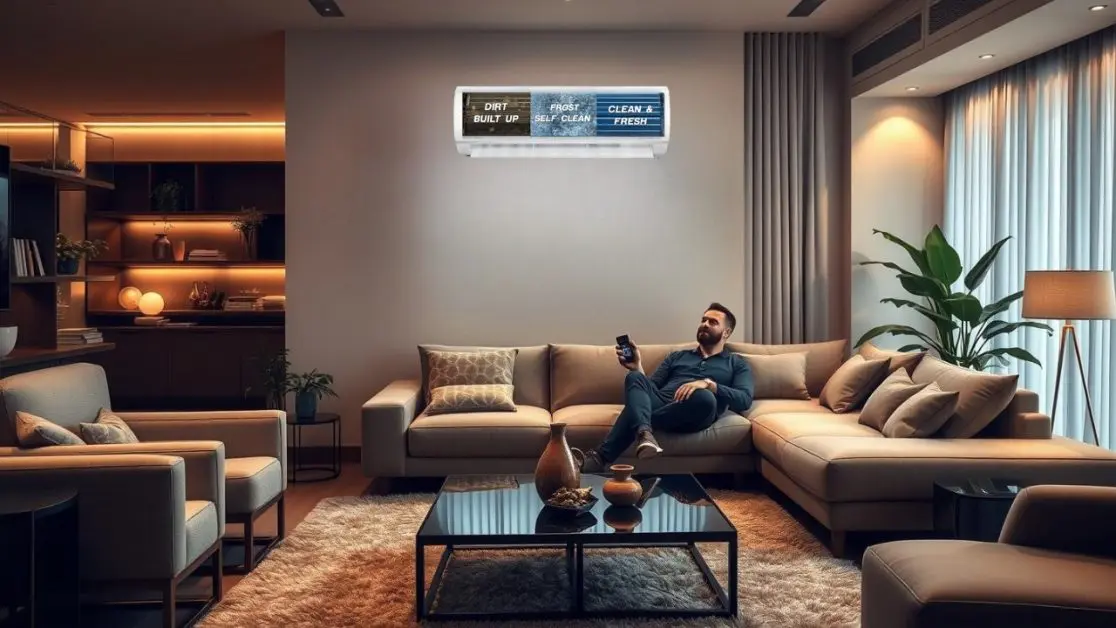
Now let’s zoom in on the how, not just the what.
In Gravity Series ACs, Self Clean is AI-optimized. That means the system learns your cooling patterns and adjusts the cleaning cycle for max efficiency and hygiene.
So unlike basic “dry mode” solutions, this is not a workaround. It’s a core system working in tandem with smart sensors, inverter control, and energy-efficient components.
The result?
Cleaner air. Smarter usage. Seamless experience.
A feature that reflects a mindset shift
Here’s the larger point:
Preventive technology is the new luxury.
The old model: Buy an AC. Run it till problems show up. Spend on maintenance.
The new model: Buy an AC that solves problems before you notice them.
Self Clean is not just a technical feature, it’s a way of living smarter in the Indian climate.
Let’s look at your real choices
So if you’re choosing a new AC this monsoon, here are your three broad options:
1. Basic models with no self-cleaning system
Lower upfront cost. But higher electricity bills and more maintenance calls.
2. Mid-range models with manual cleaning mode
A step better. But it only works if you remember to use it every time.
3. AI Smart ACs with automatic Self Clean (like Gravity Series)
Costs a bit more upfront. But pays for itself in under a year via lower bills, better health, and less stress.
Smart Indian homes are moving to option three. Because the long-term gain isn’t just financial. It’s emotional peace of mind.
Zooming out: What this teaches us about modern living
In a way, the Self Clean feature is a metaphor for how we want our lives to be:
- Less reactive, more proactive
- Less cluttered, more streamlined
- Less maintenance, more intuition
Whether it’s your AC, your kitchen, or your calendar systems that clean themselves are the future.
And if that future also means breathing cleaner air, saving energy, and spending fewer Sundays waiting for service guys? Even better.
Final thought
The smartest features are often the quietest ones. No flashy lights. No constant reminders.
Just a background system working so well that you forget it’s even there.
That’s what Haier’s Self Clean-enabled ACs deliver. Especially when the air outside is damp, the laundry’s taking two days to dry, and fungus is trying to flow a party in your walls.
Sometimes, the best form of defense is dry.