


Rainy clothes have a smell.
Not always obvious. But if you’ve ever pulled out a T-shirt that sat damp too long on the balcony line, you know it.
Monsoon in India is both a blessing and a burden. Cool breezes, chai moments, childhood nostalgia. But also endless laundry delays, damp socks that never dry, and that stubborn smell of half-dried jeans.
Now that the skies are clearing, the question is simple: How should your washing habits change when rainy laundry days are finally over?
Drying was the biggest struggle. Now the script flips.

In monsoon, the fight is against moisture.
- Clothes take two days to dry.
- Fans double as indoor dryers.
- Everyone secretly hopes for a 10-minute patch of sunlight
Come September, the problem changes. The sun is back. Humidity is lower. Which means your washing machine no longer has to battle the weather, it has to battle your habits.
Most Indian families don’t pause to adjust. They keep the same rainy-day rhythm: frequent short washes, cautious drying, heavy use of indoor racks. But seasons demand new systems.
Why seasonal laundry habits matter
Laundry is a system. Change one variable temperature, sunlight, fabric thickness and the whole system behaves differently.
- In monsoon: energy consumption rises because dryers or fans run longer.
- Post-monsoon: energy waste comes from not optimising settings when the weather itself is already helping.
- Year-round: clothes wear out faster if cycles don’t match fabric and climate
Think of it this way: you don’t eat khichdi the same way in May as you do in December. Why wash clothes the same way across seasons?
Three shifts to make after the rains
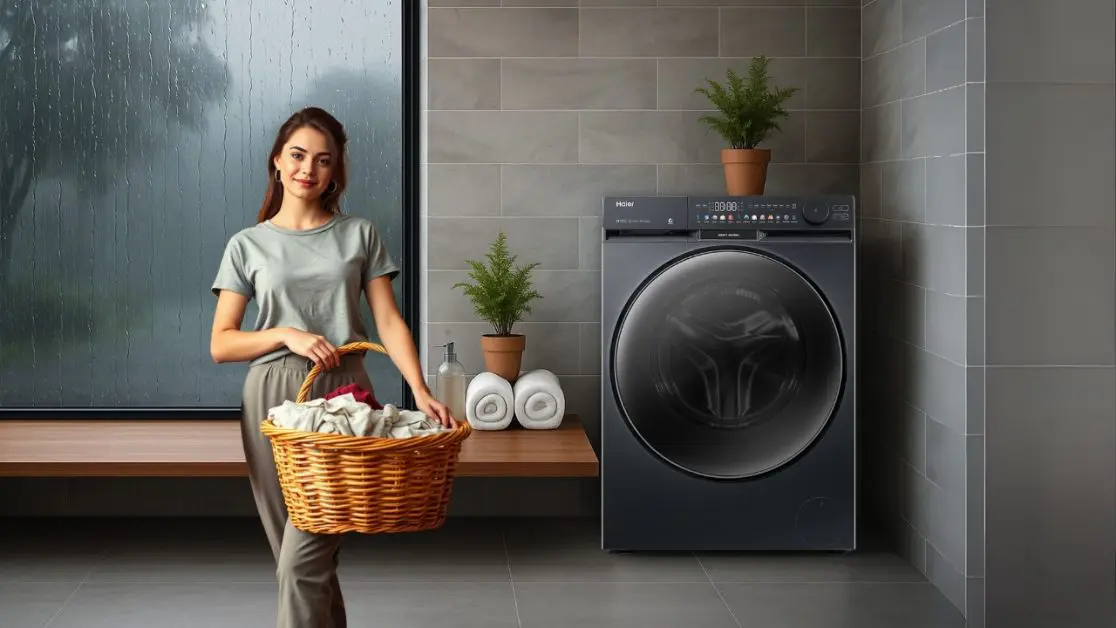
1. Move from “survival wash” to “quality wash.”
During rains, speed wins. Quick 15-minute cycles. Half loads. Anything that prevents that pile from smelling. Post-monsoon, you can slow down. Opt for full cotton or allergy-care programs. Your clothes will thank you.
2. Shift from “air-struggle drying” to “sun-smart drying.”
Balconies suddenly transform into free solar dryers. That’s when you pair outdoor drying with gentler spin settings. You don’t need aggressive spins to wring every drop to let the sun finish the job.
3. Switch from “extra energy” to “efficient energy.”
In monsoon, you had little choice but to over-wash or double-rinse. Now, efficiency matters. A 5-star front load with Direct Motion Motor isn’t just quieter; it uses less energy per cycle.
Where Haier fits in naturally
Modern homes need modern allies. Haier’s washing machines are built for exactly these seasonal shifts:
- Super Drum 525 gives more space for bigger loads perfect for the bedsheets and comforters that you can now wash and dry quickly in post-monsoon sun.
- Direct Motion Motor keeps operation whisper-quiet and durable, no clunky spin noise when you’re catching up on weekend binge-watching.
- Refresh steam cycle revives clothes, reduces wrinkles and odour great for items that don’t need a full wash but feel “monsoon tired.”
- Hai Smart App lets you control cycles from your phone because let’s be honest, half of us forget laundry once we hit the office traffic
This isn’t about hard-selling an appliance. It’s about recognising that tech should evolve with seasons, just like habits do.
The hidden costs of not adjusting
If you don’t shift gears after monsoon, here’s what happens:
- Clothes wear out faster. Over-spinning and over-rinsing stress fabrics.
- Energy bills creep up. You keep running “rainy-day cycles” when you don’t need to.
- Time is wasted. Sunlight can dry in hours, but your old habit makes you rely on machines alone
It’s not just inefficiency, it’s money, time, and wardrobe lifespan slipping away.
Household examples we all recognise

- The bachelor in Bengaluru: keeps tossing jeans into the quick cycle every three days because that’s how he survived July rains. Now his denim fades twice as fast.
- The Mumbai family: ran ceiling fans at full speed for drying all through August. In September, they forgot to switch off the “extra spin” setting, wasting energy even with perfect drying weather.
- The Chennai couple: just bought a new front load. Their parents keep telling them to “wash less in the rain.” They’re discovering how cycle settings actually save electricity post-monsoon.
Every home has its own laundry folklore. But the pattern is that universal habits lag behind weather.
What changing habits looks like in practice
Let’s break it down systematically.
For cotton clothes:
- Use a standard cotton cycle at 40°C.
- Lower spin speed sun will do the rest.
For baby clothes:
- Allergy care or baby care program.
- Post-monsoon, you can skip double rinses
For office wear:
- Refresh cycle instead of full wash mid-week.
- Less wear on fabric, more freshness.
For bedding:
- Use Super Drum capacity.
- Wash in the morning, sun-dry by evening.
The principle: don’t let rainy-day paranoia drive dry-day behaviour.
The deeper system at play

The laundry seems small. But it’s a mirror of how we adapt or fail to adapt to change.
Indians are masters of improvisation in monsoon. Plastic covers on bikes. Towels at every door. Umbrella collections. Yet when skies clear, we forget to re-design routines.
Habits outlive circumstances. Systems thinking reminds us: efficiency isn’t just what the machine delivers. It’s what you choose to adjust.
The emotional payoff
Imagine this: Sunday morning, late September. The balcony is full of sun. Your T-shirts are washed on the right setting, spun just enough, and dry by lunch. No damp smell. No crumpled collars.
Laundry becomes less of a battle, more of a rhythm. That’s the emotional win.
And when your washing machine is smart enough to adapt with you, quiet, efficient, generous in capacity that rhythm feels effortless.
Final implication
This isn’t just about clothes. It’s about recognising that life gets lighter when systems sync with seasons.
Rainy laundry days are almost over. The habits you choose now decide whether the next few months feel like freedom or just more of the same damp struggle.