


Yes most households waste water and energy by running half loads.
The fix lies in using smart washing machine settings like Half Load, AI Wash, or Auto Sense, which automatically adjust water and power to the actual load size.
Why do we end up washing half loads?
Think of your last laundry day. Did you wait for the basket to fill up, or did you throw in a few shirts because the kurta you needed for the next morning was buried inside?
Most Indian homes fall into one of three patterns:
- The weekday rush: One person needs a quick wash before office or college. The machine runs for just 5–6 pieces.
- The parent hack: Kids spill food, paint, or dal at odd hours. A small, urgent load gets washed.
- The work-from-home shuffle: Loungewear piles up faster than bedsheets. Smaller, frequent washes feel easier.
Convenience wins. But so does waste. A half load in a full cycle uses almost the same water, detergent, and energy as a full load.
That’s the hidden cost.
How much water does a washing machine use?
According to the Bureau of Energy Efficiency (BEE), a conventional washing machine cycle can use anywhere from 40 to 120 litres of water depending on load size and model.
Here’s the catch:
- A full load might use ~90 litres.
- A half load often still uses ~70 litres.
That’s 20 litres gone, just because you didn’t have enough clothes to fill the drum. Multiply that by three half loads a week, and you’re wasting over 3,000 litres a year, enough to meet a family’s drinking water needs for months.
Water is invisible until it isn’t.
The hidden costs of half-load washing

It’s not just water. Running half loads has a ripple effect:
1. Electricity bills climb – Heating water, spinning cycles, and drying take the same energy whether the drum is half or fully loaded.
2. Clothes wear out faster – Extra friction in under-filled drums can be harsher on fabrics.
3. Time gets eaten – More loads mean more cycles to supervise, more time spent hanging, folding, or ironing.
In other words, half-load washing is like taking your car out for five short trips when one well-planned drive would have done the job.
So, what’s the fix?
Modern washing machines have quietly solved this problem.
1. The Half Load Setting
Older machines offered a Half Load button. Switch it on, and the machine reduces water intake and energy accordingly.
The limitation? It was still manual. You had to remember to press it.
2. Auto Sense or AI Wash
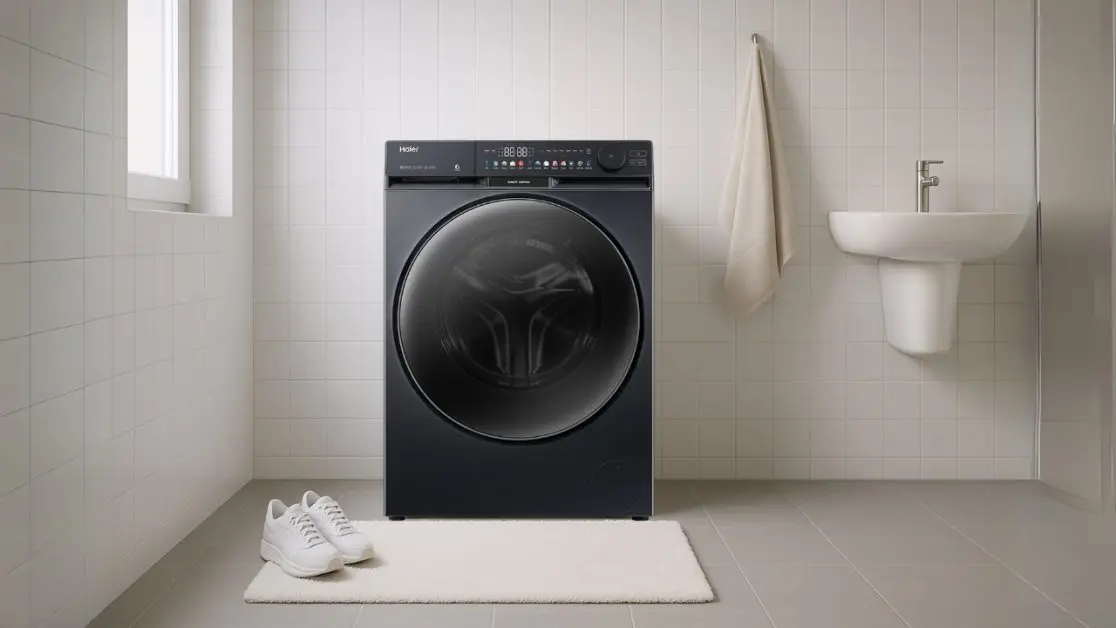
Today’s smart front-load washing machines go a step further. Features like One-Touch AI Wash on Haier’s 10 Kg and 12 Kg models automatically detect:
- The weight of your laundry
- The type of fabric
- The dirt level
Then they decide the water level, detergent dose, and cycle length for you. One touch. That’s it.
3. Eco Wash Programs
Another fix lies in Eco Wash cycles, which use lower temperatures, reduced rinses, and slower drum speeds to save both water and electricity.
What does this mean for real homes?

Picture this.
- A working couple in Bengaluru. They do two small weekday washes and a big weekend one. With AI Wash, the weekday cycles automatically scale down water and energy, making them guilt-free.
- A parent in Kolkata. Their child spills paint on school uniforms. A quick half load doesn’t feel wasteful anymore because the machine senses and adjusts.
- A solo professional in Gurugram. They wash small sets of activewear daily. Instead of wasting litres, the machine optimises each mini cycle.
Technology adapts to the rhythm of life, not the other way around.
Numbers that make the case
| Scenario | Old Washing Style | With AI / Half Load Setting | Savings |
| 3 half loads/week | ~10,920 litres/year | ~7,000 litres/year | ~3,920 litres saved |
| Electricity | 180 kWh/year | 120 kWh/year | 60 kWh saved |
| Money (water + power) | ~₹4,000/year | ~₹2,700/year | ~₹1,300 saved |
These are conservative estimates. For larger families, the savings scale up dramatically.
What to look for in your next washing machine
If you’re in the market, look beyond drum size and design. Check for:
- AI Wash / Auto Sense technology – Does it detect load size and fabric?
- Direct Motion Motor – As in Haier’s machines, for quieter, energy-efficient cycles.
- Eco and Quick Wash programs – To balance convenience with sustainability.
- Warranty strength – Haier offers 5 years comprehensive and 20 years motor warranty on these models, signalling long-term trust.
A machine that saves water every day quietly pays for itself in a few years.
Small habits that complement smart tech
Even the best settings work better when paired with mindful choices:
- Plan laundry by category: Separate heavy fabrics from light ones so loads balance out.
- Use delay timers: Haier’s machines allow you to set washes overnight when water pressure is higher and energy tariffs lower.
- Avoid overloading: Just as underloading wastes water, overloading reduces wash quality. Balance is key.
The cultural shift
In India, laundry is not just utility. It’s a social rhythm. From school uniforms lined up on Sunday evenings to fresh festive clothes during Durga Puja, how we wash reflects how we live.
Smart washing is less about machines and more about respecting the resources we all share.
Or as one Haier customer put it after switching to AI Wash: “I realised the machine wasn’t just saving water it was saving me the guilt of wasting it.”
The takeaway
Half loads feel convenient, but they silently drain thousands of litres of water every year.
The fix is simple, use Half Load settings, Eco cycles, or AI Wash programs. These features, now standard in advanced machines like Haier’s 10 Kg and 12 Kg front-load models, turn wasteful habits into sustainable routines without asking you to change your lifestyle.
The principle is clear, when technology adapts to you, sustainability stops being a sacrifice and starts being effortless.