

National Education Day, celebrated every year on November 11, honours Maulana Abul Kalam Azad, India’s first Education Minister and his belief that learning must reach every home.
In 2025, that spirit feels alive again, only this time, the classroom is often a living room.
From chalkboards to smart screens – how India’s learning spaces evolved
If you walk into any Indian home today, learning doesn’t just happen behind a desk.
It happens when a child rewinds a science video on YouTube, when a parent attends an online finance course after dinner, or when siblings explore a documentary together on the big screen.
This is what National Education Day truly celebrates the idea that learning never stands still.
It adapts, reshapes, and reinvents itself to fit our lives.
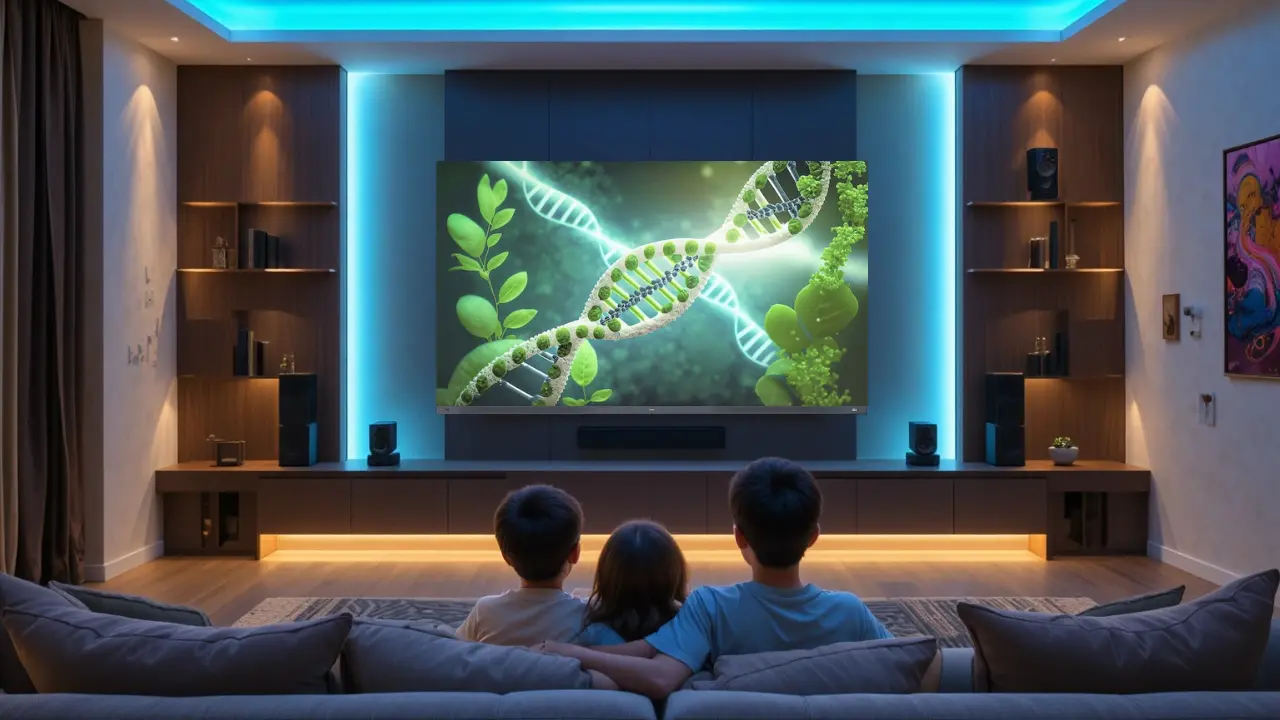
Once, the sound of learning was chalk against a board. Now, it’s a digital assistant explaining the solar system, a teacher streaming lessons through Google Meet, or an 215cm (85) Haier Mini LED Google TV turning documentaries into cinematic classrooms with Dolby Vision clarity and sound by KEF. Because sometimes, the best way to learn is to see and hear every detail come alive.
Why November 11 matters more than ever
Back in 2008, the Ministry of Education declared November 11 as National Education Day to commemorate the birth anniversary of Maulana Abul Kalam Azad a man who built the foundation of modern India’s education system.
He envisioned schools that sparked curiosity, universities that drove innovation, and cultural institutions that kept India’s creative spirit alive.
Azad’s legacy shaped the IITs, UGC, and the Indian Institute of Science, proving that true education builds nations, not just careers. His vision? That education should be accessible, affordable, and lifelong ideals that feel more relevant in the age of online classes, AI-powered learning tools, and smart homes that make curiosity convenient.
The new classroom is everywhere

Today’s learners aren’t limited by walls. They learn between chores, commutes, and chai breaks.
Education lives in podcasts, video lectures, virtual internships, and even the algorithm that recommends what to watch next.
Here’s what the modern Indian “classroom” looks like:
- For students: YouTube educators and interactive courses on smart TVs bridge gaps in access.
- For professionals: Upskilling platforms like Coursera or Google Workspace certifications bring global learning home.
- For families: Kids learn through shows that teach empathy and science in equal measure.
- For everyone: A well-designed home setup, good lighting, stable Wi-Fi, and a vibrant screen makes learning immersive.
And that’s where technology quietly supports the cause Maulana Azad championed education for all.
From AI-powered TVs with voice search to energy-efficient appliances that create calm, clutter-free spaces, every innovation brings focus back to learning, growing, and living better.
When a TV becomes a teacher
Screens often get blamed for distraction. But what if we reframed them as windows of discovery?
Imagine a teenager watching a documentary about space on a Haier M80F Mini LED Google TV.
The 4K detail pulls them into galaxies far away. The Sound by KEF audio lets them hear the silence of space, while Dolby Vision makes the colours of nebulae glow in ways a textbook never could.
That’s not just entertainment. That’s engagement.
That’s learning in its purest form curiosity made visible.
Because in the right setting, even a screen can inspire the same wonder that a great teacher once did with a piece of chalk.
The invisible lessons we’re learning at home
If there’s one thing the pandemic taught Indian households, it’s that learning thrives in adaptation.
Parents became teachers. Kitchens turned into labs. Bedrooms became study zones. Homes evolved into smart ecosystems where appliances and humans worked in sync.
Every connected device from an AC that adjusts to a student’s study time, to a fridge that keeps tiffins fresh for late-night projects plays a quiet role in creating an environment of focus and comfort.
Haier’s philosophy of “Inspired Living” fits perfectly here.
It’s not just about owning technology, it’s about how technology frees us to focus on what matters most: growth, learning, and togetherness.
From access to experience the next chapter of education
Maulana Azad once said, “Education imparted by heart can bring revolution in the society.”
Today, that heart lies in how we design experiences, not just classrooms.
The next generation of education in India will depend on three forces:
1. Access: Affordable internet and smart devices that make quality learning universal.
2. Environment: Homes designed for focus are cool, well-lit, and connected.
3. Engagement: Screens, tools, and apps that make learning feel like play.
Together, they reflect a new kind of freedom: the freedom to learn anywhere, anytime, and at any age.
So what does National Education Day mean for our homes?
It’s a reminder that every home is now a learning hub.
The dinner table debates, YouTube explainers, family documentaries, even trivia nights all count as education in motion.
And when technology supports that rhythm, when a Haier smart TV curates learning shows, or an energy-saving AC keeps the room quiet and comfortable, we move closer to the vision Azad imagined: an India where education is not confined, but continuous.
Because every screen can teach something new
if we know how to look at it.
Final Thought
Education isn’t just a system we build, it’s a culture we sustain.
And in every home that learns, listens, and stays curious, Maulana Azad’s dream quietly lives on.