
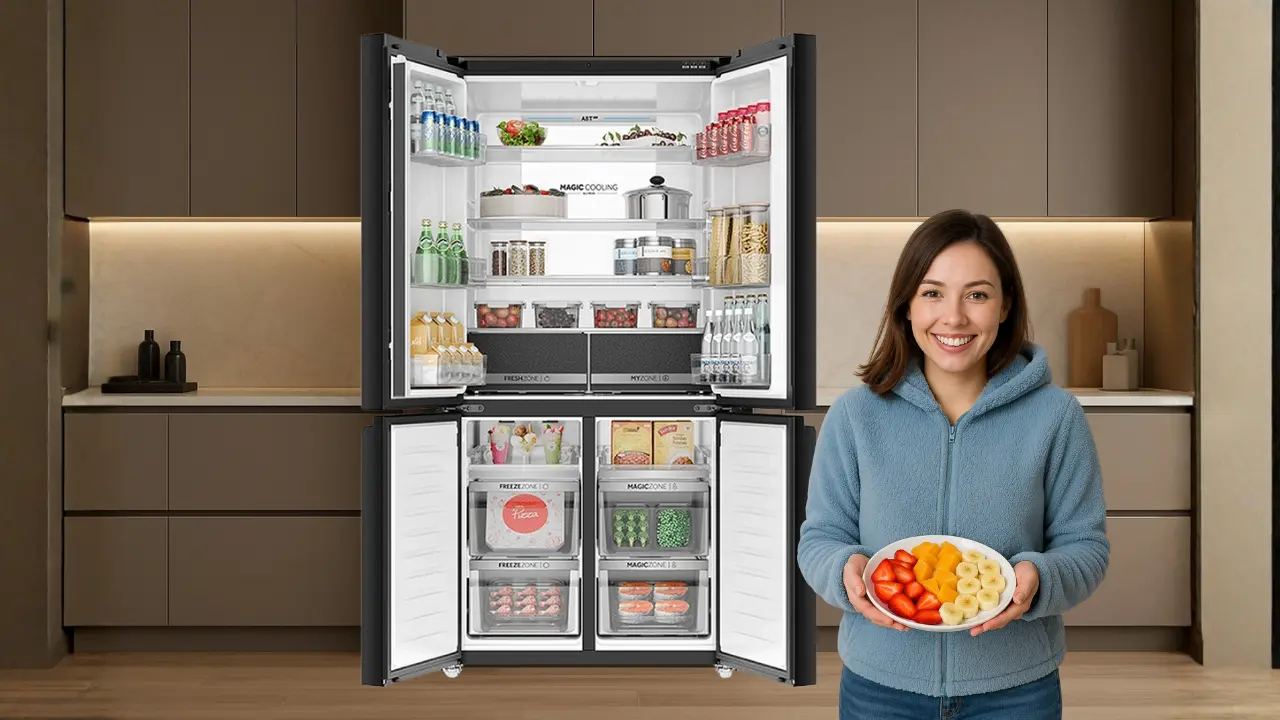

Modern refrigerators keep food fresher for longer because of one simple principle: controlled, consistent and intelligent air flow that moves cold air exactly where it is needed.
We rarely think about the air inside our fridge. We think about the leftovers, the milk packet wedged near the door, the vegetables we forget until they turn quietly sad. But behind that everyday chaos sits a surprisingly elegant system. Air flow.
The invisible engine that decides whether your tomatoes stay crisp or your curd turns watery by midweek.
Once you understand it, the entire fridge starts making sense in a new way.
This is that explanation.
Why does air flow matter so much in the first place
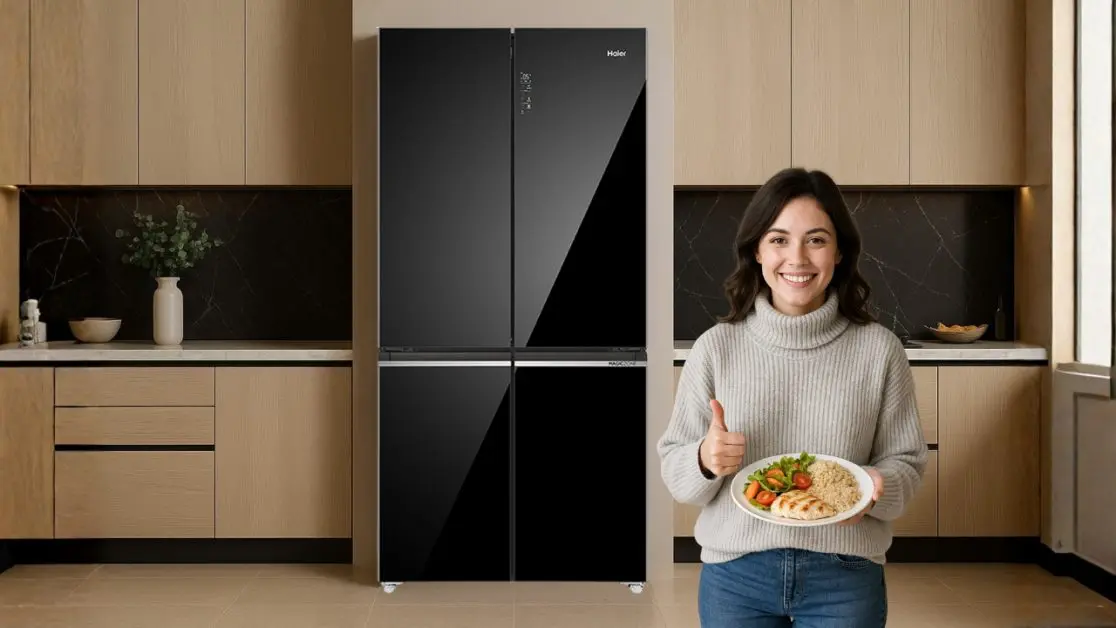
Open your fridge on any weekday morning. The first thing you notice is the temperature shift. A few seconds, and you can feel the cold air slipping out.
What you do not immediately see is what follows. Sensors working to bring the temperature back. Fans pushing chilled air into specific zones. Vents redirecting air so one shelf does not freeze while another stays warm.
Air flow is the quiet supervisor. It makes sure the entire space behaves like a single, stable climate.
And stability is everything. Researchers at the Journal of Food Engineering note that food spoils faster when temperatures fluctuate, even if the numbers look safe on paper. The bacteria respond to the swings, not the average.
Good air flow reduces those swings.
That is why modern fridges talk so much about multi air flow, dual fan cooling, and intelligent circulation. It is not jargon. It is the heart of food preservation.
What actually happens inside a modern fridge
Think of your fridge like a small theatre.
Every shelf is a seating section. Every ingredient is an audience member with its own mood. Milk hates warmth. Greens get upset with dryness. Raw meat needs isolation. Fruits prefer soft cooling.
To balance all these personalities, the fridge uses three systems.
1. Fans that direct cold air like stage lights
Older fridges relied on a single cooling point. Cold air fell from the freezer, slowly drifting into the fridge section.
Modern models use twin fans. One for the fridge. One for the freezer. Independent. Smart.
The Haier Lumiere 630L 4-door refrigerator uses two fans for precise circulation. It is the difference between one ceiling fan cooling an entire hall versus multiple vents keeping each corner comfortable.
Twin fans give you:
- Faster cooling after frequent door openings
- More uniform temperatures across shelves
- Reduced odour mixing because air does not stagnate
- Better moisture retention for delicate food items
This is why vegetables stay crisp instead of limp.
2. Vents that distribute air like well-placed windows
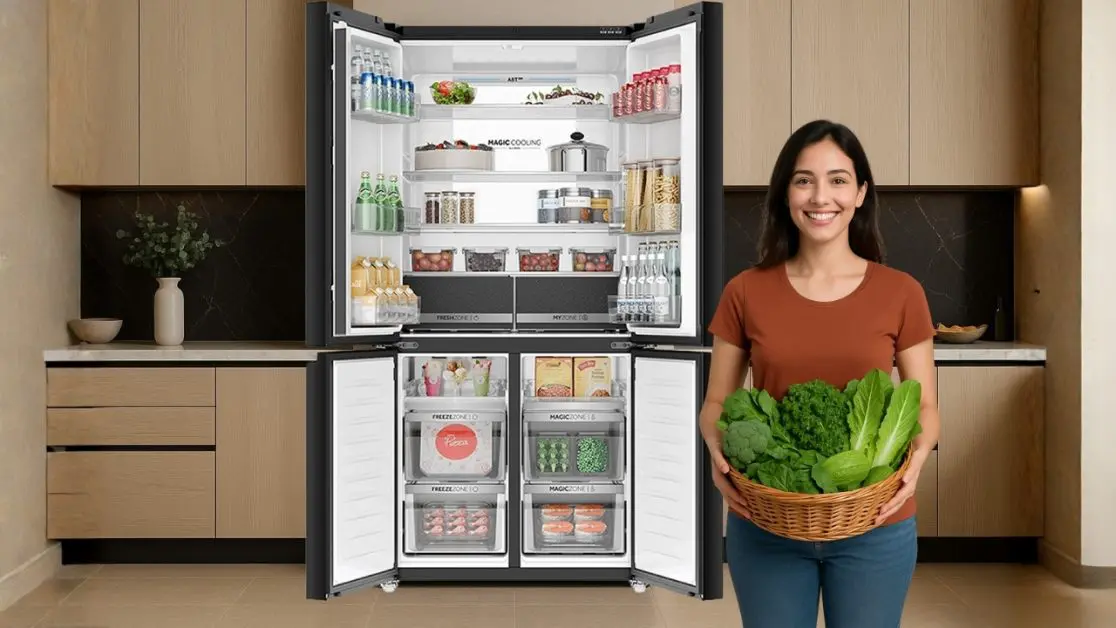
Cold air moves, but it needs a path.
Vents placed across the fridge guide chilled air into each zone. High-end models use sensors that adjust the air flow based on usage patterns.
If you cooked biryani last night, stored it hot, and opened the door multiple times in the morning, the fridge understands the stress. Smart Sense AI in models like the Lumiere Series adjusts cooling automatically.
That is invisible comfort. You never notice it. Your food does.
3. Technologies that keep the air itself clean
Even the best air flow fails if the air is dirty.
Modern refrigerators add sterilisation layers.
Haier uses ABT Pro to absorb impurities and reduce odours. The air that circulates inside stays cleaner, which means the ingredients stay fresher.
Because freshness is not just about temperature. It is also about air quality.
And air quality depends on circulation.
What happens when air flow is poor
This is where science becomes visible in daily life.
You see it in your vegetables
Uneven cooling dries out leafy greens. Moisture pools in the wrong places. Condensation collects on lids. All small signs that the fridge is not breathing properly.
You smell it
Odours linger. Flavours mingle. Leftover curry affects the taste of your cake.
You feel it when you open the door
A fridge with weak circulation takes longer to regain its temperature after each door opening. Which means food spoils sooner, even if the fridge is powered on all day.
In other words, air flow is not a feature. It is a survival system.
So how does technology actually improve air flow
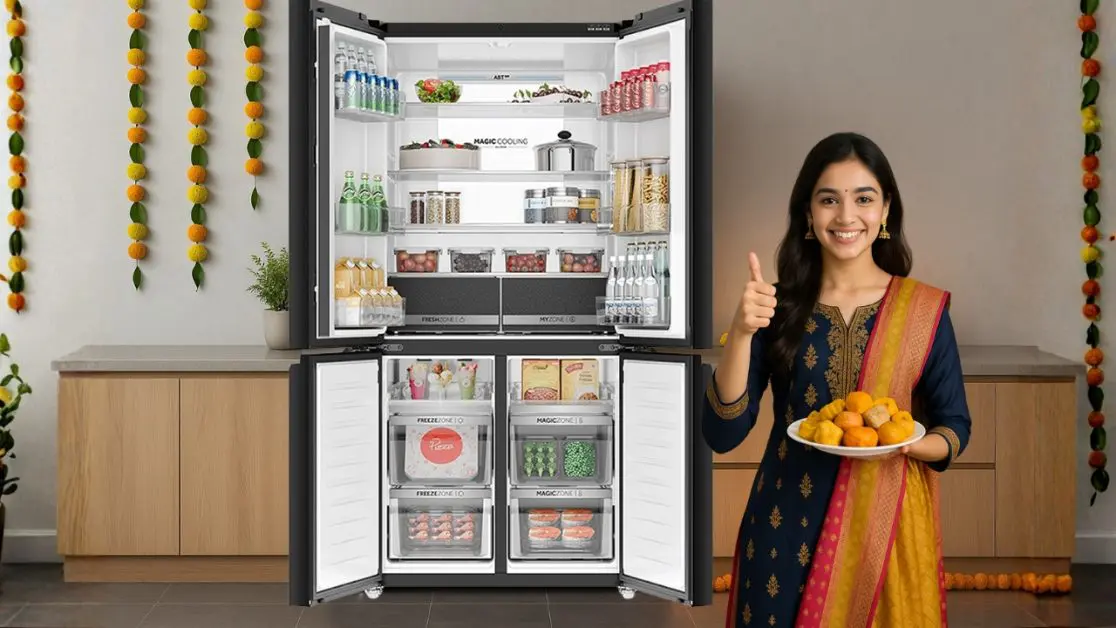
This is where modern engineering quietly shines.
More sensors
Temperature sensors. Door sensors. Humidity sensors.
All working together to keep cooling consistent.
Better fan placement
Instead of one big fan, multiple smaller fans reduce dead spots. No more warm corners where milk spoils faster.
Zonal cooling
Convertible spaces like the Lumiere Series allow you to shift cold air between compartments. Need more fridge space during festivals? More freezer space during summer? Air flow adjusts automatically.
Smarter algorithms
The fridge learns your habits.
When you open it the most.
How often you store fresh food.
When the temperature drops outside.
Then it adapts its cooling patterns to reduce energy usage.
Good air flow is not just about freshness. It is about efficiency.
A quick comparison: Traditional vs modern airflow
| Feature | Old Single-Airflow Fridges | Modern Multi-Airflow Fridges |
| Cooling speed | Slow and uneven | Fast and consistent |
| Door-open recovery | Takes long | Quick due to twin fans |
| Moisture control | Poor, leads to dry vegetables | Balanced humidity retention |
| Odour mixing | Common | Reduced due to active circulation |
| Energy efficiency | Average | Smarter cooling with sensors |
| Freshness | Shorter shelf life | Longer shelf life |
The difference becomes obvious after a week of groceries.
Where does the user fit into this system
This is where it gets interesting.
We assume a fridge is a static box.
You put food. You close the door. Done.
But you are actually part of its cooling system.
Your habits shape the fridge’s air flow pattern.
How often you open the door
Frequent door openings let out cold air.
The fridge responds by pushing more air through the vents.
How you arrange your food
Crowded shelves block circulation.
Stacked containers restrict movement.
Plastic covers trap warm air.
Air flow needs space. Not much. Just enough for cold air to pass around your food.
How you use compartments
Vegetable boxes, dairy zones, quick access shelves.
Each exists because different foods need different temperature flows.
Once you align your habits, the fridge performs better without consuming extra energy.
This is the part people underestimate.
Technology is powerful.
Habits are transformative.
Why airflow technology matters for Indian households
Indian households have unique needs.
Festive seasons with overloaded fridges
Diwali sweets. Summer lassi. Weekend leftovers.
Air flow keeps everything fresh even when the shelves are packed.
Ingredients with different moisture levels
Coriander wilts fast.
Spinach needs humidity.
Milk needs stability.
Cooked food needs isolation.
Air flow that adjusts across zones prevents cross-contamination and flavour transfer.
Hot climates and frequent power fluctuations
Quick cooling recovery reduces spoilage even when the door is opened multiple times or the temperature outside rises.
This is why brands like Haier focus on advanced circulation systems. They fit the rhythm of real Indian kitchens.
The simple truth hidden inside a complex appliance
Air flow seems technical until you see how human it is.
It protects your groceries.
It supports your routines.
It understands your patterns.
And it does all this quietly.
Refrigeration is usually described as cooling.
But in reality, it is choreography.
Air moving in patterns that keep life running smoothly.
A well-designed fridge does not just chill.
I think.
A small nod to the Lumiere Series, where the airflow story comes alive
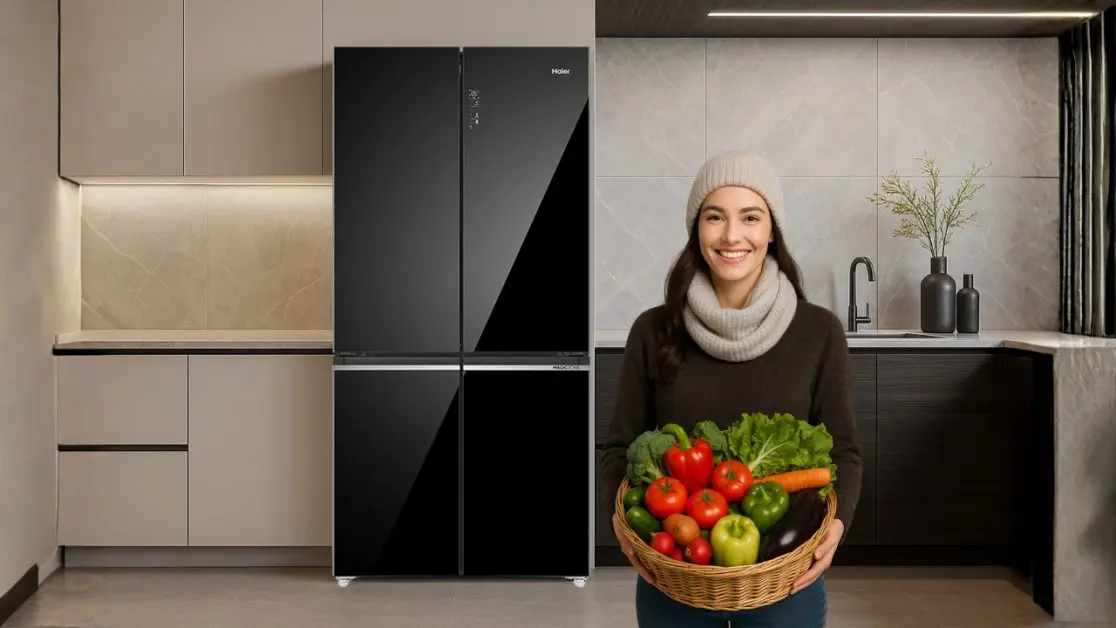
The Haier Lumiere 630L 4-door refrigerator is a good example of airflow done well.
Twin fans. Smart Sense AI. ABT Pro. Convertible zones. Designed glass interiors that keep circulation fluid.
Not because it is trying to impress.
But because real Indian households demand performance that feels effortless.
When a fridge becomes something you do not think about anymore, you know the airflow is working.
The bigger implication
Good air flow is a systems lesson hidden in a kitchen appliance.
Balance and movement matter more than power.
Invisible systems shape visible outcomes.
Small design choices change everyday life.
Once you understand this, you stop seeing your fridge as a storage box.
You start seeing it as a climate system designed for your home.
And that is the deeper value modern appliances bring.
Quiet intelligence.
Predictable comfort.
One less thing to worry about.