

Picture quality feels different in winter because your eyes behave differently in cold weather, your room lighting changes, and your TV’s brightness, contrast, and local dimming respond to those environmental shifts.
Winter alters the viewing conditions, so the picture appears warmer, cooler, sharper, or dimmer even when the settings stay the same.
The season changes. Your screen does too.
It starts small.
A late December evening.
A cup of chai.
A favourite series waiting on the home screen.
You hit play and the colours look richer than usual. Or softer. Or strangely crisp.
You wonder if something changed.
Your TV. Your eyes. Your room.
Or the winter itself.
This is the moment most Indian families experience without naming it. The picture feels different. Not better or worse. Just different.
The real story sits quietly behind physics, biology, and the lighting inside our homes.
And when you understand it, you start seeing your TV with new clarity.
Why does winter change the way we see picture quality
The room is dimmer in winter. Screens react to that.
Most Indian homes rely on natural light during the day. Winter flips that balance.
The sun sets earlier.
Curtains stay drawn.
Homes feel dimmer.
A dimmer room does one thing extremely well. It boosts the perceived contrast of any TV. Blacks look deeper. Colours look more saturated. Edges look sharper. It is the same logic that makes streetlights feel brighter at 7 pm in January than at 7 pm in June.
Picture quality does not improve. Your eyes simply interpret the same visual differently.
This is why high brightness TVs with QD Mini LED technology feel stunning during winter evenings. Local dimming zones get more room to breathe. Highlights look controlled instead of washed out.
It is not only technology at work. It is also your walls, curtains, and the winter light falling on them.
Implication: Picture quality depends less on panel specs and more on the environment you sit in.
Your eyes behave differently in cold weather
Here is a simple test.
Step outside on a winter morning. Stare at something bright.
Notice how long your eyes take to adjust.
This matters when you watch TV.
One scene cuts from a dark hallway to a bright outdoor shot.
Your eyes take extra milliseconds to recalibrate.
You interpret the jump as sharper brightness or harsh contrast.
The TV stays the same.
Your eyes do the transforming.
Implication: Seasonal biology affects your viewing experience as much as seasonal weather.
Winter changes how shadows appear in your home
Every filmmaker knows this.
Shadows are never absolute. They borrow their character from the space they fall in.
In winter:
- Walls reflect less light
- Corners look deeper
- Shadows look cleaner
- Reflections reduce on glossy screens
This amplifies the depth of dark scenes.
Mini LED TVs with deeper local dimming zones look even more pronounced because the surrounding room cooperates.
It is the same reason every Indian home suddenly looks more photogenic during winter weddings. Lighting does half the job. Shadows do the rest.
The invisible system behind picture quality
Picture quality looks like a display problem.
But winter reveals the truth.
It is a system problem.
A system shaped by:
- Ambient light
- Human perception
- Reflection patterns
- Room temperature
- Colour temperature of bulbs
- Screen technology
- Processing algorithms
The smartest TVs understand this system and adapt.
Most others simply show you what they can.
Why premium picture processors perform better in winter
Scene recognition adjusts faster when the environment changes
Imagine you are watching a cricket match in January.
Your room is darker than usual.
The camera pans from a bright stadium to a close indoor interview.
Basic TVs over-brighten the foreground because they cannot read the ambient conditions.
More advanced processors like Haier’s AI Ultra Sense Processor analyse the scene, detect lighting changes, and tune contrast and depth intelligently. This is where technologies like Dolby Vision IQ perform beautifully because they factor in the lighting of your room, especially during low-light winter evenings.
This is not a sales pitch.
This is what modern Indian families already feel:
The TV just knows what to do.
Three reasons picture quality feels sharper in January nights
1. The contrast illusion effect grows stronger
Psychologists call it the contrast illusion effect.
When your environment is darker, bright objects appear brighter.
Winter = darker homes.
Darker homes = stronger illusion.
Stronger illusion = sharper picture.
Simple. Predictable. Universal.
2. Whites appear cooler when your room feels colder
Think of white bedsheets on a winter morning.
They look whiter. Crisper.
Colour scientists like Michael Webster from the University of Nevada have written about this phenomenon. Our perception of white shifts depending on surrounding temperature cues.
A cold room makes whites on a TV screen lean cooler.
A warm room makes whites appear slightly yellow.
This is why winter movies feel more atmospheric.
It is not just the plot. It is the ambience around you shaping every frame.
3. Motion looks smoother when your eyes are less sensitive to brightness
Lower sensitivity to light improves motion clarity.
Fast-paced scenes feel less blurred.
Sports look more fluid.
Winter, unknowingly, gives you a smoother viewing experience.
The winter viewing triangle
If you want one simple framework to remember why picture quality changes in winter, here it is.
1. Room Light
Dimmer winter light increases perceived contrast.
2. Human Vision
Cold weather changes how quickly eyes react to brightness.
3. TV Technology
Better processors and Mini LED dimming zones amplify or correct these effects.
You can tune only one of these manually.
The room.
The other two run on instinct and engineering.
So how do you get the best picture quality in winter
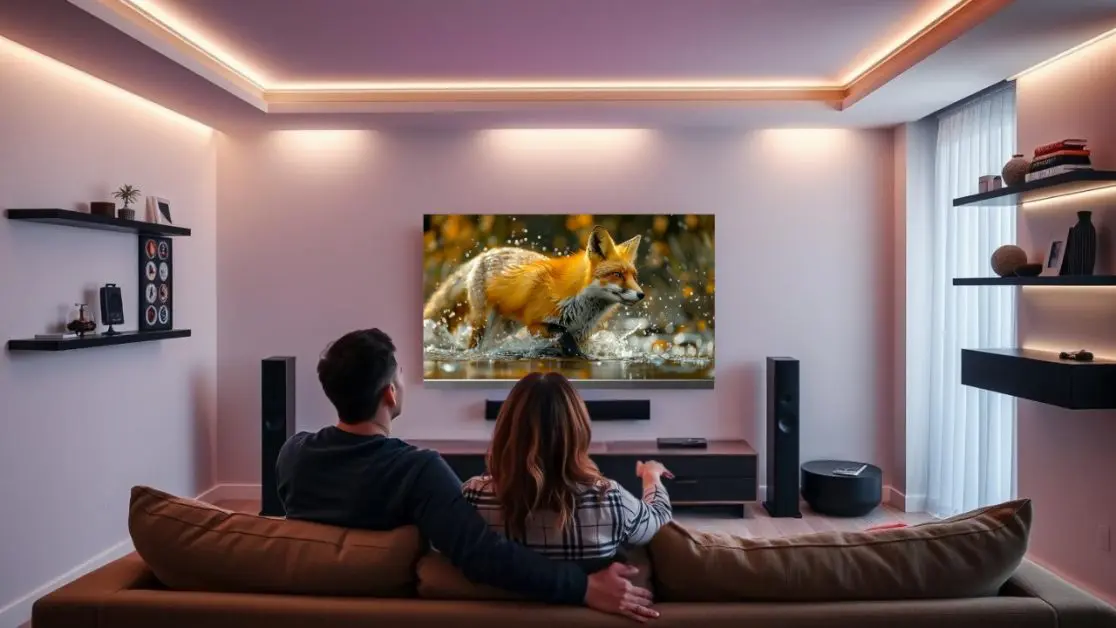
Here are three real-world options Indian families use around this time of year.
Option One: Control the room
- Use soft white lights instead of cool LEDs
- Reduce reflective surfaces around the TV
- Keep curtains slightly open during the day for natural balance
This is the most economical and quick fix.
Option Two: Use intelligent picture modes
Modern TVs offer winter-friendly picture modes without calling them that.
- Dolby Vision IQ
- Adaptive contrast
- AI picture tuning
- Local dimming presets
These modes read the room and adjust accordingly.
You let the machine do the thinking.
Option Three: Upgrade to a panel that respects winter light
Every season tests a display differently.
Winter tests:
- dimming zones
- brightness control
- processor intelligence
- HDR behavior
Mini LED TVs, especially those with higher dimming zones like the Haier M96 Series 254cm(100) or M92 Series 189cm (75) , tend to handle winter lighting with finesse because the technology is built for contrast-heavy environments.
Not a recommendation.
Just an observation from how most Indian homes actually watch content between November and January.
The bigger insight: Picture quality is a conversation between your home and your TV
Winter reminds us of something we forget all year.
Picture quality does not live inside the panel.
It lives in the relationship between:
- the TV
- the room
- the viewer
It is a domestic ecosystem.
One that changes with seasons, moods, and the way Indian families live.
Some nights you want bright.
Some nights you want to be cinematic.
Some nights you want the TV to understand the moment without you touching the settings.
This is where good design quietly shines.
It adapts to you instead of making you adapt to it.
Final takeaway
When picture quality feels different in winter, nothing is wrong.
Something is working.
Your home is changing.
Your eyes are changing.
Your evenings are changing.
A good TV keeps up with that rhythm.
A great one becomes part of it.
If you ever notice your Mini LED TV looking richer during a January binge night, now you know why. Winter is not just a season outside your window. It is the season on your screen too.