
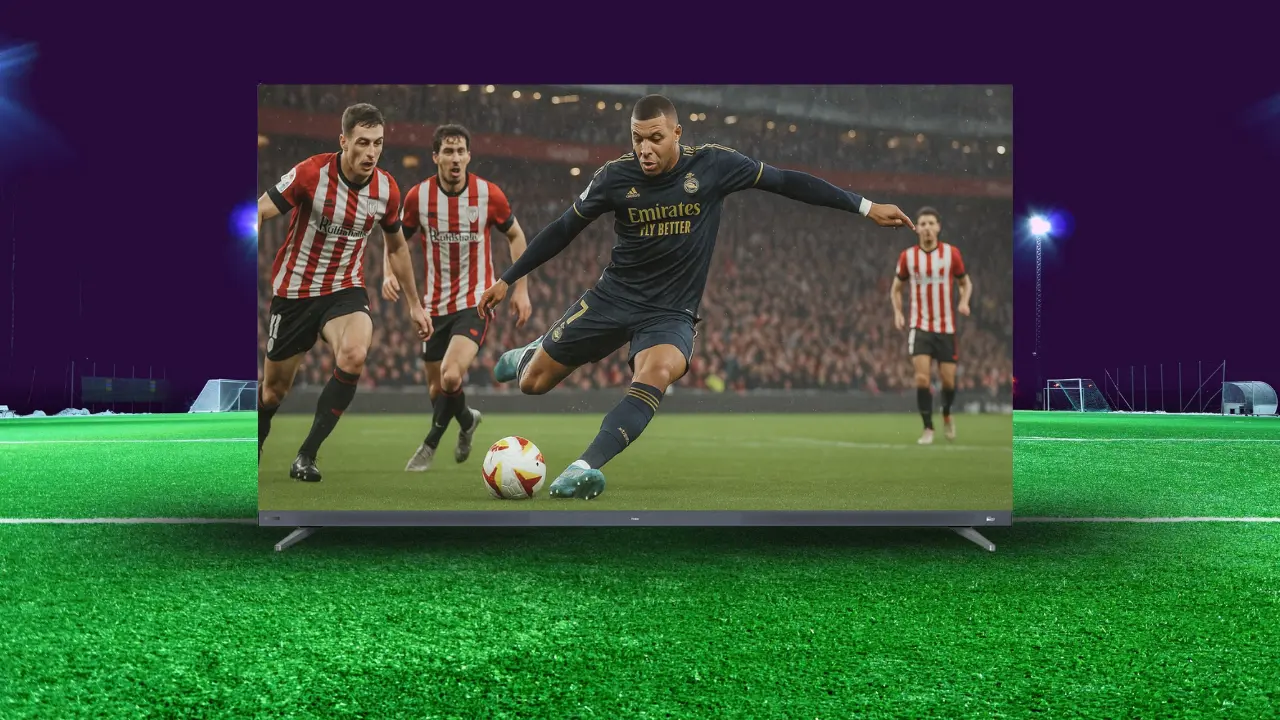

Real Madrid’s 3–0 win against Athletic Club was the kind of match that rewards you for watching every frame.
Mbappé’s brace, Camavinga’s header, Trent Alexander-Arnold’s pinpoint assist, the pace of transition, the details in the footwork. A normal TV shows the match. A 144Hz Mini LED lets you feel it.
This is the difference that changes living rooms during football season.
Not a spectacle.
Experience.
A match where small details told a bigger story
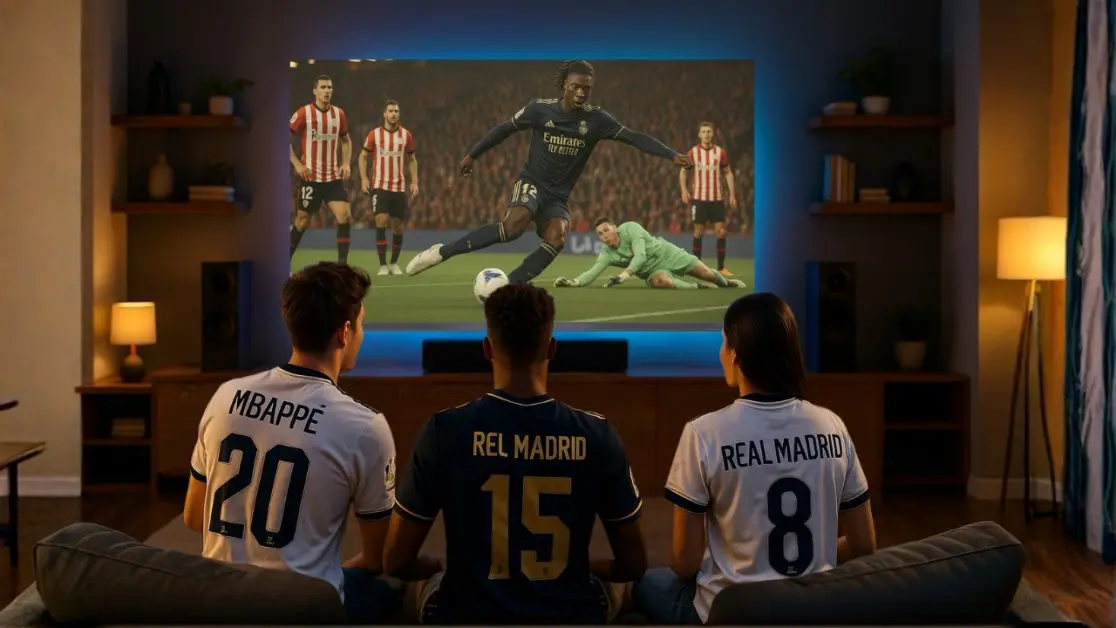
Every football fan remembers where they were during certain matches. Not because of the scoreline, but because of the moments inside the moments.
This one had plenty.
- Mbappé controlling Alexander-Arnold’s raking pass before slicing through defenders for the opening goal
- Camavinga timing his run perfectly to nod in Madrid’s second after Mbappé cushioned a header across goal
- A long-range finish for Mbappé’s 18th of the season, struck hard enough to hum
Fast. Fluid. Ruthless.
It was the kind of match where your eyes chase details. The texture of the pitch. The flick of a boot. The exact second the ball leaves Mbappé’s foot. Families watching together sit up a little straighter. Parents call their kids into the room. Someone rewinds. Someone says, “Wait, did you see that.”
And here is the real insight.
Football does not just live in goals. It lives in micro-movements.
And micro-movements only show up on screens built to honour them.
The real question: what does it take for a home screen to keep up with Mbappé
You can feel a match like this only when three things work together.
1. Motion that is fast enough to keep up
Speed exposes the limits of most living room screens.
A 60Hz panel tries. A 120Hz panel manages.
A 144Hz Mini LED thrives.
With every extra frame shown per second, motion blur drops. The ball stays sharp during counter-attacks. Players remain defined while sprinting. The camera pans feel smooth instead of stretched.
On the Haier M90 Mini LED TV, the 144Hz panel is built exactly for these moments .
The difference shows up in places viewers rarely mention aloud.
The arc of a curling cross.
The spin on a long-range shot.
The shoulder drop before a dribble.
Little things.
The things that make Mbappé look like Mbappé.
2. Light that behaves like stadium floodlights
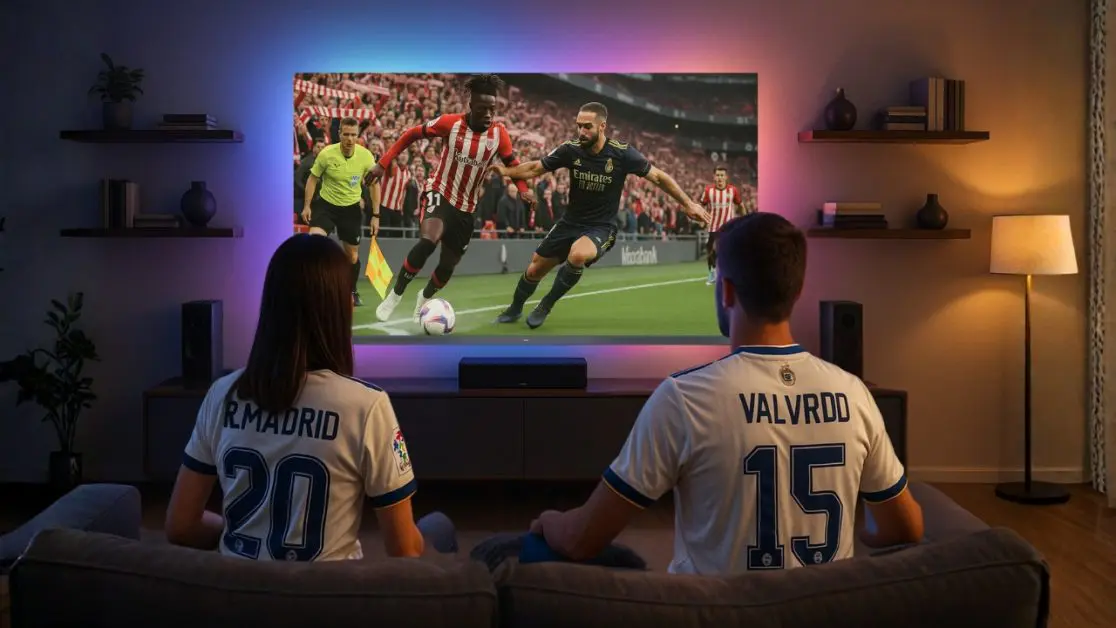
Mini LED screens carry thousands of tiny lighting zones that turn on and off with precision.
The result is a picture that feels more like standing inside San Mamés than watching it from the sofa.
The M90’s 240 dimming zones and Dolby Vision IQ come together to deepen contrast and sharpen brightness even when your living room lights are on or off .
Black stays black.
White stays clean.
Colours stay honest.
In simple language.
You stop noticing the screen.
You start noticing the football.
3. Sound that does not sit behind the moment
A match like this is not quiet.
Crowd surges. Boots thud. Passes snap.
A 50W 2.1 channel woofer with Dolby Atmos pushes sound forward instead of letting it fall flat behind the TV . Crossfield passes stretch across your room. Commentary feels centred. The stadium noise rises and settles the way real stadium noise does.
Because football is not just seen.
It is heard.
Why this match matters for modern Indian homes
Every Indian household has its own match-day ritual.
Some homes have one loud superfan.
Some have quiet watchers who analyse every touch.
Some have families that turn big matches into living room festivals.
A match like Madrid vs Athletic Club creates a shared moment across homes.
Eight-year-olds google Mbappé’s goal record.
Parents debate if the long-range second was stoppable.
Someone in the family jokes that Camavinga has springs in his shoes.
This is where design meets emotion.
A good TV becomes part of the conversation.
A great TV disappears.
It turns the room into the stadium without announcing itself.
Haier’s M90 Mini LED sits in this second category. The kind of appliance that does not demand attention. It earns it quietly through function, colour accuracy, smoothness and sound.
What Real Madrid’s 3–0 win teaches us about screens at home
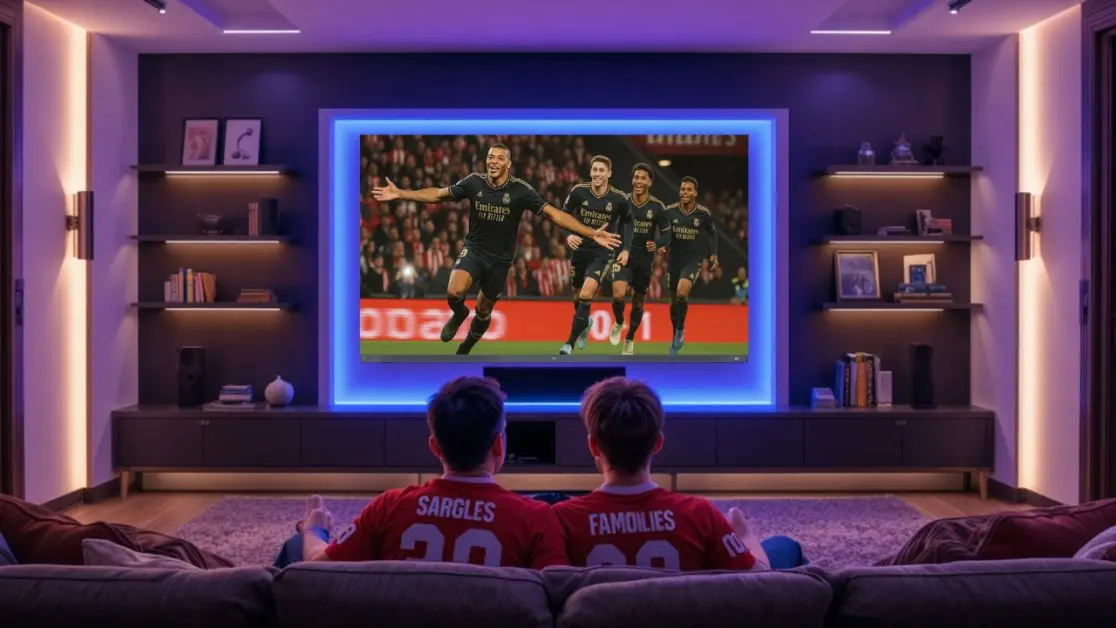
Matches like this act like a simple test.
Not for the team.
For the television.
Can your screen show you the exact moment a match changes.
Because most matches hinge on a single detail.
A touch. A foul. A pass. A tiny misstep.
A 144Hz Mini LED turns those details into visible moments.
Here is the pattern worth noticing.
- Football has become faster.
- Broadcasts have become sharper.
- Players move in ways that resemble animation.
- Cameras track tighter, closer, more aggressively.
If your screen does not evolve with the sport, you miss the evolution.
And that is the real takeaway.
Technology should not slow down the things you love.
Where this fits into the rhythm of Indian life
Most living rooms today are multi-purpose spaces.
On weekdays they are quiet corners after long office hours.
On weekends they turn into theatres, gaming hubs or family zones.
A screen that handles a Mbappé sprint at 144Hz is also a screen that makes:
- PS5 games feel responsive
- Bollywood action scenes feel cleaner
- Cricket replays look sharper
- Kids animations look brighter
- Night-time living rooms feel more like cinema halls
This is how a modern home organises itself.
Not around more appliances.
Around appliances that do more.
The final insight
A great TV does not change the match.
It changes how the match stays with you.
Mbappé’s brace becomes a memory instead of a moment.
Camavinga’s header becomes a replay you keep thinking about.
Real Madrid’s 3–0 win became a story told at the office the next morning.
And the living room becomes a place where technology quietly lifts the joy of watching together.
Because a 144Hz Mini LED does something simple but rare.
It keeps up with greatness.