
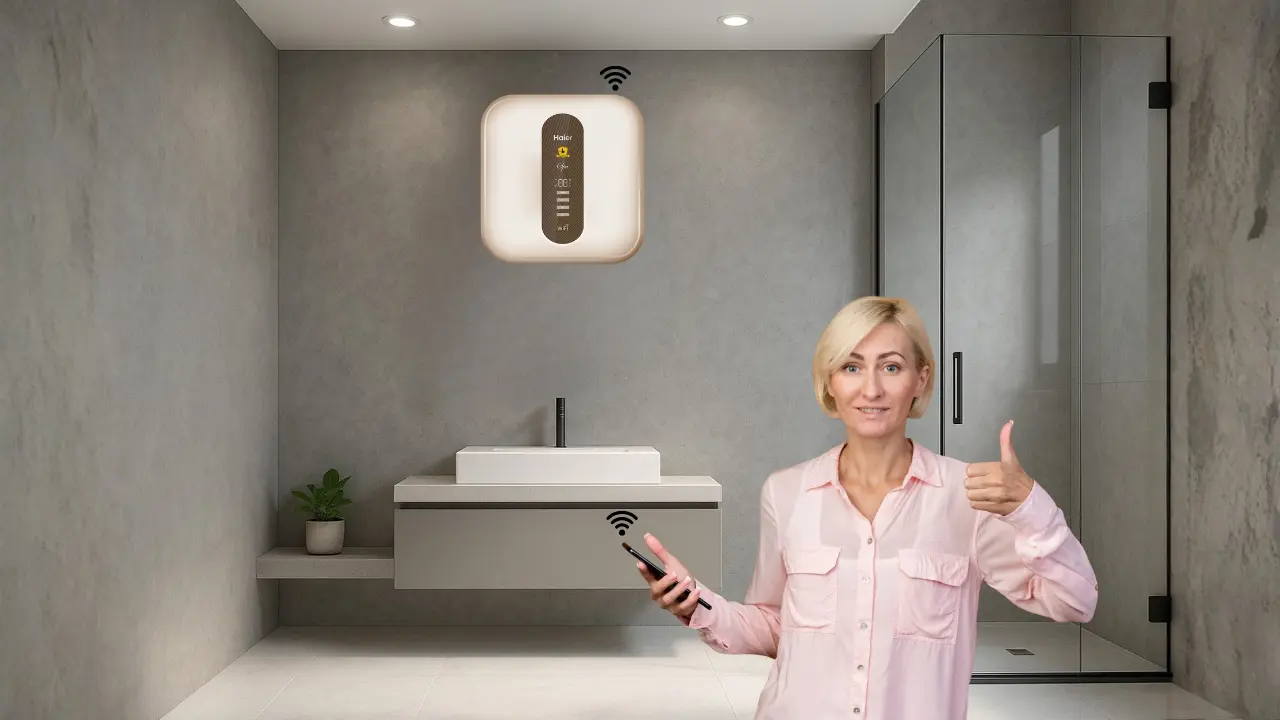

Wi-Fi water heaters make elderly care safer, simpler, and far more dependable. They offer remote control, automatic cut off systems, consistent hot water, and protection against shocks and overheating, which reduces everyday risks for seniors.
For Indian families balancing work, caregiving, and household routines, these smart heaters quietly make life easier. They turn safety into a system, not a guess.
Why do elderly care routines collapse at the bathroom door?
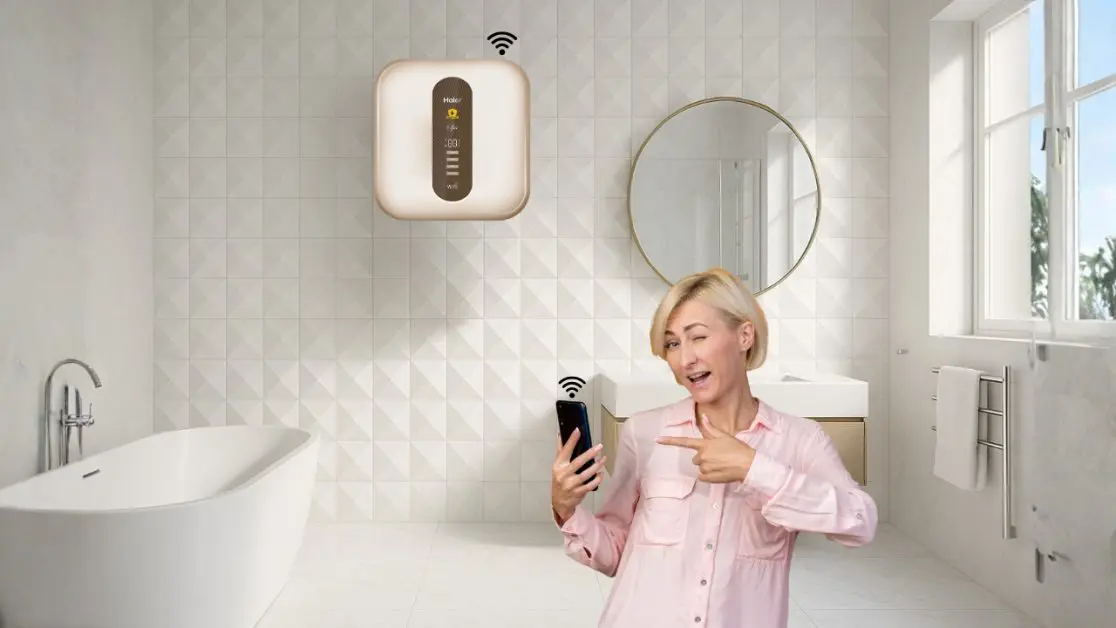
Because the bathroom is where independence meets vulnerability.
Every Indian household knows the familiar morning scene. A parent or grandparent steps in for a bath. You listen for longer than usual. You call out to check if the water is too hot, too cold, or taking too long. These moments seem tiny. They are not.
Hot water is comfortable. But for seniors, it is also a risk. A sudden temperature spike. A slippery delay waiting for the geyser to heat. A forgotten power switch. These small failures add up.
Wi-Fi water heaters change that pattern.
They make the invisible parts of elderly care visible, manageable, and predictable.
The bathroom is the first place that needs smart safety
The most important idea in elderly care is control. Not control over the person, but control over the environment.
A Wi-Fi water heater offers three types of control that change everything.
1. Control of temperature
2. Control of timing
3. Control of safety
This is where traditional geysers fall short. They only heat water. They do not adapt. They do not remember. They do not warn.
A Wi-Fi water heater does all three.
Smart temperature control removes the biggest risk

Hot water burns are one of the most common accidents among seniors. The problem is not just the high temperature. It is unpredictable.
A smart heater solves that through:
- Remote temperature setting
- Stable, consistent heating
- Auto cut off at unsafe levels
According to the Haier ES15V SD WIFI product manual, its dual thermal protection system cuts off heating at two levels. The first stops heating at 75°C, and the second shuts down the system at 95°C if the first fails.
This creates a layered protection system, not a single point of safety.
A senior should never have to judge water temperature with their hand. A system should do it for them.
Remote control brings peace of mind for working families
Caregiving today is hybrid. You work from home some days. You work from the office on others. You might even be in another city while checking in on parents through calls.
A Wi-Fi water heater matches that reality.
You can:
- Switch it on from your phone
- Check if it is running
- Turn it off if forgotten
- Schedule heating before their routine
These are not features. These are assurances.
If your parents bathe at 8 am, you do not need them to switch anything on. You tap a button at 7:45. Water is ready. No waiting. No confusion. No risk of touching switches with wet hands.
This is what modern caregiving looks like. Small interventions that prevent bigger problems.
Safety systems matter more than convenience
Most conversations about smart appliances focus on ease. Elderly care demands a different frame. The real value is not convenience but protection.
The Haier Wi-Fi water heater includes a shock proof design that lowers voltage to a safe level in case of leakage.
That single line changes the safety math of a bathroom.
Add to that:
- Over pressure protection
- IPX4 waterproofing
- Anti vacuum mechanisms
- MUV valve for plumbing safety
- A glass lined tank for durability and corrosion resistance
These are not luxuries. They are safeguards for a generation that grew up using bucket baths long before modern bathroom fittings existed.
They deserve technology that works quietly in the background without demanding new habits.
Consistency is not a luxury for the elderly. It is comfortable.

Hot water that fluctuates feels like a minor inconvenience when you are young. For seniors, inconsistency creates shock, discomfort, and instability.
Systems fail in two ways. Suddenly or slowly.
Traditional geysers fail slowly. Sediment build up, irregular flow, unreliable heating. Seniors experience these as abrupt. A smart heater prevents that.
Haier’s RSC technology ensures a consistent flow of hot water by preventing stagnant water and activating internal circulation.
A consistent flow system helps seniors maintain balance and reduces the instinctive jerk that happens when hot water suddenly turns cold.
Stability becomes a safety feature.
Smart memory reduces cognitive load
Elderly care often collapses when we expect seniors to remember too many small steps.
Turn the switch on.
Set the temperature.
Wait.
Check.
Turn the switch off.
A Wi-Fi water heater replaces these with automation.
The Haier Wi-Fi model includes Smart Timer and Smart Memory. It learns and adapts to usage patterns. If your parents bathe every evening at 7, the system heats automatically without manual intervention.
Think of it as a gentle routine keeper. A digital version of the small reminders you would otherwise give them every day.
Hygiene becomes a built in function, not an afterthought
Seniors, especially those with reduced immunity, need hot water systems that stay clean from within.
The Haier Wi-Fi water heater includes an anti-bacterial function. The BPS mode heats water to 80°C to deactivate harmful bacteria.
This matters more than people realise.
Stored water, if not cycled or heated properly, becomes a breeding ground. Traditional geysers do not address this. Smart systems do.
Energy savings mean long term sustainability for families
A Wi-Fi heater is not just about care. It is also about the household energy budget.
Here is where insulation matters most.
The Haier model uses PUF insulation to retain heat for a long time, reducing reheating cycles and saving electricity.
Elderly routines often include more frequent or longer baths, especially in winter. A good insulation system ensures that comfort does not translate into higher bills.
Smart timers, power management, and accurate temperature control collectively create efficiency.
A system that saves effort also saves energy.
Three choices every modern family needs to evaluate
When choosing a water heater for elderly care, families typically consider three options.
One option is the basic storage geyser
Simple. Familiar. But no intelligence and limited safety systems. Works as long as someone supervises use.
The second option is an instant water heater
Fast but limited capacity. Not ideal for seniors who prefer relaxed baths or need assistance. Also lacks deeper smart safety features.
The third option is a Wi-Fi enabled smart water heater
This is where safety, comfort, and control form a complete system.
- Automatic cut off
- Shock proof design
- Dual thermostat
- Anti bacterial protection
- Remote operation
- Smart timers
- Consistent flow technology
When elderly care becomes the lens, the third option is structurally superior.
A simple table to compare what matters most
| Feature | Traditional Geyser | Instant Heater | Wi-Fi Water Heater |
| Temperature Control | Manual | Manual | Remote and automated |
| Safety Systems | Basic | Limited | Multi layered (shock proof, thermal, pressure) |
| Ease for Seniors | Low | Medium | High |
| Caregiver Convenience | Low | Medium | Very High |
| Hygiene | Not assured | Not assured | Anti bacterial mode |
| Energy Savings | Low | Medium | High |
This is not a comparison of products. It is a comparison of caregiving systems.
Where Haier’s Wi-Fi heater makes a meaningful difference
When a brand builds safety into its blueprint, outcomes change.
Haier’s smart Wi-Fi heater integrates safety, hygiene, durability, and remote control into a single appliance. Its shock proof design, dual thermostat system, IPX4 water resistance, Smart Timer, and BPS anti bacterial mode come together as a coherent care architecture.
This is what makes it suitable for elderly care.
It removes uncertainty from the daily bath routine.
It removes effort from the caregiver.
It removes risk from the environment.
Good technology is not loud. It is dependable.
The broader insight: elderly care is a design problem, not a supervision problem
Families often think they need to watch more closely. In reality, they need systems that remove the need for constant watching.
A Wi-Fi water heater does something simple yet profound. It turns a bathroom appliance into a caregiving ally.
- It anticipates.
- It prevents.
- It remembers.
- It protects.
That is what a modern Indian household needs. Tools that create calm, not tension. Tools that help parents stay independent without staying at risk.
Caregiving improves when systems become smarter than habits.
The final takeaway
Wi-Fi water heaters are perfect for elderly care because they turn safety into a structured experience. They offer predictable temperature, remote control, layered protection, hygienic water, energy efficiency, and a daily routine that feels effortless.
This is not just about technology.
It is about dignity, comfort, and peace of mind.
A small appliance.
A powerful shift in how homes care for the people who cared for us.