
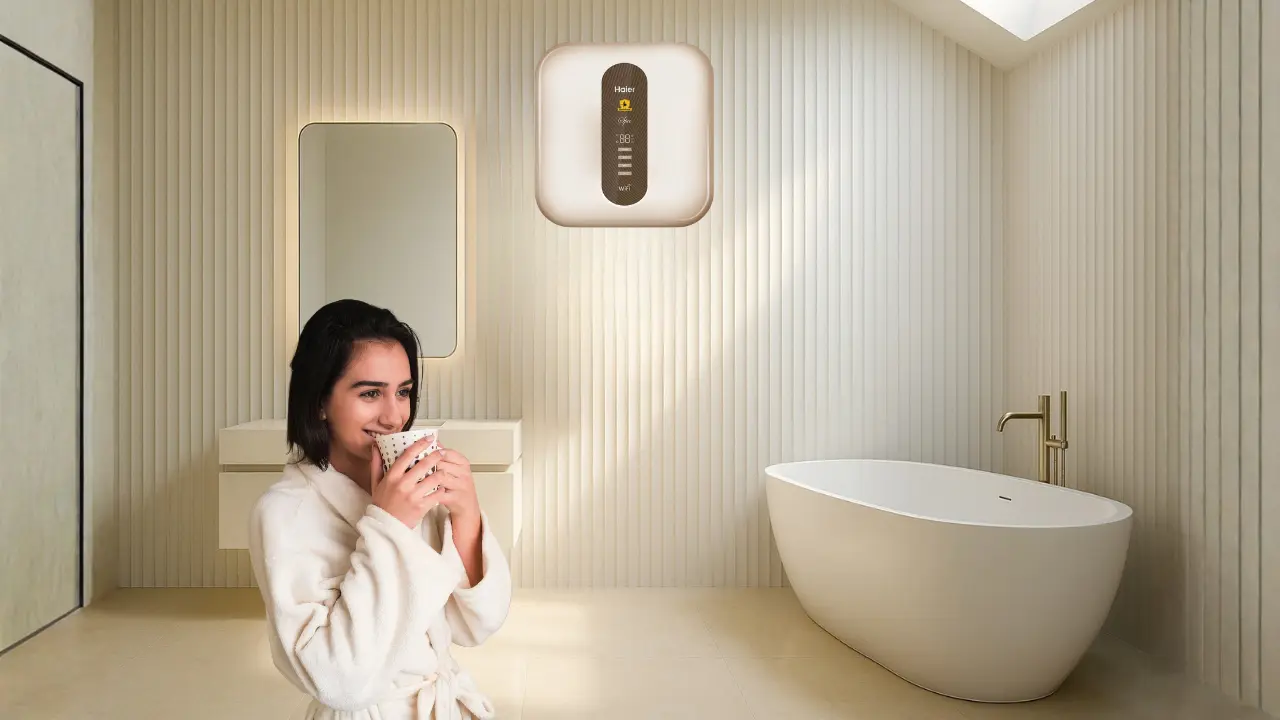

Hot water does more than make winter bearable. It shapes how the body resets, how the mind unwinds, and how a home feels at the end of a long day.
That is the real story behind water heating in Indian homes. Not luxury. Not indulgence. Wellness.
We think of hot water as a button. A switch. A small convenience in the morning rush.
But look closely and you notice something bigger.
Every bath is a ritual. Every warm bucket, a pause. Every winter shower, a reset.
This article explores that idea with a simple lens. If hot water has quietly become a wellness tool, what does that mean for how modern Indian homes use it? And how can smarter choices help families, couples, and solo-working millennials build routines that feel healthier and more balanced?
Let us start with what we already know but rarely say out loud.
Hot water is the first moment of stillness in an Indian morning
Think of the average weekday.
The alarm rings. The brain negotiates. The body resists.
Then a familiar decision forms.
Cold bath or warm water?
Most of us choose warmth without any debate.
Not for comfort but for function.
Warm water wakes the muscles.
Warm water softens the stiffness that comes from long hours at a desk.
Warm water resets the mood faster than coffee ever can.
This is not luxury. This is biology.
Muscle easing. Better circulation. Lower morning stress.
A warm shower gives the day structure. It sets the baseline.
Wellness begins here.
If warmth heals the body, consistency heals the routine
The biggest enemy of a winter morning is unpredictability.
No hot water. Slow heating. Sudden temperature dips. The familiar panic.
Wellness collapses when routine collapses.
That is why consistency matters more than temperature.
A stable flow. A reliable thermostat. A system that protects from voltage fluctuations and overheating.
These are not technical features. They are behavioural stabilisers.
When a heater uses Dual Thermal Proof systems to cut off overheating or when a Shock Proof mechanism converts unsafe voltage into safe voltage during leakage situations, as outlined in the Haier heater, it is not just engineering.
It is psychological reliability.
A predictable start to the day is a wellness practice.
Hot water is emotional regulation disguised as routine
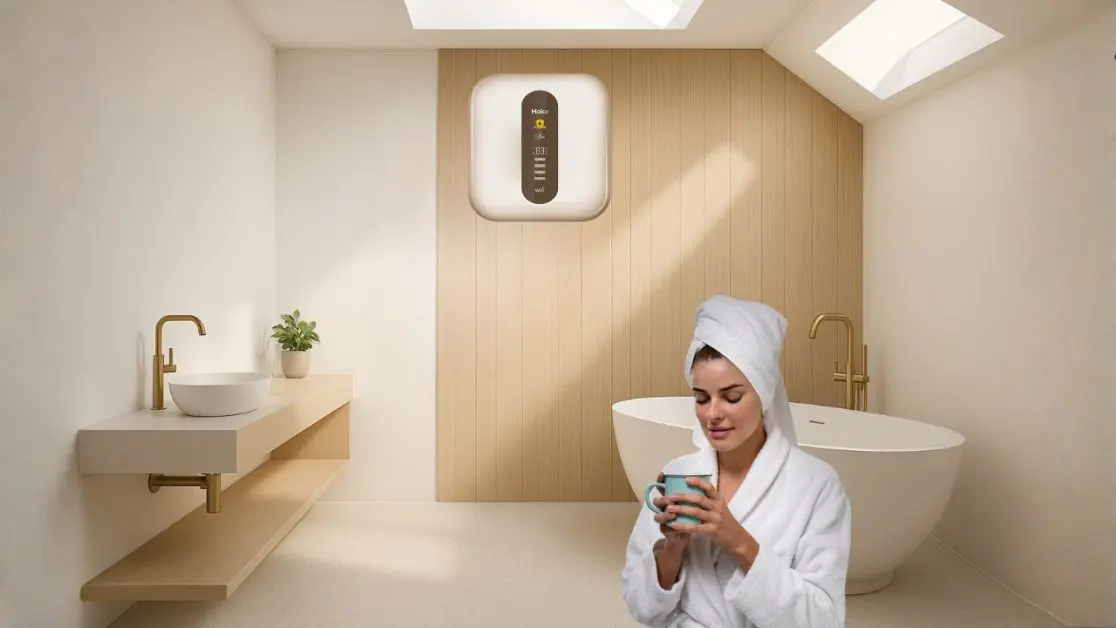
Look at Indian homes during the evening.
A child returns from tuition.
A parent returns from traffic.
A couple returns from a long shift.
What do they do?
They take a warm bath before dinner.
Not because they are dirty. Because they are tired.
Warm water does something quiet.
It lowers cortisol.
It slows the heart rate.
It signals the body that the outside world is over and the inside world has begun.
Families do not call it wellness.
But it is.
In fact, psychologists often discuss transitions.
The moments that separate work mode from home mode.
In Indian households, warm water is the transition.
The bath is the emotional doorway.
Wellness grows when water stays clean, safe, and fresh
There is another hidden layer to wellness.
Not temperature. Not pressure.
Purity.
Few people think about bacteria inside water tanks.
Stagnant water. Uncirculated storage.
These are invisible problems until they become visible.
That is why modern systems use circulation technologies and bacterial protection modes.
For example, the BPS (bacteria proof system) mode in Haier’s heater heats water to 80 degrees to deactivate bacteria.
The RSC technology keeps water flowing consistently instead of allowing stagnant pockets, also illustrated on the same
Wellness is not just what touches the skin.
It is also what you cannot see.
Freshness is wellness.
And cleaner water is healthier water.
The hidden link between comfort and energy efficiency
Here is a counterintuitive idea.
Hot water feels effortless only when energy is used well.
Because reheating cold water again and again creates waste.
And waste creates guilt.
And guilt, over time, creates friction in the home.
A well-insulated water heater reduces that friction.
PUF insulation retains heat longer, reducing reheating cycles.
Less power used. Less cost wasted. More comfort sustained.
This is shown clearly in the insulation section of the source document .
Energy efficiency is not just a number on the bill.
It is part of the rhythm of a home.
A heater that remembers your preferred temperature.
A timer that heats water just before you step in.
A system that works with your routine instead of forcing you to adjust to it.
This is how wellness becomes practical.
Why Indian winters make the case for hot water as self care
Winter changes behaviour.
We sleep differently.
We hydrate less.
We move slower.
We feel aches faster.
Hot water becomes a tool for recovery.
Three things hot water improves instantly
1. Muscle relief
Warm baths reduce stiffness in the neck, shoulders, and lower back.
2. Respiratory comfort
Steam from a warm bath helps open nasal passages during cold months.
3. Emotional recovery
Warmth signals safety. The brain softens. The mood settles.
These are not small gains.
In high stress urban life, they are essential.
Indian homes are evolving from function-first to wellness-first.
From survival to balance.
From routine to ritual.
And hot water is at the centre of this subtle shift.
What does wellness look like in a modern Indian bathroom?
A bathroom today is a personal spa.
Not in design but in purpose.
It is where the day begins.
Where the stress ends.
Where families reset.
Where individuals feel a sense of pause in a world that rarely slows.
So the water system inside that bathroom matters more than before.
Look at the choices available.
One option is safety first
A heater that protects from shocks, manages voltage, and prevents overheating.
Haier’s model includes a Shock Proof feature that converts unsafe voltage to safe voltage in leakage conditions, and a bi-capillary dual thermostat system for layered protection, shown in the safety.
The second option is purity
Bacterial protection mode. Circulation technology. Fresh water every time.
The third option is durability
Glass lined tanks, corrosion resistance, Incoloy 800 heating elements.
These extend lifespan and preserve performance
The fourth option is energy balance
Stable insulation. Smart timers. Power efficient operation.
When a home chooses the right combination, the bathroom stops being a utility space.
It becomes a healing space.
Hot water is where technology meets wellbeing
Most homes upgrade appliances for one of three reasons.
A growing family.
A new home.
A recurring inconvenience.
But wellness asks a different question.
Does this appliance support my body and mind every day?
A smart water heater silently answers yes.
It offers safety when voltage fluctuates.
It offers consistency when schedules fluctuate.
It offers cleaner water when seasons fluctuate.
Technology becomes wellness when it removes small daily stresses.
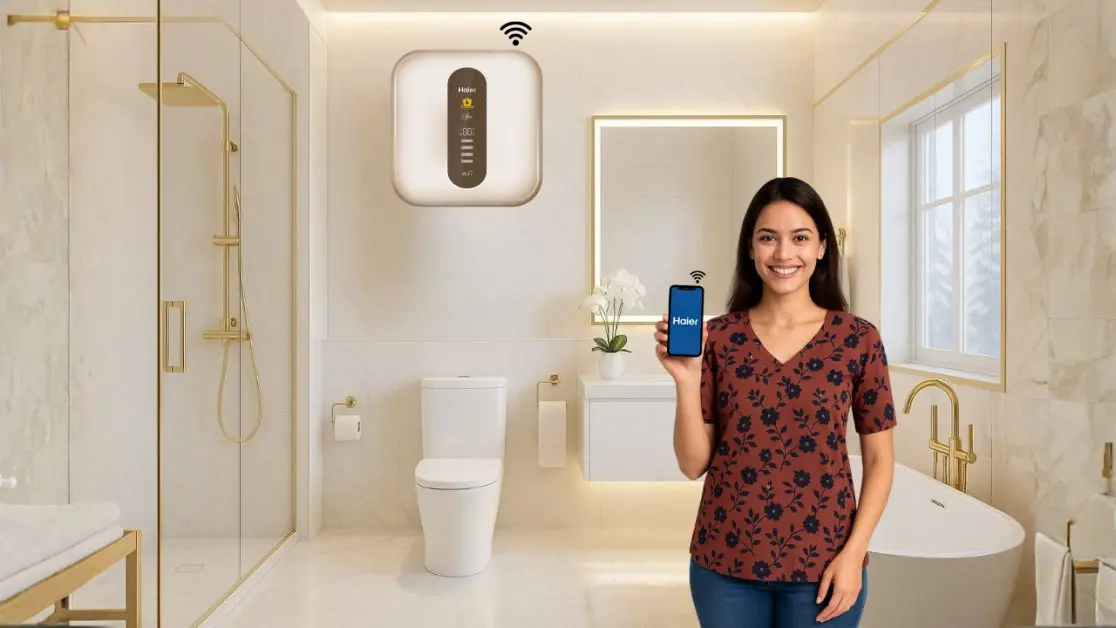
And Haier’s products often aim for exactly that. Whether it is the RSC flow technology ensuring smooth water flow or the IPX4 water resistance that keeps the system safe in wet conditions the goal is not to impress. It is to make life feel sorted.
Hot water is not comfortable. It is controlled.
Control over your morning.
Control over your energy use.
Control over your environment.
Control over how your day begins and how it ends.
Wellness is not found in big lifestyle changes.
It comes from small, repeatable habits that shape how you feel.
Hot water is one of those habits.
A few minutes of warmth.
A sense of pause.
A moment that belongs only to you.
In crowded cities, in busy homes, in relentless routines, this matters.
The final insight
A warm bath is not a luxury. It is a boundary.
Between stress and calm.
Between chaos and clarity.
Between the world outside and the world inside your home.
When technology supports that boundary, wellness becomes a daily practice.
And that is what the modern Indian household really needs.
Not more features.
More peace.
If a water heater can offer that, it is no longer an appliance.
It is part of the way we live well.