
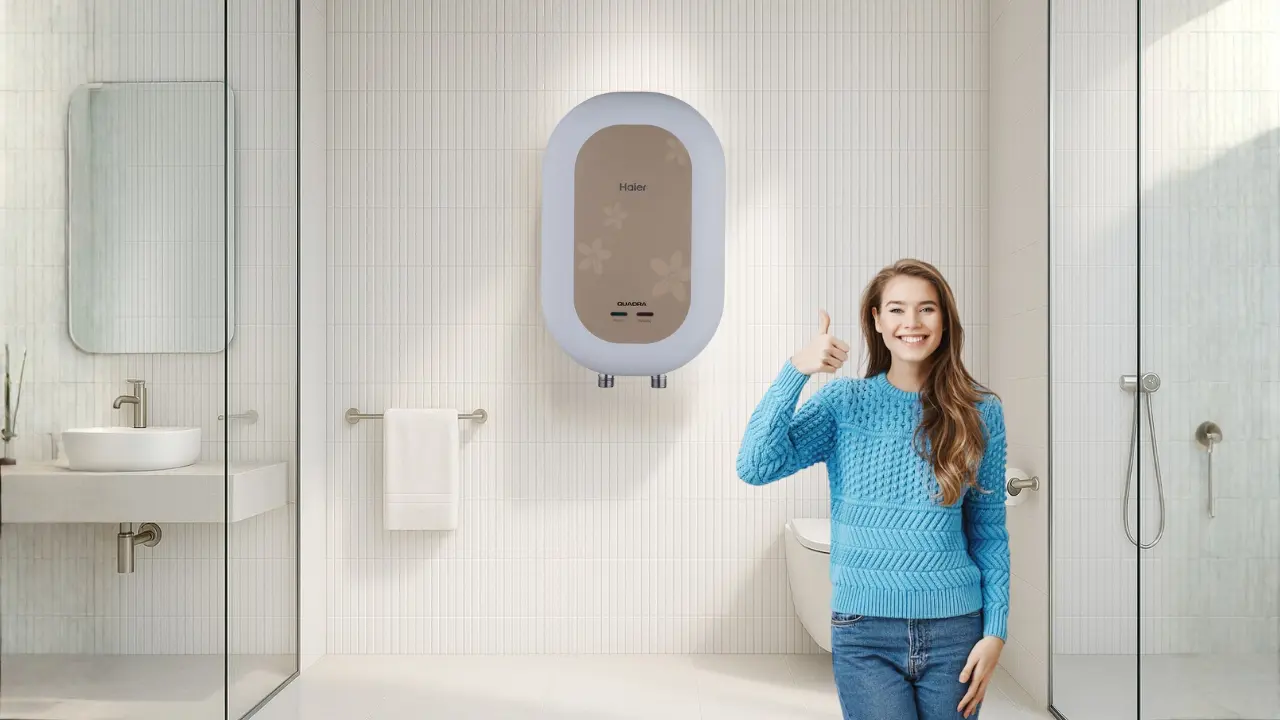

BPS Mode heats the stored water in your water heater to around 80°C to inhibit bacterial growth, giving you cleaner, fresher hot water during winter.
It works quietly in the background, refreshes the tank, and ensures every shower feels healthier when temperatures drop.
Winter has a way of changing how a home feels.
Nights stretch longer. Mornings slow down.
And suddenly, hot water becomes more than a comfort.
It becomes a ritual.
But winter also exposes something we rarely think about.
Not the heater on the wall
but the water inside it.
How long it sits.
How quickly it cools.
How quietly bacteria multiply when no one is looking.
This is why BPS Mode matters.
It solves a problem hidden behind bathroom tiles.
Why Winter Creates the Perfect Conditions for Tank Bacteria
The pattern shows up in almost every Indian home.
Mornings start late
We wake slower, we turn on the heater later, and stored water sits untouched for longer hours.
Bathrooms stay colder
Tiles absorb the chill.
Fixtures drop in temperature.
The tank cools faster than usual.
Water supply timings shift
In many cities, water arrives early morning or late evening.
Cold water fills the tank at its coldest moment.
These three forces create one outcome.
Stagnation.
And stagnation is where bacteria thrive.
Even if you cannot see them.
Even if the water looks clear.
The hidden system inside the heater is affected.
BPS Mode is designed for this exact moment.
The Core Insight: Heating Water Is Not the Same as Cleaning Water
Most people trust the heater blindly.
Turn it on.
Wait ten minutes.
Take a shower.
But regular heating warms the water only to bathing temperatures
forty, fifty, maybe sixty degrees.
Comfortable for us.
Comfortable for bacterial survival too.
The real disruption happens at higher temperatures.
That is the science BPS Mode uses.
So What Does BPS Mode Actually Do?
In simple terms:
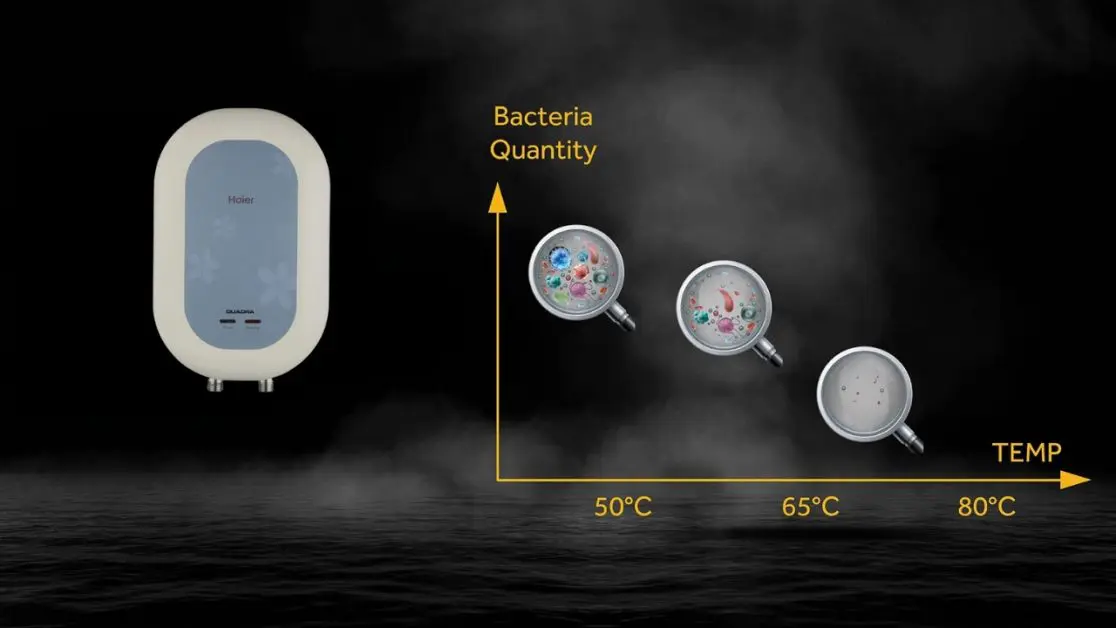
BPS Mode heats your stored water to around 80°C, inhibiting bacteria and giving the tank a deep clean cycle.
The water heater heats up the water at 80°C to inhibit the bacteria.”
Think of it as a hygiene reset button.
One cycle.
One high-heat pass.
One tank was refreshed.
It does not change your daily routine.
It simply restores the water’s quality from the inside.
Why the 80°C Threshold Matters in Real Homes
Eighty degrees has three advantages.
1. It neutralises common bacterial activity
Warm water at 40 to 60°C is not enough.
But 80°C disrupts the environment where bacteria hold on.
2. It sanitises the tank itself
Residue, settlement, stagnation pockets, and micro-impurities all lose stability at this temperature.
3. It improves morning water performance
A tank reset at night means faster, more consistent heating in the morning.
A Household Example: The Four-Shower Winter Morning
Imagine a home in Delhi or Jaipur.
The family of four wakes up.
The first shower feels perfect.
Second is okay.
By the third, water feels flatter.
By the fourth, even hotter settings feel inconsistent.
Why?
Because stored water quality matters as much as temperature.
And winter worsens the gap.
But with a BPS cycle run overnight:
- The tank starts the day fresh.
- Heating feels smoother.
- Temperature holds better.
- Everyone gets consistent hot water.
This is not a luxury.
It is a small system running reliably so your morning doesn’t fall apart.
The Hidden Trio: Why BPS Mode Works Better on New-Age Heaters

BPS Mode is only one part of the ecosystem.
It works best when the heater supports it through three invisible structures.
1. U-Turn Flow or RSC Technology
RSC (U-turn Flow) Technology, which prevents stagnant water deposition and keeps water moving inside the tank.
Movement disturbs bacterial settlement.
2. Durable tank structure
A glass-lined tank protects the interior surface from corrosion, improving hygiene and keeping the tank stable longer.
3. High-quality heating element
An Incology 800 stainless steel heating element ensures consistent high-temperature performance during BPS cycles.
It is the combination of all three
Heat
Movement
Protection
that keeps water healthier in winter.
This is a systems problem.
Solved through systems thinking.
When Should You Use BPS Mode? A Simple Framework
Different homes have different rhythms.
Here is a clear way to decide your frequency.
1. Weekly BPS Mode
Good for most households.
- Two to four members
- Regular water usage
- Moderate winter chill
- Faster weekday mornings
Weekly cycles keep the tank clean without changing your routine.
2. Every Alternate Day
Useful when:
- Water sits in the tank for long hours
- The heater is placed in a cold utility area
- You use the heater mainly at night
Alternate cycles prevent slow buildup.
3. Daily During Harsh Winters
Ideal for:
- Delhi, Punjab, Haryana, Himachal, Uttarakhand
- Temperatures below ten degrees
- Families with back-to-back morning showers
Daily cycles ensure no stagnation window forms.
Each option has one goal.
Keep the water you touch every day fresh.
Cost vs Benefit: Does BPS Mode Use More Electricity?
Yes, the cycle heats water to a higher temperature.
But the bigger picture works differently.
Here’s why:
1. Cleaner tanks heat faster
Less residue.
Less load.
More efficient heat transfer.
2. Better insulation reduces reheating
Haier uses PUF insulation to retain heat for long hours and reduce reheating cycles.
3. One reset saves multiple micro-cycles
A single 80°C cycle at night prevents repeated small reheats during the day.
4. Winter temperature drop increases energy anyway
Using BPS Mode prevents energy wastage caused by dirty or cooled water.
In practice, BPS saves more energy than it consumes.
Because efficiency always wins over stagnation.
A Simple Comparison
| Feature | Standard Heating | BPS Mode |
| Temperature | 40 to 60°C | Around 80°C |
| Tank hygiene | Moderate | Strong |
| Water freshness | Average | High |
| Winter performance | Good | Excellent |
| Energy efficiency | Normal | Higher long-term |
| Best season | Everyday | Peak winter |
The difference becomes clear the moment winter deepens.
A Closer Look at Haier’s BPS Ecosystem
Haier’s water heaters include a full hygiene system that supports BPS Mode:
- Bacteria Proof System for 80°C sterilisation cycles
- RSC U-Turn Flow Technology for continuous water circulation inside the tank
- Glass-lined tank for corrosion resistance and stability
- Incology 800 heating element for long life and steady high-heat performance
- PUF insulation for heat retention and lower electricity use
- Dual thermostat protection for safe cut-off during overheating
These are not decorative features.
They are the unseen guardrails that make BPS Mode effective in real Indian conditions.
Why BPS Mode Feels Made for Indian Households
Three patterns define Indian winters.
1. Uneven morning schedules
Some wake at 5.
Some at 8.
Some bathe in the evening.
BPS Mode creates consistency across all of them.
2. Multi-person usage
A single tank serves multiple showers.
Hygiene consistency matters.
3. Water hardness in many cities
Hard water accelerates scaling.
Scaling affects heating and flow.
And BPS Mode becomes a powerful counterbalance.
BPS Mode is not a luxury feature.
It is a practical win for everyday Indian life.
How BPS Mode Changes the Winter Routine
- The first shower feels fresh
- The last shower doesn’t feel flat
- The tank runs cleaner
- Heating becomes smoother
- Electricity use goes down over time
- Water quality improves silently
Winter demands more from every appliance
because winter slows everything down.
BPS Mode is the heater’s way of keeping pace.
The Larger Principle: Clean Systems Outperform Heated Systems
Everyone talks about hot water.
Only a few talk about healthy hot water.
The distinction becomes clearer as winters deepen.
Heat comforts.
Cleanliness protects.
A good water heater does both.
And a smart water heater knows when to do what.
Final Thought
Home appliances rarely announce the work they do.
They simply make life feel easier.
BPS Mode is one of those quiet features that does not ask for attention.
It asks for trust.
It is not there for the days you remember it.
It is there for the days you don’t.
And that is the true test of a winter-ready home.