
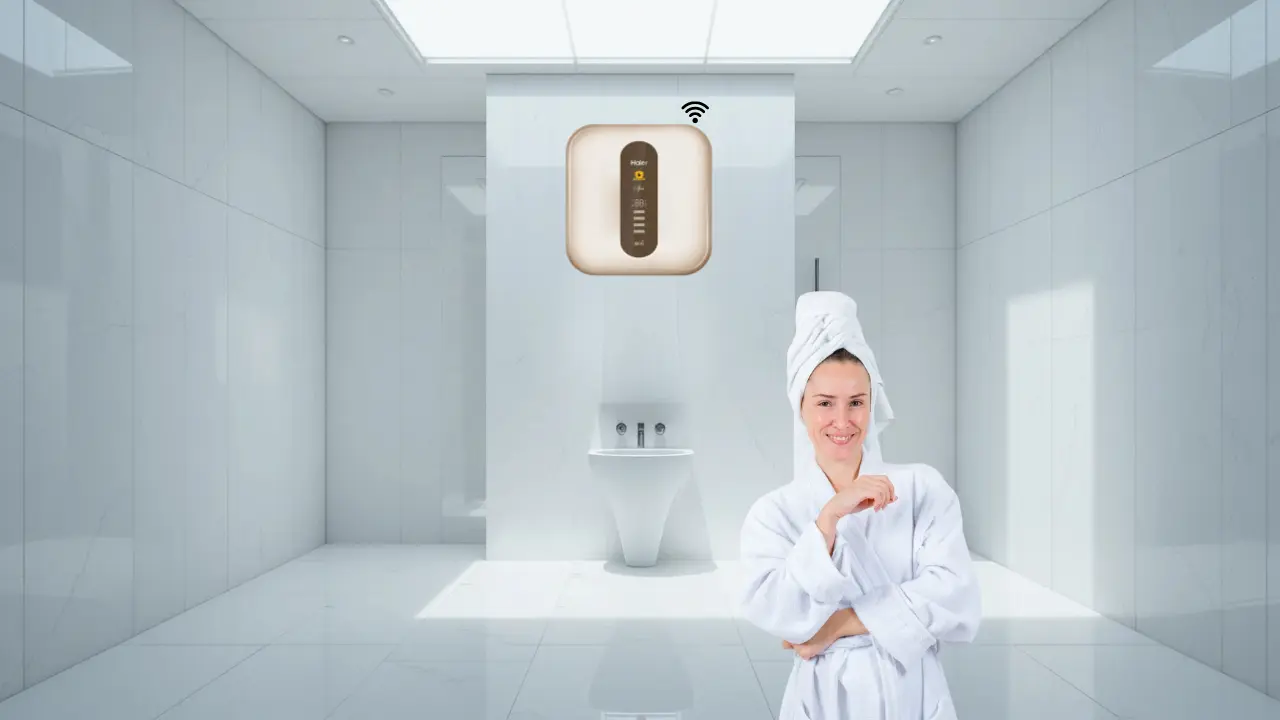

A smart timer for morning showers works by preheating your water automatically at a set time, so your geyser warms up only when your day begins, saving power and giving you ready hot water without waiting.
Why a smart timer matters more than we think
Morning routines decide the tone of the entire day.
A rushed start multiplies stress. A smooth one unlocks calm.
Hot water plays a quiet but powerful role in that equation. Not because we talk about it, but because we feel it.
The warmth that loosens stiff shoulders. The comfort that wakes us gently. The predictability we need when mornings are already crowded with to-do lists, school tiffins, breakfast plans and quick WhatsApp check-ins.
So the question becomes simple.
How do we make something as basic as a morning shower feel sorted without thinking about it?
A smart timer is one answer.
A small feature that rewires an entire routine.
And in Indian homes where schedules vary, power bills matter and winters catch us unprepared, the value of an automatic preheat system becomes even clearer.
This is the invisible system behind smarter mornings.
What a smart timer actually does
Strip away the tech language and a smart timer does three things.
1. It warms water before you wake up.
2. It switches off when the cycle ends.
3. It removes guesswork from your mornings.
Think of it like setting an alarm, but for hot water.
Your geyser becomes the one family member who wakes up early without complaining.
In Haier’s ES15V SD WiFi water heater, the smart timer works with smart memory, remote control and voltage fluctuation protection. But the real benefit is psychological. You stop waiting, checking, hoping. Hot water becomes a guarantee, not a gamble.
That subtle shift changes how mornings feel.
The real-world situations where a smart timer shines
Concrete examples teach better than concepts, so let’s start there.
1. The 7.30 am office scramble
You wake up at 6.45.
You need to shower at 7.
Your geyser needs ten to fifteen minutes to heat on a cold January morning.
You switch it on. You wait.
You check the mirror. You check the water.
You wait again.
A smart timer flips the sequence.
Set it for 6.40 pm.
Wake up at 6.45.
Shower ready at 7.
No waiting. No extra power usage.
2. The slow-moving winter sunrise
North Indian winters are unpredictable.
Some mornings feel pleasant, others cut through layers.
This is where a smart timer saves both electricity and patience.
Instead of leaving the geyser on for long durations, you schedule a single, precise heating cycle. The ES15V SD WiFi unit’s PUF insulation keeps the water warm, so you do not reheat unnecessarily.
3. The shared bathroom puzzle
In many households, mornings resemble a queue system.
Parents, kids, grandparents, everyone rotating through a single bathroom.
A smart timer gives structure to that flow.
You schedule a heating cycle before the first person enters.
The rest of the family follows without reheating.
A simple system.
A surprisingly big impact.
How smart timers work inside modern water heaters
There are three invisible layers.
Layer 1: Predictable heating
The heater starts warming at the time you choose.
No manual intervention needed.
Layer 2: Consistent temperature
Smart thermostats maintain the level you prefer.
There is no overheating or random drops.
Layer 3: Safe cutoff
Once the water reaches the set temperature, the system powers off.
This saves energy and prevents overheating.
In Haier’s ES15V SD WiFi unit, dual thermal protection handles both early cutoff and backup cutoff. This gives you safety without needing to think about it.
Smart systems work best when you barely notice them.
That is the point.
Setting up your smart timer step by step
This is where readers usually expect jargon.
Let us keep it real and simple.
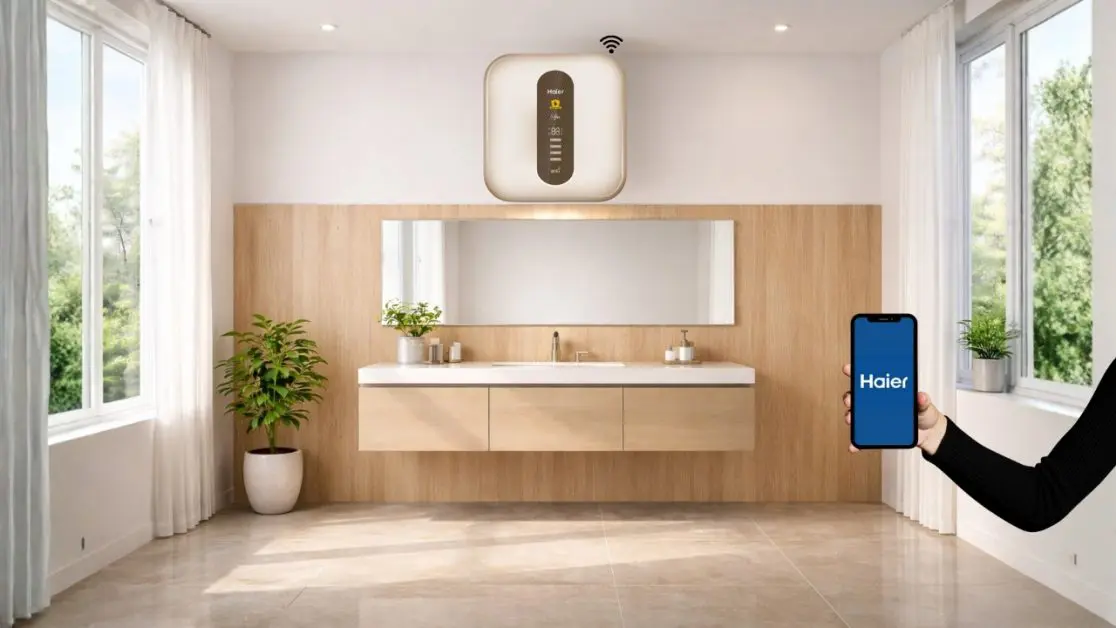
Step 1: Connect to WiFi
Open the Haier Smart Home app and link your water heater.
It behaves like any other smart appliance.
Quick pairing. Instant recognition.
Step 2: Choose your preferred hot water time
Select when you want your water ready.
Not when you want the heating to start.
For example:
If you shower at 7, set your timer for 7.
The system calculates the heating time automatically.
Step 3: Save your schedule
Tap confirm.
Your heater now remembers this pattern.
Thanks to Smart Memory, even daily routines are learned over time.
Step 4: Forget about it
This is the beauty.
Once set, the routine runs quietly in the background.
You adapt once. The system adapts forever.
Smart timer vs manual heating: the cost difference
A clear cost-benefit comparison helps readers think clearly.
| Factor | Manual Heating | Smart Timer Heating |
| Electricity Use | Higher due to overuse | Lower due to precise cycles |
| Stress | You wait for heating | Water is preheated |
| Predictability | Depends on weather | Always consistent |
| Convenience | Requires manual switch | Fully automated |
| Winter Efficiency | Inconsistent | Optimised heating pattern |
The difference is not theoretical. It is felt daily.
Why this matters for Indian households
Three patterns define our mornings.
1. Time is fragmented, not free
Most Indian mornings are a mix of overlapping routines.
Kids waking up. Breakfast ideas forming. Parents stepping out early.
A geyser that heats on time brings structure you can trust.
2. Power bills matter
Short, precise heating cycles save electricity.
Simple logic. Real impact.
3. Comfort is not a luxury
Hot water is a basic comfort.
And comfort affects mood, mindset and productivity.
A better morning is not an upgrade.
It is a foundation.
Where the Haier ES15V SD WiFi water heater fits naturally
No hard sell.
Just a moment to connect the dots.
The ES15V SD WiFi model stands out because it combines three systems that work well together.
1. Smart Timer for scheduled heating.
2. Smart Memory that learns your routines.
3. Superior insulation that keeps water warm without reheating.
Add the IPX4 water protection, 8 bar rated pressure for high-rise buildings, Incoloy heating element, antibacterial mode and remote operation.
The result is a heater built for real Indian families, not ideal conditions.
It is not about features.
It is about how those features reduce friction in daily life.
How to choose the right smart timer routine for your home
You do this by answering one question.
When does your home wake up?
From there, you pick the right system.
One option is the Early Bird Routine
Ideal for working professionals who shower before sunrise.
Set the timer 15 minutes before waking.
Minimal heating. Maximum comfort.
The second option is the Family Wave Routine
Heating starts just before the first person enters.
PUF insulation keeps water warm for the rest.
Predictable. Efficient. Smooth.
The third option is the Weekend Flow
Weekend mornings move slower.
Schedules change.
Use the remote control to heat only when needed.
Three routines.
Three ways to bring order to unpredictable mornings.
The bigger picture: what a smart timer teaches us
Hidden inside this tiny feature is a universal insight.
Systems create calm.
We think we need more time or more discipline, but what we truly need are better systems that run without our attention.
A smart timer is one such system.
A small automation that helps mornings feel lighter, cleaner and more intentional.
It shows us that comfort is not created by grand gestures.
It is created by consistent patterns that work quietly.
And in a country where winters vary, schedules stretch and homes evolve, a smart water heater is not just a device.
It becomes part of the rhythm of the house.
Final thought
If mornings decide the day, then the smart timer decides the morning.
It turns a daily task into a predictable comfort.
It saves power without demanding effort.
And it gives Indian homes exactly what they crave.
Ease.
Warmth.
Reliability.
Haier simply gives that idea a shape.