
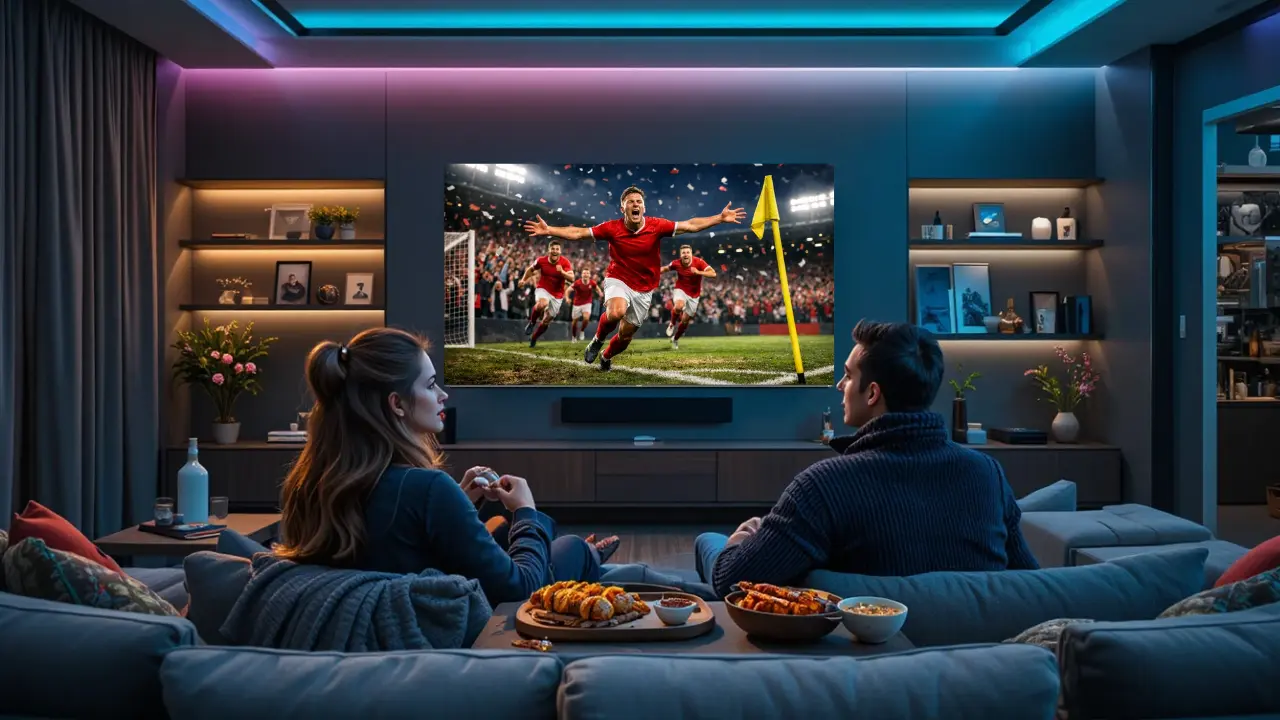

January football nights work best when three things align. The match matters. The food is effortless. And the living room quietly does its job.
This is the simple system behind great winter evenings at home. When screens feel immersive, kebabs cook evenly, and nobody is stuck managing chaos, the night flows. Football on screen. Kebabs on the plate. January, sorted.
Why January football feels different at home
Cold changes behaviour.
People come home earlier. Plans shrink. The sofa becomes a destination.
January football nights are not about loud house parties anymore. They are about controlled comfort. A warm room. A full plate. A match that pulls everyone in without trying too hard.
Data backs this shift. Winter months consistently see higher evening TV consumption in India, especially for live sports and prime time viewing. When the temperature drops, attention moves indoors.
Football fits this mood perfectly.
The hidden system behind a good football night
Most people think a football night fails because the team loses.
That is rarely the reason.
Football nights fail because the system breaks.
- Food arrives late
- Snacks cool too fast
- The screen feels dull
- Sound forces subtitles
- Someone is stuck in the kitchen
Great nights are engineered quietly.
They remove friction.
When the system works, nobody notices it. They only remember the match.
Food that matches football rhythm
Football is uneven.
Bursts of action. Sudden pauses. Long stretches of tension.
Your food has to respect that rhythm.
Kebabs work because they behave like the game.
- They stay hot longer than chips
- They can be eaten in seconds
- They do not require plates or forks
They keep attention on the screen.
Why kebabs dominate January match nights
There are practical reasons kebabs take over winter football menus in Indian homes.
- Protein-heavy snacks keep you full longer
- Warm spices suit cold evenings
- Small portions reduce distraction
And then there is the cultural layer.
Kebabs feel indulgent without being festive. They sit comfortably between everyday dinner and party food.
Perfect match-night food.
One kitchen. Three match-night food strategies

Every household approaches match night differently.
Patterns still emerge.
One option is the prep-ahead home
This household plans.
- Kebabs marinated in the morning
- Stored through the day
- Cooked just before kickoff
The benefit is flavour control.
The cost is planning time.
Stable refrigeration matters here. When ingredients are stored consistently, flavours develop without spoilage.
The second option is the just-in-time home
This is the most common setup.
- Work runs late
- Prep starts minutes before kickoff
- Cooking needs to be fast and forgiving
Even heat distribution matters most here. Appliances that circulate hot air properly reduce flipping, checking, and anxiety.
The third option is the zero-effort home
This is the practical household.
- Frozen kebabs
- Minimal prep
- Maximum convenience
In this setup, uniform heating is everything. Nobody wants burnt edges and cold centres during stoppage time.
Each option works.
The difference is the system supporting it.
Why even cooking matters more than recipes
Most kebab recipes are simple.
Inconsistency ruins them.
Uneven heat breaks attention. Someone stands up. Someone checks the food. The match loses grip.
This is where modern cooking systems quietly help. Preset menus and consistent hot air circulation remove micro-decisions. Kebabs cook evenly. Timings become predictable.
Predictability is the real luxury on match night.
The screen is not about size. It is about immersion
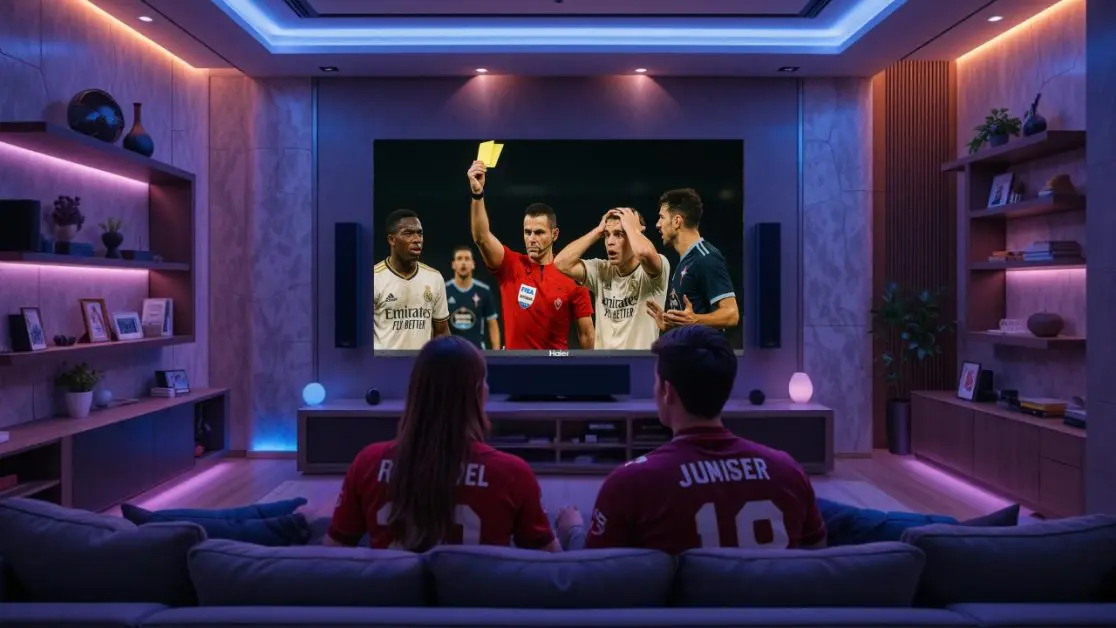
People talk about screen size.
They rarely talk about absorption.
Football demands peripheral engagement. You glance away. You return instantly. The screen must hold context without effort.
This is where Mini LED technology shows its value in real homes.
Take Haier’s Mini LED M80 series as an example.
- H55M80FUX works well for compact living rooms where lighting stays on and viewing distances are shorter
- H65M80FUX fits the classic family living room where parents, kids, and guests watch together
- H75M80FUX suits larger spaces where football becomes a shared event
- H85M80FUX turns open living areas into true stadium-style viewing zones
Across sizes, the benefit remains consistent.
- Better contrast keeps the pitch visible under warm lighting
- Local dimming preserves detail during night matches
- Motion handling keeps fast transitions readable
In winter, when lights stay on and curtains stay closed, this matters more than peak brightness numbers.
Sound decides who stays in the room
Sound is the first thing households compromise on.
It is also the first thing they regret.
Football audio is layered.
Crowd noise. Commentary. Whistles. The ball striking the boot.
When sound lacks clarity, people strain. When it feels balanced, they relax.
Systems tuned with dedicated audio engineering change behaviour subtly. Commentary stays clear. Crowd noise wraps the room instead of bouncing randomly.
Nobody comments on it.
Nobody leaves either.
Energy habits shift in January
Winter evenings run longer.
TVs stay on. Kitchens stay active. Power usage increases.
Indian households become more conscious of energy consumption during this season. Features like energy-saving modes and efficient standby consumption matter quietly here.
When appliances manage power without reminders, people stop thinking about it.
Mental energy matters as much as electrical energy.
The living room becomes neutral territory
January football nights bring mixed audiences.
Parents. Kids. Friends. Roommates.
The living room becomes a shared space.
That changes expectations.
- Remotes must be intuitive
- Voice controls reduce interruptions
- Interfaces should feel familiar
Platforms like Google TV reduce friction by shortening the distance between intention and action. Content appears faster. Inputs feel natural.
Less negotiation. More watching.
A simple January match-night framework
Great nights do not need upgrades. They need alignment.
Before kickoff
- Food ready or scheduled
- Screen adjusted to room lighting
- Volume set for conversation
During the match
- Food that stays warm
- No kitchen runs
- No setting changes
After the final whistle
- Easy cleanup
- Leftovers stored
- No lingering fatigue
If two stages work, the night works.
If all three work, the night becomes a habit.
Why these nights matter

Football nights are not really about football.
They are about permission.
Permission to pause.
Permission to gather.
Permission to do nothing else.
January intensifies this need. The year feels heavy. Decisions pile up. Energy runs low.
Simple systems create breathing room.
That is why appliances that fade into the background matter more than flashy features. They allow people to be present.
The larger pattern
Homes are becoming experience hubs.
Work moved in. Entertainment followed. Cooking adapted.
The future of living is not about owning more things. It is about managing moments better.
Football nights and kebabs are not trivial examples. They reveal a pattern.
When systems work quietly, people relax fully.
One thought to carry forward
A good January football night is not built during the match.
It is built by decisions made earlier.
What you simplify decides what you enjoy.
What you enjoy becomes what you repeat.
And repetition is how rituals are formed.
That is how homes start feeling lighter, warmer, and more intentional again.