
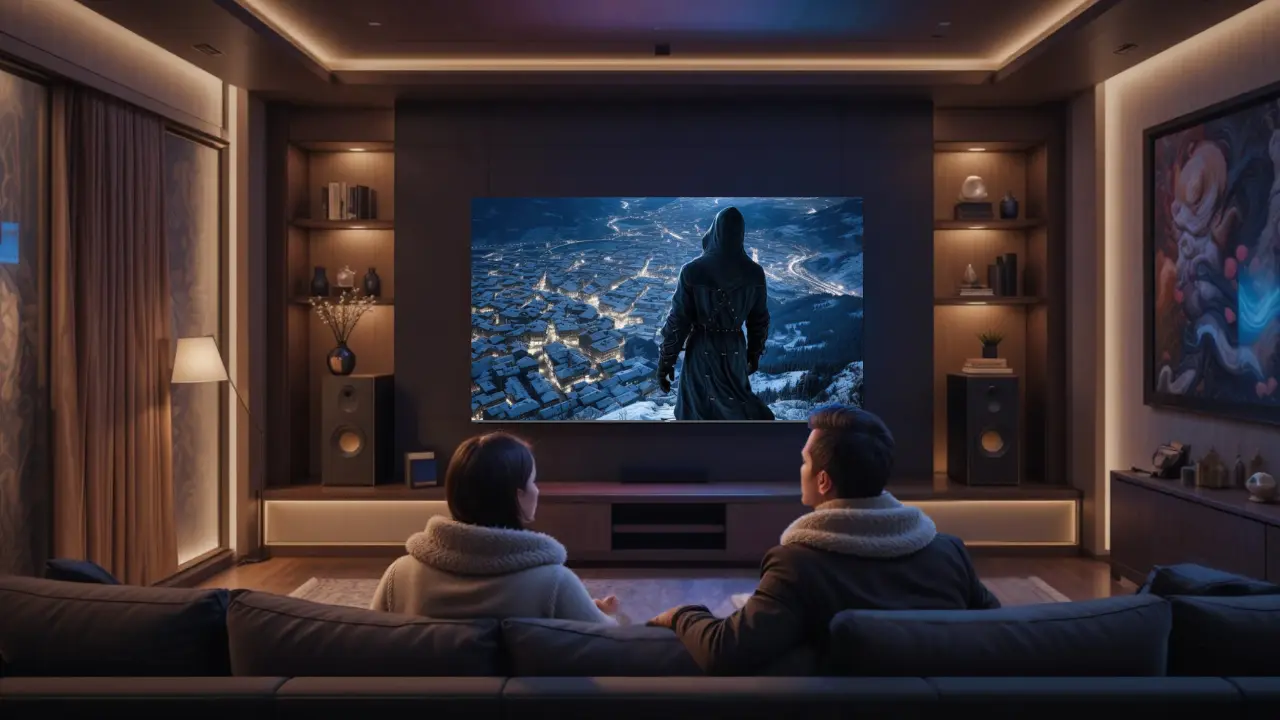

Cinematic viewing at home is no longer about copying a movie hall. It is about control.
Control over timing, comfort, sound, light, and the small rituals that make watching something feel personal. In modern Indian homes, the cinema experience is no longer outside. It quietly lives inside the living room.
This shift is not accidental. It is cultural. And it is deeply practical.
The moment everyone recognises
It is Friday night.
Dinner is done. Plates are stacked. Someone brings out a bowl of popcorn that was not meant to be shared but will be.
The lights dim. Not fully. Just enough.
And for the next two hours, the house agrees on one thing.
This matters.
That moment used to belong to multiplexes. Now, it belongs to homes that are designed for it.
Why cinematic viewing moved home
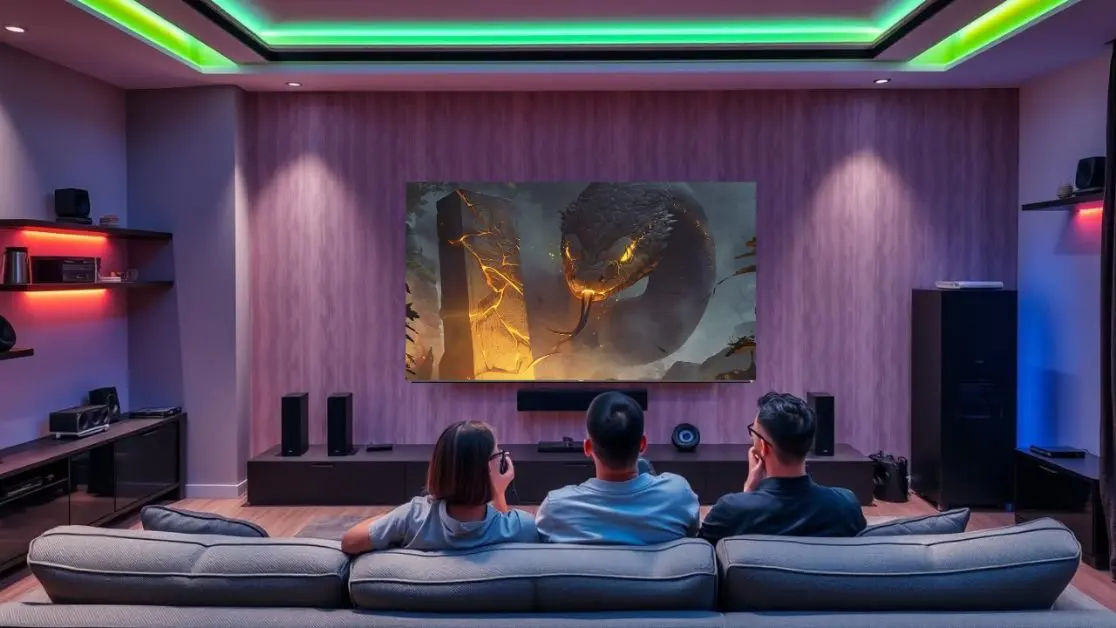
Cinemas did not disappear. Life just changed.
Commutes grew longer. Schedules became unpredictable. Weekends became precious. Parents wanted flexibility. Young professionals wanted privacy. Couples wanted comfort.
So the system adapted.
Streaming platforms brought content home. But content alone never creates cinema.
Experience does.
Cinema is a system, not a screen
Most people think cinematic viewing starts and ends with screen size.
That is incomplete thinking.
Cinema is a system made of four elements that must work together.
- Visual scale
- Picture accuracy
- Sound presence
- Environmental control
When one fails, the illusion breaks.
When all align, the room disappears.
The visual side of immersion
Big screens do not impress because they are big.
They work because they reduce distraction.
When the screen fills your field of vision, your brain stops scanning the room. It focuses forward. Just like a theatre.
This is why screen size matters, especially in Indian living rooms where seating distances are often closer than global averages.
Resolution matters less than consistency
Here is the counterintuitive truth.
Most viewers cannot articulate resolution differences. But they instantly feel inconsistency.
Uneven brightness. Washed-out blacks. Over-sharpened faces.
These pull you out of the story.
Technologies like Mini LED and local dimming exist for one reason only. To keep contrast stable across scenes.
Dark scenes stay detailed. Bright scenes stay controlled. The image stops reminding you that it is a screen.
Sound is half the movie

Cinema sound does not shout.
It surrounds me.
Good sound design does not draw attention to speakers. It places you inside space. Rain feels distant. Footsteps feel close. Dialog stays clear even when music rises.
This is why integrated audio systems matter more than external volume.
Sound should arrive where the story needs it. Not where the hardware sits.
Why built-in audio has changed
Older TVs assumed external sound systems would do the heavy lifting.
Modern homes do not want clutter.
This pushed TV audio forward. Multi-channel systems. Dedicated woofers. Spatial tuning.
When sound is designed with the display, alignment improves. Timing tightens. Voices anchor to faces.
You stop adjusting volume. You stop fiddling.
You start watching.
The environment completes the illusion
Cinema happens in controlled environments for a reason.
Light direction. Seating height. Viewing angles.
At home, these variables change. Which means the TV has to adapt.
Modern displays now adjust picture settings dynamically based on content type and brightness levels. Sports look different from films. Animation behaves differently from drama.
This automation removes friction.
Cinema should not require settings menus.
Three home cinema setups people actually use
Not everyone wants the same experience. And that is the point.
One option is the family setup.
Large screen. Balanced brightness. Clear dialog. Perfect for weekend movies and cricket nights.
The second option is the solo unwind setup.
Moderate lighting. Focused sound. Comfortable seating. Ideal for late-night shows and gaming.
The third option is the social setup.
Wide viewing angles. High brightness. Strong bass presence. Built for friends, match nights, and shared reactions.
Good systems flex across all three without demanding adjustments.
Why smart platforms matter
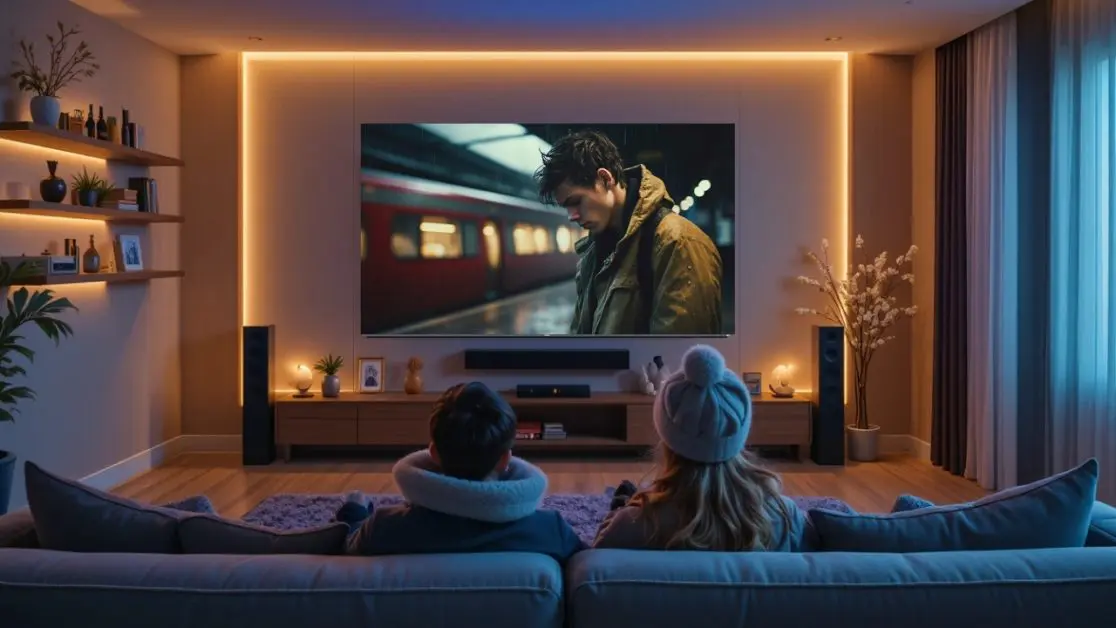
Cinema is not only about playback.
It is about discovery.
Scrolling endlessly breaks momentum. Confusion kills mood.
Smart TV platforms now curate content based on habits, not noise. They remember preferences. They reduce friction between intention and action.
When the system understands what kind of night it is, it gets out of the way.
That is real intelligence.
Energy efficiency is part of the experience
Here is something rarely discussed.
True comfort includes peace of mind.
Large screens used to imply large power bills. That assumption no longer holds.
Modern panels are more efficient. Smart power management reduces consumption during static scenes. Standby power usage is minimal.
Cinematic viewing should feel indulgent, not wasteful.
A quick reality check
Cinema at home does not need perfection.
It needs reliability.
When systems behave predictably, rituals form. Friday nights become consistent. Sunday afternoons feel earned.
That is when homes turn into experiences.
Where Haier fits into this story
Haier has quietly leaned into this shift.
Not by shouting about specs. But by integrating them.
Large-format displays. Balanced picture processing. Sound systems tuned for rooms, not labs.
A good example is the M80F Mini LED 215cm Google TV with Sound by KEF, which combines Mini LED contrast, Dolby Vision, Dolby Atmos, and a 2.1 channel 50W audio system designed for spacious living rooms. It supports smoother motion for sports and hands-free voice control, reducing friction during everyday use
What matters is not the model name.
What matters is philosophy.
Technology that fades into routine.
The hidden system at work
Cinema works when effort disappears.
When no one argues about brightness.
When volume stays steady.
When the screen adapts faster than the room changes.
This is not about indulgence.
It is about alignment.
The real upgrade is emotional
People do not remember specifications.
They remember moments.
The gasp during a goal. The silence during a scene. The shared laugh that arrives late but lands perfectly.
Cinematic viewing at home works because it respects time, comfort, and control.
It turns watching into belonging.
What this means for modern homes
Homes are no longer passive spaces.
They respond. They adjust. They support routines.
Cinema at home is not a luxury trend. It is a lifestyle correction.
A recognition that some of the best experiences are quieter, closer, and more intentional.
One final thought
Great cinema does not demand attention.
It earns it.
And when your home gets that right, you stop going out to be entertained.
You stay in. And feel complete.