


Multi-channel audio sounds more real than stereo because it mirrors how human hearing actually works. Real life does not arrive from two fixed points.
Sound comes from all directions, at different distances, with depth, height, and movement. Multi-channel audio recreates that natural sound field. Stereo flattens it.
Everything else flows from this truth.
It usually starts with a familiar moment
It is 9:30 pm.
Dinner is done. The house finally quiets down.
You sit on the sofa and press play.
The picture looks sharp. Colours pop.
But something feels off.
The voices feel stuck to the screen.
The crowd noise sounds pasted on.
Explosions feel loud, not alive.
This is not a volume problem.
It is a space problem.
And space is exactly where the stereo runs out of road.
Stereo was built for a different world
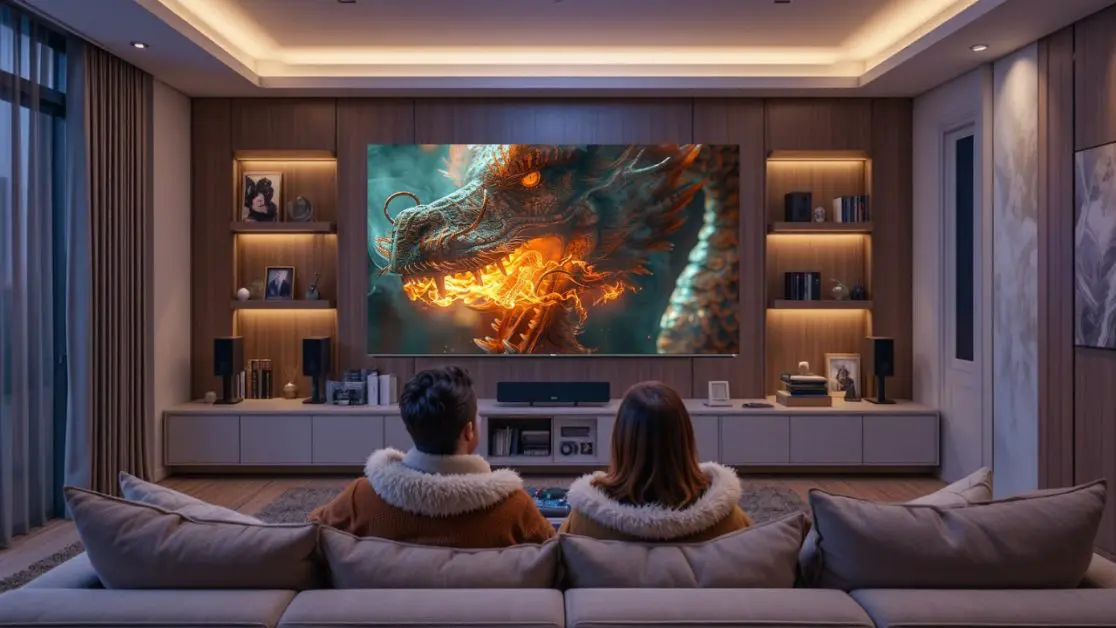
Stereo audio is simple by design.
Two channels.
Left speaker. Right speaker.
That was revolutionary once. Vinyl players. Radio sets. Early televisions.
Stereo gave sound width when mono had none.
But stereo has a hard limit.
It can only place sound between two points.
Everything happens on a flat line.
Voices, music, effects all compete for the same horizontal space.
Your brain fills the gaps. It works harder than you realise.
Stereo asks the listener to imagine depth.
Multi-channel creates it.
How human hearing actually works
Close your eyes for a moment.
You can tell if a sound is:
- In front of you
- Behind you
- Above you
- Approaching
- Moving away
You do not think about it.
Your brain calculates it instantly.
It uses:
- Timing differences between ears
- Volume differences
- Reflections from walls and ceilings
- Changes in frequency as sound moves
This is called spatial hearing.
Stereo ignores most of it.
Multi-channel audio is built around it.
What multi-channel audio really means
Multi-channel audio is not about being louder.
It is about placement.
Instead of two sound sources, audio is split across multiple channels:
- Front left
- Front right
- Centre
- Side surrounds
- Rear surrounds
- Height channels
- A dedicated low-frequency channel for bass
Each channel has a job.
This separation allows sound to exist around you, not just in front of you.
A voice can stay locked to a character.
Rain can fall above.
A car can pass from left to right.
Crowd noise can wrap the room.
Sound becomes a scene, not a layer.
The centre channel changes everything
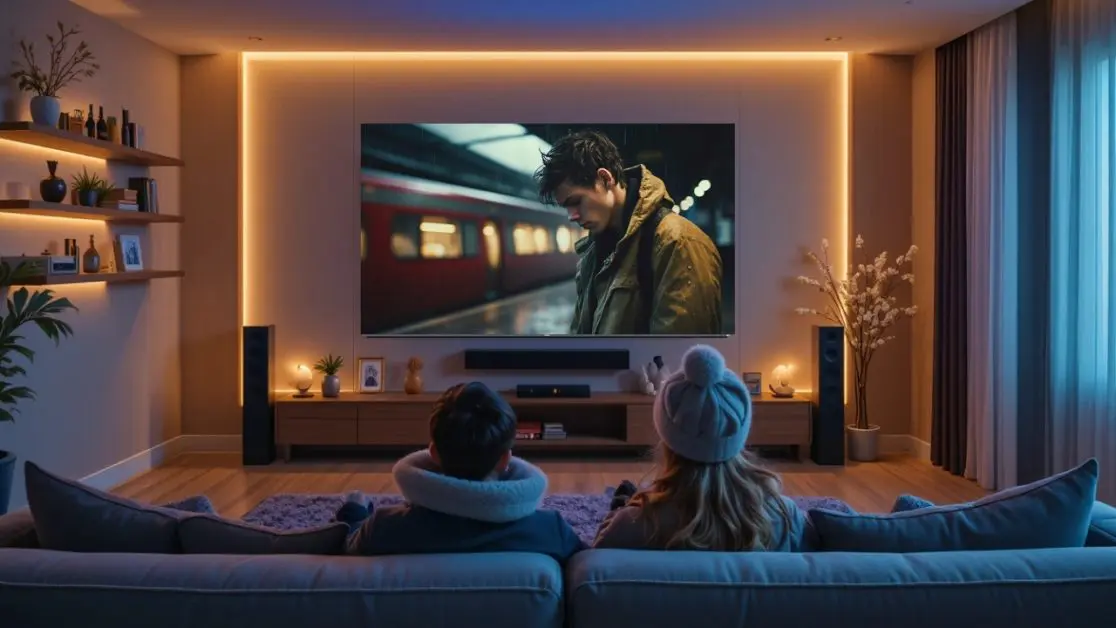
This is the quiet hero of multi-channel audio.
In stereo, dialogue fights with music and effects.
In multi-channel systems, dialogue gets its own dedicated channel.
The result:
- Clearer speech
- Lower volume needed
- Less strain on ears
- Better understanding in noisy scenes
For Indian households, this matters more than we admit.
Late-night viewing.
Sleeping children.
Neighbours next door.
Clarity beats loudness every time.
Why bass feels different, not just heavier
In stereo systems, bass is shared.
In multi-channel audio, bass is assigned.
Low frequencies go to a dedicated woofer channel.
That matters because bass behaves differently:
- It travels through floors
- It fills rooms
- It creates physical impact
When handled separately, bass feels controlled, not boomy.
You feel thunder.
You feel a stadium cheer.
You feel background music instead of hearing distortion.
This is realism, not drama.
The illusion of height
Modern multi-channel formats introduce vertical sound.
Sound can come from above.
This is not a trick.
It is psychoacoustics and speaker placement working together.
Think about it:
- Helicopters
- Rain
- Temple bells
- Fireworks
- Stadium roars
These sounds exist in three dimensions in real life.
Stereo forces them onto a flat plane.
Multi-channel audio restores the missing axis.
Height makes scenes believable.
Why movies benefit first, but not alone
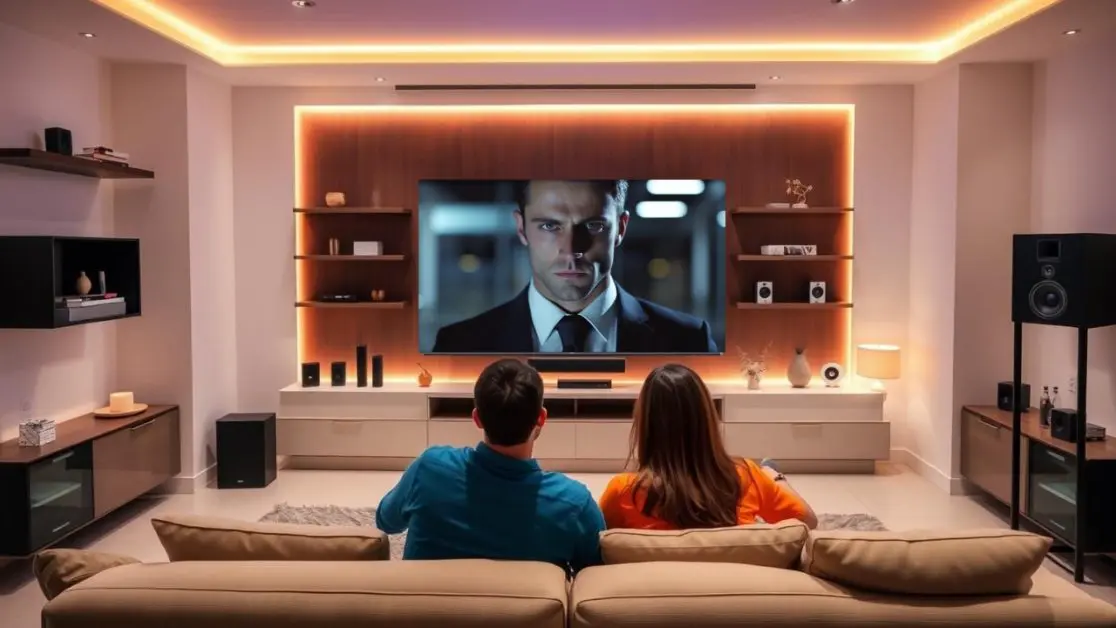
Films expose audio weaknesses quickly.
Action scenes.
Crowds.
Fast movement.
But multi-channel audio shines equally in quieter moments:
- A whisper behind the camera
- Ambient city sounds
- Live concerts
Even everyday content improves:
- Cricket commentary feels anchored
- Crowd noise feels layered
- Studio applause surrounds you
The difference is subtle until you go back.
Then the stereo feels oddly small.
A simple comparison
Stereo audio
- Two channels
- Flat soundstage
- Shared dialogue and effects
- Listener imagines depth
- Works best at higher volumes
Multi-channel audio
- Multiple dedicated channels
- Layered soundstage
- Clear separation of elements
- Depth and movement feel natural
- Works well even at lower volumes
The cost is complex.
The benefit is realism.
Why modern TVs finally make this accessible
Multi-channel audio used to mean:
- External speakers
- Complex wiring
- Dedicated rooms
That barrier is fading.
Modern TVs integrate advanced audio processing, speaker placement, and channel simulation.
For example, the C90 OLED 140cm (55) Google TV includes a 2.1 channel system with dedicated bass handling and support for immersive audio formats that map sound more accurately across space.
The specifications highlight how sound output, channel separation, and processing work together to create depth without cluttering the living room
The system thinks about sound placement, not just output.
That shift changes adoption.
Why Indian homes feel the difference faster
Most Indian living rooms are not acoustically treated.
There are:
- Hard floors
- Curtains
- Furniture
- Open layouts
- Adjacent rooms
Multi-channel audio adapts better to real spaces.
Because sound is distributed, not forced forward, reflections feel intentional instead of messy.
The room becomes part of the experience, not a problem to overcome.
The fatigue factor nobody talks about
Flat audio is tiring.
When all sound comes from one direction, your brain works overtime to decode it.
Multi-channel audio reduces cognitive load.
Sound feels organised.
Your brain relaxes.
This matters during:
- Long binge sessions
- Late-night viewing
- Family movie marathons
- Weekend sports blocks
Good audio does not shout.
It settles into the room.
Why this is really about trust
Realism builds trust.
When sound behaves like real life, you stop noticing the system.
You engage with the content.
That is the highest compliment technology can earn.
You forget it is there.
Multi-channel audio succeeds not by being impressive, but by being invisible.
The bigger idea hiding underneath
This shift mirrors something larger.
We are moving from features to experiences.
From specs to systems.
From louder to smarter.
Stereo was about output.
Multi-channel audio is about understanding context.
It recognises that life does not happen in straight lines.
Sound does not either.
What this means for how we choose technology
The question is no longer:
“How loud is it?”
The better question is:
“How real does it feel?”
Multi-channel audio answers that honestly.
It respects how humans hear.
It respects how homes are built.
It respects how people actually live.
And once you experience a sound that behaves like life, going back feels impossible.
Because realism, once heard, cannot be unheard.
That is not marketing.
That is perception changing.
Frequently Asked Questions
Why do dialogues get buried under music and effects on my TV?
In stereo, dialogue shares space with everything else. In multi-channel systems, dialogue gets its own centre channel, keeping voices clear.
Does this matter more for late-night or family viewing?
Absolutely. Clear dialogue at lower volumes is crucial for sleeping children, neighbors, and shared living spaces.
Why do explosions sound noisy instead of immersive?
Without channel separation, bass distorts. Proper bass handling creates physical presence instead of harsh sound.
How can sound feel like it’s coming from above me?
Multi-channel audio uses psychoacoustics and speaker mapping to recreate vertical sound cues that stereo completely ignores.
Does multi-channel audio only matter for action movies?
No. It improves news, cricket, concerts, talk shows, and even YouTube content by anchoring voices and layering ambience.
Why do live concerts feel flatter on stereo TVs?
Stereo collapses crowd, music, and space into one layer. Multi-channel restores separation and atmosphere.