
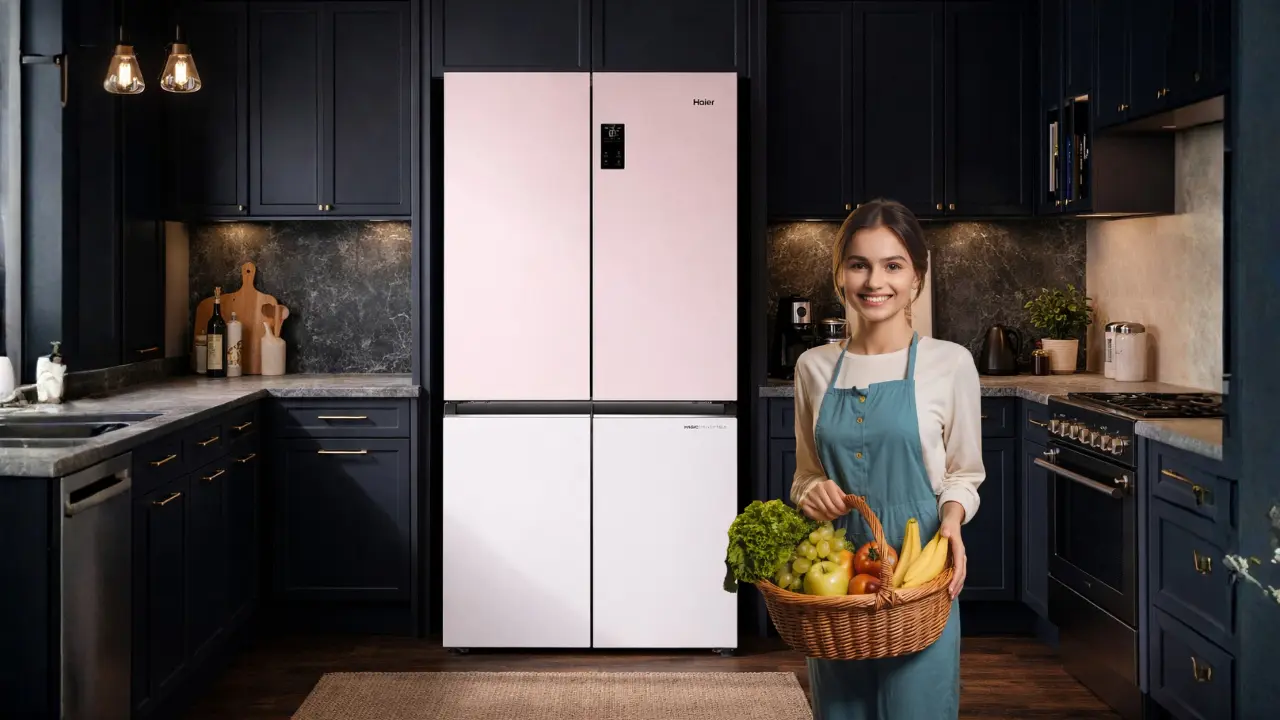

Organized cooling with dedicated storage zones means your refrigerator works like a well-run home, not a crowded storeroom.
Each food category gets its own space, its own temperature, and its own rhythm. The result is less waste, better freshness, quicker cooking, and a kitchen that feels calmer every single day.
This is not about luxury.
It is about control.
When the fridge becomes the busiest room in the house?
Open an Indian refrigerator on a Sunday evening.
Leftover sabzi from lunch.
Milk packets stacked wherever they fit.
A bowl of cut fruits balancing on top of last night’s curry.
Ice cream hiding behind frozen peas.
Everything is cold.
Nothing is organised.
The problem is not the food.
It is the system.
Most fridges treat all cooling as equal. Indian kitchens do not.
We store leafy vegetables, dairy, chutneys, raw meats, festival sweets, sauces, snacks, leftovers, and bulk groceries all at once. Each of these has a different shelf life, moisture need, and temperature sweet spot.
One temperature does not fit all.
That is where dedicated storage zones quietly change everything.
What organized cooling actually does differently
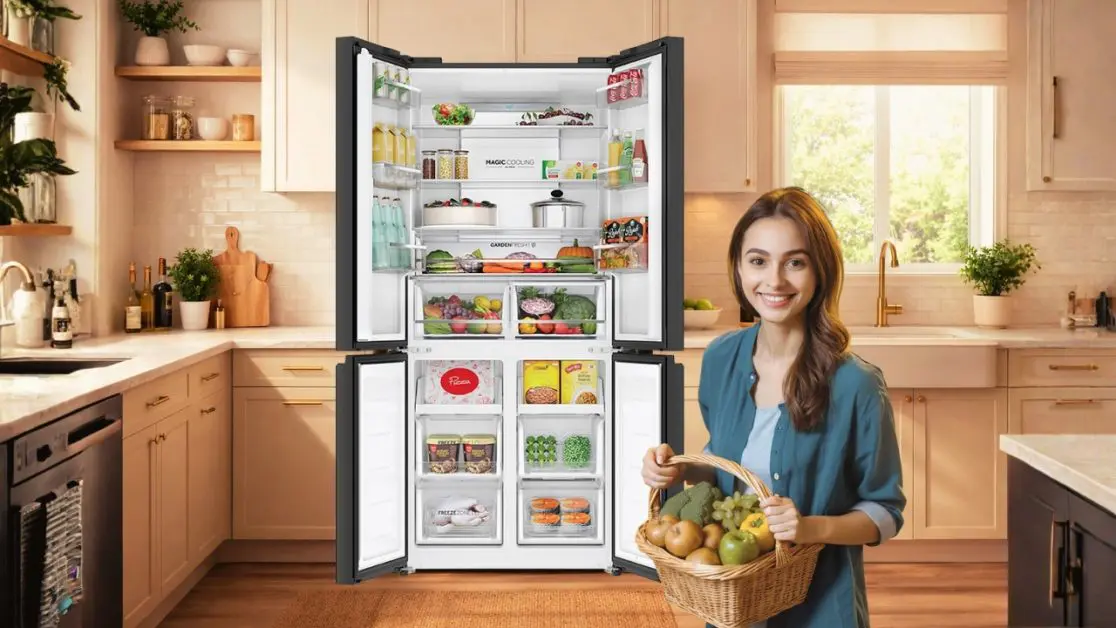
Organized cooling is simple in idea, but powerful in impact.
It divides your refrigerator into purpose-built zones, each designed around how food behaves, not how shelves look.
Think of it like this
A good fridge works like a well-planned kitchen drawer.
- Spices go together.
- Cutlery has its own tray.
- Dry groceries stay separate from wet items.
Cooling should work the same way.
Dedicated storage zones create predictability. And predictability is what keeps food fresh longer.
Why mixed storage quietly wastes food
Here is the invisible problem most households miss.
Different foods release different gases, moisture levels, and odours.
- Fruits like apples release ethylene, which speeds up ripening.
- Leafy greens need humidity, but rot faster near strong odours.
- Dairy absorbs smells easily.
- Cooked food loses texture when chilled unevenly.
When everything shares one space, the strongest element wins. Usually, that is moisture or smell.
Organized cooling reduces cross-contamination, not just of taste, but of time.
Food stays usable longer because it lives in the right environment.
The real-life impact in Indian homes
This is not a theory. It shows up in small daily moments.
For working professionals living solo
You cook once. You eat across three days.
A dedicated cooked food zone means leftovers taste like food, not fridge.
No soggy rotis. No curry smelling like onions.
Time saved: real.
Food wasted: lower.
For families with kids
Milk, yoghurt, cheese, butter.
When dairy has a consistent zone with stable temperature, spoilage drops sharply. You stop throwing out half-used packets because they smell “slightly off”.
Kids notice. Parents relax.
During festivals and bulk shopping
Diwali. Eid. Weddings. Birthdays.
Sweets need cool, dry storage.
Gravies need sealed, colder zones.
Drinks need quick-access cooling.
Dedicated zones turn chaos into flow. You stop rearranging shelves every hour.
How dedicated storage zones are actually designed
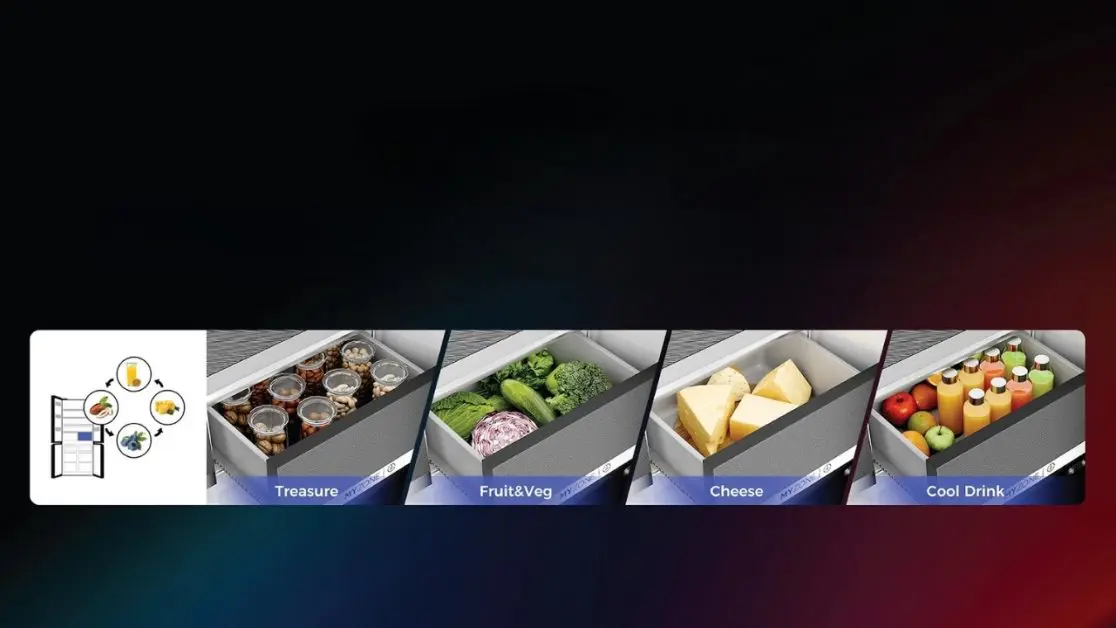
Not all zones are equal. The best systems follow three principles.
1. Temperature specificity
Some zones are colder. Some are milder.
Raw meat and frozen items need deeper cooling.
Vegetables need freshness, not freezing.
Beverages benefit from quick chill, not icy shock.
Modern multi-door refrigerators use convertible zones to shift between fridge and freezer based on need, instead of forcing one permanent setup.
2. Moisture control
Vegetables wilt when dry.
Fruits rot when too wet.
Separate crisper zones with controlled humidity dramatically extend freshness. This is why greens stay crisp longer when they are not shoved next to uncovered leftovers.
3. Physical separation
This matters more than people realise.
Smell transfer happens fast. Dedicated compartments act like walls inside your fridge, stopping flavours from bleeding into each other.
A simple way to understand organized cooling
Think of your refrigerator like a bookshelf.
You would not stack novels, cookbooks, office files, and children’s comics randomly.
You create sections.
You remember where things belong.
You retrieve faster.
Dedicated storage zones do the same thing for food.
What changes when zones become a habit
Here is the surprising part.
Once people use a fridge with clear zones, they stop overbuying.
Why?
Because visibility improves.
You can see:
- What is fresh
- What needs cooking
- What can wait
This reduces duplicate purchases and forgotten leftovers. According to multiple consumer food studies, better fridge organisation can reduce household food waste by up to 20 percent over time.
Order changes behaviour.
How modern refrigerators support this shift
This is where thoughtful design matters more than raw capacity.
A large fridge without zones is just a big box.
A slightly smaller fridge with smart zoning feels bigger in daily use.
For example, Haier’s multi-door refrigerator designs focus heavily on internal zoning rather than just outer size. Models like the Lumiere series divide storage into clearly defined sections, including convertible zones that allow the space to function as a refrigerator when freezer demand is low.
That matters during festivals, family visits, or weekly meal prep.
The role of convertible zones in Indian kitchens
Indian food habits change by season.
Summer means more fruits, drinks, and leftovers.
Winter means more cooking, bulk storage, and freezing.
A fixed freezer-to-fridge ratio fails here.
Convertible zones let households adapt storage instead of adjusting lifestyle.
- More fridge space when hosting.
- More freezer space during batch cooking.
- Balanced setup during routine weeks.
This flexibility is not flashy. It is deeply practical.
Organized cooling and energy efficiency
Here is a hidden benefit most buyers overlook.
When food is organised:
- Doors open for shorter durations.
- Items are found faster.
- Cooling cycles stabilize.
This reduces energy waste.
Advanced inverter compressors, like the ones used in premium multi-door refrigerators, maintain steady temperatures instead of overworking after every door opening. Over time, this consistency saves power and reduces wear on the appliance.
Efficiency is not just about star ratings.
It is about behaviour supported by design.
What to look for if organized cooling matters to you
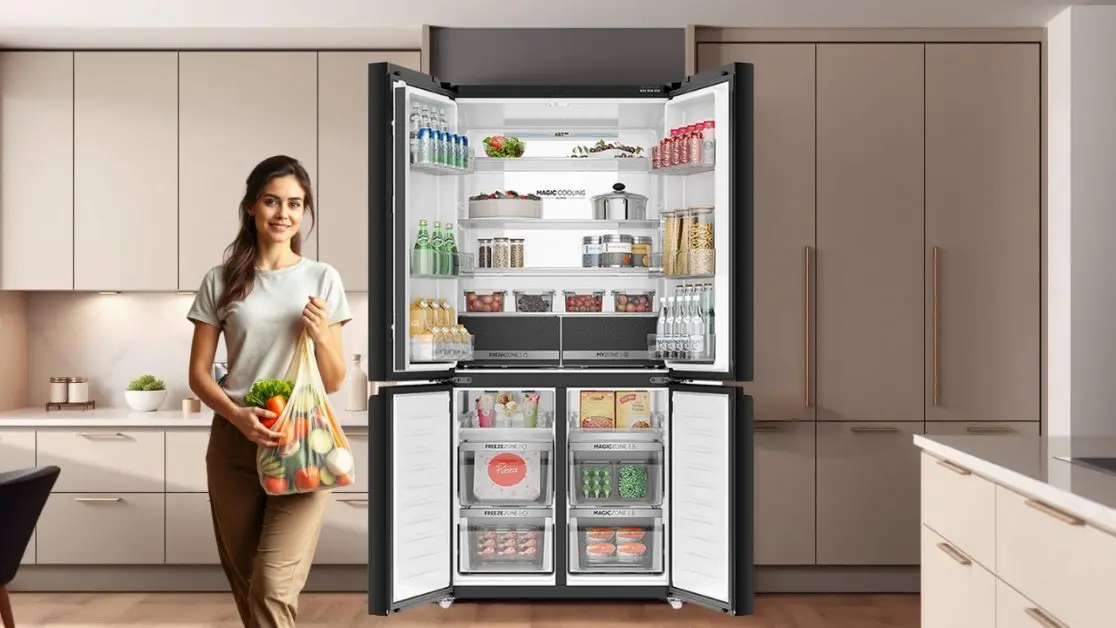
If this idea resonates, here is a simple framework to evaluate any refrigerator.
Check for these features
1. Multiple independent compartments
At least 3 to 4 clearly separated zones.
2. Convertible storage options
Ability to switch between fridge and freezer.
3. Spill-proof, adjustable shelving
Indian utensils are heavy. Shelves must support real loads.
4. Odour control systems
Helps maintain freshness across zones.
5. Interior lighting that reaches corners
Visibility supports organisation.
These are not premium extras anymore. They are becoming the baseline for modern Indian kitchens.
The emotional side of an organised fridge
This part rarely gets talked about.
An organised fridge reduces friction.
You open it after a long day and know exactly where things are.
You cook faster.
You clean less.
You throw away less.
It quietly supports better habits without demanding discipline.
That is a good design.
Why this matters beyond the kitchen
Systems shape behaviour.
A fridge that supports organisation nudges households toward:
- Better meal planning
- Lower waste
- Healthier eating
- Calmer routines
This is not about appliances.
It is about invisible structure.
The same way a well-designed workspace improves focus, an organised cooling system improves daily life without announcing itself.
The future of cooling is not colder. It is smarter.
Cooling technology has peaked in temperature control.
The next leap is the intelligence of space.
Dedicated storage zones, convertible layouts, and thoughtful internal design are shaping how Indian homes interact with food.
Brands like Haier are leaning into this shift by designing refrigerators around real household behaviour rather than showroom specs alone.
Because when storage makes sense, life feels lighter.
The takeaway worth remembering
Cold keeps food safe. Organized cooling keeps life smooth.
The difference is not dramatic.
It is daily.
And those daily wins are what turn a house into a home that runs well.
Frequently Asked Questions
Why does my fridge feel stressful even though it’s big enough?
Because size doesn’t reduce chaos. When all foods share the same cooling space, you’re forced to reorganise every time you open the door. Dedicated zones remove micro-decisions, you know where things belong.
My leftover curry tastes weird the next day. Is it spoiled?
Not spoiled, uneven chilling and smell absorption. Cooked food stored in a stable, sealed zone retains texture and flavour much longer.
Can organised cooling actually reduce food waste?
Yes. Studies show better fridge organisation can cut household food waste by up to 20% over time, simply by improving visibility and freshness.
Why do fruits rot faster when stored with vegetables?
Many fruits release ethylene gas, which accelerates ripening and spoilage in nearby produce.
Are multi-door refrigerators actually more practical or just premium-looking?
Practical. More doors = more zones = better temperature stability and faster access with less cold loss.
Is interior lighting actually important or just cosmetic?
Important. Good lighting improves visibility, which directly improves food usage and reduces waste.