


AI-powered TVs now adjust picture, sound, and performance in real time based on what is playing on the screen.
Sports, movies, news, gaming, or late-night OTT binges each get tuned differently. The result is a viewing experience that feels natural, effortless, and surprisingly personal without constant manual settings.
The moment you stop adjusting settings
It usually happens without announcement.
A cricket match switches from a bright afternoon over to floodlights.
A movie moves from dialogue to an action-heavy chase.
A late-night show plays softly while the house sleeps.
You do nothing.
Yet the picture sharpens. Motion feels smoother. Sound settles into the room instead of blasting it.
That is the real promise of AI that adapts to what you are watching. Not features. Not menus. But less thinking.
Technology works best when it disappears.
Why “smart” TVs stopped being about apps

A few years ago, smart TVs meant one thing. Apps.
Netflix. YouTube. Hotstar. Prime Video.
That phase is done.
Today, every TV has apps. What separates a good experience from a forgettable one is how the TV behaves while content is playing.
This is where adaptive AI matters.
Not all content is built the same.
Not all homes look the same.
Not all moments need the same settings.
A system that treats everything equally always underperforms.
What adaptive AI actually does in real life
Forget the technical language for a moment.
Adaptive AI works like a good host.
- When guests arrive, it brightens the room.
- During a serious conversation, it quiets the background.
- Late at night, it lowers the lights without being asked.
On TV, this intelligence shows up in small but important ways.
- Sports get smoother motion and clearer tracking.
- Movies get deeper contrast and controlled brightness.
- Low-resolution content looks sharper instead of stretched.
- Sound adjusts so dialogue stays clear even at lower volumes.
The system reads the context, not just the content.
One screen. Many viewing personalities
Think about a typical Indian home.
One screen serves many roles.
Morning news during chai.
Kids cartoons in the afternoon.
OTT shows after work.
Cricket or football on weekends.
Gaming late at night.
Each of these demands something different.
Option one: Manual control
You change picture modes.
You adjust sound.
You tweak brightness.
It works. But it requires effort and attention.
Option two: Fixed presets
Sports mode.
Movie mode.
Game mode.
Better. But still reactive.
Option three: AI-driven adaptation
The TV detects what is playing and adjusts automatically.
This is where modern AI TVs step ahead.
The benefit is not convenience alone.
It is consistent.
Good viewing, every time, without friction.
The hidden system behind better visuals
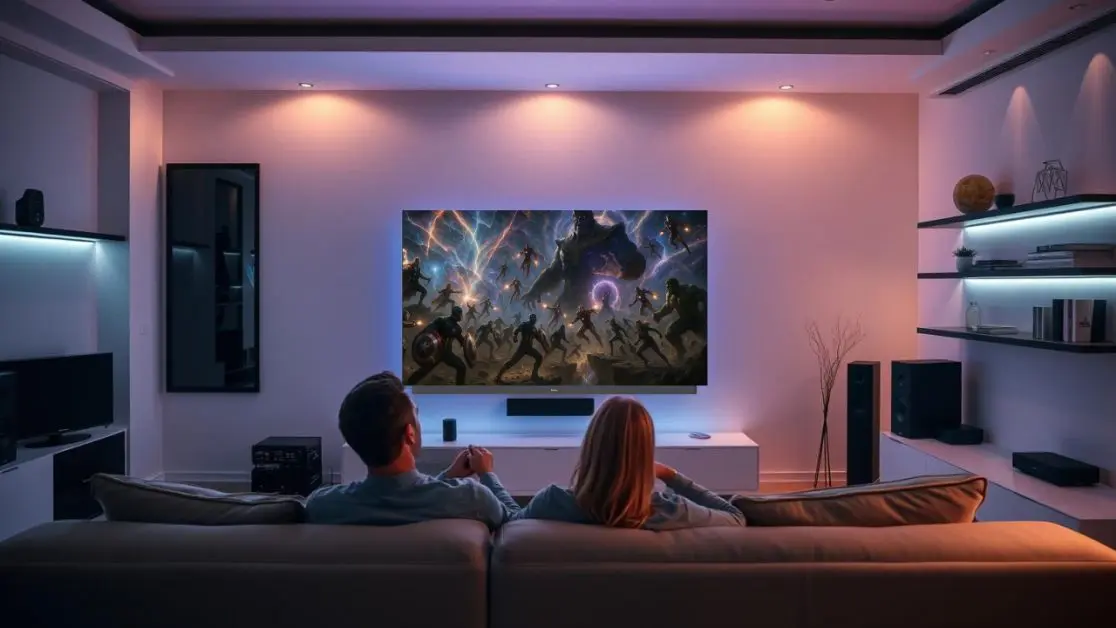
Adaptive AI works across layers, not settings.
Here is what happens behind the scenes.
- Scene recognition identifies sports, movies, animation, or games.
- Motion intelligence adjusts refresh rate and smoothing dynamically.
- Color and contrast tuning changes scene by scene.
- Upscaling engines enhance older or compressed content.
- Ambient awareness adapts brightness based on room lighting.
None of this is about making things louder or brighter all the time.
It is about balance.
A system that understands restraint often feels more premium than one that only pushes extremes.
Sound that understands the room
Picture quality gets attention. Sound often gets ignored.
But sound is where AI quietly improves daily life.
Late-night viewing is the best example.
You want to hear dialogue clearly without waking anyone.
Adaptive audio systems now:
- Lift speech frequencies when background sound increases.
- Lower bass automatically at night.
- Adjust output based on content type.
Action scenes feel immersive. Conversations feel intimate.
The TV learns when to step back.
Why big screens need smarter intelligence
As screen sizes increase, flaws become more visible.
Motion blur.
Over-sharpened faces.
Uneven brightness.
A large display without intelligent processing feels overwhelming.
This is where AI-driven picture engines matter more than ever.
On large screens, adaptive processing:
- Keeps fast motion smooth without soap-opera effects.
- Preserves skin tones across lighting changes.
- Maintains detail without artificial sharpening.
The bigger the screen, the smarter the system needs to be.
This principle shows up clearly in large-format TVs that rely on integrated AI engines to manage visuals, sound, and performance together rather than in isolation .
Gaming, sports, cinema. One system, different rules
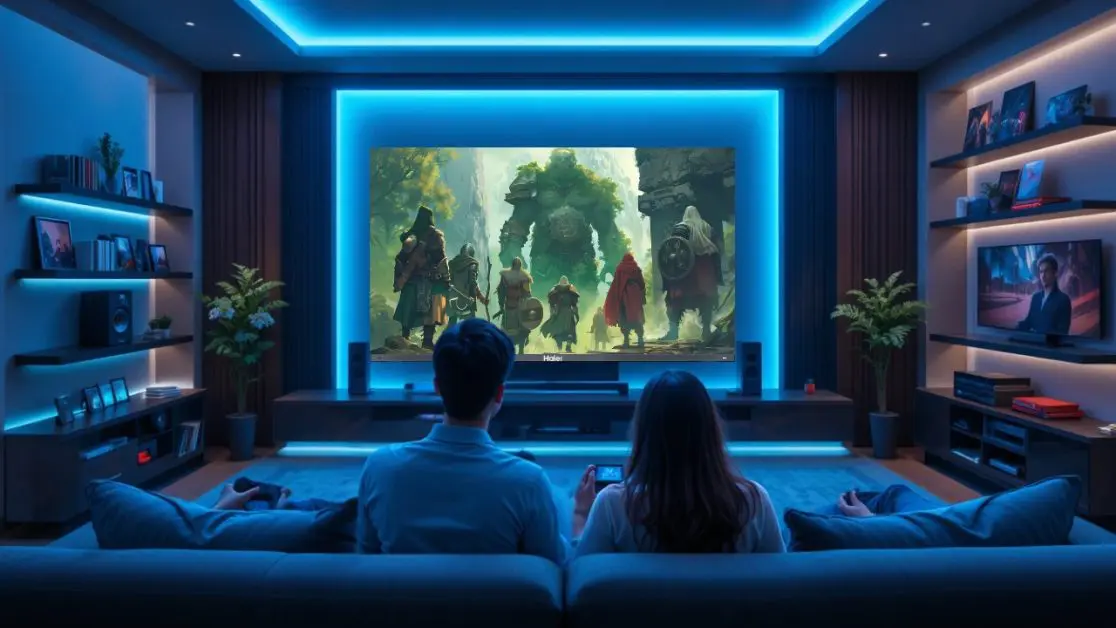
Each use case has different priorities.
Sports viewing
- Smooth motion
- Clear player tracking
- Balanced brightness for long viewing
Movies and series
- Contrast depth
- Accurate colors
- Controlled highlights
Gaming
- Low latency
- Stable refresh rates
- Fast response
Adaptive AI systems shift priorities automatically.
You do not choose modes.
The system chooses for the moment.
This is not automation for its own sake.
It is automation that respects intent.
Energy efficiency without thinking about it
There is another benefit that rarely gets highlighted.
Power use.
Adaptive AI reduces unnecessary brightness and processing when it is not needed.
This matters in Indian homes where TVs stay on for long hours.
Smarter tuning leads to:
- Less wasted energy
- Reduced eye strain
- Longer component life
Efficiency is not about turning things off.
It is about using only what the moment demands.
What this means for everyday living
The real shift is not technological. It is behavioral.
People no longer want to manage devices.
They want devices to manage themselves sensibly.
The same way modern cars adjust fuel use or ACs adapt to room conditions, TVs now respond to content context.
The pattern is clear.
Technology that adapts feels more human.
Technology that demands attention feels outdated.
Where Haier fits into this story
Haier’s approach to AI-driven TVs reflects this larger shift.
Instead of treating picture, sound, and performance as separate features, systems like AI Center-driven TVs integrate them into one adaptive experience designed for real homes and real usage patterns .
The focus stays on:
- Reducing manual control
- Improving consistency
- Making large screens easier to live with
No drama. No overstatement. Just quiet intelligence at work.
The future of watching is contextual
Here is the larger insight.
Screens are no longer passive displays.
They are responsive environments.
AI that adapts to what you are watching is not about being impressed.
It is about feeling comfortable.
When the screen understands the moment, the room feels calmer.
When the system adjusts itself, people relax.
That is the direction modern homes are moving toward.
Less control panels.
More calm.
And once you experience it, going back feels strangely exhausting.
That is how you know the system is working.
Frequently Asked Questions
Why do TV presets never feel right for my home lighting?
Because presets assume controlled environments. Real homes change, daylight, lamps, late-night darkness. Adaptive AI uses ambient awareness to adjust brightness dynamically instead of locking you into one mode.
Can one TV really handle news in the morning, kids’ cartoons, and late-night OTT properly?
Yes, if it uses contextual AI. Scene recognition allows the TV to tune visuals and sound differently for animation, dialogue-heavy shows, or fast-paced sports, automatically.
Why do action scenes sometimes look too smooth or artificial on big TVs?
That’s over-aggressive motion smoothing. Adaptive AI adjusts motion scene by scene, preserving cinematic feel while keeping sports smooth, without the soap-opera effect.
Does AI just make everything brighter and sharper?
No. Good AI values restraint. It balances contrast, color, and sharpness so visuals feel natural, not exaggerated, especially important on large screens.
Why is dialogue hard to hear at night unless I increase volume too much?
Traditional TVs boost everything equally. Adaptive AI lifts speech frequencies while reducing bass, keeping dialogue clear without disturbing others.
Does AI audio really matter if I don’t use a soundbar?
Yes. Intelligent audio processing improves clarity, balance, and comfort even with built-in speakers, especially for everyday viewing.