
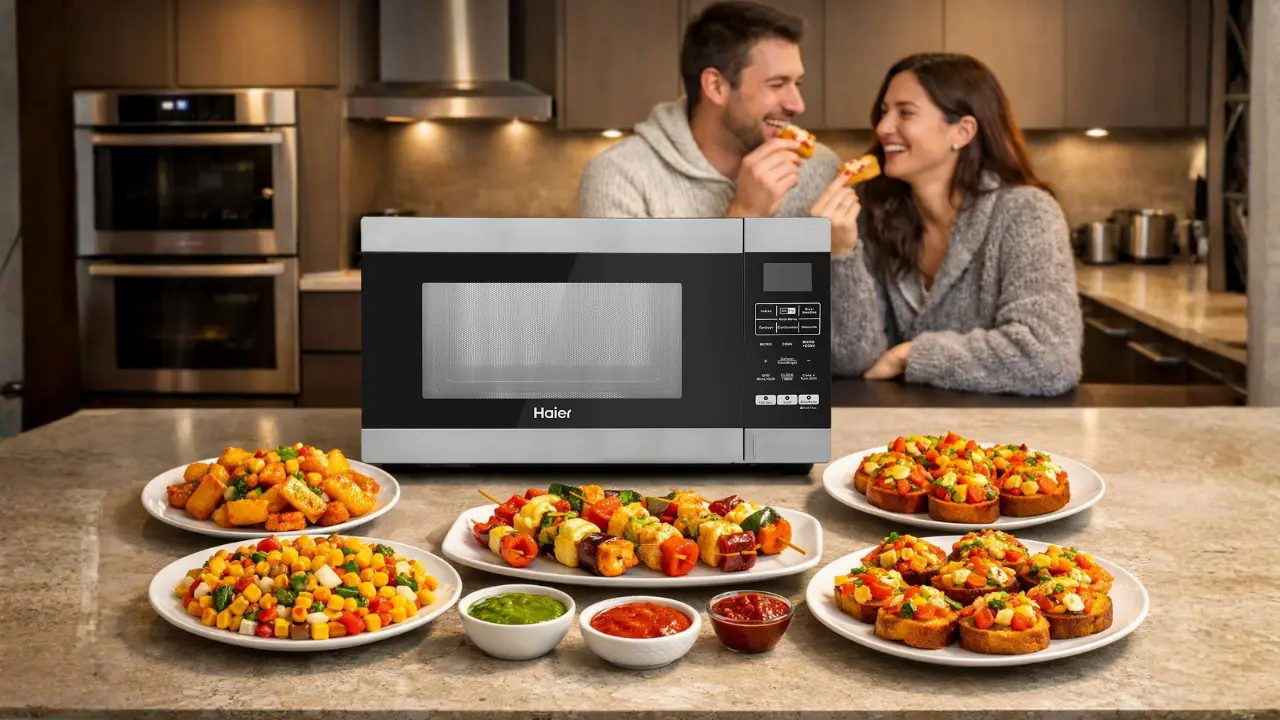

January is the best time to learn microwave cooking because life finally slows down enough for habits to form.
The festive rush is over. Kitchens are quieter. Meals become simpler. People want food that feels warm, balanced, and comforting without spending hours near the stove. This is where microwave cooking stops being a shortcut and starts becoming a skill that quietly upgrades everyday life.
January is not about dramatic change.
It is about better systems.
January resets how Indian kitchens actually function.
December kitchens are reactive.
Leftovers pile up.
Cooking happens in bursts.
Appliances are used on instinct, not intention.
January kitchens are deliberate.
You cook smaller portions.
You repeat meals.
You notice what works.
That repetition is exactly how microwave cooking is learned properly. When you cook the same oats, dal, vegetables, or rice multiple times a week, patterns emerge.
You understand power levels. You understand resting time. You understand moisture.
Skill builds quietly.
The microwave gets misunderstood because we meet it during chaos
Most households buy or use a microwave during busy phases.
A housewarming.
A sale season.
A packed work schedule.
So it becomes a reheating box.
January changes that relationship.
This is the month people finally ask the right questions.
- Can I cook full meals in this?
- Can I reduce oil without losing comfort?
- Can I eat warm food without standing near heat?
The answer is yes.
But only if the microwave is learned, not rushed.
Microwave cooking is not about speed. It is about control
Stove cooking demands attention.
You stand.
You stir.
You adjust constantly.
Microwave cooking demands decisions.
You choose power.
You choose time.
You choose a container.
Then you step away.
That shift matters in January, when people want routines that reduce mental load. Microwave cooking rewards planning. Once you understand its logic, results become repeatable.
That repeatability builds trust.
January is when auto cook menus actually make sense
Auto cook menus are often ignored.
Not because they are useless.
Because people never slow down enough to try them.
January changes that.
Modern convection microwaves like the 20L Convection Microwave with Mirror Glass Design (HIL2001CSSH) offer 66 auto cook menus that automatically set time and power combinations for everyday dishes .
Larger models like the 25L Convection Microwave Oven with Bread Basket (HIL2501CBSH) and 30L Convection Microwave with In Built Air Fryer (HIL3001ARSB) go further, offering 305 auto cook menus covering Indian meals, snacks, and desserts .
Auto menus are not shortcuts.
They are teachers.
You learn by observing what works. Over time, you stop relying on presets because you understand the system behind them.
Winter food habits align perfectly with microwave cooking
January food is about warmth, not indulgence.
Soft breakfasts.
Gentle lunches.
Comforting dinners.
Microwaves cook from the inside out, which preserves moisture and texture when used correctly. This works exceptionally well for Indian food in winter.
Everyday examples that quietly win
- Khichdi stays soft without constant stirring
- Steamed vegetables retain colour and bite
- Gajar ka halwa develops sweetness without burning
- Reheated idlis remain fluffy instead of rubbery
Research consistently shows that microwave cooking can preserve more heat sensitive nutrients than prolonged boiling, especially for vegetables.
That matters when January goals include eating better, not just eating less.
Oil reduction feels sustainable in January
January always brings conversations about oil.
Not elimination.
Reduction.
Microwave cooking supports this naturally.
Convection microwaves allow grilling, baking, and combination cooking that reduce dependence on oil while maintaining texture.
Combination modes that use microwave, grill, and convection together can cut cooking time by up to 30 percent, depending on the dish .
This matters because habits survive when they do not feel restrictive.
Healthy food fails when it feels like punishment.
Bread is the fastest confidence builder
Here is a pattern many households miss.
People learn microwave cooking faster when they start with bread.
Why?
Because success is obvious.
Warmth.
Softness.
Crisp edges.
The Haier 25L Convection Microwave Oven with Bread Basket (HIL2501CBSH) includes a dedicated bread basket function designed for Indian breads like roti, naan, kulcha, tandoori roti, and garlic bread .
This builds confidence quickly.
Once someone learns how heat behaves with bread, they trust the appliance with full meals.
January repetition makes this learning stick.
January households finally use the features they paid for

This is the month when people reorganize kitchens.
They clean cavities.
They notice the finish.
They explore features.
Stainless steel cavities, like those found in Haier convection microwaves, reflect heat better and are easier to clean, improving cooking consistency and hygiene over time .
Deodorizer functions start getting used.
Combination modes get tested.
Accessories stop gathering dust.
Microwave cooking improves not because the appliance changes, but because attention does.
Why microwave cooking suits solo professionals and new couples
January routines are individual.
Office lunches.
Staggered dinners.
Flexible timings.
Microwaves scale effortlessly for this lifestyle.
One portion or four both work
- Rice cooks evenly without monitoring
- Omelettes finish in minutes
- Desserts scale down without waste
- Leftovers reheat without drying
Advanced models like the Haier 30L Convection Microwave with In Built Air Fryer (HIL3001ARSB) combine microwave, convection, grilling, air frying, and rotisserie in one appliance, reducing the need for multiple tools .
January is when people appreciate fewer appliances that do more.
Microwave cooking quietly teaches energy awareness
January brings budget awareness.
Power bills.
Time costs.
Efficiency.
Microwaves only consume energy when actively cooking. There is no endless preheating. No forgotten flames. Automatic shutoff prevents waste.
Over a month, especially in small households, this difference becomes visible.
You do not feel it in December.
You notice it in January.
The deeper shift microwave cooking creates
Once people learn microwave cooking, their relationship with food changes.
They stop equating effort with quality.
They realise good food depends on:
- Correct timing
- Controlled heat
- Thoughtful portions
Not constant supervision.
This mindset reduces food waste, improves meal planning, and makes daily cooking less emotionally draining.
The microwave becomes a quiet partner, not a backup plan.
Why January habits last longer
January habits stick because they start gently.
No guests waiting.
No pressure to impress.
No rush to perform.
Just food.
Just warmth.
Just everyday meals.
Microwave cooking fits this season perfectly. It does not demand attention. It gives time back.
And time is the one thing modern Indian households value deeply.
The real reason January is the right time
January gives people permission to learn imperfectly.
To try.
To adjust.
To repeat.
Microwave cooking is not about replacing tradition.
It is about supporting it with systems that make daily life lighter.
Once learned, it reshapes kitchens quietly all year long.
That is why January is not just a good time to learn microwave cooking.
It is the right time.
Frequently Asked Questions
Why does microwave cooking feel easier to learn in January?
January is quieter. There are fewer guests, simpler meals, and slower routines. That calm creates repetition, making it easier to notice how power levels, time, and moisture behave. Microwave cooking improves through repetition, not pressure.
Can I really cook full Indian meals in a microwave, or is it just for reheating?
You can cook full meals, dal, rice, vegetables, khichdi, even desserts. January is when people finally slow down enough to explore this intentionally instead of treating the microwave as a reheating box.
Why does microwave food sometimes turn rubbery or dry for me?
That usually happens due to incorrect power levels, no resting time, or unsuitable containers. January repetition helps you understand moisture control, which is the real skill behind good microwave cooking.
Why do winter foods work better in the microwave?
Winter meals are soft, warm, and moisture-rich. Microwaves cook from the inside out, which preserves softness and texture when used correctly, ideal for Indian winter comfort food.
Are auto cook menus actually useful, or just marketing?
They work best when life slows down, like in January. Auto menus are teachers. They show you ideal time–power combinations, helping you understand the system instead of guessing.
Why do people stop using auto cook menus over time?
Because once you observe patterns, you no longer need presets. Auto menus build intuition first, independence later.
Why do people learn microwave cooking faster with bread?
Because success is obvious. Bread shows warmth, softness, and crisp edges instantly. Once you understand how heat behaves with bread, trusting the microwave with full meals feels natural.