

Automatic adjustments improve efficiency and reduce costs by removing guesswork from everyday decisions.
Smart appliances sense real conditions, learn patterns, and fine-tune performance in real time. The result is less waste, lower bills, and comfort that feels effortless because the system adjusts before you even notice the need.
That is the short answer.
The longer, more interesting story lives inside Indian homes. In the moments between work calls, school pickups, late dinners, and monsoon humidity.
Let us step into that story.
The hidden cost of manual control.
Every Indian household has lived this scene.
You switch on the AC after a long commute.
The room feels too warm, so you drop the temperature. Ten minutes later, it feels too cold. You adjust again.
By midnight, the AC has worked harder than needed, and your electricity bill quietly remembers everything.
Manual control feels empowering. It is also inefficient.
Not because people are careless. But because humans are bad at continuous optimization. We react after discomfort appears. Machines can act before they do.
That gap is where automatic adjustments create value.
Automatic adjustments work because systems see patterns humans miss
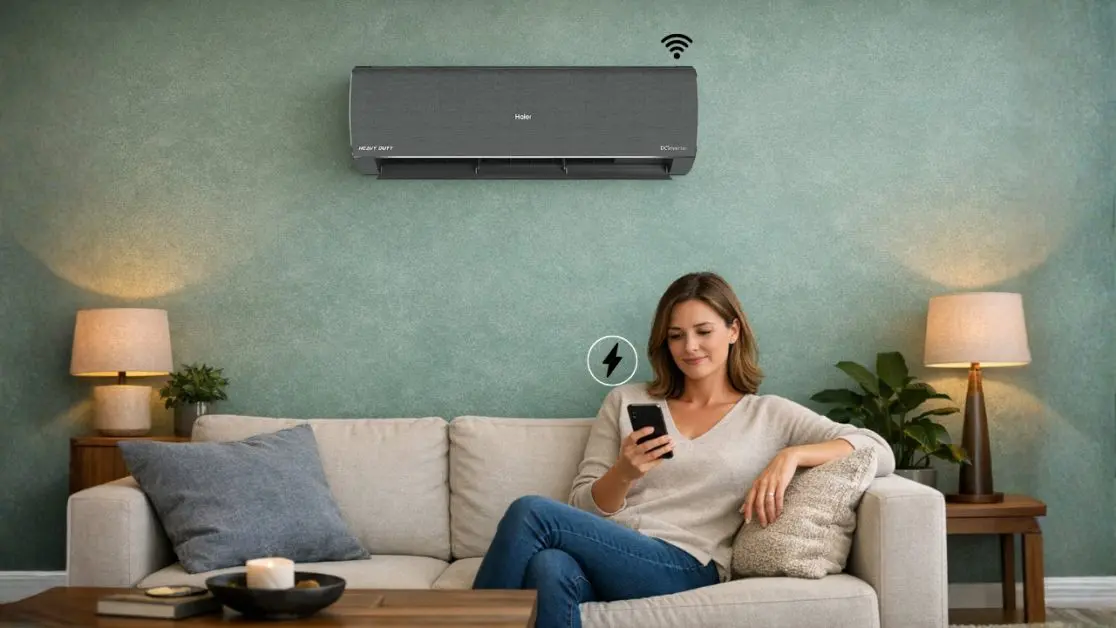
A smart system does not ask, “What temperature do you want right now?”
It asks better questions.
- How hot is the room versus outside?
- How many people are present?
- How quickly does this space cool?
- What usually happens at this hour?
When these inputs come together, the appliance stops behaving like a switch and starts behaving like a system.
This is the core idea behind AI-driven climate control in modern appliances.
Haier’s AI Atmox platform for air conditioners is built around this principle, combining environment sensing, usage learning, and real-time optimisation to reduce energy waste while protecting comfort.
The insight is simple.
Efficiency improves when decisions happen continuously, not occasionally.
Why automatic adjustments reduce costs without feeling restrictive
Cost-cutting usually feels like sacrifice.
Automatic adjustments flip that logic.
Instead of asking you to compromise comfort, the system removes unnecessary effort from places you do not notice.
Here is how that plays out in real life.
One option is overcooling the entire room
Traditional ACs cool every corner equally, even if you are sitting on one sofa with a laptop.
Cost:
- Higher power draw
- Longer compressor cycles
- Uneven comfort
The second option is targeted adjustment
AI Target Cooling focuses airflow where it is actually needed, instead of treating the whole room as one zone.
Benefit:
- Faster comfort
- Lower energy use
- Reduced strain on the system
This is not about weaker cooling. It is about precise cooling.
Precision is cheaper than brute force.
Pre-emptive action beats reactive control
Think about how you prepare for guests.
You do not wait for them to arrive before cleaning the house. You anticipate.
Automatic systems do the same.
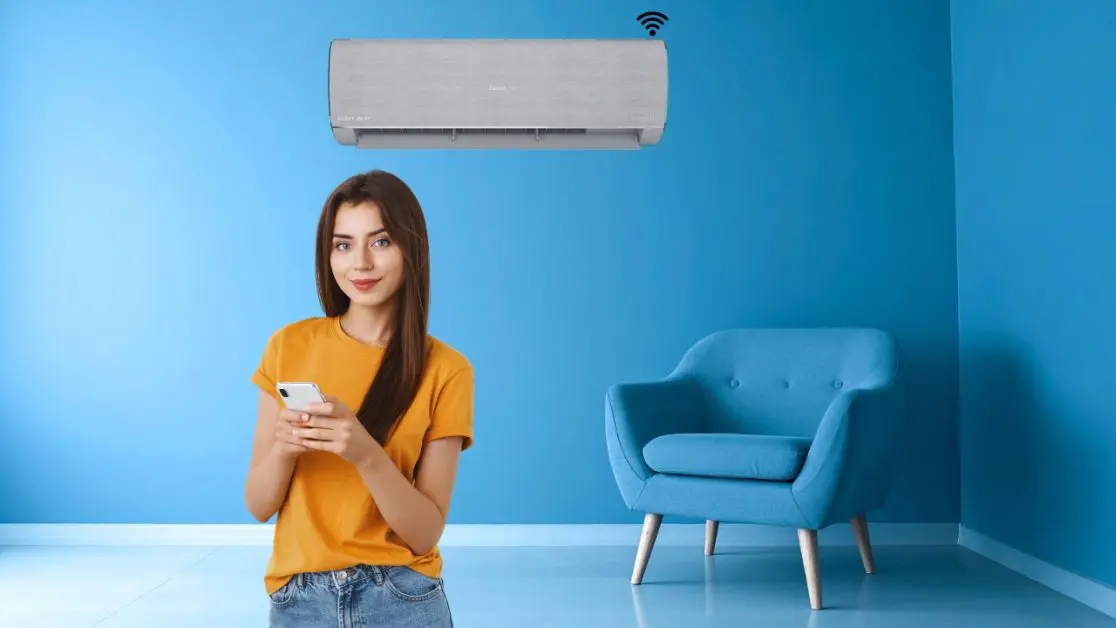
AI Pre-Cooling uses behavioural learning and location-based signals to start cooling before occupancy, so the system runs gently instead of aggressively later.
The implication is subtle but powerful.
- Shorter peak load
- Smoother energy curve
- Less power consumed per hour of comfort
Anticipation costs less than correction.
Energy savings happen when systems know when not to work
One of the biggest energy leaks in Indian homes is empty-room cooling.
We forget to switch things off. Or we assume we will return soon.
AI Human Detection changes that equation.
By sensing occupancy, the system automatically shifts to energy-saving modes or powers down when no activity is detected, without needing timers or reminders.
The benefit is not just lower bills.
It is a mental relief.
Because the system carries the responsibility you used to carry.
Automatic adjustments turn electricity into visible information
Another reason costs feel uncontrollable is invisibility.
Electricity disappears into the wall. Bills arrive weeks later.
AI Electricity Monitoring changes that relationship by translating consumption into understandable patterns.
- Daily and monthly usage views
- Cost displayed in currency
- Mode-wise tracking between normal and eco operation
- Custom energy targets
When systems show consequences clearly, behaviour improves naturally.
Not through guilt. Through clarity.
Efficiency improves when cleaning becomes automatic too
Dust is an efficiency killer.
Dirty coils force appliances to work harder for the same output.
Manual cleaning rarely happens on time.
AI Auto Clean systems address this silently by cleaning indoor and outdoor units automatically after defined operating hours, preserving heat exchange efficiency and reducing long-term energy loss.
This matters because efficiency is not a one-time achievement.
It is a condition that must be maintained.
What automatic adjustments teach us about better living
There is a broader lesson hiding here.
The most effective systems do not ask for attention.
They earn trust by working quietly in the background.
Automatic adjustments:
- Reduce decision fatigue
- Prevent small inefficiencies from compounding
- Create savings without daily discipline
In a country where energy costs rise quietly and time feels increasingly scarce, this matters.
The future of efficiency is not harder effort. It is smarter by default.
Why this matters beyond appliances
This is not just about air conditioners.
It is about how modern households operate.
When systems adjust automatically:
- Parents focus less on controls and more on time together
- Working professionals stop micromanaging their homes
- New homeowners build habits around efficiency without stress
Good technology does not demand behaviour change.
It absorbs complexity.
The real definition of smart living
Smart living is not about apps or features.
It is about outcomes.
- Comfort that feels consistent
- Bills that feel predictable
- Homes that respond without reminders
Automatic adjustments deliver exactly that.
They make efficiency invisible and savings inevitable.
And once you experience that rhythm, going back to manual control feels like rewinding progress.
The insight worth remembering
The best systems save money by preventing waste, not by enforcing restraint.
Automatic adjustments do not just improve efficiency.
They redefine how effort, comfort, and cost coexist inside the modern Indian home.
Quietly.
Reliably.
Every day.