
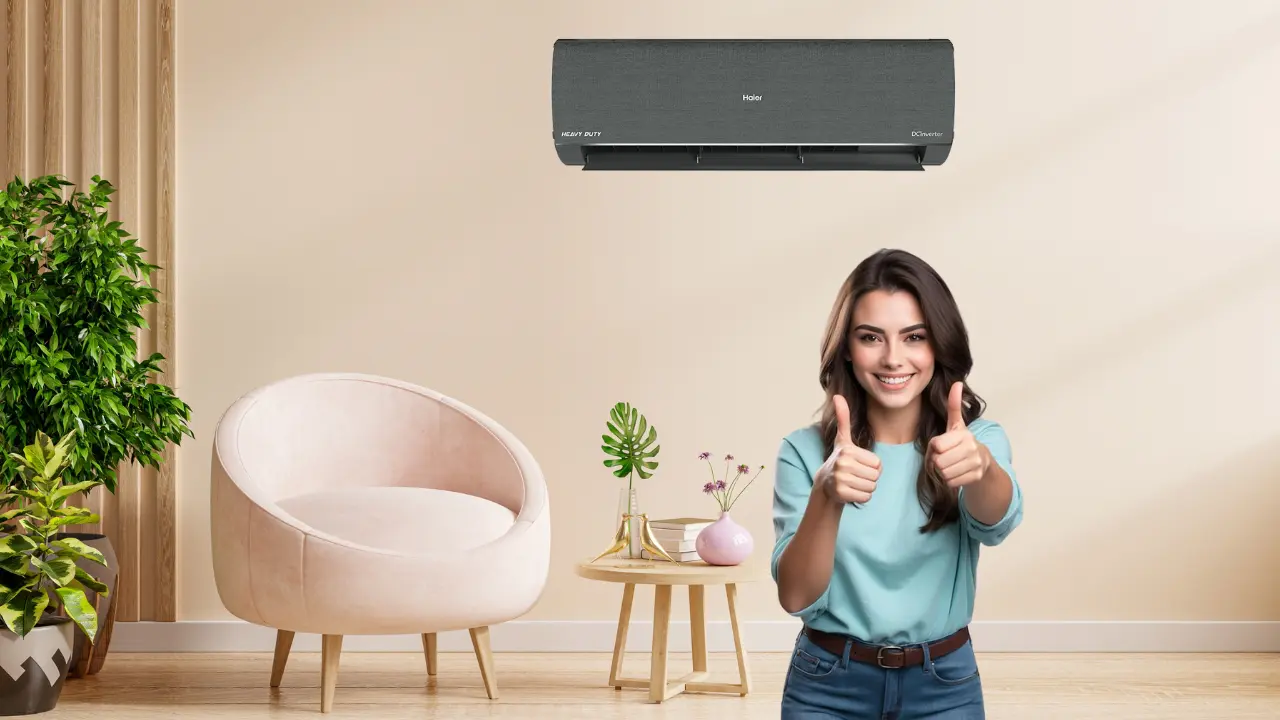

Comfort without compromise and savings without effort is about letting your home think ahead for you.
The best modern appliances remove daily friction by balancing performance, energy use, and lifestyle needs automatically.
In Indian homes today, real comfort comes from systems that learn, adapt, and quietly optimize without constant reminders, manual settings, or guilt about electricity bills.
That is the promise.
Now let us talk about why it matters.
The modern Indian home has changed faster than our habits
Evenings look different now.
Work stretches late. Commutes drain energy. Homes pull double duty as offices, classrooms, gyms, and theatres. Yet many daily decisions still feel stuck in the past.
Switch this off.
Adjust that temperature.
Check the power bill.
Remind someone to close the fridge door.
Comfort should not demand supervision.
The hidden cost is not money alone. It is attention.
Every manual adjustment is a tax on mental energy. Over time, that tax adds up.
Why comfort and savings are no longer opposites
For years, we accepted a trade-off.
One option was comfort.
Cold rooms. Bright screens. Powerful appliances. Higher bills.
The second option was savings.
Fans over ACs. Smaller screens. Constant reminders to switch things off.
The third option was compromise.
A little discomfort. A little guilt. A lot of adjustment.
That triangle no longer holds.
Smart systems collapse the trade-off by doing something simple but powerful.
They replace reaction with prediction.
When an appliance understands patterns, it stops wasting effort.
Systems beat settings every single time
Think about how people actually live.
Nobody wakes up thinking about temperature curves or energy graphs. They think about getting through the day.
The best homes run on systems, not instructions.
- A fridge that manages freshness without reminders
- An AC that adapts to weather and occupancy
- A TV that delivers immersion without extra boxes
- A washer that balances hygiene and efficiency quietly
Each appliance becomes part of a larger loop.
When systems talk to reality, effort disappears.
What effortless comfort really feels like
Effortless comfort is subtle.
It is walking into a room that feels right without adjusting anything.
It is sleeping through the night without waking up sweaty or cold.
It is watching a match without fiddling with volume or brightness.
It is opening a fridge and trusting what is inside.
The best part is what you do not notice.
No second guessing.
No constant corrections.
No stress.
Comfort works best when it stays invisible.
Why Indian homes need adaptive intelligence more than most
India is not one climate.
Summer behaves differently in Mumbai, Jaipur, and Bengaluru. Monsoon humidity changes how cooling feels. Winters shift sharply across regions. Power tariffs vary. Usage patterns change with festivals, guests, and work schedules.
Static appliances struggle here.
Adaptive appliances thrive.
When systems respond to environment, behaviour, and time, they stop wasting energy on assumptions.
They cool only where needed.
They preserve only what matters.
They adjust without asking.
That is not luxury.
That is relevant.
A closer look at smart cooling as a system
Cooling is where the comfort versus savings myth breaks first.
Traditional AC usage follows guesswork.
Set a temperature. Hope for the best.
Smart cooling works differently.
It observes.
It learns.
It optimises.
Modern AI-driven climate systems can analyse room conditions, occupancy patterns, and even arrival behaviour to pre-adjust cooling and avoid overuse.
According to Haier’s AI-powered Atmox platform, these systems dynamically balance comfort and efficiency by learning usage habits and environmental data in real time, instead of relying on fixed manual settings .
The implication is simple.
Cool air arrives faster.
Energy waste drops quietly.
Bills stay predictable.
Comfort does not need to be loud to be effective.
Savings work best when they feel automatic
The problem with energy saving advice is not logic.
It is friction.
People know what to do. They just do not want to keep doing it.
Automatic savings change behaviour without asking for discipline.
Consider what intelligent power management does:
- Tracks usage instead of guessing
- Shifts modes based on real need
- Reduces output when rooms are empty
- Prevents overcooling by design
This is not about cutting corners.
It is about removing waste.
Savings stick when they require zero reminders.
Appliances that respect attention feel premium
Premium is not about features.
It is about respect.
Respect for space.
Respect for time.
Respect for habits.
The most advanced appliances today do not demand learning curves. They blend into routines.
A fridge should not ask you to remember settings.
A washing machine should not need constant monitoring.
A TV should not require external clutter to sound good.
When technology disappears into behaviour, trust grows.
Why families, couples, and solo professionals all want the same thing
Life stages differ.
Needs overlap.
Parents want reliability.
Couples want balance.
Solo professionals want simplicity.
The common thread is predictability.
- Food stays fresh longer
- Rooms feel comfortable without micromanagement
- Power bills do not spike unexpectedly
- Appliances fit the rhythm of the day
This is where brands like Haier India focus their thinking. Not on selling machines, but on building systems that feel human.
The appliance does the thinking.
People get the benefit.
The quiet role of design in everyday comfort
Design often gets reduced to looks.
That misses the point.
Good design reduces decision-making.
Clear displays.
Logical controls.
Minimal interruptions.
When design supports behaviour, learning disappears.
The best-designed homes do not shout intelligence. They feel calm.
The economics of effort-free living
Let us talk about costs without spreadsheets.
Effort has a price.
Every manual adjustment costs attention.
Every forgotten switch costs money.
Every overuse shortens lifespan.
Effort-free systems save in three ways:
- Energy efficiency through real-time optimisation
- Time savings by removing daily micromanagement
- Longevity by reducing stress on components
The return is not instant gratification.
It is sustained ease.
That compounds.
Why smarter homes feel more human, not more technical
There is a fear that smart homes feel cold.
The opposite is true.
When technology adapts to people, not the other way around, homes feel warmer.
More intuitive.
More forgiving.
More aligned with real life.
This is not about screens everywhere.
It is about intelligence behind the scenes.
The bigger pattern most people miss
Comfort and savings improve together when systems learn faster than habits change.
This is the pattern playing out across appliances, workspaces, and even cities.
Prediction replaces reaction.
Automation replaces reminders.
Design replaces discipline.
Homes stop demanding attention.
They start supporting it.
What this means for the future of Indian living
The next decade of Indian homes will not be defined by bigger appliances.
It will be defined by quieter ones.
Machines that understand context.
Systems that optimize automatically.
Spaces that feel right without explanation.
Comfort without compromise is no longer aspirational.
Savings without effort is no longer idealistic.
They are becoming standard expectations.
And once you experience that shift, it is impossible to go back.
Because the most powerful upgrade is not what your home can do.
It is how little it asks from you.
Frequently Asked Questions
Is comfort really costing me attention, not just electricity?
Yes. Every manual correction is a small cognitive tax. Over time, that adds up. Appliances that auto-adjust remove this friction, freeing mental energy for more important things.
How can savings feel invisible instead of restrictive?
When appliances track real usage, reduce output only when needed, and prevent overuse by design, savings happen quietly, without reminders.
What’s different about AI-based cooling compared to setting 24°C?
Manual settings assume constant conditions. AI systems learn behaviour and environment continuously, adjusting dynamically instead of relying on one fixed number.
Why do I still worry about food freshness even with a good fridge?
Because trust requires consistency. Smart freshness systems manage conditions automatically, reducing the need for reminders or second guessing.
Why does predictability matter more than control?
Because constant control is tiring. Predictability lets people trust their home instead of managing it.
Why does comfort improve when systems learn faster than habits change?
Because prediction replaces reaction. Automation replaces reminders. Design replaces discipline. Homes stop demanding attention and start supporting it.