
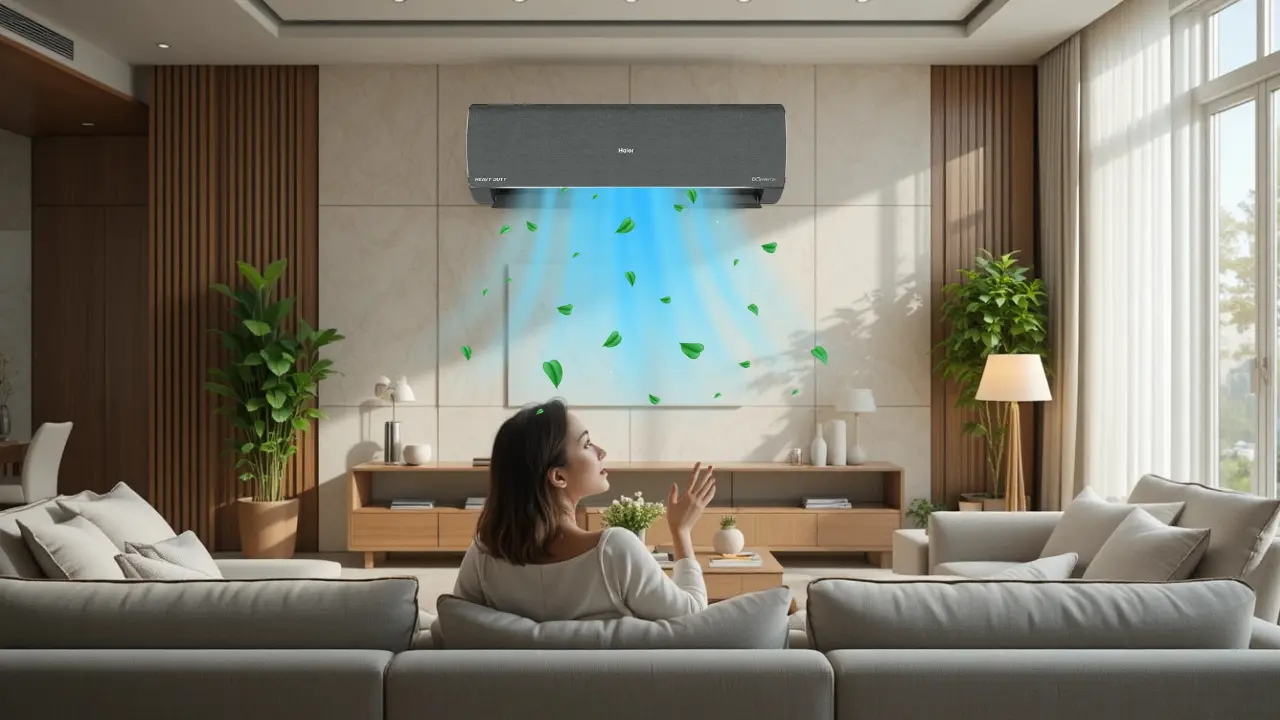

Smart cooling that adjusts before you feel the change is about systems that observe patterns, anticipate needs, and act early.
Instead of reacting after a room feels uncomfortable, intelligent air conditioning studies weather, routines, and indoor conditions to fine-tune cooling ahead of time. Comfort feels steady. Energy use feels lighter. Life flows without interruptions.
The moment you realise cooling has been reacting, not thinking
It is 6:45 pm.
You unlock the door after a long commute.
The room is warm. Not unbearable. Just uncomfortable enough.
You switch on the AC.
You wait.
That wait has become normal in Indian homes. We plan around it. We tolerate it. We adjust our routines to it.
But here is the uncomfortable truth.
Reactive cooling forces humans to manage machines. Intelligent cooling reverses that role.
Smart cooling begins before discomfort appears. Not after.
Why traditional cooling always feels one step behind
Most conventional air conditioners operate on a simple logic.
- Sense current temperature
- Compare it to a fixed setting
- Switch compressor on or off
That sounds fine on paper.
In real homes, it breaks down.
Because comfort is not just temperature.
It is humid.
It is body heat.
It is time of day.
It is how many people are in the room.
It is whether rain is coming or the sun is setting.
A single number on a remote cannot manage all that.
When systems ignore context, humans pay the price in discomfort and higher bills.
Smart cooling works because it watches patterns, not buttons
Smart cooling systems work on a different assumption.
Humans repeat themselves.
- You come home around the same time.
- You sleep at similar hours.
- You use certain rooms more than others.
- You adjust the AC the same way every night.
AI-powered cooling systems observe these patterns quietly.
Over time, they stop waiting for instructions.
They act first.
This shift from reaction to prediction changes everything.
What “adjusts before you feel the change” actually means
Smart cooling is not about extreme cold or flashy features.
It is about timing.
Here is what adjustment before discomfort looks like in practice.
1. Cooling that prepares the room before arrival
Instead of starting cooling when you enter a warm room, smart systems anticipate occupancy.
Based on location data, schedules, and historical usage, the AC begins cooling earlier so the room is already comfortable when you arrive.
No waiting.
No temperature shock.
This is known as AI pre-cooling and is explained in detail in Haier’s AI-Atmox.
Comfort should greet you, not make you wait.
2. Cooling that adapts to weather shifts automatically
Indian weather changes quickly.
Sunny afternoons turn into humid evenings.
Dry heat turns sticky during the monsoon.
Traditional ACs require manual changes. Smart systems do not.
They monitor outdoor conditions, indoor humidity, and thermal load. Cooling output adjusts gradually, not suddenly.
The result is stability.
No sudden chills.
No damp air.
No overcooling.
3. Cooling that knows where you actually are
Most rooms are not used evenly.
You sit on the sofa.
You sleep on the bed.
You work at the desk.
Smart cooling uses installation data and room layout to direct airflow where people are present, instead of cooling empty corners.
This targeted approach delivers faster comfort with less energy use.
Cooling the person, not the space, is how efficiency improves without sacrifice.
The hidden cost of overcooling that no one talks about
Overcooling is common in Indian homes.
It happens slowly.
- AC set too low
- Compressor running longer than needed
- Body compensating with blankets
- Energy bills climbing quietly
Smart cooling prevents this by constantly adjusting intensity.
As the temperature gap reduces, cooling power steps down automatically.
Not abruptly.
Not noticeably.
Just enough.
The system stays alert so humans do not have to.
Three ways homes handle cooling today
Every household fits into one of these patterns.
Option one: Manual control
- Frequent remote adjustments
- Inconsistent comfort
- Higher electricity consumption
This relies on constant attention.
Option two: Fixed automation
- Timers and preset modes
- Limited adaptability
- Works only if routines never change
This assumes life is predictable.
Option three: Adaptive intelligence
- Learns habits over time
- Adjusts before discomfort
- Balances comfort with efficiency
This adapts as life evolves.
The third option scales with complexity. The others break under it.
Why this matters more for Indian households
Indian homes face unique conditions.
- High ambient temperatures
- Long cooling seasons
- Dense urban layouts
- Rising electricity costs
Smart cooling systems are not luxury upgrades here. They are structural solutions.
They reduce decision fatigue.
They protect sleep quality.
They control energy spent quietly.
And they do it without asking users to learn new habits.
Energy savings that come from timing, not restriction
Energy efficiency often feels like sacrifice.
Lower temperatures restricted.
Usage limited.
Comfort compromised.
Smart cooling flips that narrative.
By cooling earlier, targeting airflow, and reducing overcooling, systems consume less energy overall while delivering better comfort.
Electricity monitoring 2.0 features make this visible.
You see usage patterns.
You see savings in real time.
You understand cause and effect.
Awareness builds trust. Trust builds habit change.
When cooling becomes part of the home system, not a device
The most powerful shift is not technological.
It is psychological.
When cooling becomes predictable, people stop thinking about it.
That mental relief matters.
It reduces friction in daily routines.
It removes small irritations that add up.
It allows homes to feel calmer.
This is where Haier’s AI Climate Control philosophy fits naturally. Not as a product push, but as a system approach to living spaces .
The larger pattern smart cooling reveals
Look beyond air conditioning.
The same principle is shaping modern homes.
- Fridges that regulate cooling zones automatically
- Washing machines that decide water and time on their own
- TVs that adjust visuals and sound based on content
The future of appliances is not more control. It is better judgment.
Smart cooling is one of the clearest examples of that shift.
A simple truth worth remembering
Comfort should not demand attention.
When systems learn faster than humans can react, life feels smoother.
You do not notice the adjustment.
You just feel at ease.
That is the quiet power of smart cooling that adjusts before you feel the change.
And once you experience it, going back feels unnecessary.
Because the best technology does not announce itself.
It simply works.
Frequently Asked Questions
Why does my AC always feel one step behind my comfort?
Because it waits for discomfort before acting. Reactive cooling only responds after the room warms up.
What does “cooling before I feel it” actually mean in daily life?
It means the room is already comfortable when you arrive, no waiting, no temperature shock. Pre-cooling uses your schedule and habits to prepare the space in advance.
I reach home around the same time daily. Why can’t my AC remember that?
Traditional systems can’t learn. AI-powered cooling observes patterns and adjusts automatically without repeated instructions.
How does a smart AC know where to cool inside the room?
By using room layout and installation data to direct airflow toward occupied zones sofa, bed, or desk instead of cooling empty corners.
Does smart cooling mean extreme cold or flashy modes?
No. It’s about timing and balance. The best systems feel calm, not aggressive.
What makes AI-based cooling different from timers or preset modes?
Timers assume life never changes. AI adapts as routines shift weekends, guests, late nights without manual reprogramming.