
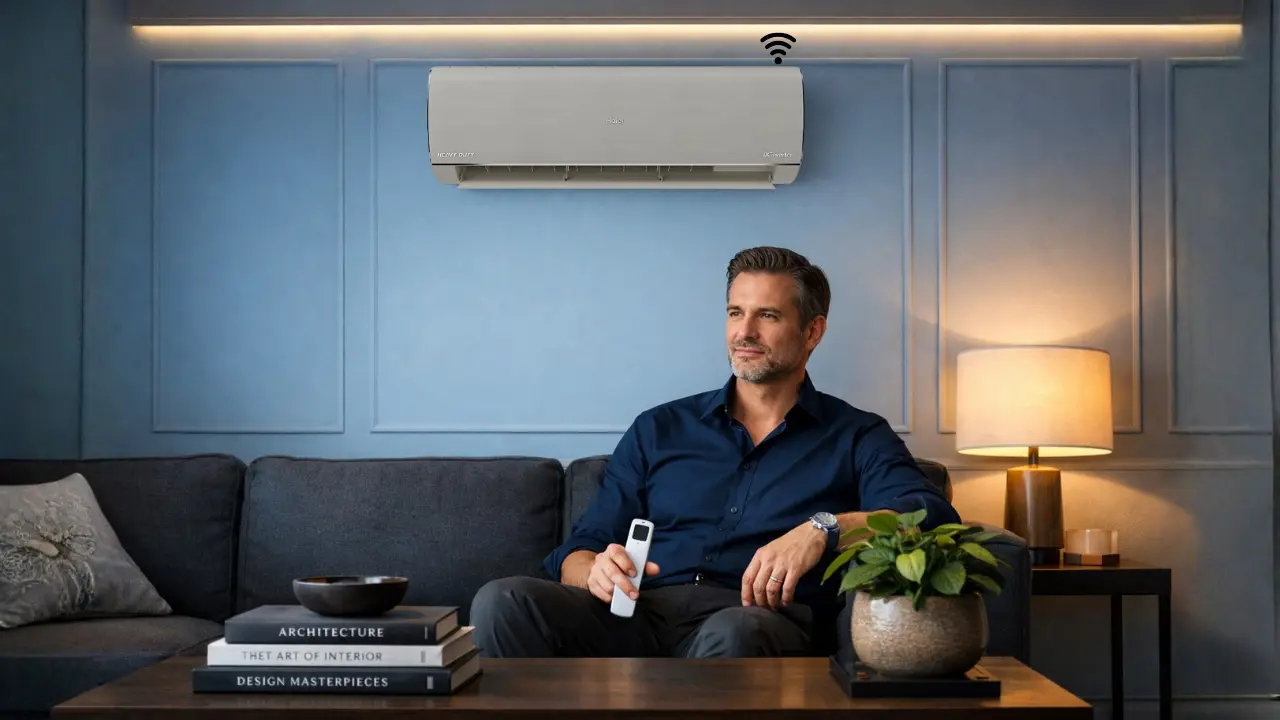

A truly smart AC today does three things at once.
It keeps you comfortable without constant tweaking, reduces electricity waste automatically, and takes care of its own upkeep.
When AI handles all three together, cooling stops being a daily decision and starts becoming a quiet background system that simply works.
Why does cooling still feel harder than it should?
It usually starts the same way.
You come home after work.
The room feels stuffy.
You switch on the AC.
Five minutes later, it feels too cold.
Another ten, and you are reaching for the remote again.
This dance happens in homes across India every summer. Bedrooms. Living rooms. Home offices. Even rented flats where settings never feel quite right.
The assumption has always been simple.
Comfort needs constant control.
That assumption is outdated.
Because temperature is not a number.
It is a context.
And context changes every hour.
Comfort is not about colder air. It is about smarter air
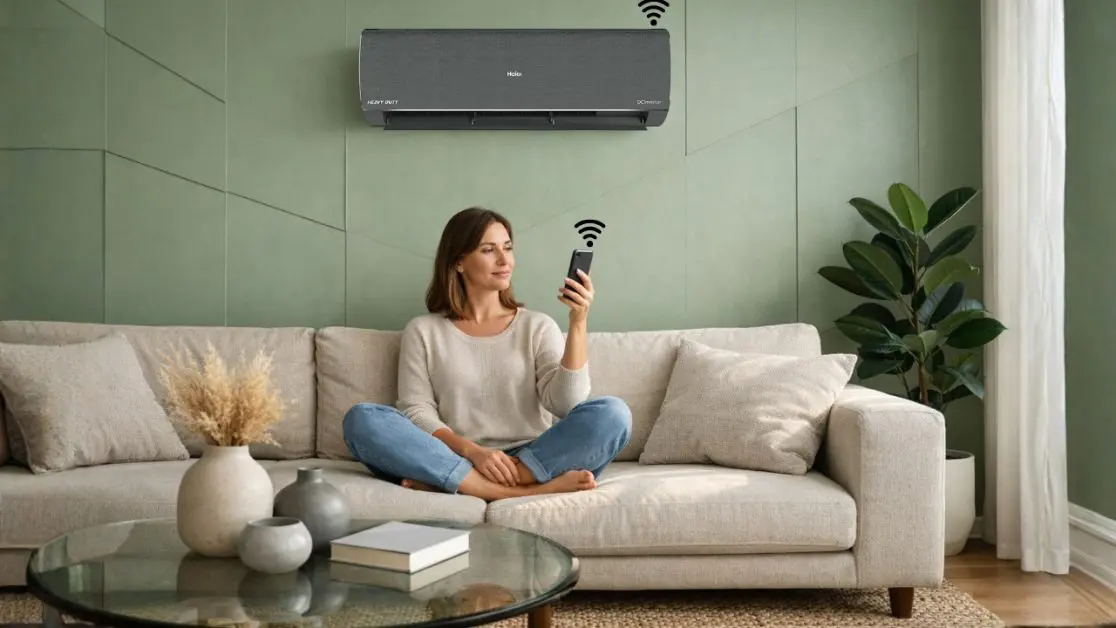
Think about how comfort actually works in real homes.
A sunny afternoon with curtains open feels different from a humid evening after rain.
A family watching TV needs different cooling than one person working on a laptop.
A sleeping body needs less aggressive cooling than an active one.
Traditional ACs treat all of this the same.
Modern AI systems do not.
What AI Climate Control really changes
AI driven climate systems learn three things at once:
1. Your space
Room size, layout, airflow direction, and heat buildup patterns.
2. Your habits
When you arrive home, how long you stay, and how you usually set the temperature.
3. Your environment
Outside heat, humidity, season, and even time of day.
Instead of reacting to button presses, the system predicts what comfort should feel like next.
Comfort stops being manual. It becomes adaptive.
This is the difference between turning a knob and having a system that reads the room.
Pre-cooling is not a feature. It is a mindset shift
There is a small moment that changes how people think about ACs.
You unlock the door.
And the room already feels right.
No waiting. No blast of cold air. No compromise.
AI powered pre-cooling works by learning when you are about to arrive and preparing the space in advance. It uses location patterns and past behavior instead of fixed timers.
Why this matters in daily life:
- You stop running the AC all day just to avoid coming home to heat.
- You stop overcooling rooms that stay empty longer than expected.
- You get comfort exactly when it is needed, not before or after.
Good systems respect timing. Great systems anticipate it.
Target cooling fixes the biggest waste we ignore
Here is an uncomfortable truth.
Most ACs cool air that nobody is using.
A sofa corner.
An empty dining area.
A far wall at night.
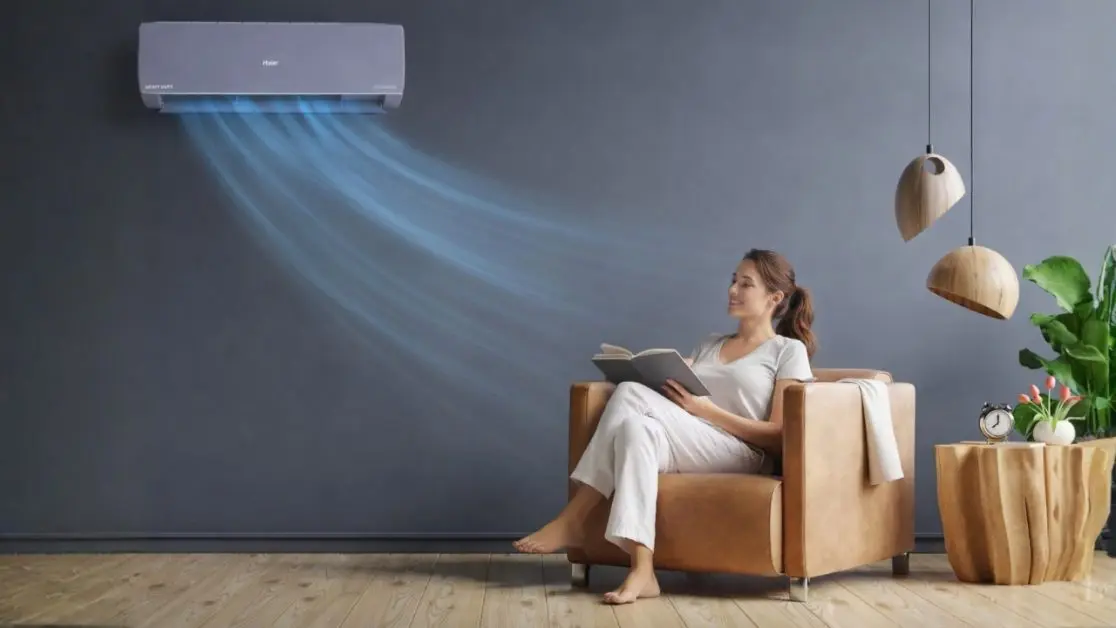
AI target cooling flips the logic.
Instead of cooling the entire room uniformly, the system focuses airflow where people actually are. It uses installation data and spatial learning to direct cooling more precisely.
The benefits are immediate and practical:
- Faster comfort where you sit or sleep.
- Lower energy use because less air is over processed.
- Fewer temperature swings that cause discomfort.
This is not about stronger cooling.
It is about relevant cooling.
Like a reading lamp versus a floodlight.
Savings do not come from restraint. They come from intelligence
Most energy saving advice sounds the same.
Set higher temperatures.
Switch off more often.
Limit usage.
That framing misses the real opportunity.
Savings scale when systems make better decisions than humans can in real time.
How AI driven savings actually work
AI power management focuses on patterns, not rules:
- It detects when rooms are occupied and when they are not.
- It shifts between cooling intensities based on temperature gaps.
- It reduces output automatically once comfort stabilizes.
Instead of running at full capacity until someone intervenes, the system fine tunes itself continuously.
What this delivers:
- Lower power bills without daily discipline.
- Fewer peaks in electricity consumption.
- Cooling that feels steady rather than aggressive.
Efficiency improves when thinking moves from control to calibration.
Seeing your electricity changes behavior faster than advice
There is a reason fitness trackers work.
Visibility creates awareness.
AI enabled Electricity monitoring 2.0 turns invisible consumption into something tangible. Daily usage. Weekly patterns. Cost in currency, not units.
When people can see:
- How long the AC ran in normal mode versus eco mode.
- Which days consumed the most power.
- How small habit changes affected monthly cost.
Decisions change naturally.
Not because someone was told to save energy.
But because the system made outcomes visible.
This is how behavior shifts at scale.
Human detection is about respect for absence
One of the most wasteful moments in any home is an empty room being cooled.
It happens during:
- Quick grocery runs.
- School pick ups.
- Long phone calls outside the room.
AI based human detection solves this quietly.
The system senses when a room is empty and adjusts cooling automatically. It does not wait for timers. It does not rely on memory.
The result is simple:
- Less wasted energy.
- No need to remember switch offs.
- Comfort resumes instantly when you return.
The best automation respects presence and absence equally.
Service is part of comfort, not an afterthought
There is another friction people rarely talk about.
AC maintenance.
Filters clog. Coils collect dust. Efficiency drops slowly until cooling feels weaker and bills rise.
Most homes notice too late.
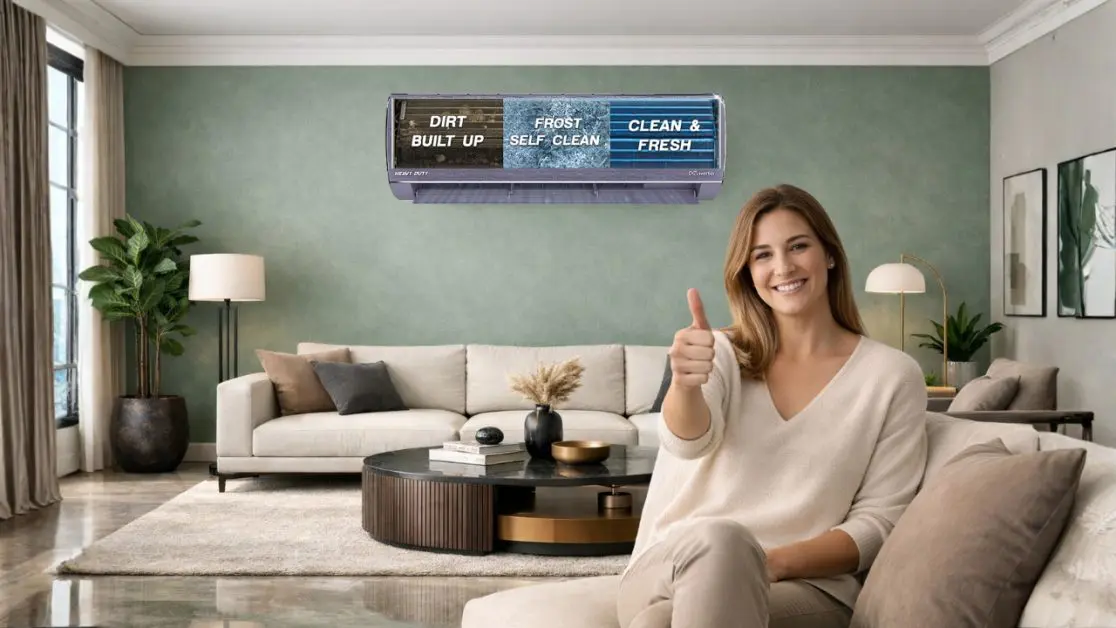
AI enabled self cleaning systems change this relationship entirely. Indoor and outdoor units clean themselves at regular intervals, keeping airflow efficient and hygienic without manual effort.
What this unlocks:
- Consistent cooling performance across seasons.
- Better air quality indoors.
- Lower maintenance costs over time.
Service stops being reactive.
It becomes preventive.
And prevention always feels effortless when done right.
One system. Three outcomes. No trade offs
Comfort, savings, and service are usually treated as separate goals.
They are not.
They are outcomes of the same underlying principle.
Intelligence reduces friction.
When one AC system learns your habits, understands your space, monitors energy use, and maintains itself, the experience changes fundamentally.
You stop thinking about:
- When to switch modes.
- Whether the room is overcooling.
- How much power you are wasting.
- When servicing is due.
You start noticing something else.
The room feels right more often.
Bills feel predictable.
Maintenance becomes invisible.
Why this matters for modern Indian homes
Indian homes are evolving quickly.
More people work from home.
Living spaces multitask all day.
Electricity costs fluctuate.
Weather patterns are less predictable.
In this environment, static appliances struggle.
Adaptive systems thrive.
That is why AI powered climate control is not a luxury feature anymore. It is the infrastructure for everyday life.
Technology works best when it removes decisions, not adds options.
The bigger pattern hiding in plain sight
Across industries, the shift is the same.
From tools that wait for instructions
to systems that take responsibility.
From manual optimization
to continuous learning.
From control
to trust.
Smart ACs are simply one visible example of this transition inside the home. Brands like Haier are building appliances that fit into life quietly, without demanding attention, while improving outcomes in the background.
That is the future of comfort.
Not colder air.
Smarter systems.
And once you experience it, going back feels strangely exhausting.
Frequently Asked Questions
Why do I keep adjusting my AC even when the temperature looks right?
Because comfort isn’t just temperature. It changes with humidity, sunlight, activity, and time of day. Traditional ACs respond only to numbers, so you’re forced to keep correcting what the system can’t understand.
I feel like I’m constantly fighting my AC remote. Is that normal?
Unfortunately, yes with conventional systems. They rely on manual control, while comfort actually depends on context. AI-powered ACs reduce this friction by adapting automatically.
Why does the same AC setting feel different at different times of day?
Because comfort depends on factors like sunlight, humidity, and activity. A sunny afternoon and a humid evening require different cooling even at the same temperature.
Does AI cooling mean my room will always be very cold?
No. AI focuses on feeling right, not being colder. It often uses gentler, more precise cooling that feels more stable and natural.
I work during the day and sleep at night. Can one AC handle both comfortably?
AI systems adjust airflow and intensity based on activity levels, so working, relaxing, and sleeping all get different cooling profiles automatically.
Will pre-cooling increase my electricity bill?
Usually the opposite. It avoids all-day operation and reduces aggressive cooling spikes by timing usage more intelligently.
I hate coming home to a hot room, but I don’t want the AC running all day. what’s the balance?
AI pre-cooling solves this by cooling only when needed, based on real behavior instead of guesswork.