
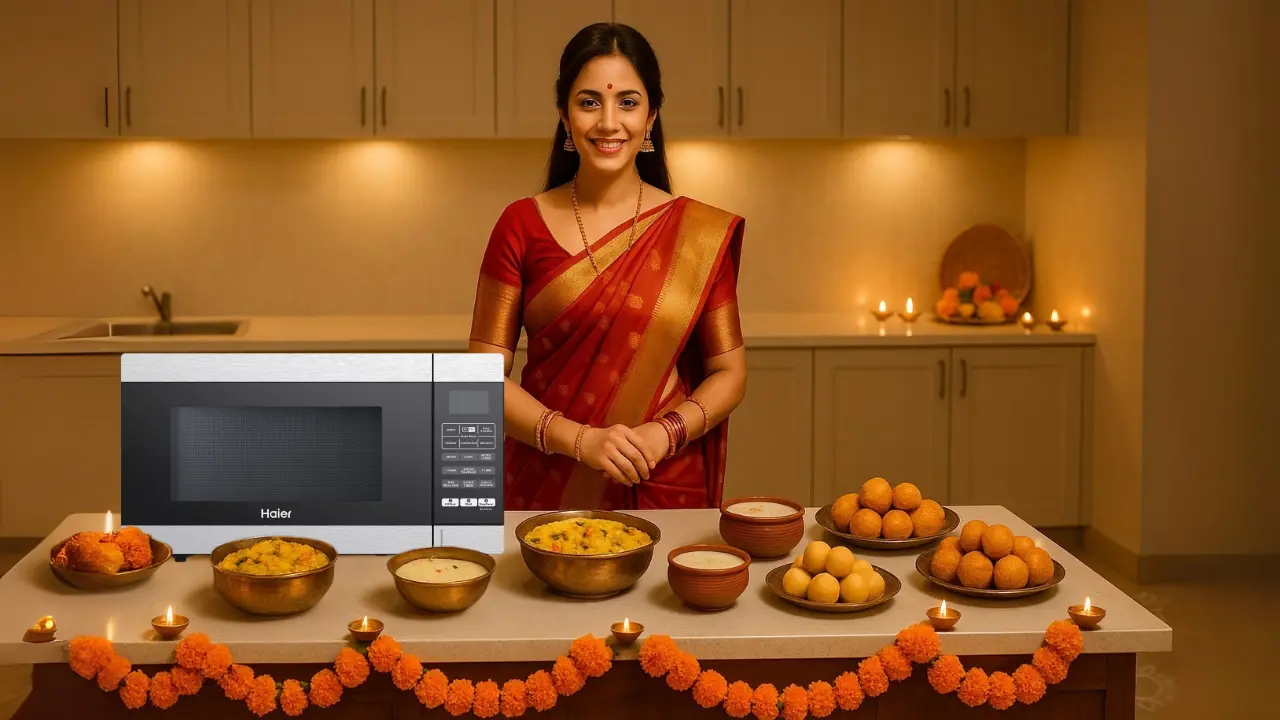

February festivals often arrive on working days, not holidays. Quick festival prasad recipes using a microwave help Indian homes maintain rituals without long kitchen hours.
With the right dishes and the right appliance, prasad stays authentic, fresh, and homemade, even when time is limited.
February festivals do not slow life down. They fit inside it.
February is a quiet but important month in Indian households.
Vasant Panchami pujas before school.
Magha Purnima offerings before office.
Society temple rituals squeezed into weekday mornings.
These are not festivals where the day pauses. Life continues around them.
That is why prasad preparation in February feels different. The intention is deep, but the time window is narrow. This is where microwave cooking stops being a convenience and becomes a practical system.
A system that respects tradition while understanding modern schedules.
Why microwave prasad works for real Indian routines
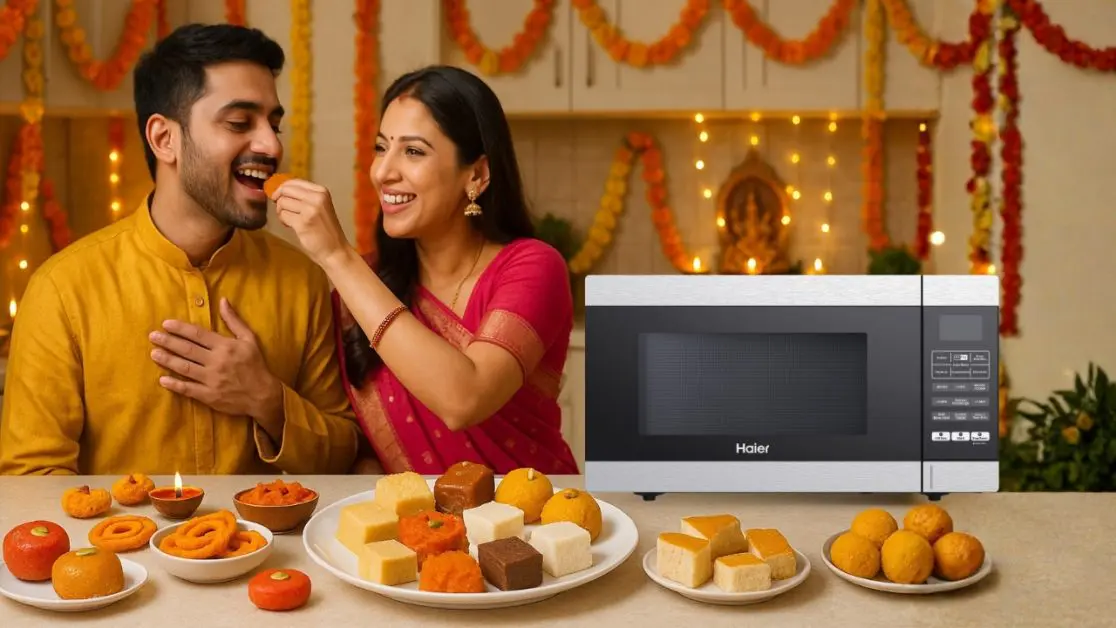
There is an old belief that prasad must take time to be meaningful.
But time is not devotion. Attention is.
Microwave cooking does not dilute faith. It removes friction. It offers steady heat, predictable results, and fewer interruptions. This matters when prasad preparation happens between meetings, school drop-offs, or evening fatigue.
Modern convection microwaves also retain nutrients efficiently, especially in milk-based and grain-based dishes. That makes them suitable for prasad, where purity and nourishment matter.
Less hovering.
Less anxiety.
More presence during the ritual.
Choosing prasad that works with microwave cooking
Not every dish belongs in a microwave. The key is selecting prasad that benefits from controlled heat and consistency.
February prasad usually falls into four reliable categories.
Milk-based prasad: Where consistency matters most
Milk-based sweets are central to many February rituals.
Option 1: Sooji sheera or kesari
Why it suits microwave cooking:
- Even heat prevents burning
- Minimal stirring required
- Small or large portions both work
How it fits modern kitchens
Using convection mode, sooji can be lightly roasted, followed by milk, sugar, and ghee added in intervals. The texture remains smooth and predictable.
This approach works especially well in compact urban kitchens using models like the Haier 20L Convection Microwave with Mirror Glass Design (HIL2001CSSH), which offers uniform heating and a stainless steel cavity that supports even cooking.
Option 2: Instant milk peda
Traditional pedas require long reduction times. Microwave versions rely on:
- Milk powder or quick khoya
- Controlled heating
- Faster setting
The result is a soft, clean pedal suitable for home offerings. Convection microwaves with precise power control make this repeatable rather than risky.
Grain-based prasad: Predictable results reduce stress
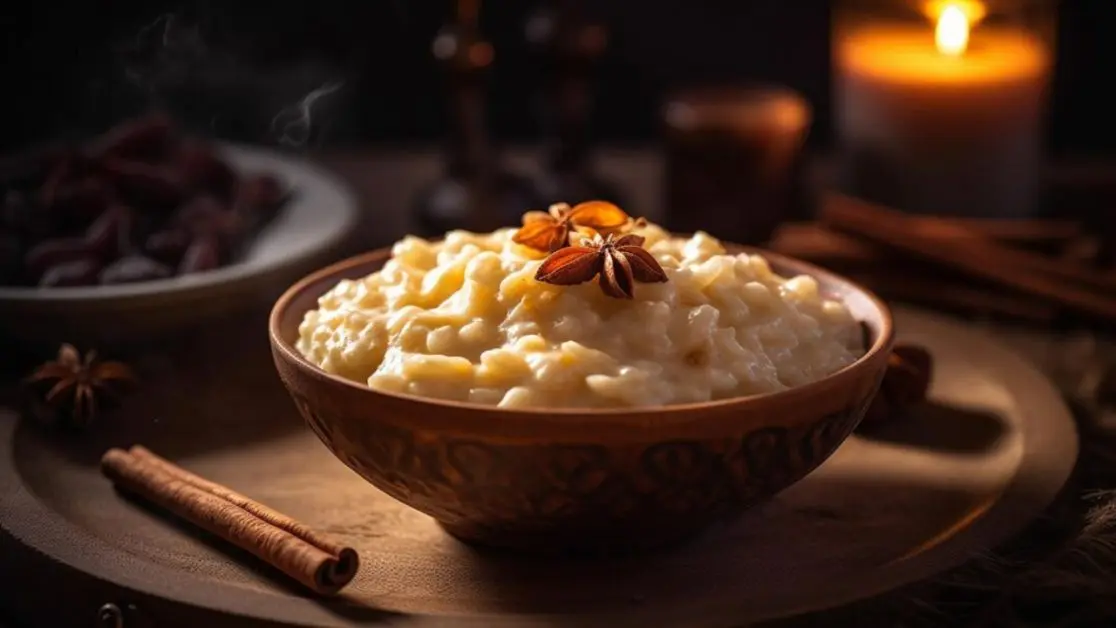
Grains respond well to microwave heat because cooking times are measurable and stable.
Option 3: Sweet rice prasad
Common for Saraswati puja and full moon rituals.
Why microwaves help:
- Rice cooks evenly
- Milk absorbs gradually
- Spices do not scorch
Process logic:
- Microwave rice and water first
- Add milk and sugar later
- Finish with nuts and cardamom
The outcome is soft grains and consistent sweetness, without standing over a stove.
Option 4: Wheat halwa
Wheat halwa often feels intimidating on weekdays.
Microwave cooking simplifies it by replacing constant stirring with timed intervals. Ghee incorporation becomes controlled rather than rushed. This makes wheat halwa practical even on early mornings.
Larger families often prefer mid-capacity appliances like the Haier 25L Convection Microwave Oven with Bread Basket (HIL2501CBSH), which supports combination cooking and preset menus that reduce guesswork.
Dry prasad: Where microwaves quietly excel
Dry prasad depends on roasting precision, not speed.
Option 5: Roasted chana, peanuts, or makhana
Why microwaves work well:
- Oil-free roasting
- Even browning
- No smoke or splatter
This is especially useful when prasad needs to be packed or stored. Oil-free cooking also keeps flavours clean and shelf life longer.
Microwaves with oil-free and multi-power features make dry prasad predictable instead of experimental.
Option 6: Til-based prasad
Til laddoos and til mixtures need careful jaggery melting.
Microwave heat allows:
- Gentle jaggery softening
- No burning
- Better binding
Small batches become easier, which suits February rituals that repeat across multiple days.
Fruit and coconut prasad – Minimal cooking, maximum respect
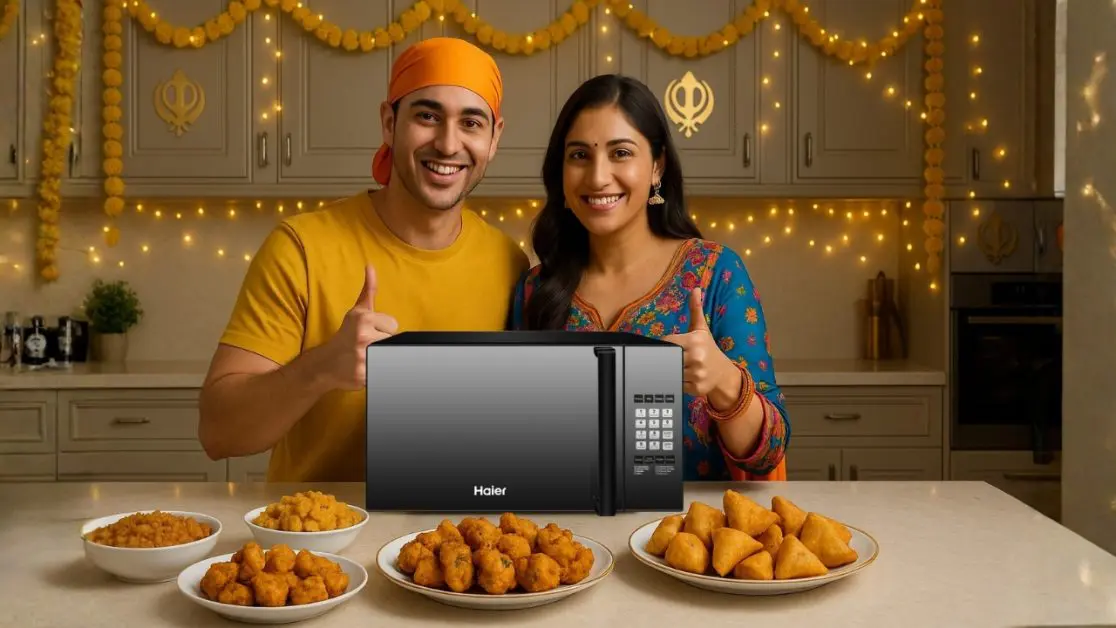
Some prasad should stay simple.
Coconut mixtures, banana offerings, or fruit-jaggery combinations require warming, not heavy cooking. Microwaves allow gentle heating without open flames, making them safer and calmer choices, especially when elderly family members or children are involved.
A simple comparison that changes how people plan
| Prasad Type | Stove Effort | Microwave Effort | Outcome Stability |
| Milk sweets | High supervision | Low supervision | High |
| Grain halwa | Constant stirring | Interval-based | High |
| Dry prasad | Oil management | Oil-free | Very high |
| Small batches | Inefficient | Ideal | Very high |
Microwaves do not rush prasad. They stabilize it.
Why February rituals reward repeatability
February festivals are not singular events.
They repeat across schools, homes, temples, and societies. Repeatability matters more than dramatic preparation.
Microwaves support that rhythm.
You can prepare prasad early.
You can reheat without damage.
You can scale portions without stress.
Larger households often lean towards advanced models like the Haier 30L Convection Microwave with In-Built Air Fryer (HIL3001ARSB), which offers multiple power levels, auto cook menus, and combination modes that support frequent use without complexity.
The hidden system behind stress-free prasad
The real challenge in prasad preparation is not effort.
It is decision fatigue.
Which flame.
Which vessel?
How long to stir.
Is it burning?
Microwaves reduce these micro-decisions. When decisions drop, rituals feel lighter. Focus returns to intention rather than execution.
Good appliances do not replace tradition.
They protect it from burnout.
What modern Indian homes are quietly doing
Across urban households, microwaves are no longer just reheating tools.
They help manage:
- Weekday rituals
- School pujas
- Elder-friendly kitchens
- Smaller, frequent prasad batches
This shift happens quietly. No announcements. No rule changes. Just smoother mornings and calmer evenings.
The larger insight
Tradition survives because it adapts.
February festivals prove this every year.
Quick festival prasad recipes using a microwave are not shortcuts. They are systems designed for real lives. Lives with jobs, families, and limited hours.
When appliances fit into that rhythm, homes feel calmer.
And prasad, prepared without rush or resentment, feels exactly as it should.
Frequently Asked Questions
I have only 30 minutes before the office. What prasad can I realistically make in my microwave?
Sooji sheera, sweet rice, roasted makhana, or instant milk peda. These require timed intervals, not constant supervision.
I feel guilty using a microwave for prasad. Is it disrespectful?
Devotion comes from intention, not flame type. A microwave offers steady, controlled heat, it doesn’t reduce sanctity. Attention matters more than duration.
How do I avoid second-guessing cook time and power levels?
Use interval cooking (2–3 minute bursts), stir between rounds, and rely on medium power for milk-based dishes to prevent overheating.
Does microwave cooking affect prasad purity?
No. Microwaves cook through heat energy. Clean utensils, fresh ingredients, and mindful preparation ensure purity.
I left my prasad in the microwave for reheating. Is that okay?
Yes, as long as it was covered and not spoiled. Reheating is often gentler than reheating on direct flame.
Is microwave cooking safer for elderly family members helping in the kitchen?
Yes. No open flame, less splatter, and fewer burns make it safer for shared kitchens.
Why does my sooji sheera burn on the stove but not in the microwave?
Microwave heat is even and controlled. No direct base flame means less scorching.
How do I prevent milk from overflowing in microwave sweet rice?
Use a deep microwave-safe bowl and cook in intervals. Stir after each round.
Can I really make peda without long milk reduction?
Yes. Use milk powder or quick khoya. Microwave in short bursts and mix until soft dough forms.