


February cooking feels lighter because routines reset, appetites shift, and time suddenly matters more.
Microwaves make it faster by collapsing prep, cooking, and cleanup into a single, predictable rhythm.
Together, they turn everyday meals into something easier to start, easier to finish, and easier to repeat without stress.
February is not festive like December.
It is not heavy like January.
It sits in between.
And that changes how Indian homes cook.
Why February Changes How Indian Kitchens Feel?
February quietly edits our behaviour.
The weather softens.
Winter foods start feeling too rich.
Summer prep is still a few weeks away.
In most Indian homes, this translates into lighter meals and shorter cooking windows.
A quick sabzi instead of a slow curry.
Reheated leftovers instead of fresh batch cooking.
Midweek dinners that need to happen between work calls and family time.
February is not about indulgence.
It is about momentum.
And kitchens adapt accordingly.
The Hidden System Behind Lighter Cooking
Cooking is rarely just about food.
It is about decisions.
What to cook.
How much effort to invest.
How long it should take.
In February, decision tolerance drops.
People want meals that feel warm but not heavy.
Filling but not exhausting.
Fast but not careless.
This is where systems matter.
A system that reduces steps gets used more often.
A system that asks too many questions gets postponed.
Traditional cooking methods assume you have time.
Modern households operate on margins.
This gap explains why microwaves become central during this season.
Microwaves Are Not About Speed. They Are About Flow.
Speed is the headline benefit.
Flow is the real value.
A microwave fits into how February days actually move.
One option is reheating last night’s dal without losing texture.
The second option is cooking a light pulao while answering emails.
The third option is air frying snacks without turning the kitchen into a heat zone.
Each option removes friction.
And friction is what most people are trying to avoid.
Studies from appliance usage data show that microwave usage in Indian homes increases by nearly 30 percent between January and March, especially for reheating, grilling, and light cooking tasks.
Not because people are lazier.
Because they are optimizing energy.
What February Meals Actually Look Like in Real Homes
Forget recipe blogs for a moment.
Think of actual plates.
Vegetable stir fries with less oil.
Paneer tossed quickly, not slow-cooked.
Leftover rajma reheated properly, not boiled again.
Frozen parathas warmed evenly instead of pan-fried.
These meals are not complex.
They are frequent.
Frequency changes everything.
When something is done daily, effort compounds.
Tools that save small amounts of time win long term.
This is why microwaves move from backup appliances to primary ones during this season.
The Microwave Has Grown Up. Kitchens Are Catching Up
There is a lingering assumption that microwaves are for reheating only.
That assumption is outdated.
Modern microwaves now handle convection cooking, grilling, baking, and even air frying in a single cavity.
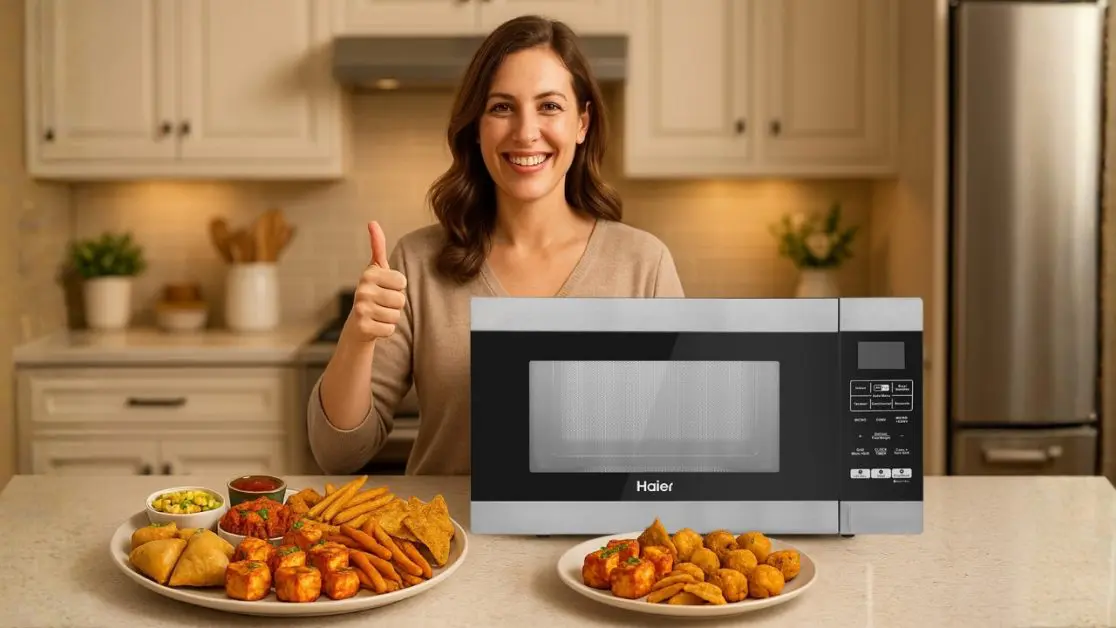
Take the Haier 30L Convection Microwave with In-Built Air Fryer as an example.
It comes with 36 dedicated air fryer menus, over 300 auto cook programs, a motorized rotisserie, and a stainless steel cavity designed for even heating and safety.
These are not novelty features. They are responses to how Indian kitchens actually cook today
The shift is clear.
Microwaves are no longer shortcuts.
They are complete cooking systems.
Why Lighter Cooking Demands Smarter Appliances
Lighter meals require precision.
Overcook a vegetable and it loses crunch.
Reheat rice incorrectly and it dries out.
Grill paneer unevenly and texture collapses.
Traditional gas cooking requires constant attention to get this right.
Microwaves automate consistency.
Auto cook menus calculate power and time.
Multi power levels adjust intensity.
Convection balances heat distribution.
This consistency matters more than speed.
Because lighter cooking leaves less room for error.
Three Ways Microwaves Change February Cooking Habits
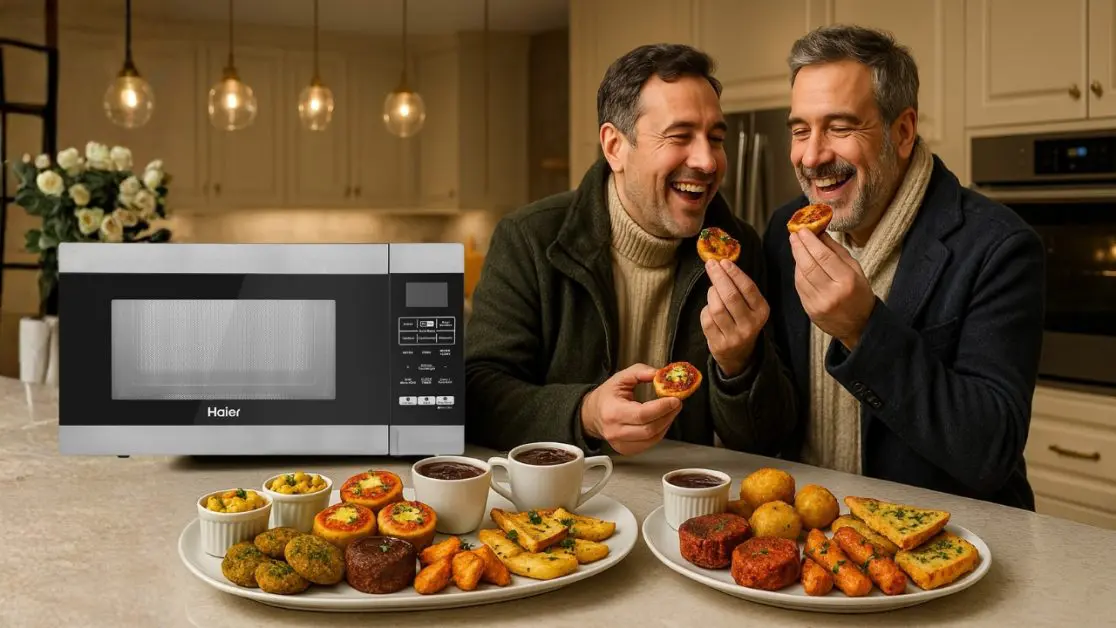
One. They Reduce Kitchen Heat Load
February afternoons can still feel warm in many Indian cities.
Gas cooking adds unnecessary heat.
Microwaves contain it.
This makes kitchens more comfortable and meals more approachable.
Two. They Support Smaller Portions
People eat lighter in February.
Microwaves make it practical to cook or reheat single servings without wasting fuel or time.
This aligns with changing nutrition habits, especially among millennials and Gen Z households.
Three. They Encourage Experimentation
When effort is low, curiosity rises.
People try baking, grilling, and air frying more often.
Not because they plan to.
Because the barrier is gone.
The Cost Benefit Equation That Quietly Wins
Microwaves often get evaluated only on price.
That misses the bigger picture.
Here is the real tradeoff.
- Lower daily gas usage
- Reduced cooking time
- Less supervision required
- Consistent results
- Fewer utensils to clean
Over a month, these benefits compound.
According to appliance energy studies, convection microwaves use up to 30 percent less energy than traditional oven cooking for similar tasks.
Efficiency is not about saving money alone.
It is about saving attention.
February Is the Season of Reset Kitchens
Just like wardrobes shift in February, kitchens do too.
Heavy kadais get used less.
Pressure cookers slow down.
Light cookware takes over.
Microwaves fit perfectly into this transition.
They support lighter food without demanding lifestyle change.
They adapt instead of forcing habits.
That adaptability is what modern homes value.
Why This Matters Beyond February
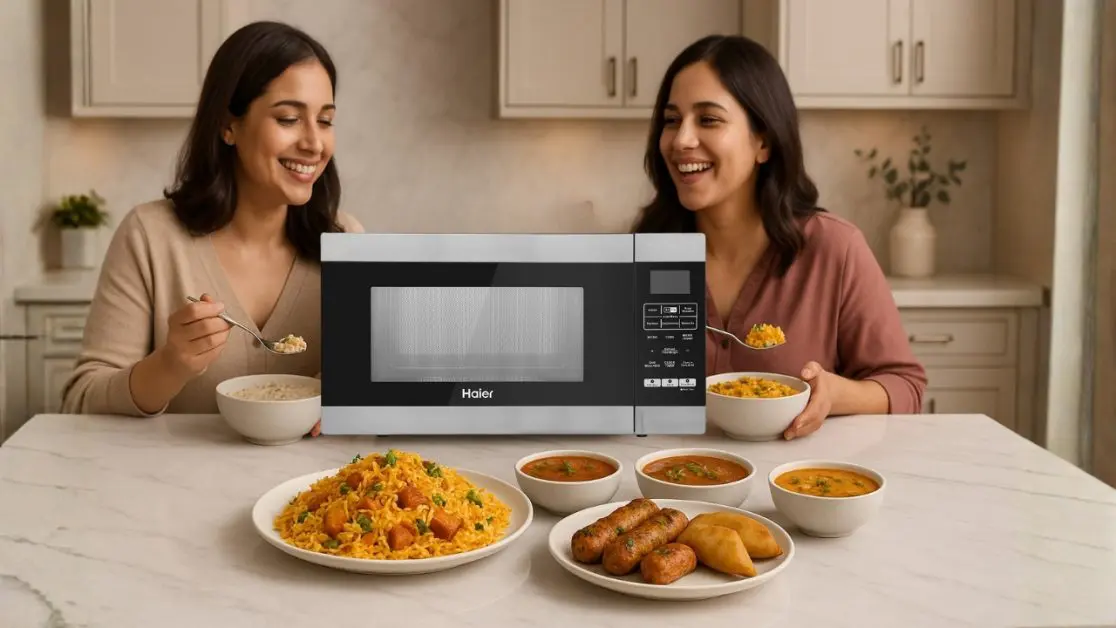
Seasonal habits create permanent preferences.
What works in February often sticks.
Once people get used to faster prep and cleaner kitchens, they rarely go back.
Once cooking feels less exhausting, it becomes more consistent.
Microwaves are not seasonal appliances.
They are seasonal accelerators.
February just happens to highlight their relevance.
The Bigger Pattern Most People Miss
Technology adoption does not happen because of features.
It happens because of timing.
February is a timing window.
People are open to lighter routines.
Open to smarter shortcuts.
Open to appliances that respect their time.
Microwaves meet that moment quietly.
No announcements.
No drama.
Just food, done right, faster.
What This Means for Indian Homes Going Forward
Indian kitchens are not becoming smaller.
They are becoming smarter.
Less effort per meal.
More consistency across days.
Better alignment with real schedules.
Microwaves are central to this shift.
Not as replacements for traditional cooking.
But as systems that support it.
When cooking feels lighter, life feels easier.
And when appliances disappear into routines instead of demanding attention, trust builds naturally.
That is how kitchens evolve.
One season at a time.
February just shows us the pattern clearly.
Faster does not mean rushed.
Lighter does not mean less satisfying.
It simply means cooking finally fits into life, instead of competing with it.
Frequently Asked Questions
Why do I feel less motivated to cook elaborate meals in February?
February often brings routine fatigue after January resets. The weather softens, festive excitement fades, and decision tolerance drops. You naturally gravitate toward lighter, repeatable meals that don’t demand emotional energy.
Why does choosing what to cook feel harder this month?
Because you’re not craving rich winter food anymore, but it’s not summer either. You’re in a “between” season which increases small daily decisions. Simpler systems (like microwave auto-cook menus) reduce this friction.
I left my dal in the fridge overnight. What’s the best way to reheat it without ruining texture?
Use medium microwave power with a lid or cover to retain moisture. Stir midway. This preserves consistency better than re-boiling on gas.
Does microwaving rice dry it out?
Only if reheated uncovered. Add a spoon of water and cover it. Microwave reheating maintains softness when moisture is managed.
Why does my microwave heat unevenly sometimes?
Overcrowding, improper container placement, or not stirring midway can cause uneven heating.
My kitchen still feels hot even in February. How can I reduce heat load?
Shift reheating, grilling, and light cooking tasks to microwave mode to reduce open flame heat.