
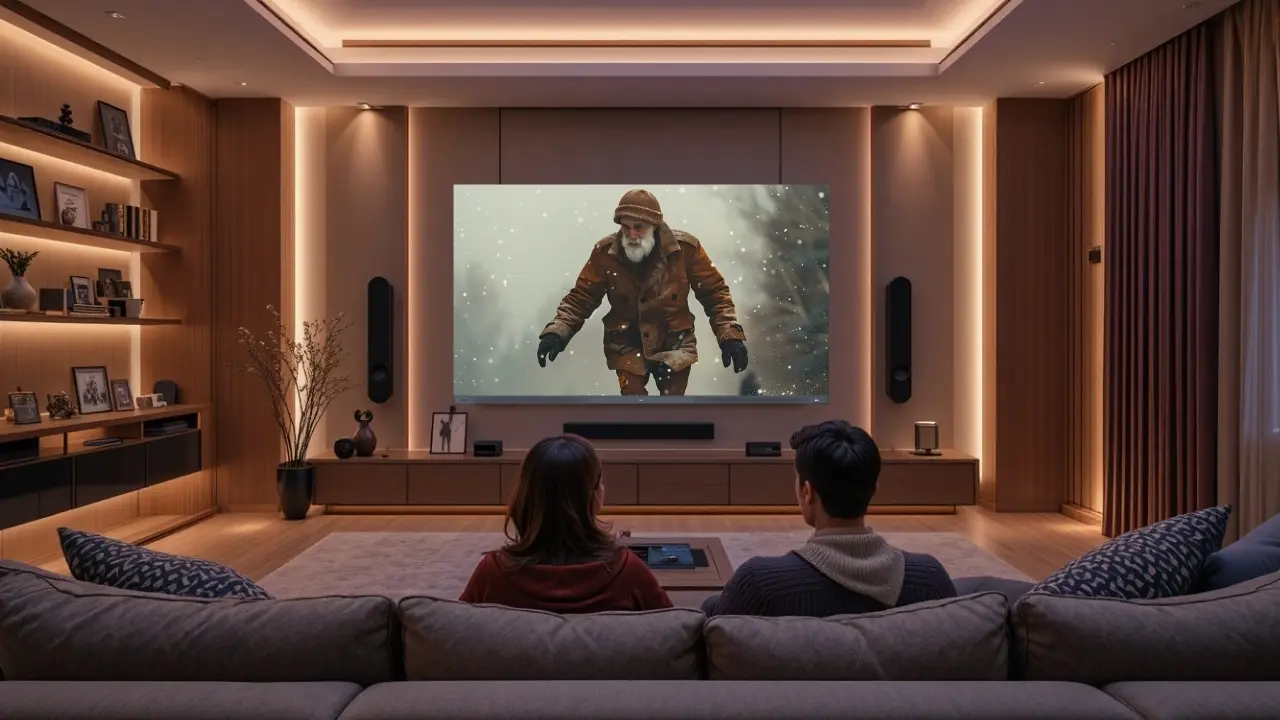

Once you experience a truly big screen at home, smaller screens start to feel like compromises. Bigger screens do not just show more.
They change how rooms feel, how people gather, and how everyday moments turn into shared experiences. Size shifts perception, comfort, and emotional impact in ways you only understand after living with it.
It usually starts with a harmless upgrade.
A new home.
A renovation.
Or a quiet thought after one too many crowded movie nights: Maybe it is time to go bigger.
At the store, a large TV looks impressive but distant. Almost unreal.
At home, the shift is immediate.
Cricket feels closer.
Movies slow down in a good way.
People stop multitasking without being told.
This is not about specifications yet.
It is about scale.
And scale has a way of changing expectations permanently.
Big screens do not just fill walls. They fill attention
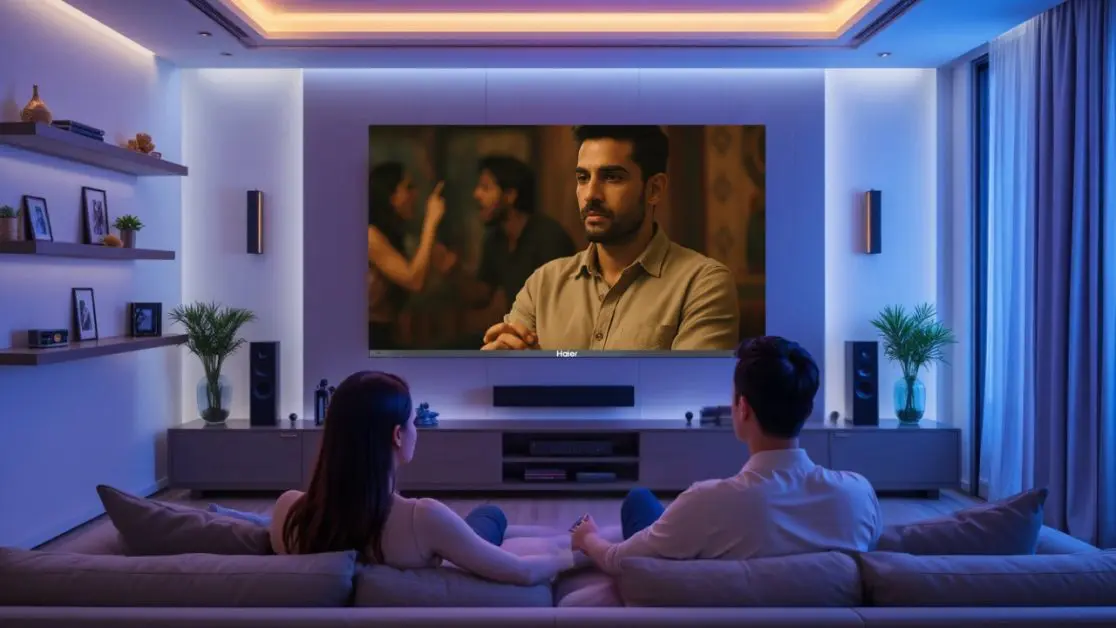
Here is the part most people do not anticipate.
Small screens ask for focus.
Big screens take it naturally.
In Indian homes, the television still sits at the emotional centre of the living room. When the screen grows, behaviour changes with it.
- Phones stay face down during matches
- Conversations pause during key scenes
- Even background viewing feels intentional
The brain reads scale as importance.
It is the same reason cinemas work. Or why festival stages feel powerful when they are large. Bigger visuals signal that something matters right now.
Why bigger actually feels calmer
There is a common fear that large screens will feel overwhelming.
In reality, the opposite often happens.
On a bigger screen:
- Text becomes easier to read from a distance
- Motion feels smoother because your eyes track less
- You lean back instead of leaning forward
This reduces strain over long viewing hours.
Display experts often note that comfort improves when visuals occupy more of your natural field of vision instead of forcing your eyes to constantly refocus on a small, bright area.
That is why large screens, when tuned properly, feel more relaxed during long evenings.
The living room quietly becomes a destination
After a few weeks, something subtle changes.
People stop saying, “Let’s watch TV.”
It becomes:
- Match night
- Movie evening
- Post-work decompression
Big screens reshape how spaces are used.
One option is a TV as a device.
The second option is a TV as furniture.
The third option is a TV as atmosphere.
Large screens naturally move into the third category.
They influence seating layout, lighting choices, and even when the lights get dimmed at night. The screen stops being an object and starts becoming part of the room’s rhythm.
Why content feels different at scale
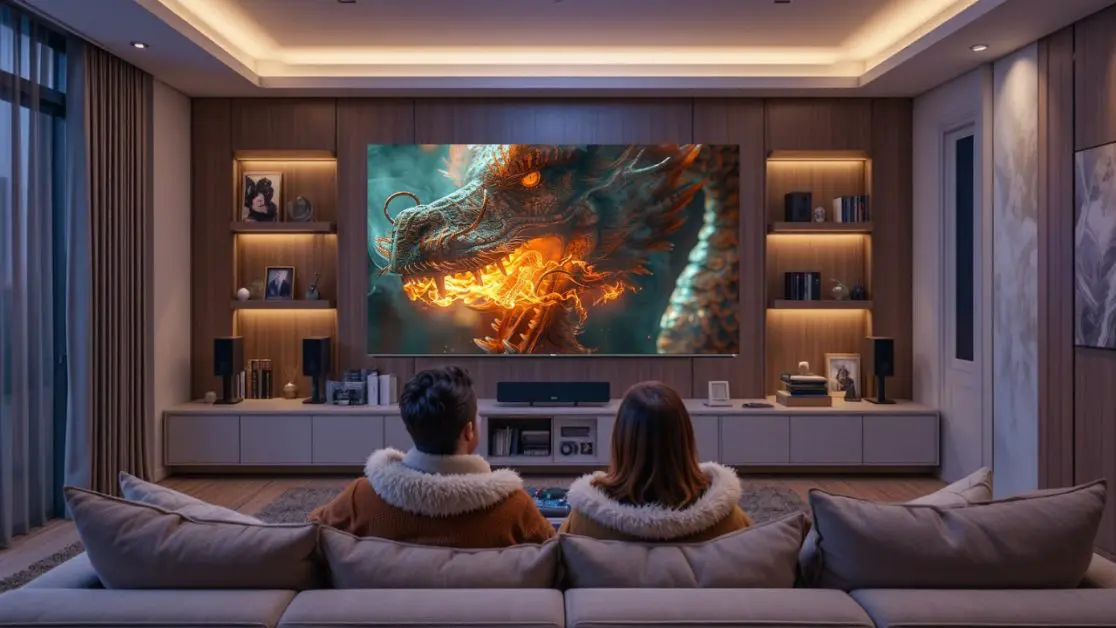
The same content behaves differently on different screen sizes.
- Facial expressions become readable
- Background details stop disappearing
- Sports camera angles finally make sense
This is why people often rewatch old favourites after upgrading.
The content did not change.
The context did.
Large screens reveal intent that smaller screens compress.
Where technology quietly matters
Size alone is not enough.
As screens grow, flaws become more visible. Poor motion handling, uneven brightness, or flat sound stand out instantly.
This is where intelligence matters.
Large-screen TVs like the Haier S90 QLED 254cm (100) Google TV with AI Center Max are designed around this exact reality.
Instead of treating picture, sound, and motion as separate elements, AI Center Max coordinates them together.
The system recognises scenes in real time, adjusts brightness based on room lighting, manages motion for sports, and balances sound so the experience stays comfortable at scale.
The principle is simple.
As screens get bigger, the thinking behind them has to get smarter.
Big screens change how ownership feels
There is also a psychological shift that rarely gets discussed.
A large screen signals intention.
It quietly tells the household:
- This space matters
- Comfort is not accidental
- Entertainment is shared, not individual
It is the same reason dining tables replaced eating on laps. Or why sofas replaced plastic chairs. Scale, when chosen thoughtfully, communicates care.
The upgrade is not size. It is expectation
After living with a big screen, your decision-making changes.
You stop asking, “Is this too big?”
You start asking, “How will this feel every evening?”
You think about:
- Viewing distance
- Lighting conditions
- Sound behaviour
This mirrors how people mature in other life choices.
Early decisions chase novelty.
Later decisions chase longevity and comfort.
Large screens accelerate that shift.
A practical way to think about going big
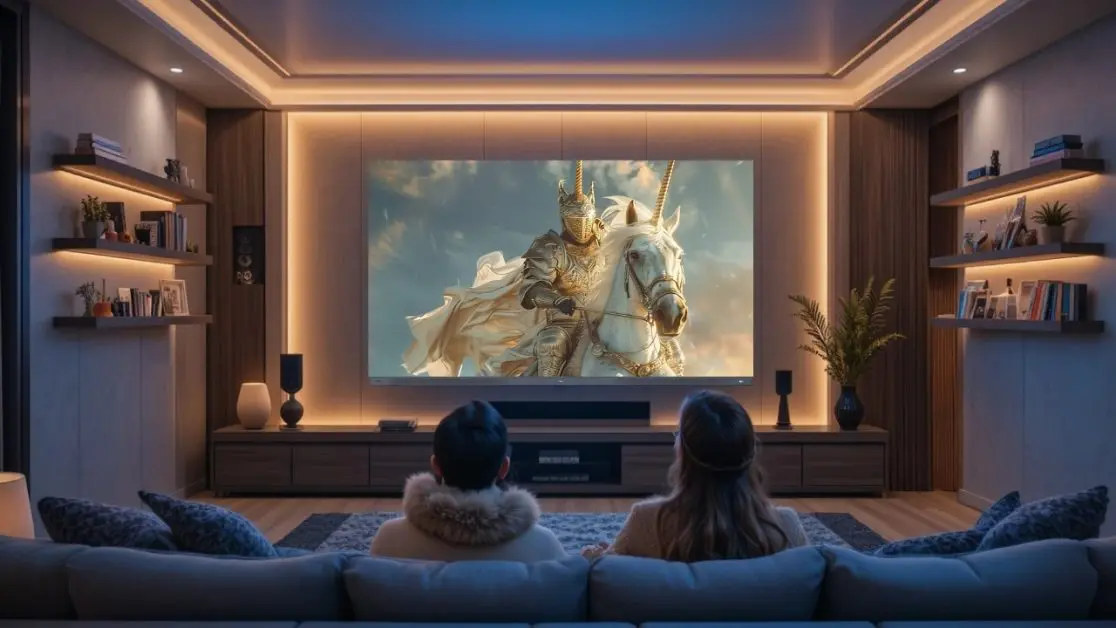
Instead of focusing on inches, better questions help.
- How far do we usually sit?
- Do we watch together or alone?
- Is the TV on for short bursts or long stretches?
When answered honestly, many homes realise something surprising.
They were undersizing for years.
Why regret almost never goes the other way
There is a sentence you hear repeatedly.
“I should have gone bigger.”
Rarely will you hear the opposite.
That is because scale creates a one-way shift in satisfaction. Once experienced, it resets your baseline.
Big becomes normal.
Normal starts feeling small.
The quiet truth about modern homes
Homes are getting more compact. Lives are getting faster. Screens are where people slow down.
That makes shared experiences more valuable, not less.
A bigger screen is not about excess.
It is about anchoring attention in a distracted world.
Once that anchor exists, it is hard to imagine going back.
The takeaway
Going big is not about showing off.
It is about settling in.
Once your home adjusts to that scale, your habits follow. Your evenings change. Your expectations shift.
Some upgrades are reversible.
This one is not.
Once you go big, you never go back.
Frequently Asked Questions
Will I regret buying a bigger TV after the excitement wears off?
Regret almost always goes the other way. The common reflection is “I should’ve gone bigger.” Once you adjust to scale, smaller screens feel limiting.
Is going big just a vanity upgrade?
Not necessarily. A large screen often becomes a shared household anchor, improving readability, comfort, and group viewing instead of just aesthetics.
I mostly stream shows casually. Do I really need a massive screen?
Even everyday streaming benefits from scale. Facial expressions, subtitles, and background details become clearer, making casual viewing more immersive and less straining.
Will a huge TV dominate my living room décor?
Initially yes visually. But over time, seating, lighting, and layout naturally adapt. The TV often transitions from device to atmosphere.
Does a big screen make a small room feel smaller?
Surprisingly, no. When wall-mounted properly, it can make a space feel more cinematic and intentional rather than cluttered.
Will it increase power consumption drastically?
Modern large-screen TVs are energy-optimised. Consumption increases with size, but not exponentially. Smart brightness controls help manage usage.
Will standard TV cabinets support such a large screen?
Often not. Many people switch to wall mounting or custom low-profile units.
Is sound automatically better on big TVs?
Not always. Larger screens benefit from well-tuned audio systems or integrated AI-based sound balancing.