
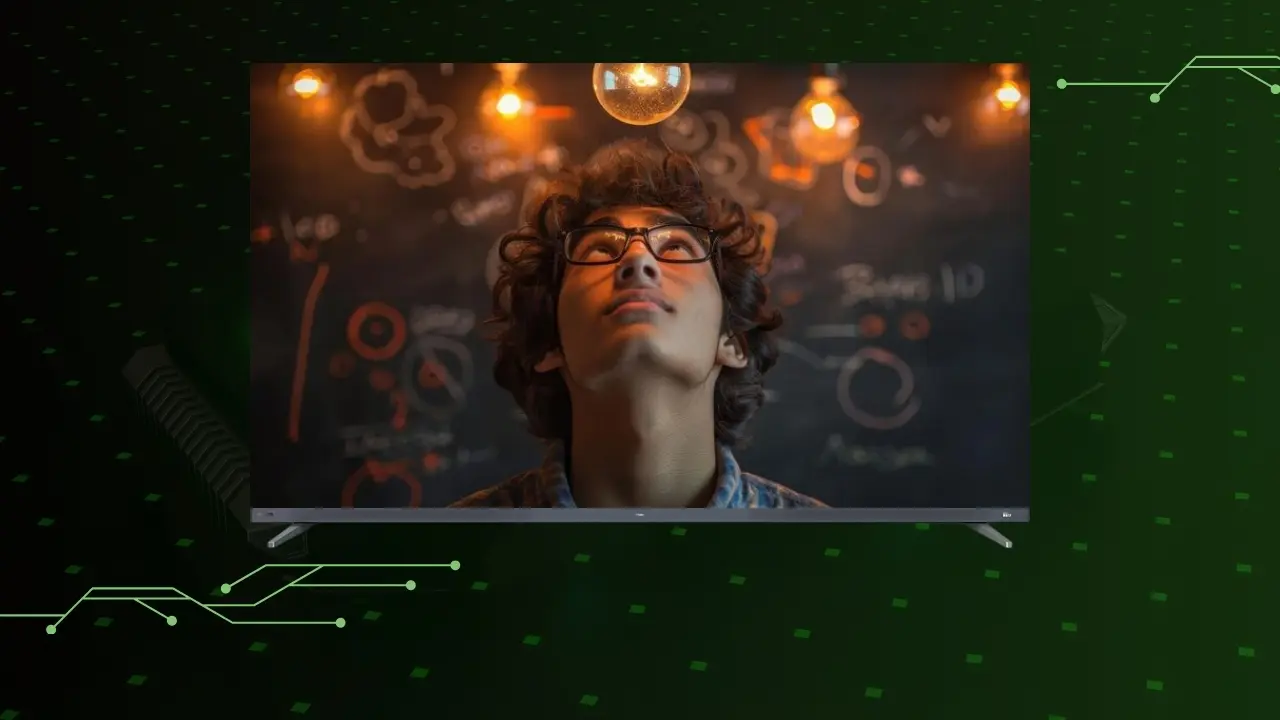

AI automatically optimises brightness and contrast by reading both the screen and the room in real time.
It analyses every scene, senses ambient light, and continuously fine tunes brightness, contrast, and tone mapping so the picture looks balanced and comfortable without manual settings.
On the Haier New M92 Series QD Mini LED Smart AI Google TV, this intelligence runs quietly in the background, adjusting as your day unfolds.
That is the technology.
The real story is why it feels so necessary in Indian homes.
Why did brightness and contrast become a daily irritation?
Think about a normal weekend.
Sunday afternoon sunlight fills the living room. The TV looks dull. Colours fade.
By evening, lights come on. The same TV suddenly feels harsh. Whites glare. Eyes tire faster than the movie ends.
Nothing changed on the screen.
The room did.
Most televisions still assume one thing.
That the environment stays constant.
Indian homes never do.
- Curtains open and close through the day
- Natural light shifts hour by hour
- Rooms host work, play, rest, and family time
- Content jumps from cartoons to cricket to late night OTT
Yet traditional brightness and contrast settings stay frozen.
AI exists to close that gap.
What brightness and contrast really control

Strip away the jargon.
- Brightness decides how much light the screen emits
- Contrast decides how clearly light and dark areas separate
When these two fall out of balance, discomfort follows.
- High brightness without control flattens faces
- Poor contrast hides detail in dark scenes
- Excess contrast makes visuals feel sharp but tiring
- Low contrast drains energy from the image
The goal is not maximum brightness or extreme contrast.
The goal is appropriateness.
And appropriateness changes constantly.
How AI learns to see like people do
This is where AI picture optimization becomes human.
Instead of asking you to choose modes, the system observes.
On the Haier New M92 Series QD Mini LED Smart AI Google TV, the AI Ultra Sense Processor evaluates three layers at the same time .
1. The content itself
AI detects what is playing.
- Dark cinematic scenes
- Bright sports broadcasts
- Animation, faces, landscapes, motion
Each type demands a different balance of brightness and contrast.
2. The room’s lighting
Built-in sensors read ambient light.
- Bright daylight
- Soft evening lamps
- Dim late night environments
The TV adapts so your eyes do not have to.
3. Human visual comfort
AI prioritises what people notice first.
Faces.
Movement.
Shadow detail.
This is why the picture feels natural instead of exaggerated.
The system working behind the screen
A useful analogy helps.
AI behaves like a seasoned photographer.
A photographer never uses one exposure for every situation. They adjust instinctively.
AI does the same, only faster.
The optimisation loop
- Scene recognition identifies content type
- Ambient sensing measures room brightness
- Tone mapping adjusts brightness dynamically
- Contrast tuning preserves detail
- Local dimming refines light and dark zones independently
On the Haier New M92 Series, QD Mini LED technology enables hundreds of local dimming zones, allowing precise control instead of blanket brightness changes .
This matters.
Bright areas stay vivid.
Dark areas stay detailed.
Neither overwhelms the other.
Why Dolby Vision IQ feels different
Many people first notice AI optimisation through Dolby Vision IQ.
Traditional HDR assumed dark rooms.
That assumption rarely holds in Indian homes.
Dolby Vision IQ adapts HDR visuals based on ambient light.
- In bright rooms, highlights stay visible
- In low light, contrast softens to reduce strain
- Details remain intact across lighting conditions
On the Haier New M92 Series QD Mini LED Smart AI Google TV, this happens automatically, without switching modes or entering menus.
That is why people stop touching picture settings after a few weeks.
Trust replaces tweaking.
How this plays out in everyday Indian life
AI optimization is easiest to understand through real moments.
Afternoon cricket matches
Sunlight pours in. Whites stay crisp. Jerseys remain vivid. The pitch stays readable.
Family movie nights
Lights dim. Contrast deepens naturally. Blacks feel rich without crushing shadow detail.
Late night solo viewing
Brightness lowers gently. Visual strain reduces. Eyes feel relaxed longer.
The TV adjusts quietly.
No interruptions.
No decisions.
No friction.
That absence of effort is the real upgrade.
Manual control versus intelligent automation
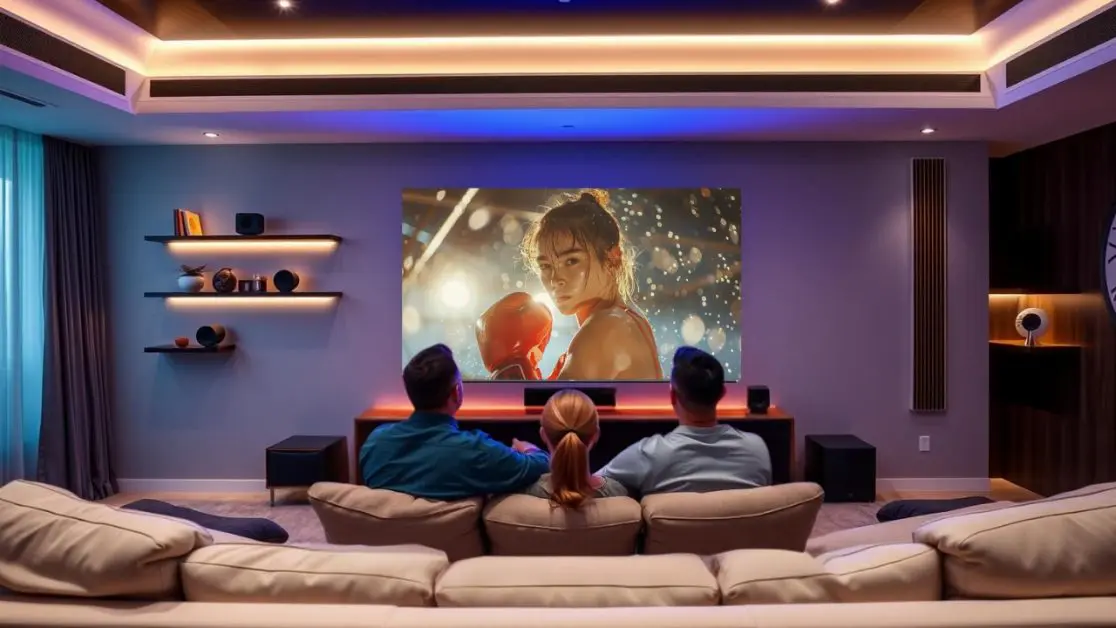
There are three ways households handle picture settings.
Option one: Ignore everything
It works until discomfort slowly builds.
Option two: Constant manual tweaking
It offers control but demands attention. Most people give up.
Option three: AI-led optimisation
It adapts automatically while preserving visual quality.
For homes with multiple viewers and unpredictable routines, the third option scales best.
Why peak brightness numbers matter less now
For years, TV buying focused on peak brightness.
That metric mattered once.
Today, adaptability matters more.
A screen that hits extreme brightness but cannot adjust intelligently feels tiring over time.
A screen that adapts feels effortless.
The Haier New M92 Series QD Mini LED Smart AI Google TV focuses on the second philosophy, where intelligence matters more than raw numbers.
What this signals about modern living
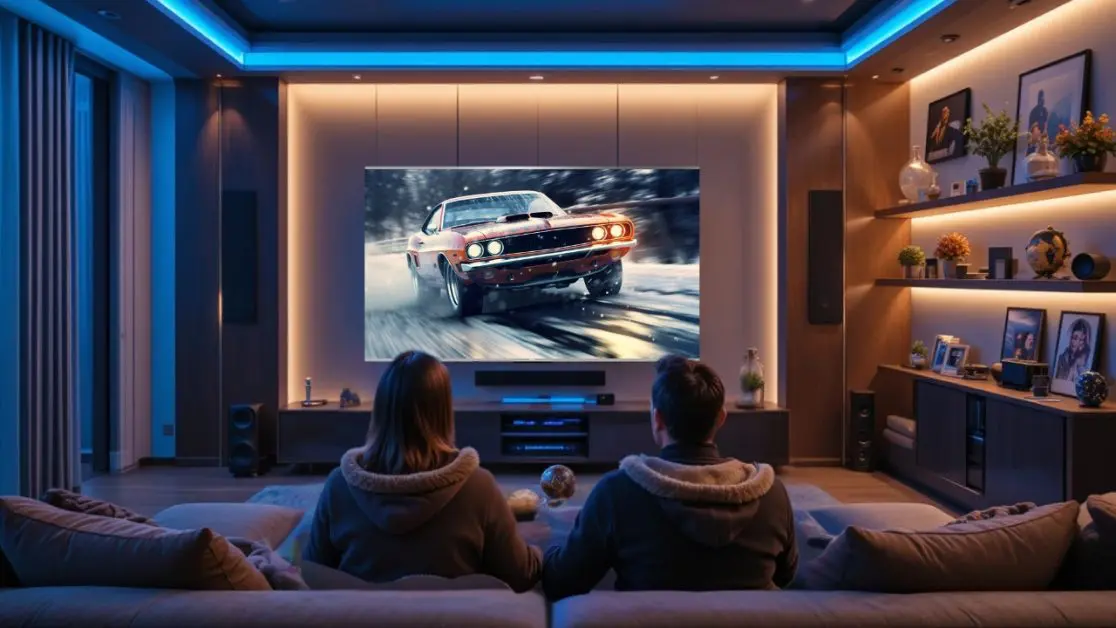
AI brightness and contrast optimization is not just a picture feature.
It reflects a broader shift.
Homes are becoming calmer.
- Devices adjust instead of demanding input
- Systems learn usage patterns quietly
- Technology fades into the background
This philosophy runs across Haier’s approach to smart living. Appliances do not compete for attention. They reduce friction.
The TV simply happens to be where you notice it first.
A simple way to judge AI picture intelligence
Here is a practical test.
If you keep adjusting settings, the system is not ready.
If you forget settings exist, the system is working.
Good AI does not show off.
It supports silently.
The larger implication
Brightness and contrast once felt technical.
Now they feel emotional.
They decide whether a space feels calm or tiring.
Whether evenings feel immersive or strained.
AI optimisation moves control away from menus and into systems that understand context.
Not smarter screens.
Smarter experiences.
And the best ones feel invisible.
Except life feels a little more sorted.
Frequently Asked Questions
Why does my TV look different in the afternoon compared to the evening?
Because your room changes, not the TV content. Sunlight, curtains, lamps, and wall reflections all shift through the day. Traditional TVs keep brightness and contrast fixed, so the picture either looks dull in daylight or harsh at night.
AI-enabled TVs like the Haier New M92 Series QD Mini LED Smart AI Google TV continuously read ambient light and adjust the picture in real time, so you don’t have to.
I’m tired of constantly tweaking picture settings. Is this normal?
Yes and it’s a sign your TV isn’t adapting. Manual modes assume your environment stays constant. In Indian homes, it never does.
AI automation removes that mental load by adjusting brightness, contrast, and tone mapping automatically based on content and room lighting.
Why do my eyes feel strained after watching TV at night?
If brightness stays high in a dim room, whites glare and contrast feels aggressive. Your eyes work harder to compensate.
AI systems reduce brightness gently in low light and soften contrast without losing detail especially with technologies like Dolby Vision IQ, which adapts HDR visuals to ambient light.
Is higher brightness always better?
No. Maximum brightness without context causes fatigue.
What matters is appropriateness, not extremes. AI balances luminance and contrast depending on what’s playing and how bright your room is.
If AI keeps changing brightness, will it ruin cinematic quality?
No good AI preserves intent while adjusting for the environment.
For example, the Haier New M92 Series QD Mini LED Smart AI Google TV uses its AI processor to analyse scene type (sports, cinema, animation) before making adjustments. Dark films remain atmospheric. Sports stay vibrant.
Will local dimming cause weird flickers or inconsistent lighting?
Not with refined zone control. QD Mini LED panels use hundreds of dimming zones, allowing precise light control instead of blanket brightness changes. This keeps bright areas vivid and shadows detailed.