
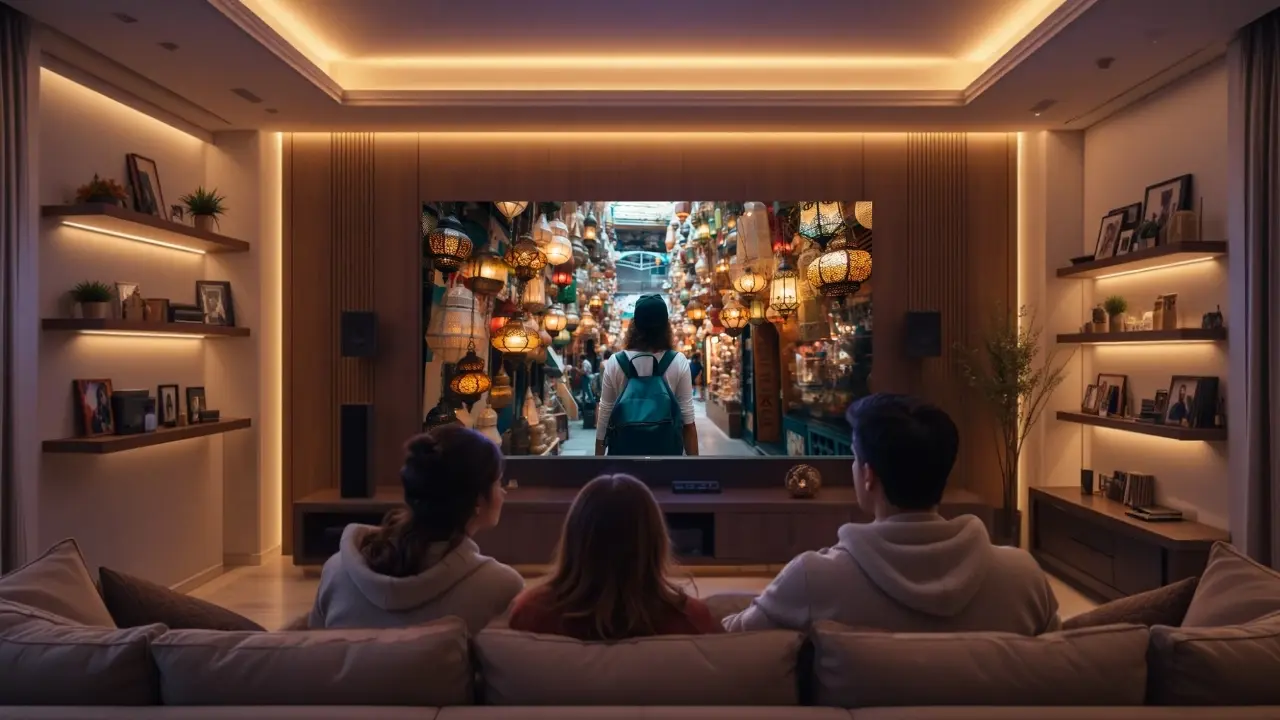

Consistent picture quality means your TV delivers balanced clarity, colour, and comfort across everything you watch.
Cricket, OTT shows, kids’ cartoons, news, late-night movies, gaming. The screen adapts automatically so nothing feels too bright, too dull, or tiring on the eyes. In real Indian homes, this consistency is what turns a TV into something you trust daily.
The familiar problem most homes quietly accept
It starts small.
The afternoon match looks sharp.
By evening, the same screen feels harsh.
Late-night movies lose detail.
Cartoons look fine. The news looks flat.
So you reach for the remote.
Brightness. Contrast. Motion. Colour mode.
Again.
This is not about preference.
It is about inconsistency.
Indian households today consume more content types in a single day than ever before. Live sports. OTT series. YouTube. Old family videos. Gaming. Background news during dinner.
Yet many TVs still expect you to manage the screen manually.
That friction breaks the experience.
Why consistent picture quality matters today

Screens have grown. Content has not become cleaner
Modern TVs are larger. Sharper. Brighter.
But content comes from everywhere.
- Live sports are heavily compressed
- Older shows were mastered for smaller screens
- YouTube quality changes video to video
- Gaming prioritises speed over cinematic polish
A large screen exposes every weakness.
This is why consistent picture quality across all content types is no longer optional. It is essential.
Consistency does not mean sameness
This is the key idea many people miss.
Consistency is not about making everything look identical.
It is about making everything look right.
- Sports need smooth motion and controlled brightness
- Movies need contrast, depth, and natural colour
- Kids’ content needs clarity without eye strain
- News needs legibility, not drama
A good TV understands context.
A great TV adapts to it automatically.
How modern TVs achieve consistency
Picture quality has shifted from settings to systems
Older TVs worked on commands.
You chose a mode. The screen obeyed.
Newer TVs work on interpretation.
They analyse scenes in real time.
They adjust motion, colour, contrast, and brightness together.
They even factor in the light in your room.
This is how consistent picture quality becomes effortless.
Not by giving you more controls.
By removing the need for them.
Three forces shaping every frame
One. The content
Resolution, compression, frame rate, mastering style.
Two. The environment
Daylight, artificial lighting, room brightness.
Three. Human comfort
Eye strain, long viewing sessions, fatigue.
When these align, the screen fades into the background.
That is when technology succeeds.
What consistency looks like in real Indian homes
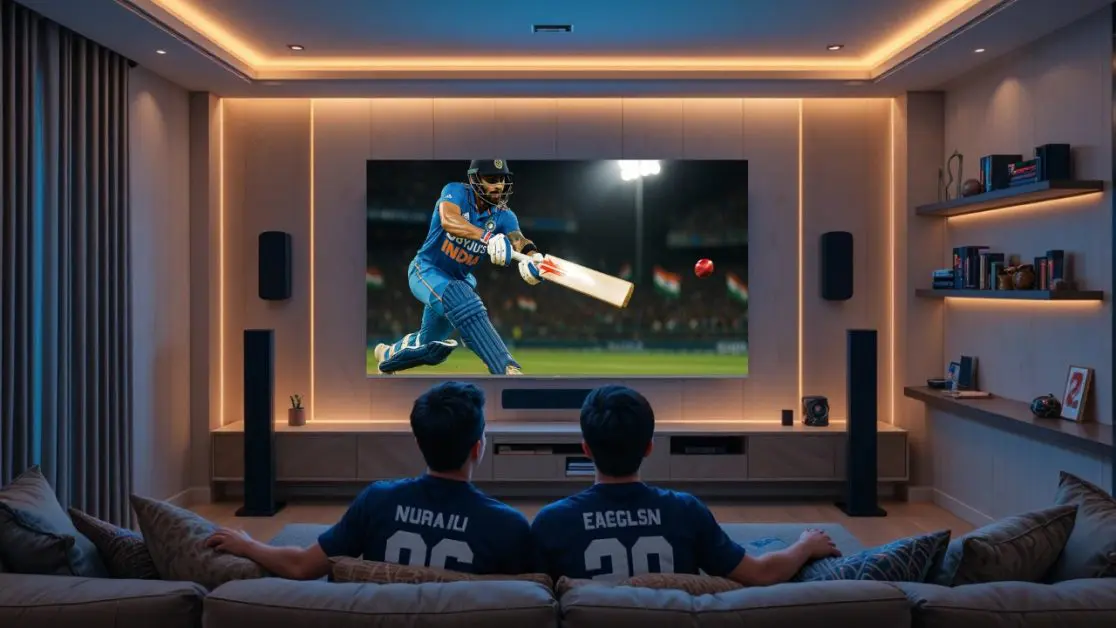
Cricket nights that stay comfortable
Cricket pushes TVs hard.
Fast motion. Bright whites. Floodlights. Rapid camera pans.
Consistent picture quality means motion stays smooth without artificial sharpness. Whites remain bright without glare. Colours stay natural even during night matches.
High refresh rates and intelligent motion handling reduce blur and fatigue.
You watch longer.
Your eyes thank you.
OTT shows that feel cinematic, not exaggerated
OTT platforms deliver wildly different content.
Some shows are carefully graded. Others are not.
Some are dark by design. Others are flat.
Consistency here means preserving detail in shadows while keeping contrast balanced. Skin tones stay realistic. Colours feel intentional.
Adaptive HDR and ambient light sensing help the picture adjust automatically as the room changes from day to night.
Your living room becomes predictable.
That predictability feels premium.
Kids’ content that stays gentle over time
Parents notice this quickly.
Bright cartoons are fine initially.
After an hour, my eyes feel tired.
Consistent picture quality includes flicker control, blue-light reduction, and brightness adjustment based on surroundings.
This is not about dull screens.
It is about sustainable viewing.
Good systems protect comfort without asking for attention.
Gaming that feels responsive and stable
Gaming demands consistency in a different way.
- Low input lag
- Stable frame delivery
- Clear motion during fast scenes
Technologies like variable refresh rate, automatic low latency mode, and high refresh panels ensure the picture keeps up with your actions.
Here, consistency equals trust.
Why AI-driven picture processing changes everything
Manual control does not scale anymore
Think about your day.
Morning news.
Afternoon sports.
Evening OTT.
Late-night scrolling.
No one wants to adjust settings four times a day.
AI-driven picture systems exist to absorb complexity for you. They recognise what you are watching and tune the screen automatically.
This is not about buzzwords.
It is about responsibility shifting from user to device.
How Haier approaches consistent picture quality
Haier’s newer TVs are built around integrated picture systems rather than isolated features.
For example, the Haier New M92 Series 189cm (75) QD Mini LED Smart AI Google TV H75M92FUX and the Haier New M92 Series 164cm (65) QD Mini LED AI Smart Google TV H65M92FUX are designed to maintain consistency across content types using a unified processing approach.
These models combine:
- QD Mini LED panels with multiple local dimming zones
- AI Ultra Sense Processor for real-time scene analysis
- Dolby Vision IQ for lighting-aware HDR optimisation
- High refresh rates for smooth motion across sports and gaming
Instead of forcing users to choose modes, the system evaluates the scene and environment together, then adjusts picture behaviour accordingly.
The result is no louder visuals.
It is steadier.
The hidden cost of inconsistent picture quality
It shows up as fatigue
When visuals fluctuate too much, your brain compensates.
- Eyes tire faster
- Focus drops
- Viewing sessions shorten
People often blame screen time.
In reality, inconsistency is the bigger culprit.
It disrupts shared viewing
Indian homes watch together.
Different ages. Different needs.
Inconsistent screens force compromise.
Someone always feels uncomfortable.
Consistency makes shared spaces easier to enjoy.
How to judge consistency when choosing a TV
Ignore feature lists for a moment.
Look for behaviour.
Ask yourself:
- Does the picture stay balanced across apps and inputs
- Does brightness adapt naturally as daylight changes
- Does motion stay smooth without looking artificial
- Do eyes feel comfortable after long sessions
Here is a simple way to think about it:
| Content Type | What Consistency Solves |
| Sports | Motion blur, brightness spikes |
| Movies | Crushed blacks, flat colours |
| Kids’ content | Eye strain, flicker |
| Gaming | Lag, tearing |
| News | Text clarity |
If a TV handles all of these without effort, it understands consistency.
Consistency is the new definition of premium
Earlier, premium meant brighter colours and sharper edges.
Today, premium means restraint.
It means the screen knows when to step back.
When not to overdo contrast.
When comfort matters more than impact.
This is why consistent picture quality across all content types has become a quiet differentiator in modern homes.
It respects your time.
It respects your eyes.
It respects daily routines.
The larger shift happening in our living rooms
We are moving from control to trust.
From tweaking settings to relying on systems.
From managing screens to living with them.
The best technology does not demand attention.
It earns it by disappearing.
When picture quality stays consistent, you stop noticing the TV and start noticing moments.
That is not just better viewing.
That is better living.
Frequently Asked Questions
Why do I keep changing brightness and picture modes throughout the day?
Because different content types (sports, OTT, news, YouTube) are mastered differently, and many TVs don’t automatically adapt well. A TV with AI-driven scene detection and ambient light sensing reduces this manual adjustment.
Is it normal that my afternoon cricket looks great but my late-night movie looks too dark?
Yes, that’s usually inconsistent HDR handling and lack of ambient light adjustment. Modern TVs with Dolby Vision IQ–style optimisation adapt brightness based on room lighting.
Why does my TV look different across apps even when I don’t change settings?
Each app delivers content with different compression and mastering standards. TVs without unified picture processing treat them inconsistently.
Should I manually create custom modes for sports, movies, and gaming?
You can but ideally, a good TV should handle that automatically through AI-based scene analysis.
Why do my eyes feel tired after watching cartoons with my kids?
Overly bright panels, excessive blue light, and unstable brightness levels can cause fatigue. TVs with flicker control and adaptive brightness reduce strain.
Is screen time the real problem, or is my TV causing fatigue?
Often its inconsistency, fluctuating brightness and contrast force your eyes to constantly adjust.
Why does my TV feel too harsh at night even on lower brightness?
Because HDR highlights and local dimming may not be adapting to low ambient light. Lighting-aware processing solves this.
How can one TV suit both elderly parents and kids?
Look for balanced colour accuracy, good motion smoothing (without soap-opera effect), and comfort-focused features like ambient light sensors.