


Overheat protection stops your water heater from becoming dangerous by automatically cutting off power when water crosses safe temperature limits.
In modern storage water heaters, dual thermostats and thermal cut-offs shut heating elements down at preset temperatures, usually around 75°C to 95°C. This prevents scalding, tank stress, and electrical risk. It is a quiet safety system that works every single day, often without you noticing.
Hot water should feel comforting.
Not risky.
And yet, in many Indian homes, the water heater works hardest when everyone is rushing. Morning school runs. Office calls. Guests visiting. That is exactly when safety matters most.
Let us unpack what overheat protection really means and why it quietly defines the quality of your everyday life.
What actually happens when a water heater overheats?
A storage water heater is a simple idea.
Cold water enters. A heating element raises its temperature. A thermostat monitors it. You use it.
But simplicity hides risk.
When water crosses safe temperature limits, three things happen:
- Pressure inside the tank increases
- Risk of scalding rises sharply
- Electrical components face stress
According to the Bureau of Indian Standards and IEC safety frameworks, temperatures above 60°C can cause scald burns within seconds. At 70°C, it takes less than a second.
Heat is useful. Excess heat is unforgiving.
That is why overheat protection is not a luxury feature. It is structural discipline.
How Dual Thermal Safety Systems Work in Modern Water Heaters
The most reliable systems do not depend on a single checkpoint.
They use layers.
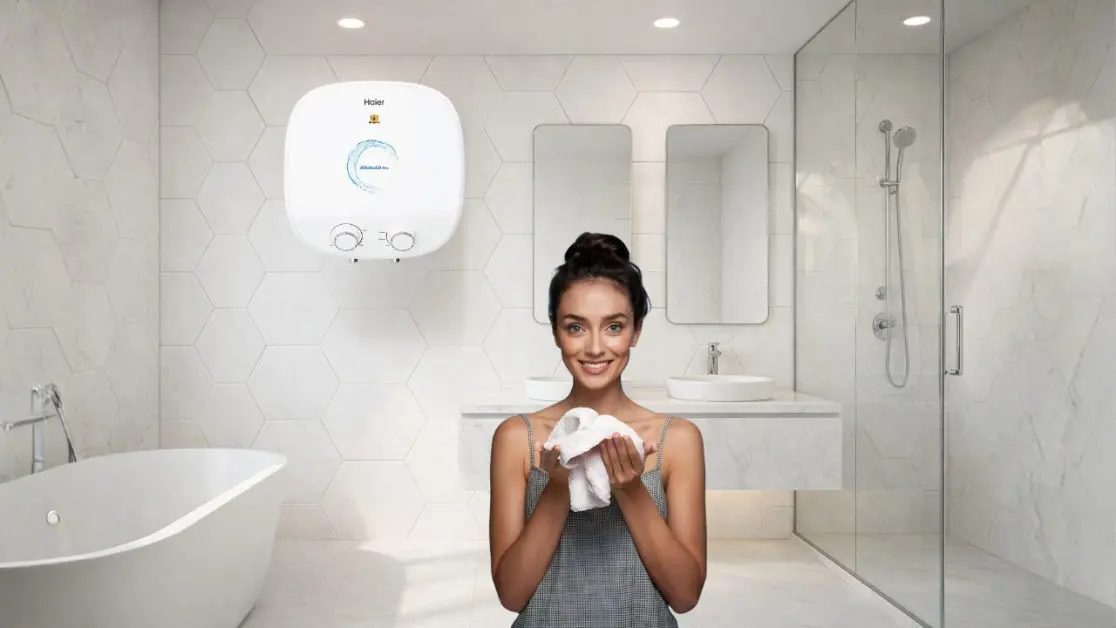
For example, the Haier 15L Square AQUALAD PRO 5 Star Water Heater ES15V-AQUALAD PRO uses a Dual Thermal Proof TTS system. As detailed in the product specifications , the first thermostat cuts off heating at 75°C. If that fails, a secondary cut-off activates at 95°C and shuts the system down completely.
Two sensors.
Two independent actions.
One outcome. Safety.
Here is how that compares conceptually:
| Stage | Temperature | Action |
| Normal heating | Up to 75°C | Heating stops automatically |
| Backup safety | Around 95°C | Power cuts off fully |
| Manual reset | Required | Prevents unnoticed restart |
That layered response is what separates a basic appliance from a reliable one.
Safety is rarely about strength. It is about redundancy.
Why Overheat Protection Matters More in Indian Homes
Indian homes do not operate on one schedule.
They operate on overlap.
- Parents leave for work at 9
- Children shower at 8
- Grandparents bathe later
- Domestic help uses hot water mid-morning
That means reheating cycles repeat.
Now consider high-rise apartments.
Pressure builds. Voltage fluctuates. Water usage is inconsistent.
Modern water heaters like the Haier 25L Square AQUALAD PRO 5 Star Water Heater ES25V-AQUALAD PRO are designed for 8 bar pressure environments , which makes overheat and over-pressure protection even more relevant.
Because heat and pressure are cousins.
And both demand respect.
Is Overheat Protection Only About Temperature?
No.
It is about systems thinking.
Overheat protection interacts with:
- Shock Proof mechanisms that convert unsafe voltage into safe levels
- MUV valves that manage pressure and vacuum release
- IPX4 water resistance that prevents external water interference
- PUF insulation that retains heat and reduces frequent reheating
When insulation works efficiently, reheating cycles are reduced.
When reheating reduces, stress on components reduces.
When stress reduces, lifespan improves.
It is a chain reaction.
Safety is rarely a single feature. It is a network.
The Hidden Costs of Ignoring Overheat Protection
Some buyers look at water heaters as basic appliances.
Heat water. Done.
But here is the real cost breakdown.
One option is: Basic heater, single thermostat
- Lower upfront cost
- Higher long-term electrical stress
- Greater scald risk
- Faster wear
The second option: Dual thermal safety system
- Slightly higher initial price
- Reduced failure risk
- Lower maintenance calls
- Longer tank durability
The third option: Full safety architecture
- Dual thermostats
- Over-pressure valve
- Shock proof protection
- Anti-bacterial heating cycles
This option costs more upfront.
But it costs less anxiety.
The real expense is not price. It is unpredictable.
How Anti-Bacterial Heating Connects to Overheat Safety
At first glance, bacterial protection feels unrelated.
It is not.
Certain bacteria multiply rapidly in lukewarm water stored between 25°C and 50°C. According to global health research, water heated above 60°C reduces bacterial survival significantly.
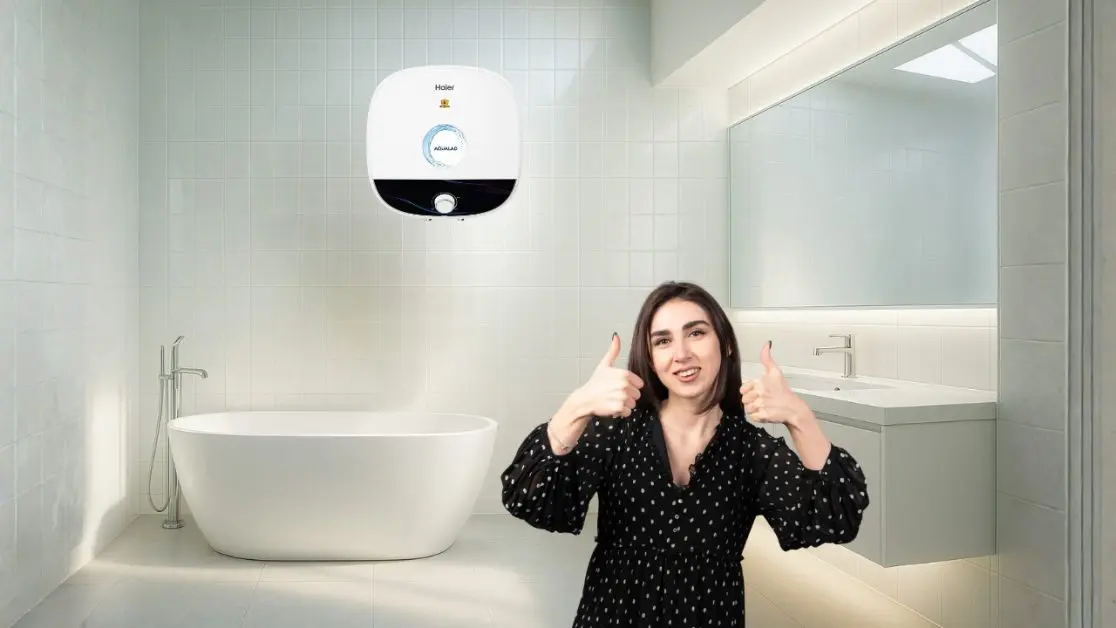
The BPS mode in AQUALAD PRO models heats water up to 80°C to inhibit bacterial growth .
Now think about the sequence:
- System heats water to high temperatures
- Overheat protection ensures it does not exceed safe structural limits
- Insulation maintains temperature
- Controlled cut-off prevents tank strain
It is disciplined heating.
Not uncontrolled intensity.
Heat must be strong. But it must also know when to stop.
Why High-Rise Living Changes the Safety Equation
More Indian families now live above the 10th floor.
Pressure increases with height.
An 8 bar rated pressure system, like those in AQUALAD PRO models , ensures the tank withstands internal stress.
Combine that with overheat protection and MUV valves.
Now safety becomes layered:
- Temperature controlled
- Pressure controlled
- Electrical leakage controlled
That is how modern appliances adapt to modern living.
Safety evolves with architecture.
Energy Efficiency and Overheat Protection Work Together
People assume higher temperature equals higher electricity use.
Not exactly.
Overheat protection works alongside insulation.
When PUF insulation retains heat efficiently, reheating frequency drops. According to energy efficiency studies, improved insulation can reduce energy consumption by 10 to 15 percent in storage heaters.
That means:
- Heating cycles are fewer
- Thermostat triggers less often
- Electrical strain reduces
Controlled systems waste less.
And calm systems last longer.
What Should You Look For Before Buying?
Instead of asking, “Does it heat fast?” ask better questions.
Look for:
- Dual thermal cut-off
- Over-pressure protection
- Shock proof safety
- 8 bar rating for high-rise homes
- IPX4 water resistance
- Insulation quality
- Titanium heating elements for corrosion resistance
Here is a simple checklist:
| Feature | Why It Matters |
| Dual thermostat | Backup temperature control |
| 8 bar pressure | Safe for high-rise buildings |
| Shock proof | Electrical safety |
| PUF insulation | Lower electricity bills |
| BPS mode | Hygienic water storage |
This is not a feature comparison.
It is risk management.
Safety Is Emotional, Not Technical
I have seen families invest heavily in modular kitchens.
Designer tiles. Sensor taps. Smart lighting.
And then install a basic water heater without layered safety.
Because it sits quietly.
Because it is not glamorous.
But safety appliances define comfort more than visible design.
Hot water touches your skin every day.
It is personal.
And anything personal deserves discipline.
The Bigger Pattern: Good Systems Protect You From Rare Events
Overheat protection rarely activates dramatically.
That is the point.
It prevents extreme situations quietly.
Just like seatbelts. Just like surge protectors. Just like insurance policies.
You do not celebrate them daily.
You rely on them daily.
That is how mature systems behave.
They prevent drama.
Why This Matters for the Future of Indian Homes
Indian households are changing.
More dual-income families. More compact bathrooms. More high-rise apartments. More elderly residents living independently.
Safety expectations are rising.
Regulatory standards are tightening.
Energy awareness is growing.
In that environment, overheat protection is not a technical feature.
It is a signal.
A signal that design teams anticipated failure scenarios.
A signal that safety was engineered, not assumed.
The future of home appliances belongs to systems that think ahead.
And the simplest proof of that mindset is how they manage heat.
Because heat is powerful.
And power without control is a risk.
Final Thought
Overheat protection is not about stopping heat.
It is about stopping excess.
It is about building guardrails into everyday life.
Hot water should begin your day with comfort, not calculation.
When systems manage temperature, pressure, and electricity together, homes feel calmer.
And calm is the true luxury.
Choose appliances that respect limits.
Because real intelligence knows when to switch off.
Frequently Asked Questions
Do I really need dual overheat protection, or is one thermostat enough for my home?
If your water heater runs multiple times a day (which most Indian homes do), a single thermostat is a single point of failure. Dual thermal protection adds redundancy. If one fails, the second cuts power. It reduces scalding risk, electrical stress, and long-term wear.
Why is a dual thermal system worth paying extra for?
Because it protects you from rare but high-impact failures. The primary thermostat cuts off at ~75°C. The backup cut-off activates around 95°C and requires manual reset. That manual reset prevents unnoticed overheating cycles.
I live in a high-rise apartment. Does that really change what I should buy?
Yes. High-rise homes experience higher pressure (often up to 8 bar). A heater rated for 8 bar pressure with overheat protection handles both heat and pressure safely.
Is overheat protection just marketing, or is it actually functional?
It’s functional. According to the Bureau of Indian Standards and IEC frameworks, water above 60°C can cause burns in seconds. Protection systems are designed specifically to prevent this.
I keep my heater on all day. Is that dangerous?
Not if it has proper thermostat regulation and insulation. A good system heats to a set temperature and shuts off automatically. Efficient PUF insulation reduces reheating frequency.
Does heating water to 80°C help with bacteria?
Yes. Bacteria multiply in lukewarm water (25–50°C). Heating above 60°C significantly reduces survival rates. Anti-bacterial heating modes (like BPS) heat up to ~80°C safely because overheat protection limits structural stress.
If overheat protection cuts off power, will my heater restart automatically?
The primary thermostat restarts normally. The backup thermal cut-off usually requires manual reset. That prevents repeated overheating cycles without inspection.
I want faster heating. Does higher temperature mean better performance?
Faster heating depends on wattage, not unsafe temperatures. Increasing temperature beyond safe limits only increases risk and stress.
Will frequent reheating damage my heater?
Repeated cycles increase electrical and tank stress. Good insulation reduces reheating frequency by 10–15%, extending lifespan.