


Multi-door refrigerators improve food organization by dividing storage into clearly defined zones, reducing clutter, preventing food mixing, and making daily access intuitive.
Instead of one crowded cavity, they create a system. One that mirrors how Indian homes actually cook, store, and eat.
That is the answer upfront.
Now let us talk about real kitchens.
The fridge problem almost every Indian home lives with.
Open a regular refrigerator at 9 pm.
You will see steel dabba stacked on vegetables. Milk packets squeezed behind sauce bottles. Paneer wrapped carefully, yet somehow absorbing the smell of garlic. Ice cream pushed aside to make room for frozen peas.
Nothing is broken.
But nothing feels sorted.
The problem is not habits.
The problem is layout.
Most refrigerators were designed for simpler lives. Fewer ingredients. Predictable meals. Minimal freezing.
Modern Indian homes break every one of those assumptions.
Why traditional fridge layouts struggle today
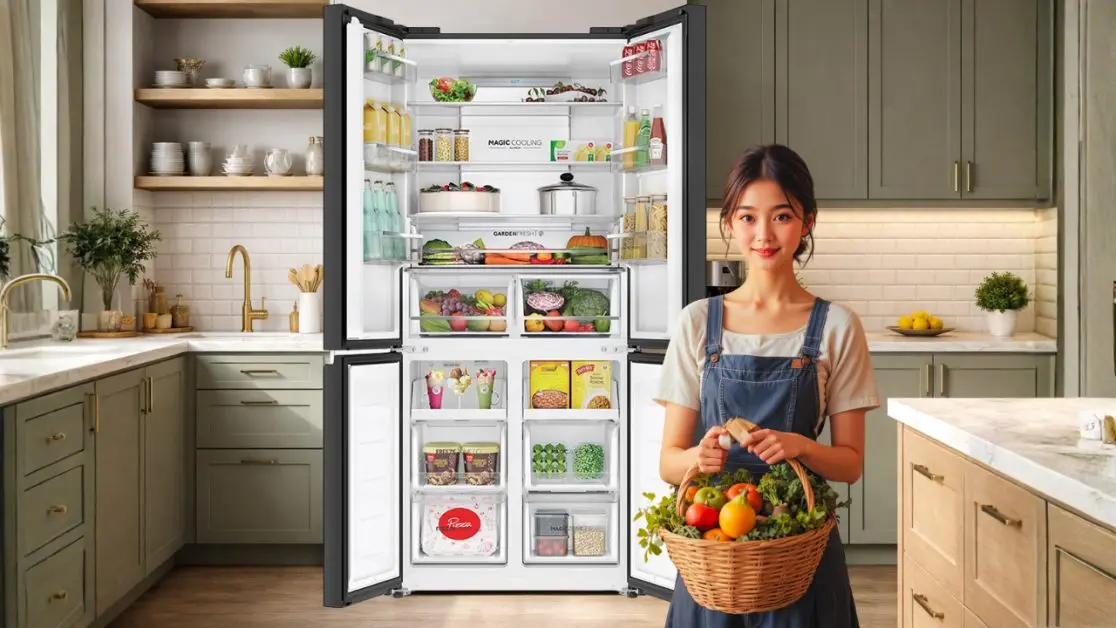
Indian households today store more variety than ever before.
- Raw vegetables bought in bulk
- Cooked food for the next day
- Dairy used daily
- Snacks for kids and guests
- Frozen food for busy weeks
- Extra storage during festivals
A single vertical cavity cannot support this complexity.
When everything shares the same air and shelves, organization collapses quietly.
What multi-door refrigerators change fundamentally
Multi-door refrigerators introduce one powerful idea.
Different foods deserve different spaces.
Instead of one tall box, you get multiple compartments that behave like rooms in a house.
Each door has a purpose.
Each zone has a job.
This is not about luxury.
It is about reducing daily friction.
How compartmentalization improves food organization
1. Zones remove daily decision fatigue
When zones are defined, thinking disappears.
Vegetables go in one section.
Dairy has its own place.
Cooked food stays separate.
Frozen items remain untouched until needed.
You stop rearranging.
You stop searching.
The refrigerator starts working with you, not against you.
2. Separation improves hygiene and freshness
Food spoilage rarely comes from neglect.
It comes from mixing.
Strong smells travel. Moisture spreads. Temperature shifts happen every time the door opens.
Multi-door refrigerators limit this by design.
- Raw food stays away from cooked meals
- Dairy avoids freezer air
- Fruits and vegetables retain moisture better
Less exposure means longer freshness.
That is organization turning into savings.
Why vertical separation matters more than shelf count
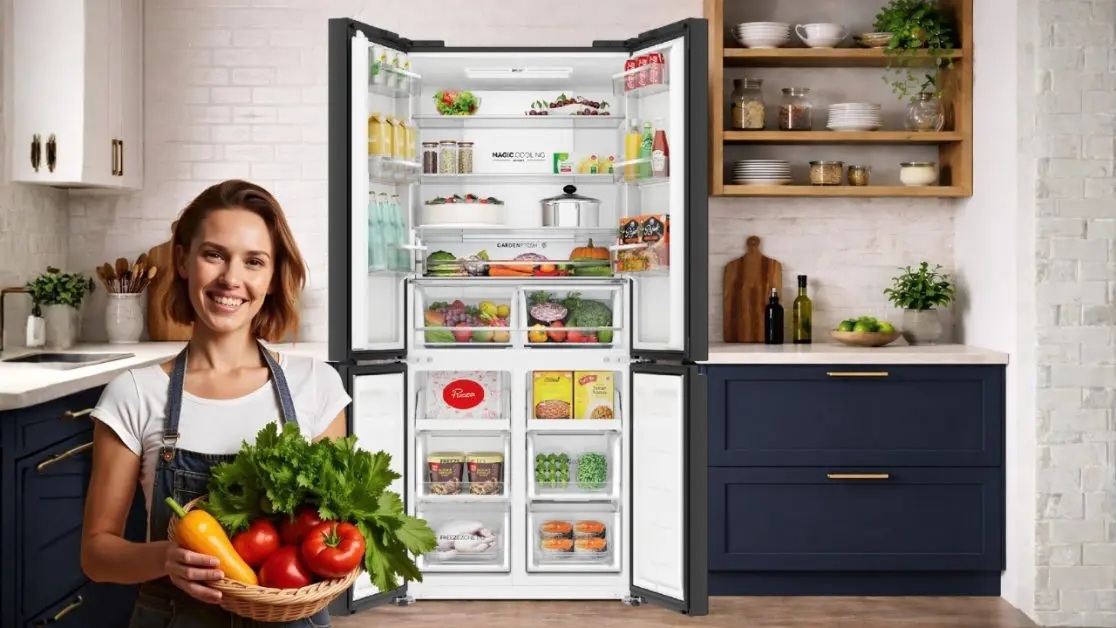
Many people believe more shelves mean better organization.
Not quite.
What matters more is how storage is divided vertically.
Multi-door layouts align storage with usage patterns.
- Upper sections for daily access items
- Middle zones for leftovers and fruits
- Lower compartments for vegetables and bulk storage
- Separate freezer zones for frozen food
You reach less.
You bend less.
You forget less.
Good organization is invisible when it works.
How multi-door refrigerators reduce food waste
Food waste happens because food is forgotten.
Multi-door designs reduce this quietly.
Better visibility
Smaller compartments mean fewer blind spots. Items do not get buried.
Predictable placement
When every category has a zone, memory improves. You remember what you own.
Stable temperature
Opening one door does not disturb the entire fridge. Cold air stays contained.
Studies on compartment-based refrigeration show improved temperature stability, which directly impacts food longevity.
Less spoilage.
Less repeat buying.
Why convertible storage matters in Indian homes
Indian storage needs change constantly.
- Festivals need more fridge space
- Guests increase fresh food storage
- Busy weeks depend on frozen meals
- Summers demand beverage space
Fixed freezers do not adapt.
Convertible zones do.
This flexibility keeps compartments balanced instead of overcrowded.
And overcrowding is the enemy of organization.
A real-world example of multi-door design done right
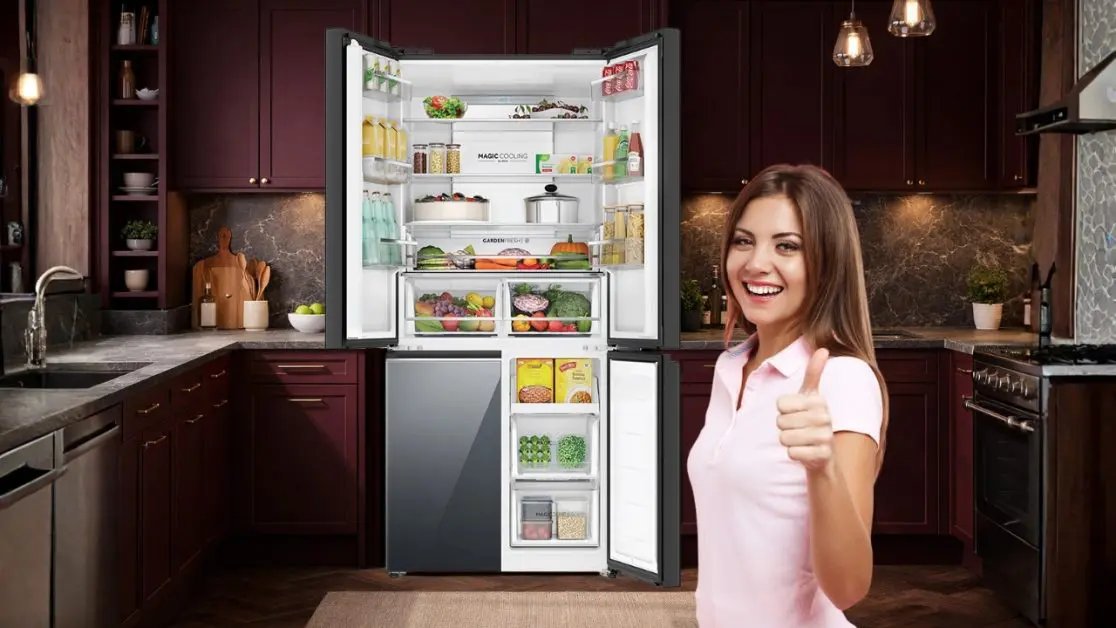
Consider the Haier Lumiere 520L 4 Door Convertible Refrigerator.
Not as a sales pitch.
As a design reference.
This model divides its 520-litre capacity into 10 distinct storage zones, allowing food categories to stay separated and visible.
- convertible fridge space for changing household needs
- Dedicated freezer and fresh food compartments
- Adjustable temperature zones for different food types
- Toughened glass shelves designed for heavy Indian utensils
The design is based on one insight.
Indian kitchens store variety, not uniformity.
The refrigerator adapts to that reality instead of forcing users to adapt.
Why multi-door refrigerators suit Indian family dynamics
Indian kitchens are shared.
Parents.
Children.
Grandparents.
Guests.
Everyone opens the fridge differently.
Multi-door layouts reduce friction without anyone noticing.
- Kids access snacks without disturbing fresh food
- Elders avoid bending for daily items
- Cooking stays organized even during peak hours
Less reshuffling.
Fewer spills.
Organization becomes effortless.
Organization also saves energy
This often goes unnoticed.
Opening one compartment instead of the entire fridge reduces cold air loss.
The compressor works less.
Temperature recovery is faster.
Energy efficiency improves because structure improves.
Good organization always has side benefits.
A simple comparison
| Feature | Single Door | Double Door | Multi-Door |
| Defined zones | No | Limited | Yes |
| Food separation | Low | Medium | High |
| Visibility | Poor | Average | Strong |
| Convertible storage | No | Rare | Yes |
| Daily effort | High | Medium | Low |
The difference is not subtle once experienced.
Why fridge organization feels emotional
A cluttered fridge creates quiet stress.
You feel behind before cooking even starts.
An organized fridge signals control. Calm. Readiness.
Multi-door refrigerators succeed because they respect this emotional layer.
They do not demand discipline.
They design it in.
The larger takeaway
Modern homes do not need more rules.
They need better systems.
Multi-door refrigerators show what happens when design aligns with real life.
When appliances adapt to people, effort disappears.
That is not a feature.
That is a good design.
Frequently Asked Questions
Why do I feel stressed every time I open my fridge at night?
Because everything competes for the same space. Multi-door refrigerators reduce this by assigning clear zones, so you stop making micro-decisions every time you store or retrieve food.
I’m tired of rearranging my fridge daily. Will a multi-door layout actually reduce my effort?
Yes. Defined compartments mean vegetables, dairy, leftovers, and frozen food each have a fixed home. Less reshuffling, less searching.
Is my fridge disorganized because of my habits, or because of its design?
Often it’s design. A single cavity wasn’t built for modern Indian cooking patterns that include bulk vegetables, multiple cooked dishes, dairy, snacks, and frozen food simultaneously.
How does compartmentalization reduce daily decision fatigue in my kitchen?
When storage is predefined, thinking disappears. You instinctively know where items go, which reduces mental load and speeds up routines.
I cook for a big family. Can a multi-door refrigerator reduce kitchen chaos during peak hours?
Yes. Multiple access points mean kids, elders, and adults can access different sections without disturbing the entire fridge.
Why does my paneer absorb garlic smell even when wrapped?
Shared air circulation in single-cavity fridges allows odor mixing. Multi-door refrigerators isolate zones to reduce smell transfer.
I store raw vegetables and cooked food together. Is that affecting freshness?
Yes. Moisture and odor cross-contamination reduce shelf life. Separate compartments protect food categories from one another.
Does opening my fridge often affect food freshness?
In traditional layouts, yes. Multi-door designs limit cold air loss because only one section opens at a time.
How does vertical separation improve hygiene compared to just adding more shelves?
More shelves don’t prevent air mixing. Separate compartments with controlled airflow do.
I left my fridge crowded after a festival. Is overcrowding really that harmful?
Overcrowding blocks airflow, causing uneven cooling and faster spoilage. Convertible zones help rebalance storage when needs spike.