
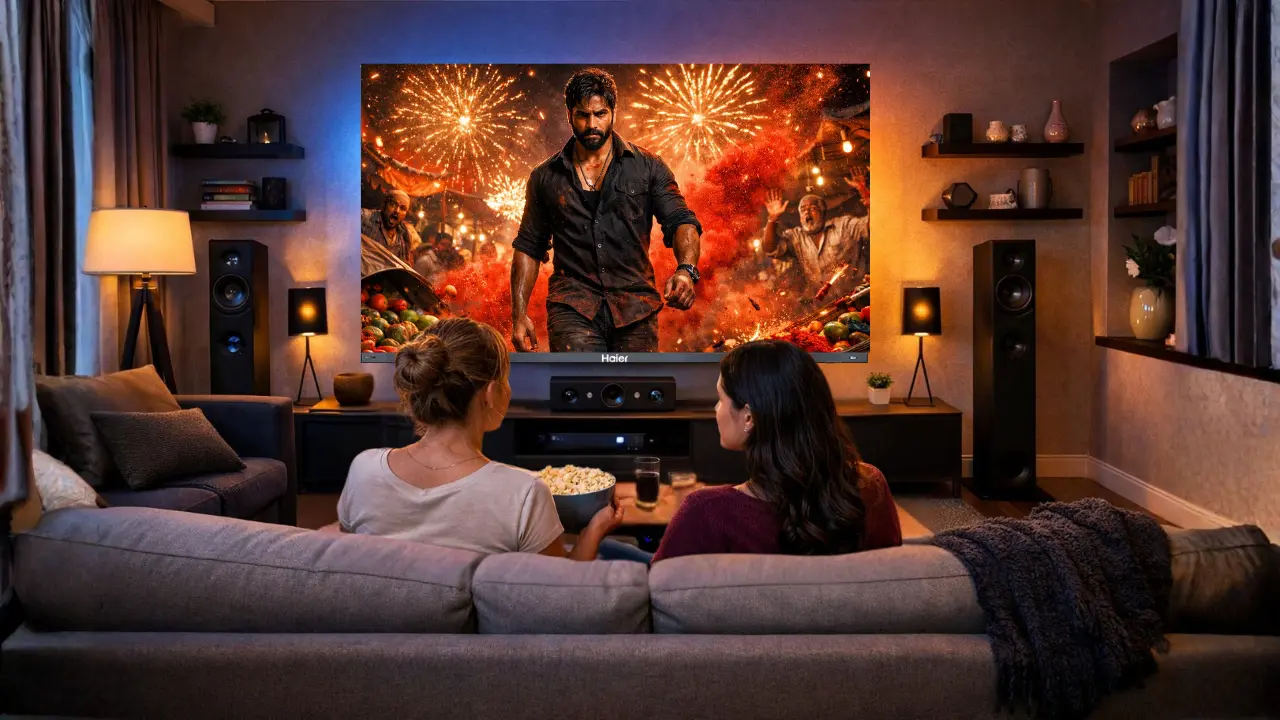

Multi-directional audio changes the viewing experience by allowing sound to move the way life does.
Not just from the front of the TV, but above you, beside you, and behind you. When sound gains direction, the brain stops analysing and starts believing. That belief is what turns watching into presence.
Now let us slow this down.
Because this shift is not about louder sound.
It is about a truer sound.
The moment sound quietly takes control of the story
It happens on an ordinary evening.
Dinner is done.
The house has settled.
A familiar show is playing in the background.
Then something feels different.
You sense footsteps before you see the character.
Rain feels like it is falling around the room, not inside the TV.
The crowd during a match feels layered, not noisy.
Nothing on the screen has changed.
The sound has.
That is the moment audio stops supporting the story and starts shaping it.
Why most TV sound feels acceptable but never memorable
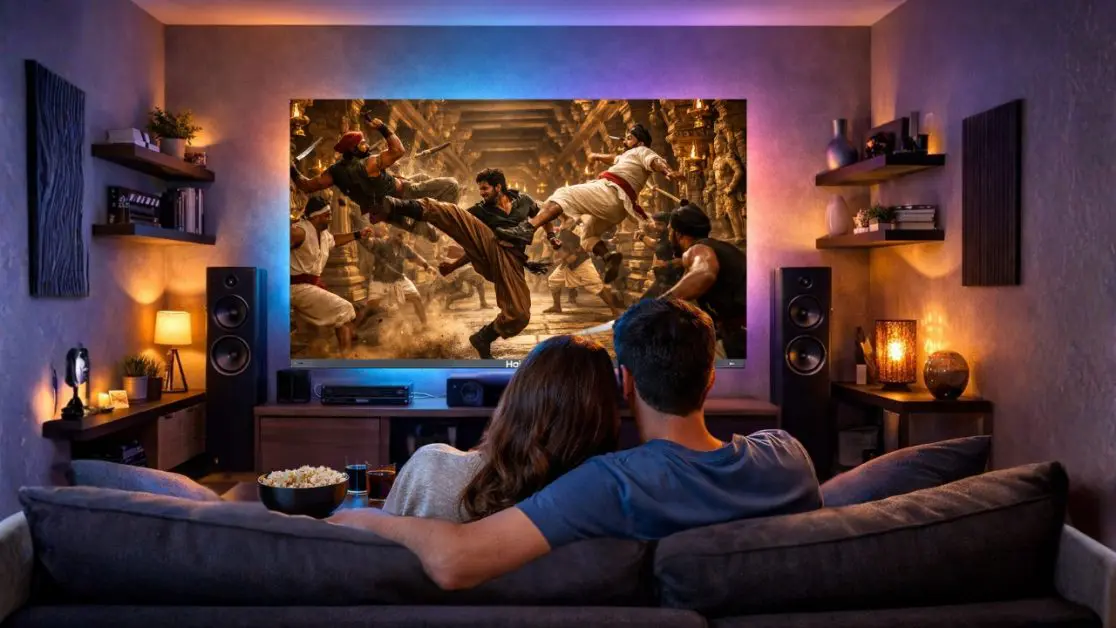
Traditional TV audio follows a simple rule.
Sound comes from the front.
You sit in front of the screen.
Problem solved.
Except that real life does not work like that.
In everyday spaces:
- Voices come from the side of the room
- Vehicles pass behind you
- Wind moves above you
- Bass travels through surfaces, not screens
Flat audio ignores these cues.
Your brain senses the mismatch even if you cannot explain it.
When sound direction does not match visual movement, immersion quietly breaks.
What multi-directional audio actually changes
Multi-directional audio does not chase volume.
It introduces dimension.
Sound gains position.
Here is what that unlocks.
One: Depth replaces loudness
Instead of pushing everything forward, sound layers itself.
- Dialog stays locked to faces
- Background sounds occupy space
- Effects move independently
Your ears begin mapping the scene like a physical environment.
Two: Motion starts to feel real
When sound travels with movement, the brain trusts the image.
A car passing left to right sounds like it is actually passing.
A helicopter rises instead of just getting louder.
Movement stops feeling animated and starts feeling believable.
Three: Silence gains meaning
This is often overlooked.
With layered audio, quiet moments feel intentional.
You notice distance.
You sense tension.
Contrast becomes emotional, not technical.
Why Indian homes feel the difference more clearly
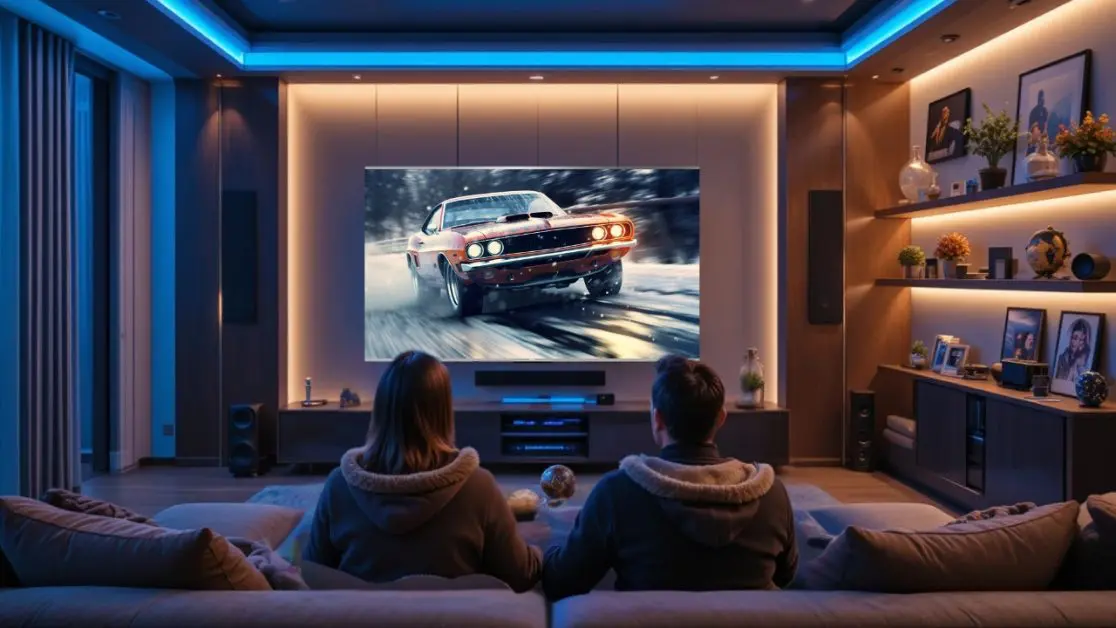
Indian living rooms are not sealed theatres.
They are active spaces.
- A pressure cooker in the kitchen
- Ceiling fans in motion
- Traffic outside
- Conversations in the next room
Flat sound competes with this noise.
Multi-directional sound works around it.
Because audio is spatially placed, the brain separates layers naturally.
Dialog cuts through without harshness.
Ambient sound stays immersive without distraction.
In busy homes, spatial audio reduces listening fatigue.
The psychology behind why this feels effortless
The human brain evolved to locate sound.
Direction mattered.
Distance mattered.
Height mattered.
When sound direction aligns with visuals, mental effort drops.
You stop processing.
You start experiencing it.
That is why:
- Long matches feel easier to follow
- Movies hold attention without strain
- Late-night viewing feels calmer
Immersion is not excitement. It is effortless.
How multi-directional audio upgrades everyday content
This is not limited to big-budget cinema.
Cricket nights
Crowd noise surrounds you.
Bat impact feels grounded.
Commentary stays clear without overpowering ambience.
Family movie evenings
Dialog remains audible without increasing volume.
Music fills the room instead of blasting forward.
Solo late-night watching
Lower volumes still feel complete.
Details do not disappear when you turn the sound down.
Small improvements compound into a better daily experience.
Why soundbars alone do not fully solve the problem
Soundbars help, but they remain add-ons.
They depend on:
- Placement
- Wiring
- Room layout
- Manual calibration
Integrated multi-directional audio systems inside premium TVs work differently.
They are designed around:
- Screen size
- Panel orientation
- Speaker positioning
- Room reflection behaviour
When display and audio are engineered together, alignment improves dramatically.
This is where TVs like the Haier M96 Series 254cm (100) QD Mini LED AI Smart Google TV (Model: H100M96FUX) stand out. Its built-in 6.2.2 channel speaker system with Sound by KEF and Dolby Atmos creates horizontal, vertical, and bass layers without external clutter, delivering a true three-dimensional sound field directly from the screen .
Integration removes friction. Less setup. More consistency.
The hidden system most people miss: sound and screen scale
Large screens change how sound should behave.
A 254cm(100) display demands audio that fills the room proportionally.
The flat sound on a massive screen feels disconnected.
Multi-directional audio scales with visuals.
- Height channels support vertical motion
- Side channels widen the soundstage
- Dedicated bass grounds large scenes
Scale without spatial audio feels incomplete.
Why this matters for the future of home entertainment
Homes are becoming experience hubs.
Work calls.
Streaming.
Gaming.
Fitness.
Shared family viewing.
Audio needs to adapt across all of them.
Multi-directional sound does not specialise in one use case.
It performs consistently across many.
That adaptability is what makes it future-ready.
A simple way to think about it

Flat audio is like reading subtitles.
Multi-directional audio is like understanding tone, distance, and body language.
Both convey information.
Only one conveys feeling.
What to notice when sound quality truly matters
Ignore spec sheets at first.
Pay attention to behaviour.
- Does sound move around you?
- Can you sense height and depth?
- Does dialog stay anchored to the screen?
- Does bass feel placed instead of overwhelming?
Experience answers these better than numbers.
The bigger implication
Visual technology has evolved quickly.
Audio is finally evolving with it.
And when it does, something subtle but powerful happens.
You stop watching content.
You start inhabiting moments.
That is what multi-directional audio truly delivers.
Not a spectacle.
Presence.
And once you experience it, ordinary sound never feels enough again.
Frequently Asked Questions
Why did my usual show suddenly feel more immersive even though the picture didn’t change?
Because spatial sound cues changed. When footsteps arrive before a character appears or rain feels like it surrounds you, your brain registers physical space not just playback.
Why do I “feel” a scene more when sound moves around me?
The brain evolved to track direction and distance. When sound comes from above, behind, or beside you, your mind stops analysing and starts believing.
Why does ordinary TV sound fine but never memorable?
Traditional TV speakers project sound forward only. That works functionally but real life isn’t flat. Without direction and height, scenes lack depth.
Why does action look intense but sound slightly disconnected?
Because movement on screen isn’t matched by movement in audio. If a car crosses left to right but sound remains centered, your brain senses the mismatch.
Why do I feel tired after long matches or movies?
When all audio comes from one direction, your brain works harder to separate dialogue from effects. Spatial separation reduces cognitive load.
Why does increasing volume not fix weak sound?
Loudness isn’t dimension. It just pushes everything forward. Depth comes from layering, not amplification.
Why do long cricket matches feel easier to follow with better sound?
Crowd ambience surrounds you while commentary stays anchored. Your brain doesn’t strain to distinguish layers.