
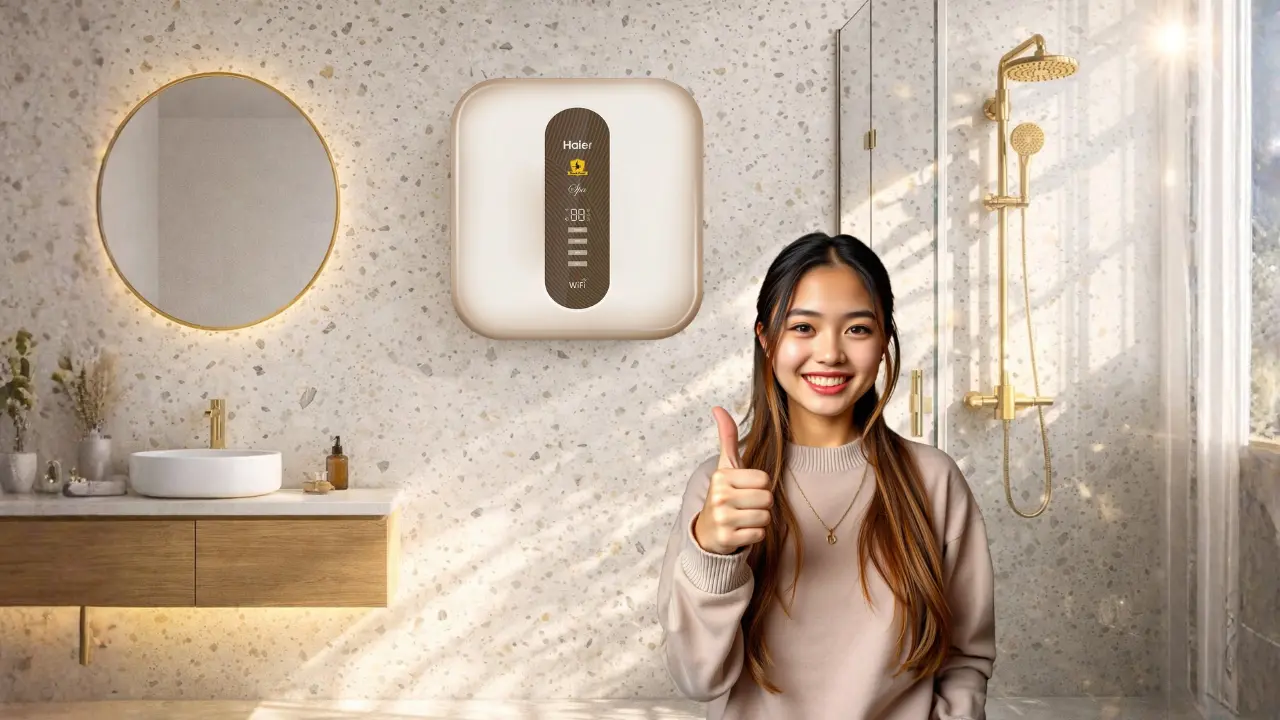

One water heater with multiple power choices means you control how fast, how much, and how efficiently your water heats, based on your home’s real needs.
It is not just about hot water.
It is about timing, electricity load, building pressure, and family routines.
A modern water heater today adapts to peak mornings, quiet afternoons, voltage fluctuations, and high-rise pressure.
Instead of one fixed setting, it offers flexible power modes, smart controls, and layered safety systems that make daily life smoother.
That is the short answer.
The longer one begins in a typical Indian bathroom at 7:45 am.
Why do mornings expose the limits of single-power water heaters?
Picture this.
One person is late for office.
A child needs a quick bath.
Someone else wants extra hot water for winter.
The geyser switches on. It heats at one fixed speed. It consumes one fixed load. It offers one response.
But homes are not fixed systems.
India’s residential electricity supply commonly fluctuates between 180V to 250V in many areas. High-rise apartments face water pressure challenges. Urban households often operate multiple appliances at once during peak hours.
A single-power heater treats every moment the same.
Life does not.
That is where multiple power choices change the equation.
What does “multiple power choices” really mean in a water heater?
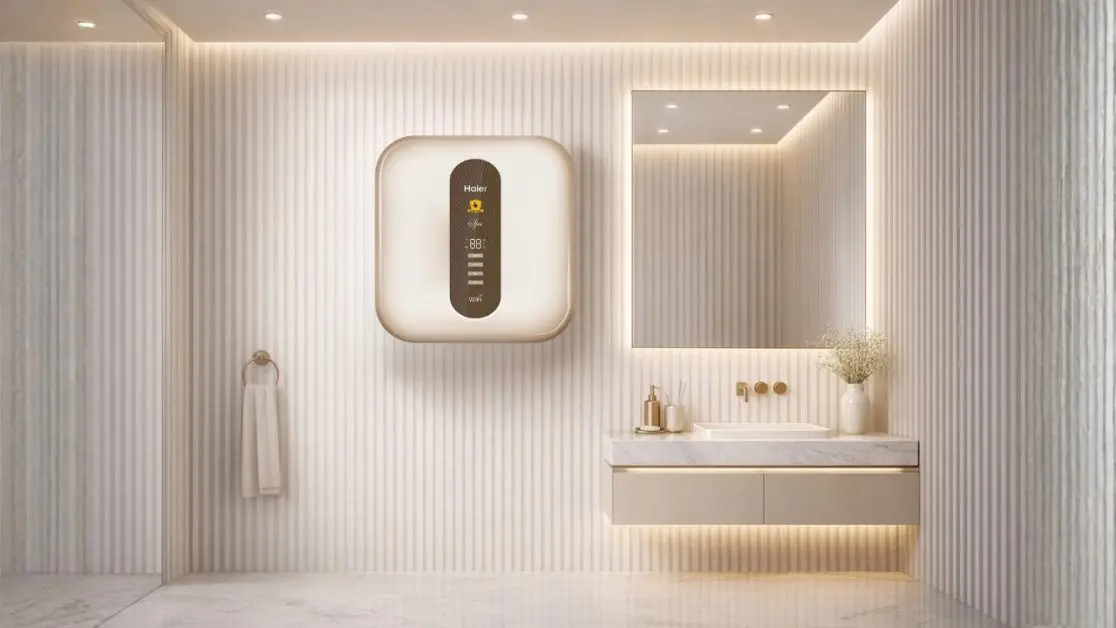
It means flexibility built into the core heating system.
Take the Haier 15L Square 5 Star Water Heater as a real-world example. It offers selectable power levels, up to 3kW, along with a 2000W high-speed heating element.
Here is what that unlocks:
- Faster heating during winter rush hours
- Lower power draw during low-demand periods
- Better compatibility with varying voltage conditions
- Reduced risk of overloading household circuits
A heater with power options behaves like a car with gears.
You do not drive in fifth gear in traffic.
You adapt.
The three power scenarios every Indian home faces
1. Peak Morning Mode
Everyone needs hot water at once.
Higher wattage settings heat faster.
A 2000W heating element shortens waiting time.
Cost: Slightly higher instantaneous power usage.
Benefit: Less waiting. Fewer conflicts. Smooth mornings.
Time saved is emotional energy saved.
2. Energy-Saver Evenings
Only one person needs warm water.
Lower power settings reduce load.
Superior PUF/EPS insulation retains heat longer.
Cost: Slightly slower heating.
Benefit: Reduced electricity consumption. Better long-term efficiency.
Water heaters contribute significantly to monthly electricity bills in urban India, especially in winter. Retained heat means fewer reheating cycles.
Efficiency is not about turning things off.
It is about not reheating what is already hot.
3. High-Rise Pressure Reality
Modern Indian cities are vertical.
An 8-bar rated working pressure supports high-rise installations.
Cost: Stronger internal tank design required.
Benefit: Consistent performance even at higher water pressure levels.
Buildings above 10 floors can experience pressure spikes.
An 8-bar rating means durability is engineered, not assumed.
Infrastructure matters more than aesthetics.
Power choice without safety is a risk. Safety layers change everything.

More power must come with smarter protection.
The Haier ES15V-SD WIFI integrates:
- Shock Proof system for electrical safety
- Dual Thermal Sensor protection (TTS)
- Over-pressure protection
- IPX4 water resistance rating
Let us decode this simply.
| Protection Layer | What It Does | Why It Matters |
| Shock Proof | Converts unsafe leakage voltage to safe levels | Reduces electric shock risk |
| Dual Thermostat | Stops heating at 75°C, cuts off at 95°C | Prevents overheating |
| 8-Bar Rating | Handles high water pressure | Ideal for apartments |
| IPX4 | Protects from water splashes | Bathroom durability |
Safety in appliances is invisible.
The best safety systems are the ones you never notice.
Smart water heating is no longer optional
Today’s homes are connected.
The ES15V-SD WIFI includes WiFi connectivity, smart timer, and smart memory features.
Why does that matter?
Because heating water at 6 am daily is predictable.
Smart timers automate repetition.
Because switching the geyser off remotely prevents waste.
Remote control access gives flexibility.
Because families forget.
Smart systems remember.
And memory reduces waste.
Bacteria-proof heating and fresh water circulation
There is another layer most people ignore.
Water sits in tanks.
The Anti-Bacterial BPS mode heats water up to 80°C to deactivate bacteria.
The RSC U-turn Flow Technology ensures water circulation and prevents stagnation.
In simple terms:
- Less stagnant water
- More hygienic bathing
- Reduced internal corrosion risk
Hygiene is not just visible cleanliness.
It is controlled by heat and movement inside a sealed tank.
Durability is an energy decision
A water heater is not a seasonal purchase.
It is a 7 to 10 year decision.
The glass-lined tank and Incoloy 800 stainless steel heating element improve corrosion resistance and lifespan.
The magnesium rod further protects against internal rust.
Durability reduces:
- Replacement costs
- Maintenance stress
- Emergency service calls
Longevity is hidden savings.
The longer something lasts, the cheaper it becomes per year.
How to choose the right power configuration for your home
Here is a simple framework.
Step 1: Assess usage pattern
- 1–2 users daily: 15L capacity is efficient
- 3–4 users back-to-back: Fast heating becomes critical
The ES15V-SD WIFI offers 15L capacity with 5 Star energy rating.
Energy rating impacts long-term consumption.
Step 2: Check building height
- Low-rise home: Standard pressure works
- High-rise apartment: 8-bar rated pressure required
Step 3: Evaluate electrical load
- Homes running AC, microwave, washing machine simultaneously need adaptable power settings
- Voltage fluctuation proofing protects internal components
Decision-making improves when you see systems, not products.
Why multiple power choices reflect a larger shift in Indian homes
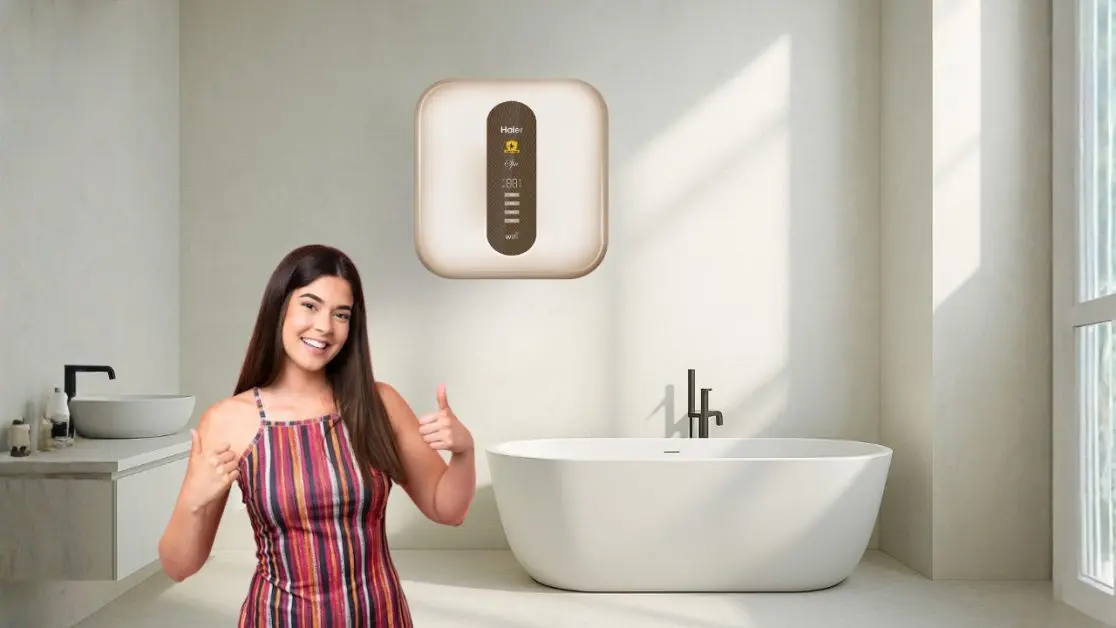
Appliances are no longer static machines.
They are adaptive systems.
Millennial and Gen Z homeowners think differently. They track electricity usage. They expect smart control. They prefer safety layers built in.
A 5 Star rating.
WiFi control.
Smart timer.
Selectable power.
These are not luxury add-ons.
They are responses to modern living patterns.
Urban India sees rising electricity tariffs year after year. Efficient appliances cushion that impact. According to Bureau of Energy Efficiency guidelines, star ratings significantly affect long-term consumption.
In practical terms:
Lower star rating = higher annual cost.
Higher star rating = lower cumulative bill impact.
Small percentage differences compound over years.
One heater. Many modes. A simpler life.
Let us zoom out.
A water heater with multiple power choices solves five invisible problems:
- Morning rush bottlenecks
- High-rise pressure stress
- Voltage fluctuation damage
- Bacterial stagnation
- Energy wastage from reheating
Each solution feels small.
Together, they reshape daily comfort.
When hot water is ready exactly when needed, mornings feel calmer. When insulation retains heat, evenings feel efficient. When smart timers automate routine, mental load drops.
Comfort is rarely dramatic.
It is consistent.
The deeper lesson: control equals confidence
In business, systems with adjustable capacity outperform rigid ones.
Homes are no different.
A water heater that adapts power output behaves like a well-managed team. It scales up when needed. It conserves when demand falls. It protects itself against overload.
That philosophy matters.
The Haier 15L Square 5 Star Water Heater ES15V-SD WIFI embodies that approach with layered safety, selectable power, smart connectivity, 8-bar pressure handling, and energy-efficient insulation.
But beyond the model, the principle stands:
Flexibility reduces friction.
And friction is what makes everyday life exhausting.
So what should you remember?
Not wattage.
Not technical terms.
Remember this:
One fixed power setting assumes life is predictable.
Multiple power choices assume life is dynamic.
Indian homes are dynamic.
And appliances that adapt quietly become invisible partners in daily rhythm.
That is the difference between buying a geyser and choosing a system.
And once you notice that shift, you never look at a water heater the same way again.
Frequently Asked Questions
Every morning my family fights over hot water. Will selectable power really fix this?
Yes. Higher wattage modes (like 2000W or up to 3kW) heat water faster, reducing waiting time during peak usage.
Is higher power mode going to spike my electricity bill?
It increases instant load, not necessarily total consumption. Faster heating often means shorter running time.
I only need hot water for one quick shower in the evening. Can I lower the power?
Yes. Multiple power choices let you reduce load during low-demand hours, improving efficiency.
Voltage in my area fluctuates between 180V–250V. Is that dangerous for a water heater?
It can stress internal components. Selectable power settings reduce strain during unstable supply conditions.
If AC, washing machine, and microwave run together, will my geyser trip the circuit?
With fixed high wattage, possibly. With adjustable power, you can balance total household load.
Is selectable wattage useful if my sanctioned load is limited (5–8 kW)?
Absolutely. Lower settings prevent overload during peak appliance usage.
I live on the 15th floor. Why should I care about an 8-bar rating?
High-rise buildings experience pressure spikes. An 8-bar tank resists structural stress and leakage risk.
What happens if I install a low-pressure-rated heater in a high-rise?
Increased internal strain, shorter tank lifespan, potential safety hazards.
Is pressure rating connected to durability?
Yes. Stronger tank design typically aligns with longer lifespan and warranty confidence.