
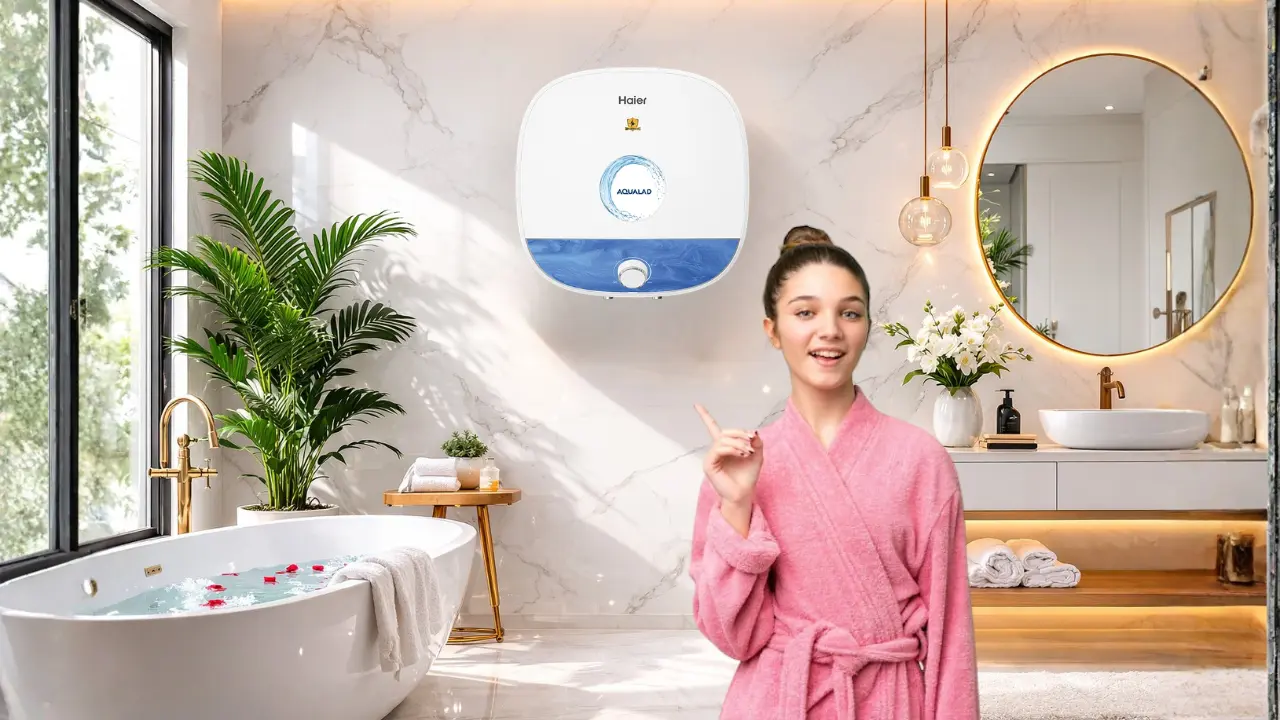

Bacteria control is no longer optional. It is essential.
Bacteria control is a must-have feature today because modern homes are closed systems. Water sits in tanks. Air circulates indoors.
Refrigerators stay sealed for days. When appliances cannot actively inhibit bacteria, they quietly store risk. Smart bacteria control features reduce that risk automatically, without extra effort from families.
That is the short answer.
The longer one begins in a bathroom at 6:45 am.
The Invisible Problem in Everyday Routines
You wake up. Turn on the geyser. Wait for the water to heat.
It looks clean. It feels warm. It smells fine.
But here is the system most people ignore.
Water stored in tanks for hours or days becomes stagnant. Warm temperatures create a comfortable environment for microbial growth.
The World Health Organization has long documented that bacteria multiply rapidly between 5°C and 60°C in stored water systems. That range is common in household tanks.
This is not panic. It is physics.
Warmth plus stagnation equals growth.
In Indian homes, water heaters often store 15 to 25 litres for repeated use. Families bathe in shifts. Working professionals shower at odd hours.
Children use smaller buckets throughout the day. The water inside stays warm for long stretches.
Without bacteria control, appliances rely on hope.
And hope is not a hygiene strategy.
Why “Clean Water Supply” Is Not the Same as Bacteria Control
One assumption drives many buying decisions.
“If my building water is clean, my bath water is clean.”
Not always.
Municipal supply may be treated. But once water enters a storage tank, a heater, or plumbing lines, new variables appear.
- Temperature fluctuations
- Mineral deposits
- Stagnation pockets
- Pressure changes
According to the Bureau of Indian Standards, safe storage temperature and periodic heating are recommended to reduce microbial risks in stored water systems.
Yet many conventional heaters operate below optimal bacteria-inhibiting temperatures unless manually adjusted.
This is where bacteria control systems matter.
They act when people forget.
They correct when habits fail.
What Does Bacteria Control Actually Do?
Let us make this simple.
Bacteria control features in modern water heaters work by periodically heating stored water to higher temperatures that deactivate bacteria. Some systems heat up to 80°C in a dedicated mode to inhibit bacterial growth.
For example, Haier’s Bacteria Proof System heats water up to 80°C in BPS mode to deactivate bacteria.
The principle is straightforward:
- 50°C: Bacteria may survive
- 65°C: Growth slows
- 80°C: Bacteria deactivate
This is temperature as hygiene.
Not marketing. Mechanics.
And it operates automatically.
The Hidden Cost of Ignoring Bacteria Control
Most buyers compare price and capacity.
Few compare hygiene systems.
That gap has consequences.
Cost 1: Health Risk
Stored warm water without bacteria control increases exposure risk, especially for children, elderly parents, and those with lower immunity.
Cost 2: Maintenance
Stagnant water contributes to scaling and residue buildup. Over time, that impacts heating efficiency and element life.
Cost 3: Peace of Mind
Uncertainty drains energy. Modern households already manage work stress, school routines, and social commitments. Hygiene anxiety should not be added to the list.
The benefit, on the other hand, is simple.
Automatic control.
Consistent safety.
Quiet assurance.
Why Bacteria Control Matters More in Urban India
Urban Indian homes are changing.
High-rise apartments dominate new construction. Many water heaters now operate under high pressure systems, often rated at 8 bar to support taller buildings.
Higher pressure. Closed plumbing. Less manual intervention.
These systems are efficient. They are also more complex.
When water circulates through long pipelines and returns to storage, stagnation risk increases. Some modern systems integrate circulation technologies like U-turn flow to reduce stagnant water pockets.
This is systems thinking.
Bacteria control does not work alone. It complements flow design, insulation, and pressure handling.
Together, they form a hygiene ecosystem.
How Modern Bacteria Control Fits Into Daily Life
Let us step back from specifications.
Think about festivals.
Diwali cleaning. Guests staying over. Multiple baths in a day. Late-night showers after gatherings.
Or think about winter mornings in Delhi.
The geyser stays on longer. Water reheats repeatedly. The tank remains warm all day.
In both cases, bacteria control becomes invisible support.
You do not monitor temperature.
You do not manually flush tanks.
The appliance handles it.
That is the shift modern appliances represent.
From reactive to preventive.
What Should You Look For in a Bacteria-Controlled Water Heater?
Not all features are equal. Compare systematically.
| Feature | Why It Matters | Benefit |
| Bacteria heating mode (up to 80°C) | Deactivates bacteria in stored water | Hygiene assurance |
| Dual thermal protection | Prevents overheating | Safety + longevity |
| Flow circulation technology | Reduces stagnant pockets | Fresher water |
| 8 Bar pressure rating | Handles high-rise systems | Consistent performance |
| High insulation | Retains heat longer | Lower electricity use |
A model like Haier 15L Square AQUALAD PRO integrates BPS mode, RSC technology, dual thermal protection, and 8 bar rated pressure.
The 25L variant offers similar systems for larger families.
Capacity changes. The hygiene principle remains constant.
Three Ways Households Approach Hygiene
Let us be honest.
There are usually three approaches.
One option is manual control
Heat water higher occasionally. Flush tanks periodically. Monitor manually.
- Economical
- Requires discipline
- Easy to forget
The second option is reactive cleaning
Call service when scaling builds up. Clean tanks annually.
- Less daily effort
- Reactive, not preventive
- Higher long-term maintenance cost
The third option is built-in bacteria control
Automated high-temperature cycles with integrated safety.
- Preventive
- Consistent
- Peace of mind
Modern families choose the third.
Not because it is fancy.
Because it reduces decision fatigue.
Energy Efficiency and Bacteria Control Can Coexist
A common worry surfaces.
“If it heats to 80°C, won’t it consume more power?”
Good question.
Modern 5-star rated heaters combine bacteria control with superior insulation materials like PUF to retain temperature longer.
That reduces reheating frequency.
Many models also offer multiple power modes such as 1, 2, and 3 kW options.
So the system balances hygiene and efficiency.
Heat high when needed.
Retain heat intelligently.
Consume power wisely.
Hygiene and savings are not opposites.
They are engineered together.
Why Bacteria Control Reflects a Bigger Shift in Appliances
This is not only about water heaters.
It is about how appliances evolve.
Refrigerators now include anti-bacterial gaskets.
Washing machines use drum-clean cycles.
ACs integrate self-clean functions.
The pattern is clear.
Appliances no longer just perform primary tasks.
They manage invisible risks.
That shift mirrors how organizations think during uncertain times.
Leaders do not wait for failure.
They build preventive systems.
Homes operate the same way.
What This Means for Young Buyers and New Homes
Millennials and Gen Z buyers evaluate differently.
They read specifications.
They compare star ratings.
They value long-term benefits.
A 5-star heater with a titanium tank, magnesium rod, dual thermostat, and bacteria proof system is not just an appliance. It is a design decision.
A decision that says:
“I prefer prevention over repair.”
That mindset shapes smarter homes.
The Memorable Insight
Bacteria thrive in neglect.
Systems thrive in design.
When hygiene depends on memory, it fails.
When hygiene depends on engineering, it scales.
That is the difference.
So, Is Bacteria Control a Must-Have Today?
Yes.
Because modern homes are dense, vertical, and fast-paced.
Because stored water systems operate daily without inspection.
Because preventive technology reduces invisible risk.
And because the cost of building it in today is lower than managing the consequences later.
Bacteria control is not a luxury feature.
It is a quiet guardian.
In a world where homes are becoming smarter, the smartest decision is often the one that works silently in the background.
And sometimes, the most important innovations are the ones you never notice.
Frequently Asked Questions
Do I really need bacteria control in my water heater, or is it just marketing?
Yes, you likely do especially if your heater stores water for hours. Stored warm water (between 5°C and 60°C) creates an environment where bacteria can multiply. Bacteria control systems automatically heat water to higher temperatures (like 80°C) to deactivate microbes. It removes guesswork from hygiene.
If my municipal water is clean, why should I worry?
Clean supply water can still become contaminated after storage. Once inside a tank or heater, temperature fluctuations and stagnation create new risks.
Is it safe to rely on manual heating instead of built-in bacteria control?
It can work but only if you consistently remember to heat water to bacteria-inhibiting temperatures. Most families don’t maintain that discipline long-term.
If my bath water looks clear and smells fine, can bacteria still be present?
Yes. Bacteria are invisible and odorless in early growth stages. Warm stored water is their ideal environment.
Does water sitting overnight in the geyser become unsafe?
Not instantly unsafe but extended warm stagnation increases microbial risk, especially if heating temperatures remain below 65°C.
Is bacteria control more important for families with kids or elderly parents?
Yes. People with developing or weaker immune systems are more sensitive to microbial exposure.