
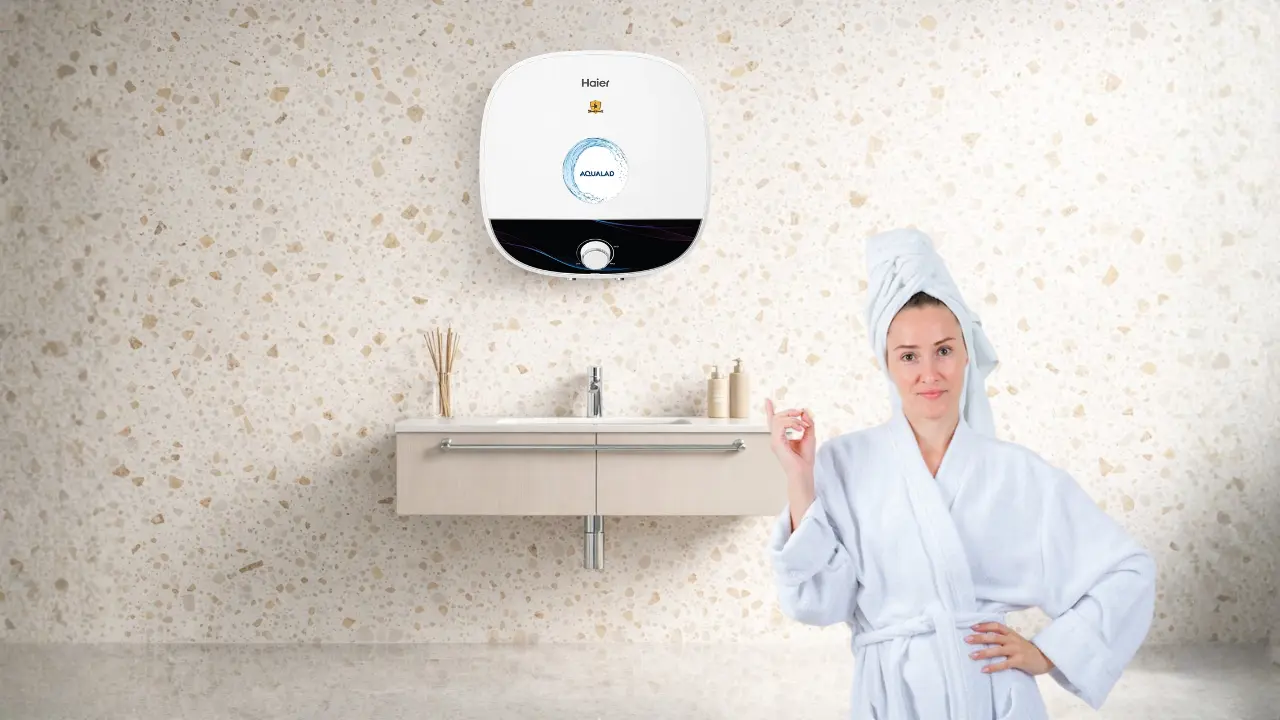

Designed for Hygiene-Conscious Indian Homes Means This
It means appliances that do more than function. They protect. They circulate. They heat, cool, wash, and store in ways that reduce invisible risks. In hygiene-conscious Indian homes, safety is not a feature. It is a system built quietly into everyday routines.
That is the short answer.
The longer one begins in the bathroom at 6:30 am.
The morning ritual that reveals everything.
A child waits for warm water before school.
A parent checks if the geyser is off.
Someone reminds everyone to not touch wet switches.
Indian homes are practical. But they are also cautious.
According to the Ministry of Housing and Urban Affairs, urban India has seen a sharp rise in high-rise living over the last decade. High water pressure. Shared plumbing lines. Compact bathrooms. All of this changes how hygiene and safety must be designed.
Hygiene is not only about visible cleanliness.
It is about what you cannot see.
Water quality. Bacteria growth. Electrical leakage. Stagnant storage.
Most of us assume hot water is safe water. That assumption hides a system we rarely examine.
Hygiene Is a System, Not a Habit
Wiping tiles daily helps.
Using fresh towels helps.
Switching off appliances helps.
But hygiene-conscious homes design protection into the appliance itself.
Take storage water heaters. The wrong tank design allows stagnant water deposition. Stagnant water breeds bacteria. Bacteria multiply silently.
That is not fear. That is physics.
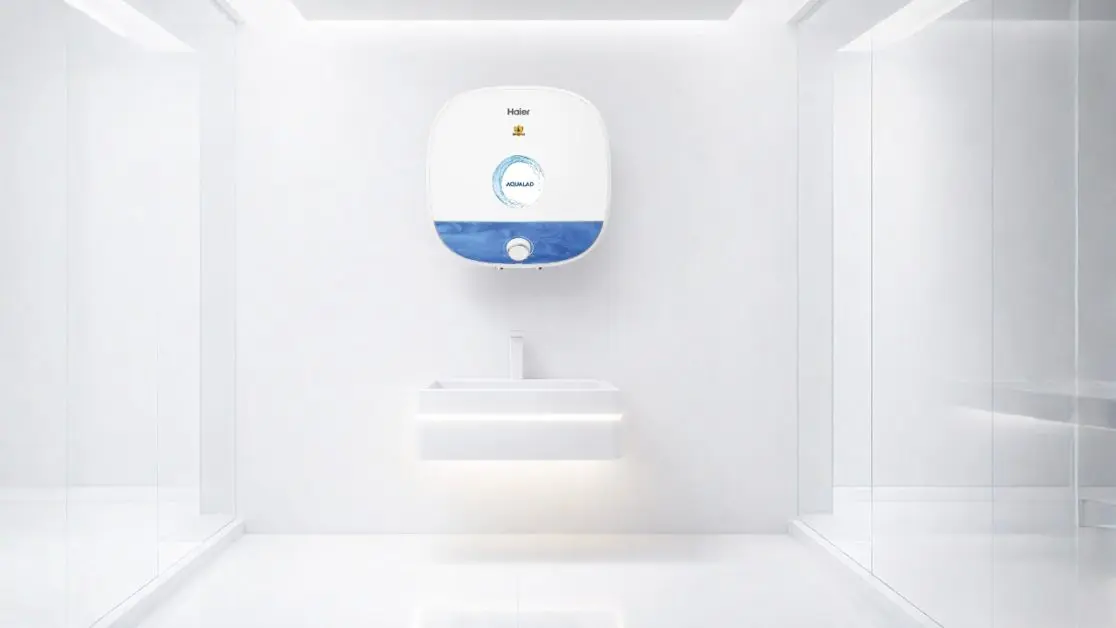
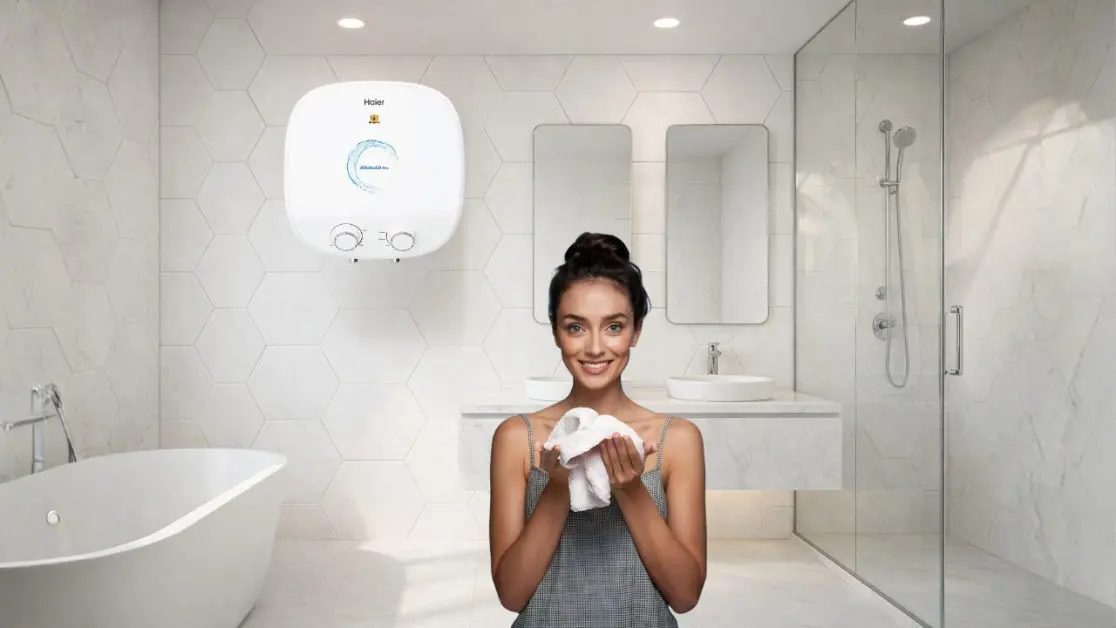
The Haier 15L Square AQUALAD PRO 5 Star Water Heater and the Haier 25L Square AQUALAD PRO 5 Star Water Heater are built with U turn RSC flow technology that activates circulation and reduces stagnant deposition
Circulation is not a luxury.
It is hygiene in motion.
When water moves, it stays fresher.
When systems circulate, risks shrink.
That principle applies beyond bathrooms. It is the same logic behind airflow in smart ACs and multi air duct refrigerators.
Movement protects.
What Does a Hygiene-Conscious Water Heater Actually Do?
Let us break it down clearly.
A hygiene-conscious water heater focuses on three invisible threats:
- Bacterial growth
- Electrical risk
- Pressure instability
Now look at how design answers each.
1. Bacteria Control Through Heat
Heating water to 80°C in BPS mode inhibits bacteria growth
Most people set geysers at comfortable levels and forget. But comfort temperature and sanitation temperature are different. Periodic high-heat cycles disrupt bacterial build up.
Cost: Slightly higher power draw during that cycle.
Benefit: Safer stored water.
Hygiene always involves a trade off.
The right design makes the trade worth it.
For more on how water temperature impacts bacteria control, even the World Health Organization highlights temperature as a key factor in reducing microbial risk in stored water systems.
2. Electrical Safety Through Shock Protection
Bathrooms combine water and electricity. That mix demands design precision.
Shock Proof technology converts rated voltage lower to safe voltage in case of leakage
This is not a marketing language. It is protection built to international standards.
Add Dual Thermal Proof where heating stops at 75°C and automatically cuts off at 95°C if the first protection fails
Redundancy matters.
One safety layer protects.
Two safety layers reassure me.
Hygiene is not just about cleanliness. It is about eliminating preventable risk.
3. Pressure Stability for High-Rise Homes
Urban India increasingly lives vertically. Water pressure fluctuates.
The AQUALAD PRO series is rated for 8 Bar working pressure
That is critical for high-rise buildings.
Cost: Slightly more robust internal design.
Benefit: Fewer pressure-related failures.
When plumbing holds steady, hygiene holds steady.
The Hidden Hygiene Feature Nobody Talks About
Insulation.
PUF or EPS insulation retains heat longer and reduces reheating cycles
At first glance, this sounds like energy efficiency. It is.
But it also reduces repeated heating and cooling stress inside the tank. Less stress means more stable internal conditions.
Stable systems resist contamination better.
Efficiency and hygiene are not separate goals.
They reinforce each other.
For deeper reading on energy efficiency standards in India, the Bureau of Energy Efficiency outlines how 5 Star ratings contribute to lower electricity consumption.
Internal reference: For a broader look at energy-conscious appliances, explore Haier India’s energy saving appliance range.
Hygiene-Conscious Homes Think in Layers
The smartest homes do not rely on a single solution.
They layer protection.
Consider this simple comparison:
| Hygiene Focus | Basic Appliance | Hygiene-Conscious Design |
| Bacteria Control | Standard heating | BPS 80°C sanitation mode |
| Electrical Safety | Single thermostat | Dual Thermal Proof + Shock Protection |
| Water Freshness | Static tank | RSC U turn circulation |
| Pressure Handling | Standard build | 8 Bar rated design |
| Energy Stability | Basic insulation | PUF/EPS super insulation |
When systems stack, risks shrink.
Layered hygiene feels invisible. But it changes daily life.
Why This Matters to Young Indian Households
Millennial and Gen Z households value aesthetics. They also value control.
But here is what they value most: predictability.
A solo professional working late does not want to second guess if the geyser is safe.
A new parent does not want to worry about bacteria in stored water.
A couple setting up their first home wants reliability.
Hygiene-conscious design reduces cognitive load.
You do not think about it.
Because it already thinks for you.
That is the future of appliances.
Beyond Water Heaters: Hygiene as a Home Philosophy
Look around a modern Indian home.
- Refrigerators with multi air flow reduce odour mixing.
- Washing machines with high temperature cycles reduce microbial residue.
- Smart ACs monitor humidity and air quality.
Hygiene is moving from manual effort to embedded intelligence.
The pattern is clear.
One option is reactive hygiene. Clean after problems appear.
The second option is preventive hygiene. Design systems that reduce risk before it shows.
The third option is layered hygiene. Combine smart design with smart habits.
The third option wins long term.
Because prevention scales.
Reaction exhausts.
What Should You Look For in a Hygiene-Conscious Appliance?
Ask five questions:
- Does it address bacteria explicitly?
- Does it include dual safety systems?
- Is it designed for Indian pressure conditions?
- Does it reduce stagnation?
- Does it carry a strong energy rating?
If the answer to most of these is yes, the appliance aligns with hygiene-conscious Indian homes.
Not because it claims to.
Because its design logic proves it.
The Bigger Insight
Hygiene is not a trend born out of recent years. It is a mindset that Indian homes have carried for generations.
What changes is the scale.
As homes become smaller, vertical, busier, and more electrified, hygiene must become engineered.
We are moving from cleaning surfaces to designing systems.
From wiping to wiring.
From scrubbing to structuring.
The homes that thrive in uncertain times are not the ones that react fastest. They are the ones that build invisible resilience.
Hygiene-conscious design is resilience made domestic.
And that is what defines the future of Indian living spaces.
Not louder machines.
Smarter layers.
When appliances quietly remove risk, homes feel calmer.
And calm, in a busy Indian household, is the ultimate luxury.
Frequently Asked Questions
I switch on the geyser every morning. How do I know the stored water is hygienic?
A hygiene-conscious heater includes periodic high-temperature modes like BPS heating up to 80°C, which helps inhibit bacterial growth inside stored water. Regular circulation (RSC U-turn flow) further reduces stagnant pockets.
My child uses the bathroom alone before school. Is there protection against electrical shocks?
Yes. Shock Proof compliance reduces voltage to safe levels in case of leakage. Dual Thermal Protection also prevents overheating, adding a second safety layer inside wet bathroom environments.
I often forget to switch off the geyser. Is that dangerous?
Dual thermostat systems automatically stop heating at 75°C and cut off power at 95°C if needed. This redundancy reduces overheating risk even if you forget to turn it off manually.
I live in a high-rise with shared plumbing. Does that increase hygiene risks?
Yes, shared plumbing and pressure fluctuations can increase contamination and stagnation risk. An 8-bar rated tank with circulation flow design maintains internal stability despite pressure changes.
I assumed hot water is automatically safe. Is that wrong?
Comfort temperature and sanitation temperature differ. Water stored at moderate temperatures can still allow bacterial growth. Periodic 80°C heating cycles disrupt microbial buildup.
If I don’t use the geyser for a few days, does bacteria grow inside?
Stagnant water increases risk. RSC U-turn circulation minimizes water deposition pockets, and high-temperature modes help sanitize stored water when reactivated.