
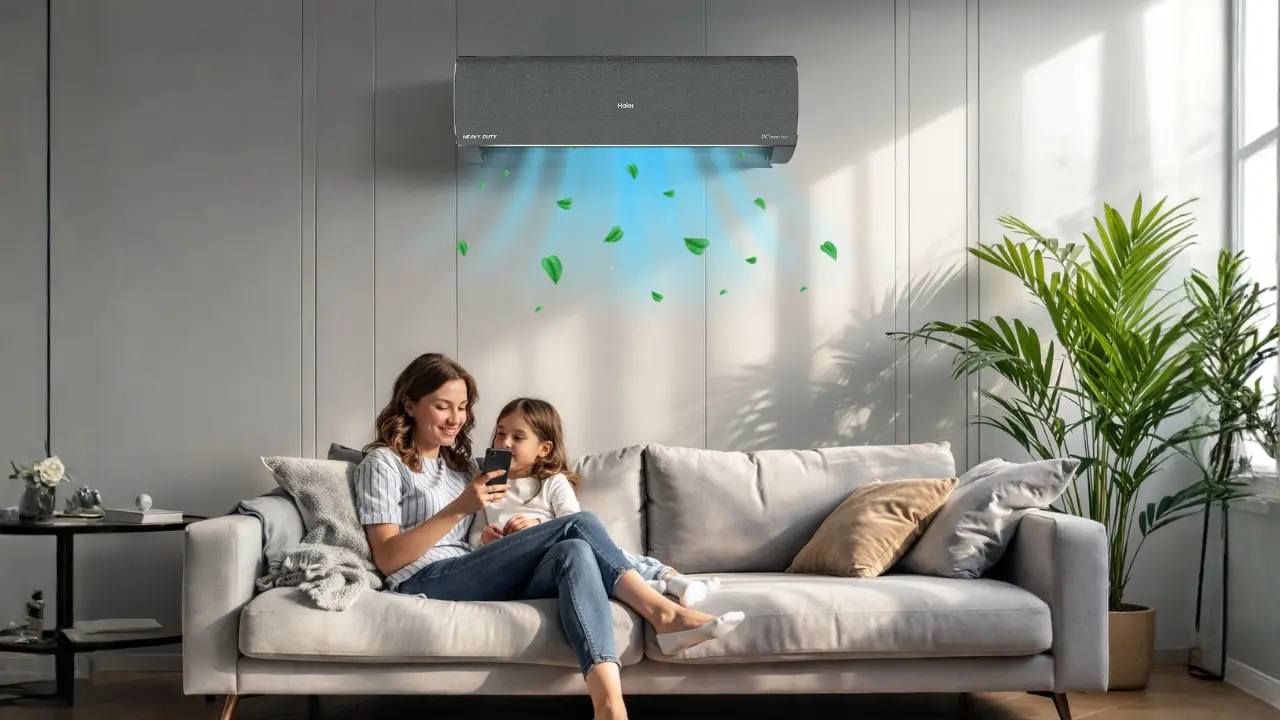

Usage insights lower monthly bills by turning invisible electricity habits into visible, actionable patterns.
When families can see how and when appliances consume power, they adjust temperature settings, usage timings, and modes with intent.
Smart Electricity monitoring 2.0, AI-driven climate control, and occupancy detection help prevent overuse. The result is simple: smarter decisions, lower energy waste, and consistently reduced monthly bills.
That is the direct answer.
Now let us talk about what this really means inside an Indian home.
The evening bill shocked most families.
It usually happens around 9:30 PM.
Dinner plates are stacked. The TV is on. The AC hums softly. Someone checks the electricity app and says, “This month feels higher.”
No one changed anything dramatically.
Or so it seems.
But electricity bills do not rise because of big moments. They rise because of small, repeated habits.
An AC left running in an empty room.
A refrigerator is set colder than necessary.
A TV operating at maximum brightness all day.
Small decisions. Multiplied daily.
According to India’s Central Electricity Authority, household air conditioning alone can account for 40* to 60* percent of summer electricity consumption in urban homes. That means even minor efficiency improvements create noticeable monthly savings.
Bills respond to patterns, not intentions.
Usage insights help families see those patterns clearly.
Why “Set and Forget” Is Expensive
For years, appliances worked on a simple model.
You set a temperature.
You switched modes manually.
You guessed what felt right.
But static settings rarely match dynamic homes.
Indian cities can see 8 to 12°C temperature shifts within a single day. Add cooking heat, balcony drafts, ceiling fans, and body warmth. Rooms behave like microclimates.
Traditional appliances respond the same way regardless of context.
That creates two costs:
- Overcooling wastes electricity.
- Undercooling increases discomfort, leading to higher manual adjustments.
Smart usage insights break that cycle.
Instead of guessing, they observe.
Instead of reacting late, they anticipate.
This is where systems like Haier’s AI Climate Control under the AI Atmox platform adjust automatically based on environment and habits.
But let us slow down.
Because this is not about features.
It is about behaviour.
Usage Insights Reveal Three Hidden Cost Leaks
Every home leaks electricity in predictable ways.
1. Cooling Empty Rooms
Many ACs run 20 to 30 minutes after a person leaves.
Haier’s AI Human Detection technology monitors occupancy and automatically switches to energy-saving mode or powers off when the room is empty.
The benefit is direct.
- No manual timers.
- No forgotten switches.
- No wasted hours.
Even 1 hour of avoided AC runtime daily can reduce seasonal electricity bills significantly over three summer months.
2. Overcooling During Stable Temperatures
Most people set ACs at 22°C by default.
But AI Eco 2.0 mode adapts cooling intensity depending on the temperature gap.
- If the room is far from the set temperature, it runs stronger.
- As it stabilizes, it gradually reduces capacity.
- At 1°C difference, it shifts to minimal mode automatically.
Cooling becomes proportional.
Not excessive.
Energy efficiency improves without compromising comfort.
3. Lack of Real-Time Awareness
Most families see electricity usage only at month end.
Too late.
Electricity monitoring 2.0 dashboards show usage in:
- Graphical formats
- Calendar views
- Real-time cost display
- Mode-wise runtime tracking
When consumption appears in currency instead of units, behaviour changes instantly.
People optimize what they can see.
The Power of Pre-Cooling and Target Cooling
Imagine this scenario.
You leave the office at 6:30 PM.
By 7 PM, you enter your apartment.
The room already feels balanced.
That is AI Pre-Cooling.
Using geofencing within 100 meters, the system anticipates arrival and cools just in time.
Why does this matter for monthly bills?
Because traditional behaviour looks like this:
- Arrive home.
- Turn AC to 18°C.
- Run at full capacity for 30 minutes.
Pre-cooling smooths the load curve.
Instead of sudden energy spikes, cooling becomes gradual and controlled.
Now consider AI Target Cooling.
Instead of cooling the entire room equally, it directs airflow precisely to where people are sitting.
The difference is subtle.
But subtle differences scale.
If one corner of the room requires cooling, why power the entire volume aggressively?
Targeted airflow reduces energy waste while improving comfort speed.
Faster comfort. Lower draw.
A Simple Cost-Benefit Snapshot
| Behaviour | Traditional Outcome | With Usage Insights |
| AC runs when room empty | 1–2 hours wasted daily | Auto power optimization |
| Manual Eco switching | Inconsistent | Automatic L1, L2, L3 shifts |
| No usage tracking | Surprise bills | Real-time cost visibility |
| Uniform cooling | Energy spread evenly | Focused target cooling |
Multiply small improvements over 90 summer days.
The monthly difference becomes visible.
Clean Systems Save More Than You Think

Energy efficiency is not only about software.
It is also about maintenance.
Dust accumulation on condenser coils reduces heat exchange efficiency. When coils struggle, compressors work harder.
Haier’s AI ODU Cyclone Clean reverses airflow to blow off condenser dust automatically.
Indoor Frost Self Clean triggers cleaning cycles after 240 hours of operation.
Cleaner systems cool faster.
Faster cooling reduces runtime.
Reduced runtime lowers bills.
Maintenance and monthly savings are directly connected.
Usage Insights Change Family Conversations
Something interesting happens when electricity data becomes visible.
Parents discuss target limits.
Children become curious about modes.
Working professionals track weekday vs weekend usage.
Electricity stops being abstract.
It becomes measurable.
This behavioural shift often creates savings beyond automation.
Consider three family types.
The Working Couple
Long office hours. Limited time.
Electricity monitoring 2.0 helps them:
- Track peak consumption hours.
- Schedule pre-cooling efficiently.
- Avoid leaving appliances on during commutes.
The Family with Children
Frequent temperature adjustments.
Human detection and Eco mode prevent overuse when rooms empty out.
The Solo Professional
Minimal supervision.
Usage insights act like silent accountability.
Data nudges discipline.
Smart appliances do not just cool rooms. They shape habits.
From Appliances to Energy Ecosystems
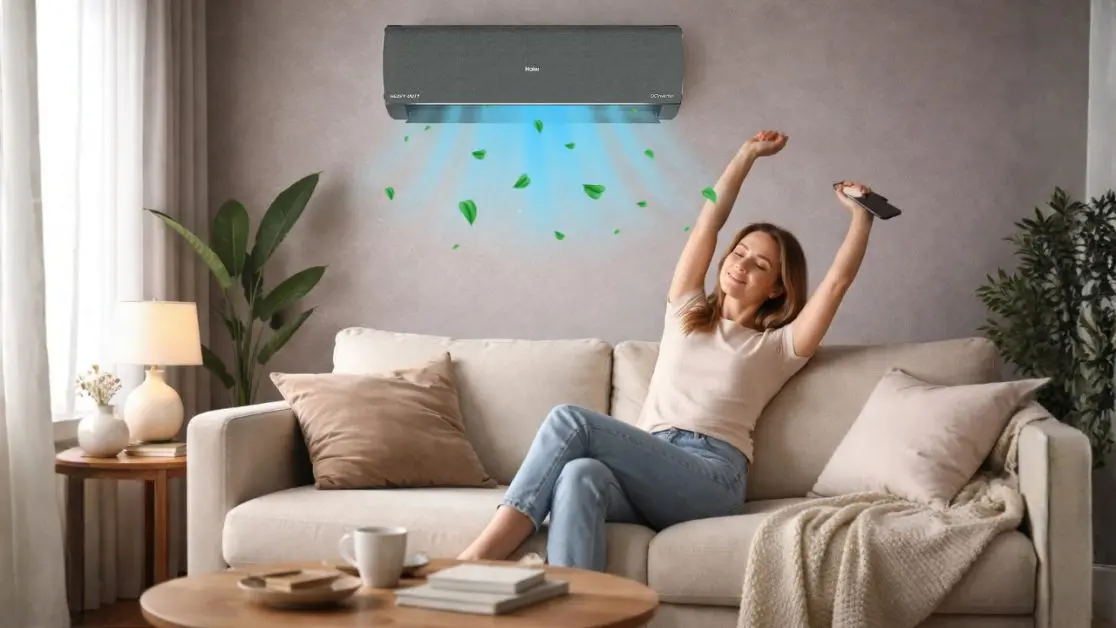
Modern homes are systems.
The AC affects refrigerator performance.
Kitchen heat affects living room cooling.
Outdoor dust affects compressor efficiency.
Usage insights connect these invisible dots.
Haier’s AI Climate Control learns patterns, tracks mode usage, analyzes environmental data, and auto-generates optimized cooling plans.
This is no longer manual control.
It is adaptive management.
The shift is subtle but powerful.
From controlling appliances
to manage energy ecosystems.
Three Choices Families Face Today
Every household has three approaches available.
One Option Is Ignore the Bill
Accept seasonal spikes as inevitable.
No monitoring.
No adjustments.
Cost: Higher monthly bills.
Benefit: Zero effort.
The Second Option Is Manual Discipline
Set timers. Adjust modes consciously. Switch off regularly.
Cost: Constant attention.
Benefit: Moderate savings.
The Third Option Is Intelligent Automation with Usage Insights
Let AI monitor occupancy.
Track consumption in currency.
Adjust capacity dynamically.
Auto-clean for efficiency.
Cost: Initial upgrade.
Benefit: Sustainable long-term savings with minimal effort.
Most families underestimate the compounding effect of the third option.
Automation scales discipline.
The Bigger Insight About Monthly Bills

Electricity bills are not punishment.
They are feedback.
They show how systems respond to behaviour.
When appliances begin learning and adapting, behaviour improves automatically.
India’s urban households are projected to double AC adoption in the coming decade. Energy demand will grow. Tariff structures will evolve.
Families that understand usage insights today will adapt faster tomorrow.
Because visibility precedes control.
And control precedes savings.
What This Means for Modern Indian Homes
Lowering monthly bills is no longer about sacrifice.
It is about awareness.
It is about:
- Cooling intelligently instead of aggressively.
- Monitoring proactively instead of reactively.
- Maintaining automatically instead of manually.
Haier’s AI-powered solutions demonstrate how climate control, Electricity monitoring 2.0, and smart cleaning combine into a unified system.
But beyond the product, the principle stands.
When homes learn, families save.
A Thought to Leave You With
Most people believe savings require effort.
The smarter truth is this:
Savings require insight.
Once you can see patterns clearly, change feels natural.
And when change becomes automatic, monthly bills quietly fall into place.
That is not just about electricity.
That is about how modern homes evolve.
One insight at a time.
Frequently Asked Questions
Why does my electricity bill suddenly feel higher even though I didn’t change anything at home?
Small habits increase consumption slowly. Running the AC a little longer, keeping the fridge colder than needed, or leaving the TV on bright mode daily adds up. Electricity bills respond to patterns, not one-time actions.
I try to manage AC settings, but I keep adjusting them all the time. Why is it so hard to get the temperature right?
Homes are dynamic environments. Cooking heat, weather shifts, ceiling fans, and body heat change the room temperature throughout the day. Static temperature settings cannot keep up with these microclimate changes.
I feel like I’m constantly thinking about electricity usage. Is there a smarter way to manage it without stress?
Yes. Usage insights and AI climate systems automatically monitor temperature, occupancy, and energy consumption. Instead of manual adjustments, the system adapts cooling levels based on real conditions.
Why do people usually notice electricity bills only at the end of the month?
Traditional electricity systems only provide consumption data after the billing cycle. Without real-time monitoring, families cannot see how daily habits affect the bill.
I usually set my AC to 22°C or even 18°C to cool the room faster. Is that actually efficient?
Not really. Lower temperatures force the compressor to run at maximum capacity. Smart cooling systems gradually adjust power levels to maintain comfort with less energy.
Why does my AC run strongly even when the room already feels cool?
Traditional systems follow fixed settings. Without adaptive control, they continue running at high intensity even when only minimal cooling is needed.
Can smarter cooling actually save electricity without making the room uncomfortable?
Yes. AI Eco modes adjust compressor power based on the temperature difference. When the room stabilizes, cooling intensity automatically reduces.