
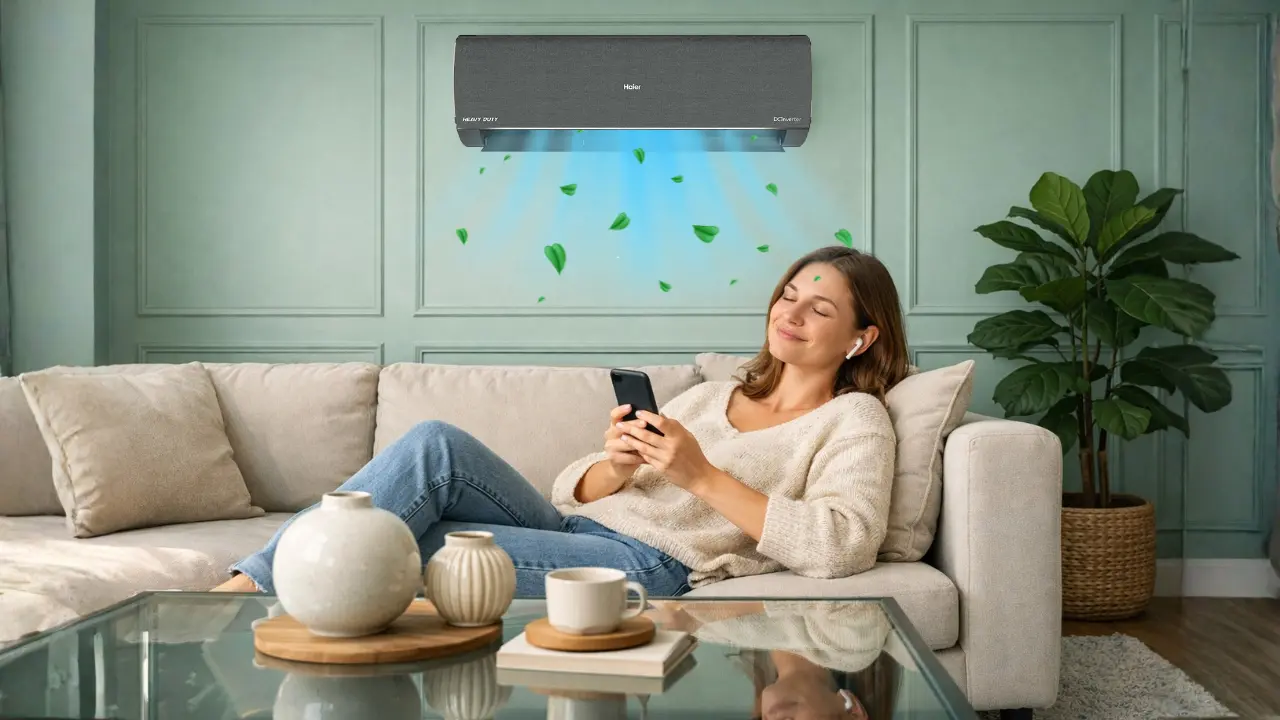

Intelligent efficiency modes reduce hidden wastage by automatically adjusting performance based on real-time conditions, human presence, and usage patterns.
They prevent overcooling, overconsumption, and unnecessary runtime, saving electricity, money, and wear on appliances without asking you to constantly intervene.
That is the short answer.
The longer one lives in Indian homes.
The electricity bill rarely tells the full story.
It is 10:45 pm.
The living room AC runs at 22°C. Nobody sits there anymore. The kids moved to the bedroom. The TV is off. The lights are dim. The AC keeps running.
No one notices.
Hidden wastage does not shout. It hums quietly in the background.
According to the Bureau of Energy Efficiency, air conditioners account for nearly 40 percent* of household electricity use during peak summer months. Add refrigerators, washing machines, and televisions, and appliances become the largest silent consumers in urban homes.
The problem is not usage.
It is unoptimized usage.
Most homes lose energy in three invisible ways:
- Overcooling or overheating beyond need
- Running appliances in empty spaces
- Operating at full power when partial power would suffice
Each of these feels small.
Together, they shape your monthly bill.
Efficiency is not about cutting comfort.
It is about cutting waste.
What exactly is hidden wastage?
Hidden wastage is energy consumed without delivering meaningful comfort or utility.
It shows up in subtle patterns:
- An AC maintaining 20°C when 24°C feels the same
- A refrigerator compressor cycling harder because coils are dusty
- A washing machine running half loads at full capacity
- A TV blasting brightness in a dim room
The International Energy Agency notes that smarter controls and automated optimization can reduce residential cooling energy use by up to 20 percent.
That number matters.
Because small daily inefficiencies multiply.
Like buying pistachios and throwing away a handful every time. One day it feels minor. By month end, it is a full packet gone.
Intelligent efficiency modes exist to solve exactly this pattern.
How intelligent efficiency modes work inside modern appliances
Smart systems are not about gimmicks. They are about adaptive behavior.
Take Haier’s AI powered climate control under its AI Atmox platform.
The system continuously analyses room temperature, humidity, geo location data, and user habits. It then auto adjusts cooling levels without manual input.
This includes:
- AI Climate Control that learns your routine
- AI Pre Cooling that anticipates your arrival
- AI Target Cooling that focuses air where needed
- AI Eco 2.0 Mode that shifts output based on temperature gap
- AI Human Detection that senses occupancy
Intelligence lies in reducing unnecessary output.
Let us break this down.
One option is manual control. The second option is intelligent adaptation.
Option 1: Manual Efficiency
You:
- Set timers
- Adjust temperature frequently
- Switch off devices consciously
- Track bills manually
Cost: Time, attention, constant involvement
Benefit: Some control over wastage
Manual efficiency works. But it demands discipline.
And discipline fades on busy days.
Option 2: Intelligent Efficiency Modes
The system:
- Learns usage patterns
- Switches modes dynamically
- Reduces output automatically
- Tracks electricity consumption in real time
Cost: Slightly higher upfront appliance investment
Benefit: Continuous optimization without effort
Automation removes decision fatigue.
That is the shift.
AI Eco 2.0 Mode prevents overcooling before it starts
Most ACs cool at fixed intensity until they hit a set temperature.
Intelligent Eco modes behave differently.
For example, AI Eco 2.0 systems adjust based on the temperature gap:
- If room and set temperature gap exceeds 3°C, system shifts to high performance
- If gap narrows between 1 to 3°C, it reduces output
- If gap is under 1°C, it stabilizes at minimal energy mode
This layered approach prevents overcooling.
According to energy efficiency guidelines, every 1°C increase in AC temperature setting can reduce electricity consumption by about 6 percent.
That is a measurable impact.
Efficiency is not about compromise.
It is about precision.
AI Human Detection cuts waste when rooms are empty
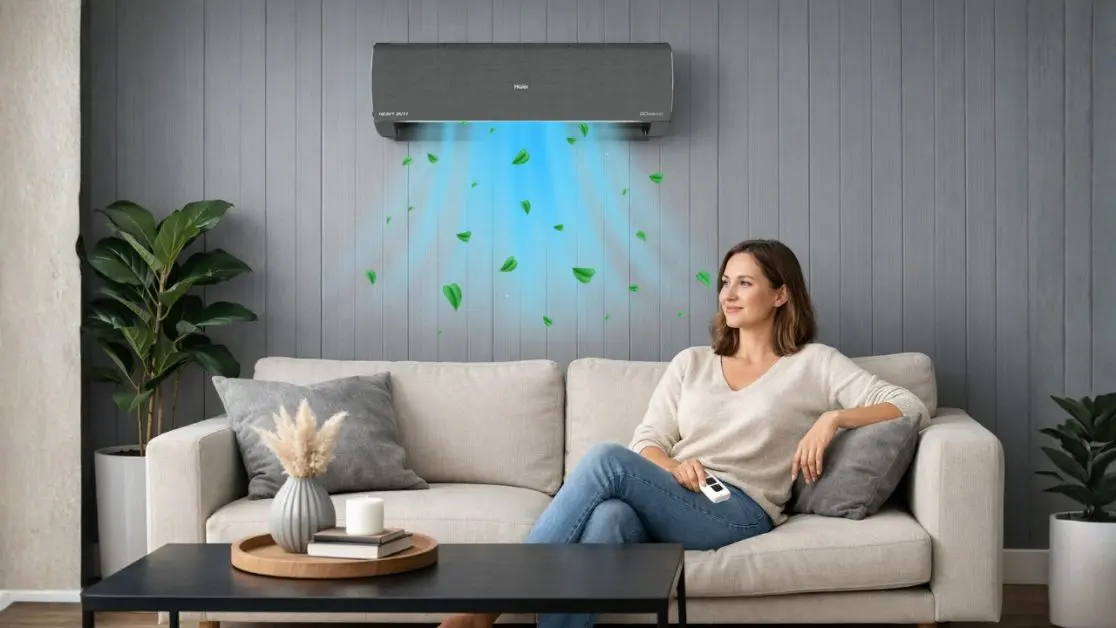
This is where hidden wastage gets exposed.
Many systems now detect absence within 12 meters and shift to energy saving mode. If no activity occurs for 15 minutes, the system lowers output. If inactivity continues for 30 minutes, it powers off automatically.
Think about that.
How many times has an AC run in an empty bedroom?
AI Human Detection closes that loop.
The U.S. Department of Energy notes occupancy based controls can cut HVAC waste significantly in underutilized spaces. The same principle applies in Indian homes.
Empty room.
Reduced output.
No wasted units.
Simple.
Electricity monitoring 2.0 changes behavior
One of the strongest psychological triggers for efficiency is visibility.
When appliances show:
- Graphical consumption
- Calendar based tracking
- Mode wise runtime
- Cost in currency
Behavior changes.
Studies in behavioral economics show households reduce electricity use by 5 to 15 percent simply by seeing real time feedback.
Intelligent Electricity monitoring 2.0 makes wastage visible.
What gets measured gets managed.
And what gets visualized gets optimized faster.
Target Cooling focuses comfort instead of blanketing the room
Traditional cooling treats every corner equally.
Intelligent target cooling focuses airflow where people sit.
This reduces:
- Unnecessary air circulation
- Compressor strain
- Energy draw
Cooling the sofa zone instead of the entire 300 sq ft space cuts invisible waste.
Imagine lighting only the desk where you work instead of the entire house.
That is targeted efficiency.
Pre Cooling saves power through anticipation
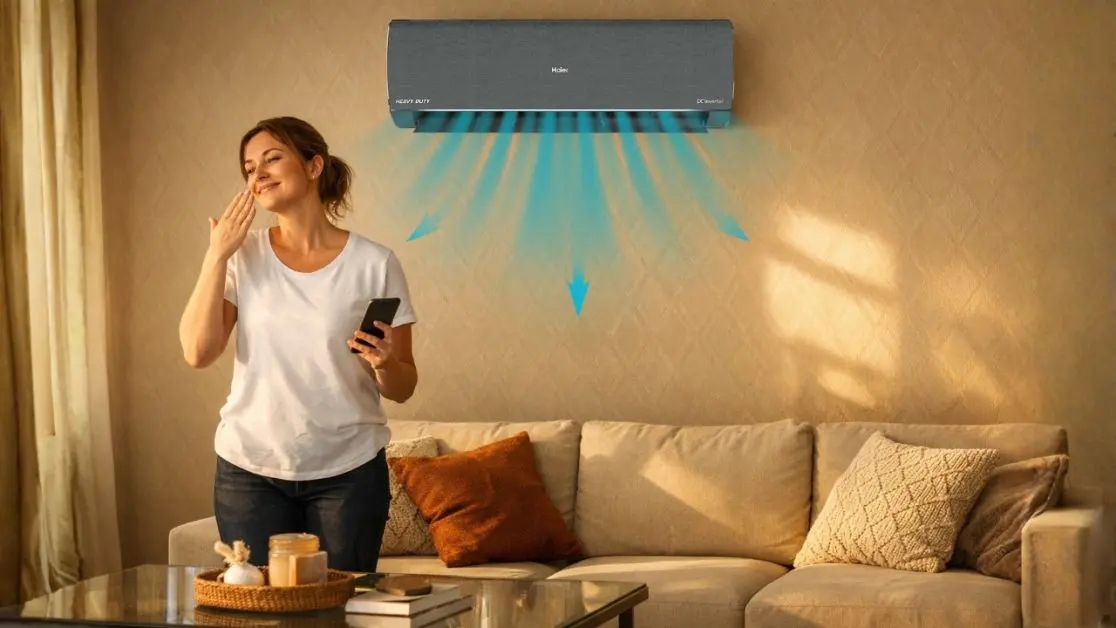
It sounds counterintuitive.
How can turning on early save energy?
Because systems that anticipate arrival cool gradually instead of blasting at maximum when you enter a hot room.
Gradual ramp up reduces peak load spikes.
Grid operators worldwide encourage demand smoothing because sudden spikes increase infrastructure stress and inefficiency.
Intelligent pre-cooling aligns comfort with efficiency.
Arriving cool.
Consume less surge power.
Hidden wastage is not just about electricity
Efficiency modes also extend appliance life.
Consider:
- Self cleaning indoor units that prevent dust buildup
- Outdoor cyclone cleaning that keeps condenser coils efficient
- Auto frost cleaning after fixed operating hours
Dust accumulation reduces heat exchange efficiency. That forces compressors to work harder. That increases power draw.
Cleaner systems cool faster.
Faster cooling uses less energy.
Preventive automation protects both performance and cost.
Efficiency is a system, not a setting
Most people treat efficiency as a button.
In reality, it is an ecosystem.
Intelligent efficiency modes combine:
- Sensor data
- Machine learning
- Environmental feedback
- Behavioral patterns
- Automated cleaning
Each layer reduces friction.
Each layer trims excess.
One layer alone helps. Together, they transform usage.
Like tuning an orchestra instead of silencing instruments.
Why this matters for modern Indian households
Millennial couples managing EMI and electricity bills.
Working professionals returning to warm apartments after 9 pm.
Parents balancing comfort for children and budget planning.
India’s residential electricity demand is projected to grow rapidly in the coming decade due to rising appliance ownership and climate shifts.
That makes intelligent efficiency not a luxury.
It becomes the infrastructure for sustainable living.
Every saved unit:
- Reduces bills
- Reduces carbon footprint
- Reduces strain on appliances
- Reduces long term maintenance
Small automated shifts compound into large annual savings.
So what should you look for in intelligent efficiency modes?
When evaluating modern appliances, consider:
- Real time Electricity monitoring 2.0
- Occupancy based auto adjustment
- Adaptive eco modes
- Targeted performance zones
- Self cleaning efficiency preservation
Each of these reduces a different layer of hidden wastage.
Together, they build resilience.
The future of comfort is quiet intelligence
The most powerful upgrades are the ones you stop noticing.
No constant tweaking.
No guilt about leaving devices on.
No surprise spikes in the bill.
Just steady performance aligned with actual need.
That is what intelligent efficiency modes quietly deliver.
Because the real luxury in modern homes is not more power.
It is a smarter power.
And the smartest systems are the ones that remove hidden waste before you even realize it was there.
Frequently Asked Questions
How do intelligent efficiency modes actually work inside modern appliances?
They use sensors, machine learning algorithms, and environmental data to adjust performance automatically based on temperature differences, humidity, occupancy, and usage patterns.
What is AI Eco Mode and how does it save electricity?
AI Eco Mode dynamically adjusts cooling intensity depending on how far the room temperature is from the set temperature, reducing unnecessary compressor activity.
Can smart appliances detect if nobody is in the room?
Yes. Many modern systems use motion sensors or occupancy detection. If no activity is detected for a period of time, the appliance lowers power consumption or turns off automatically.
How does electricity monitoring help reduce energy usage?
When appliances show real-time consumption, users become more aware of usage patterns. Studies show households reduce electricity consumption by 5–15% simply by seeing their energy data.
What is targeted cooling and why does it save power?
Target cooling directs airflow toward occupied areas instead of cooling the entire room evenly, reducing compressor workload and unnecessary air circulation.
My AC keeps running even when the room feels cool. Is something wrong?
Not necessarily. Traditional systems maintain the set temperature continuously. Intelligent systems reduce power output instead of switching off abruptly, which improves efficiency.
Why does my refrigerator compressor seem to work harder sometimes?
Dust buildup on condenser coils or blocked airflow forces the compressor to work harder, increasing energy consumption.
Do self-cleaning features in appliances really improve efficiency?
Yes. Dust and debris reduce heat exchange efficiency. Self-cleaning systems maintain airflow and cooling efficiency, reducing energy waste over time.
If I leave appliances running accidentally, will intelligent modes help prevent wastage?
Yes. Many systems detect inactivity and shift to low-power operation or automatically power off after extended periods of inactivity.
Are intelligent efficiency appliances worth the higher upfront cost?
For many households, yes. The combination of energy savings, reduced wear on appliances, and lower maintenance costs often offsets the higher initial investment over time.