
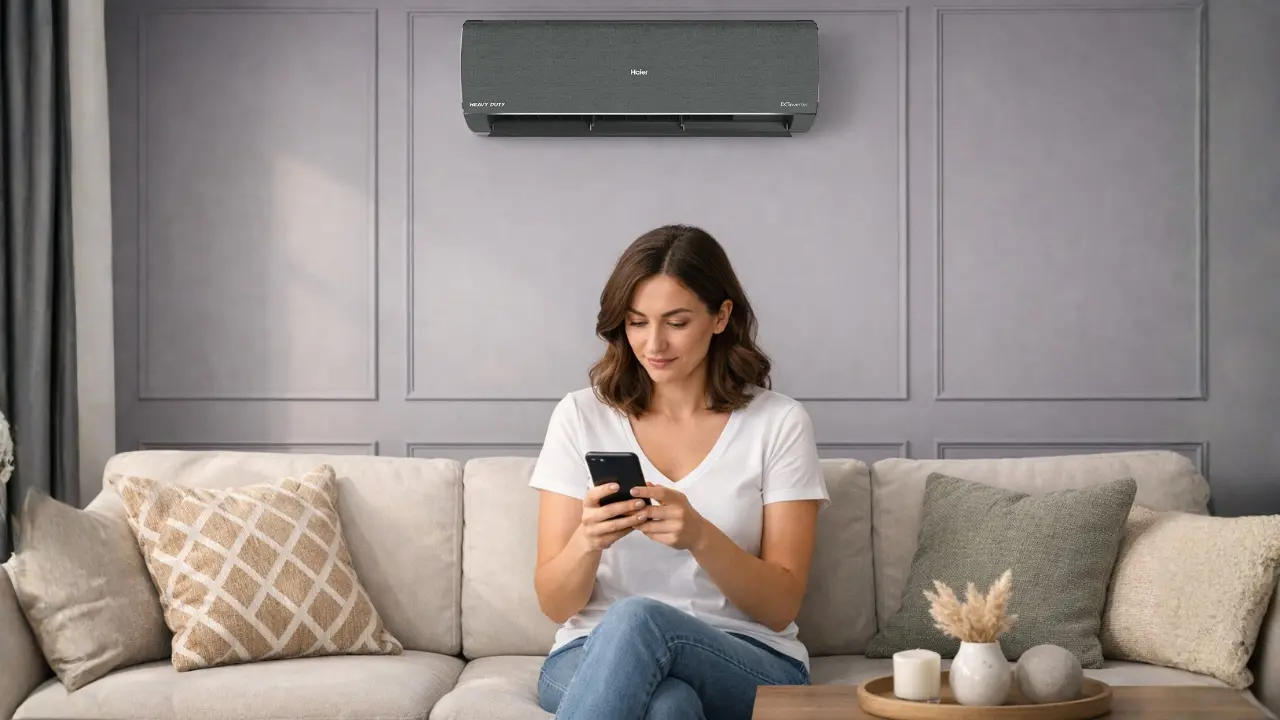

Smart energy algorithms beat traditional modes because they adapt in real time, learn from behaviour, and optimise power use automatically, while traditional modes rely on fixed settings and manual control.
The result is better comfort, lower electricity bills, and less mental load in everyday life.
That is the short answer.
Now let us talk about what that actually means inside a real Indian home.
The 8:45 PM Reality Most Homes Know
It is a weekday evening.
You step into the house after traffic. The room feels warm. Someone sets the AC to 18°C. Fifteen minutes later, it feels too cold. Someone raises it to 24°C. Then lowers it again.
This ritual repeats across cities.
According to the Bureau of Energy Efficiency, air conditioning can account for up to 40 percent* of a household’s electricity use in peak summer months. India’s cooling demand is also projected to grow eightfold by 2037 as per the India Cooling Action Plan published by the Ministry of Environment.
More cooling.
More bills.
More strain on the grid.
The question is simple.
Is the problem temperature, or is it control?
Traditional modes assume the world is static. Smart energy algorithms assume the world is dynamic.
Homes are dynamic.
What Traditional Modes Actually Do
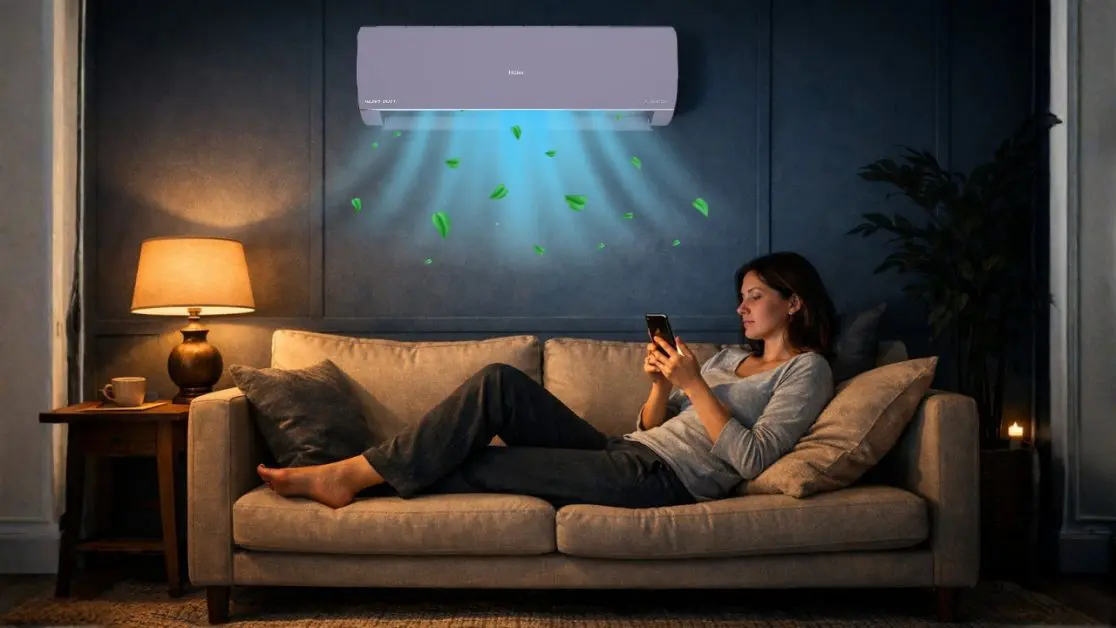
Let us break it down clearly.
Traditional AC modes are usually built around:
- Fixed fan speeds
- Manual temperature selection
- Timer-based switch off
- Basic Eco mode that reduces compressor load
These modes are predictable.
And predictable technology works well in predictable environments.
But homes are not predictable.
People move between rooms. Curtains open and close. Kitchen heat spills into the hall. Weather shifts during the evening. Ceiling fans run. Doors open.
Traditional modes cannot see any of this.
They operate like an old ceiling fan regulator. You set it. It runs. It does not ask questions.
What Smart Energy Algorithms Actually Do
Now consider how a smart energy algorithm functions.
Instead of reacting to one input, it monitors multiple variables:
- Room temperature
- Outdoor conditions
- Occupancy
- Usage patterns
- Power consumption
- Historical behaviour
Then it adjusts continuously.
In Haier’s AI Atmox system, for instance, features like AI Climate Control, AI Pre-Cooling, AI Target Cooling, and AI Eco 2.0 combine real-time sensing with adaptive logic.
The system learns.
It anticipates.
It fine-tunes.
The difference is philosophical.
Traditional mode says, “Tell me what to do.”
The smart algorithm says, “Let me understand what you need.”
One Option Is Manual Control. The Second Is Assisted Control. The Third Is Intelligent Control.
Let us evaluate them clearly.
1. Manual Control
You adjust settings every time.
Cost: Time, inconsistency, higher energy use.
Benefit: Direct control.
This works when usage is minimal.
But it requires attention.
2. Assisted Control
You use preset Eco modes or timers.
Cost: Limited flexibility.
Benefit: Some power savings.
It reduces extremes but does not adapt deeply.
3. Intelligent Control via Smart Energy Algorithms
The system studies your patterns.
For example:
- If the temperature gap exceeds 3°C, it shifts cooling intensity.
- If the gap narrows, it scales back automatically.
- If no one is in the room, it optimises power use.
Haier’s AI Eco 2.0 feature adjusts cooling levels based on temperature difference thresholds, shifting between efficiency levels dynamically.
Cost: Slightly higher initial investment.
Benefit: Long-term savings, reduced manual effort, consistent comfort.
Energy efficiency is not about using less power.
It is about using the right amount at the right time.
Why Smart Algorithms Win During Indian Summers
Indian summers are not mild.
Temperatures in many cities regularly cross 40°C. Heat waves are increasing in frequency, according to the India Meteorological Department.
Under extreme heat, traditional ACs often run at maximum capacity for extended periods. This spikes consumption.
Smart energy algorithms handle heat differently:
- They analyse temperature trends.
- They optimize compressor behaviour.
- They prevent overcooling.
- They modulate based on occupancy.
Overcooling wastes energy. Undercooling ruins comfort.
Balance is everything.
A good algorithm behaves like a seasoned orchestra conductor. Not louder. Smarter.
The Hidden System Most People Ignore: Electricity Monitoring
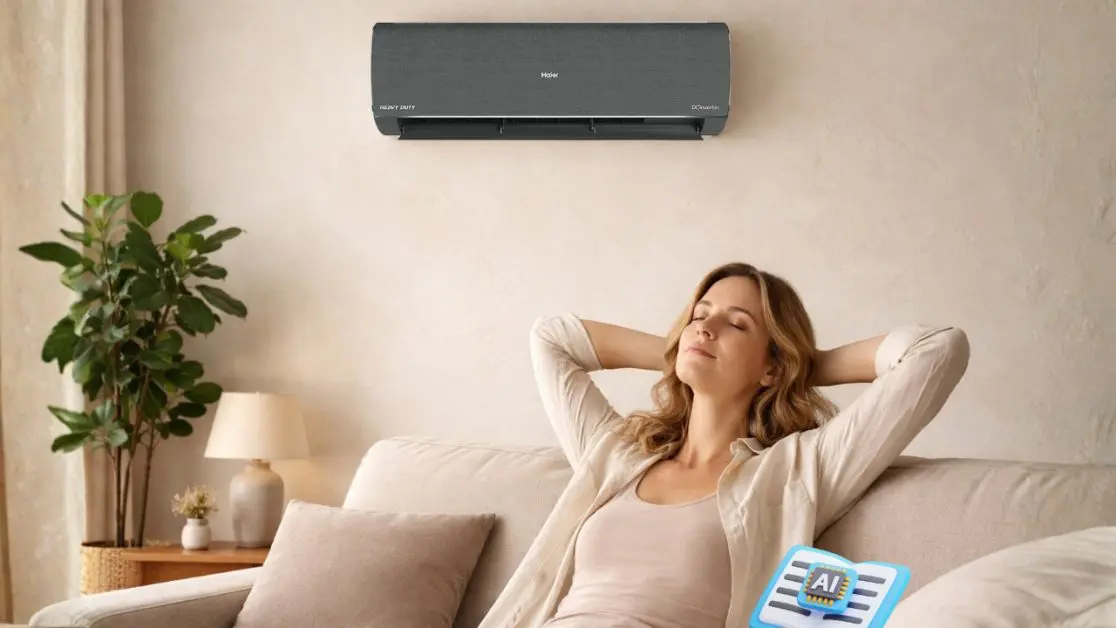
Have you noticed how we track steps, calories, and screen time?
But rarely track electricity in detail.
Smart energy algorithms now integrate electricity monitoring dashboards. Haier’s Electricity monitoring 2.0 shows graphical usage, calendar views, mode duration tracking, and cost display.
When consumption becomes visible, behaviour changes.
Research from behavioural economics consistently shows that real-time feedback reduces energy consumption. Visibility creates accountability.
What gets measured improves.
When you see daily usage in rupees, decisions shift naturally.
Predictive Comfort Beats Reactive Cooling
There is another subtle advantage.
Pre-cooling.
AI-powered pre-cooling can detect when a user enters a defined radius and begin cooling in advance.
Instead of entering a hot room and blasting the AC, the room is already balanced.
That reduces stress on the compressor.
It reduces extreme power draw.
It improves comfort instantly.
Predictive technology reduces spikes.
Reactive technology creates spikes.
This applies beyond cooling.
In organisations too, predictive planning beats last-minute scrambling.
Occupancy Detection Changes the Game
Consider this scenario.
You leave the room to take a call. The AC runs at full load.
Thirty minutes pass.
Traditional mode does nothing.
Smart human detection technology monitors activity and shifts to lower modes automatically, even powering down if inactivity continues.
The numbers matter.
Even a few hours of unnecessary cooling per day multiplies over a year.
Small waste, repeated daily, becomes a large cost.
Smart energy algorithms remove invisible waste.
Traditional Thinking vs Algorithmic Thinking
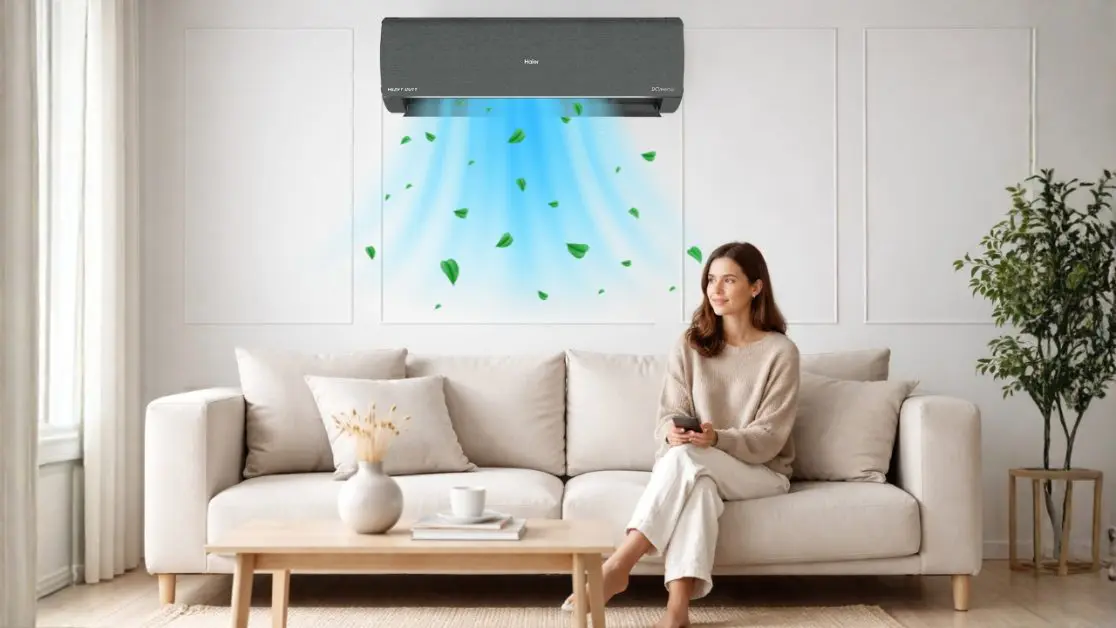
Let us zoom out.
Traditional thinking says:
- Fix a setting.
- Maintain it.
- I hope conditions remain stable.
Algorithmic thinking says:
- Monitor.
- Learn.
- Adapt.
- Cool.
This pattern shapes modern appliances.
It shapes businesses.
It shapes finance.
It shapes traffic technology.
The world no longer runs on static rules.
It runs on adaptive technology.
But Is It Complicated to Use?
This is the fear many households have.
Smart equals complicated.
In reality, smart energy algorithms reduce complexity.
Features like Direct Voice Control in select Haier models allow control without additional devices.
AI Eco 2.0 modes adjust automatically without manual toggling.
Electricity dashboards simplify tracking.
Good technology hides complexity.
If you need to think about it constantly, it is not truly smart.
Energy Savings: The Practical Math
Consider a mid-sized home where AC runs 8 hours daily in peak summer.
If intelligent optimization reduces consumption by even 10 to 15 percent, the annual savings compound.
Multiply that across multiple appliances.
Multiply that across years.
Energy efficiency is a long game.
Small percentage gains, repeated daily, create a large cumulative impact.
That is how smart energy algorithms beat traditional modes.
Not dramatically in one night.
But steadily over seasons.
What This Means for the Future of Indian Homes
India is urbanising fast. Apartment living is rising. Electricity tariffs vary by slab. Grid stress increases during peak demand.
Static appliances belong to a slower era.
Adaptive appliances belong to the present.
Smart energy algorithms are not about showing off AI.
They are about resilience.
They respond to heat waves.
They respond to occupancy.
They respond to consumption trends.
They learn.
And learning technology always outperforms fixed technology over time.
A Simple Way to Think About It
Traditional modes are like setting a ceiling fan speed and leaving it there all day.
Smart energy algorithms are like having someone in the room adjusting airflow based on how many people are present, how hot it feels, and what time of day it is.
One is static.
One is aware.
Awareness wins.
The Insight That Stays
Comfort without awareness wastes energy.
Awareness without comfort frustrates people.
Smart energy algorithms combine both.
They learn.
They adapt.
They optimize.
And in a country where cooling demand is rising sharply, that shift is not luxury.
It is direction.
When homes start thinking in technology instead of switches, everything feels a little more sorted.
Quietly.
Effortlessly.
Intelligently.
Frequently Asked Questions
Why do I keep changing my AC temperature every 15 minutes at night?
Most people react to how the room feels instead of the actual temperature change. Traditional AC modes only follow the number you set, so they cannot adapt when the room cools too much or too little.
Is constantly adjusting my AC temperature wasting electricity?
Yes. Frequent manual changes often force the compressor to work harder than necessary, which increases power consumption and reduces efficiency.
Do smart energy algorithms really reduce the need to keep adjusting my AC?
Yes. Smart algorithms continuously monitor room conditions and automatically adjust cooling levels so you do not need to constantly tweak settings.
Why does my family argue about the “right AC temperature” every night?
Because traditional modes maintain a fixed temperature instead of adapting to comfort levels as room conditions change.
Why do I sometimes set my AC to 18°C just to cool the room faster?
Many people lower the temperature drastically to accelerate cooling, but this usually wastes electricity and causes overcooling.
Do smart algorithms cool rooms faster than traditional AC settings?
Smart algorithms optimize compressor performance to reach comfort levels efficiently without extreme temperature drops.
What is pre-cooling and why do some smart ACs offer it?
Pre-cooling starts cooling the room before you arrive, ensuring the temperature is already comfortable when you enter.
Does smart cooling reduce the strain on the AC compressor?
Yes. Predictive cooling reduces sudden load spikes that occur when an AC is forced to cool a hot room rapidly.