
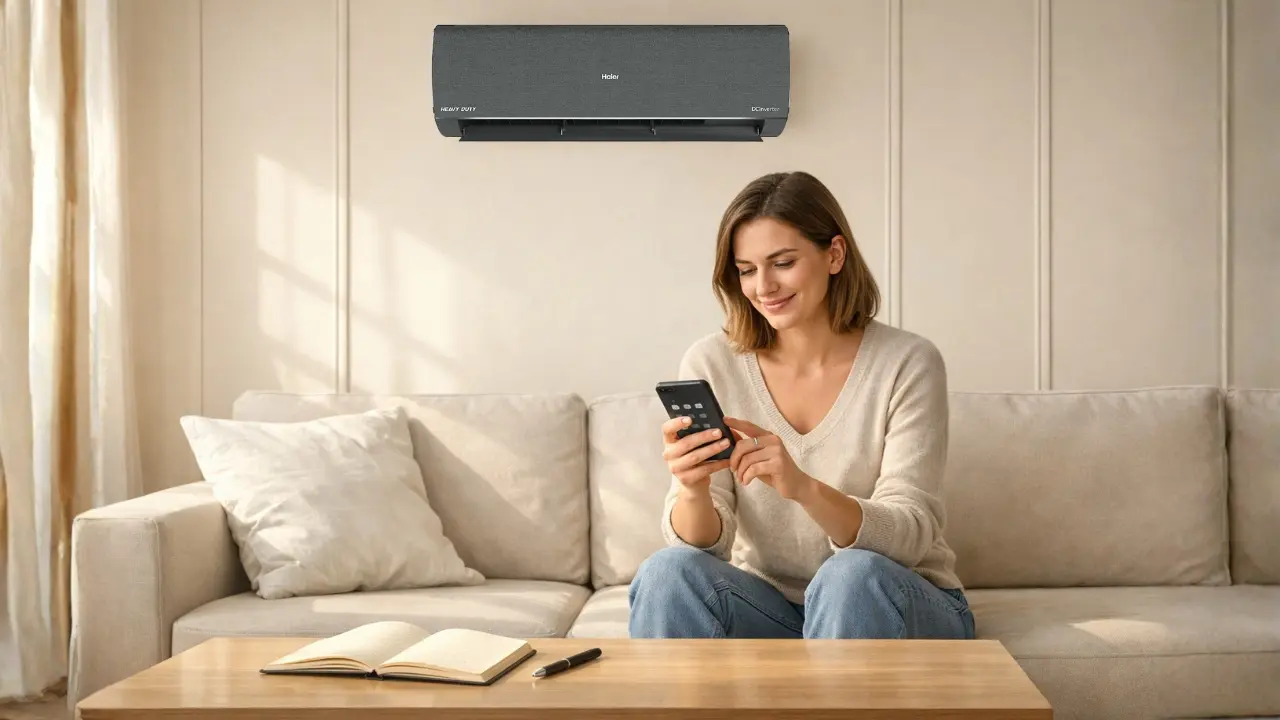

Comfort and electricity savings are not opposites. They are a system.
The balance between comfort and electricity savings comes down to this: cool only what needs cooling, when it needs cooling, and no more.
When appliances respond to real conditions instead of fixed settings, homes feel better and bills shrink. Comfort improves. Waste drops. Everyone wins.
That is the short answer.
Now let us talk about real evenings.
Why does the electricity bill feel heavier in summer?
It is 9:30 pm in May.
The AC hums in the bedroom. The fridge runs in the kitchen. The TV streams highlights from a late IPL match. A washing machine finishes a delayed cycle.
Nothing unusual.
Yet electricity usage in Indian homes rises sharply in summer. According to data from India’s Ministry of Power, residential electricity demand can increase by over 20 percent* during peak heat months. In many cities, air conditioners account for nearly 40 percent* of household electricity consumption during summer.
The pattern is simple.
Heat rises. Usage rises. Bills rise.
But comfort does not always rise with it.
Because most of us try to solve a temperature problem with a power solution.
Lower the setting. Increase the fan speed. Close the door. Hope for the best.
That approach works. Briefly.
Then someone feels too cold. Someone else feels too warm. The bill quietly grows.
The real issue is not cooling. It is controlled.
The hidden system behind comfort and electricity savings
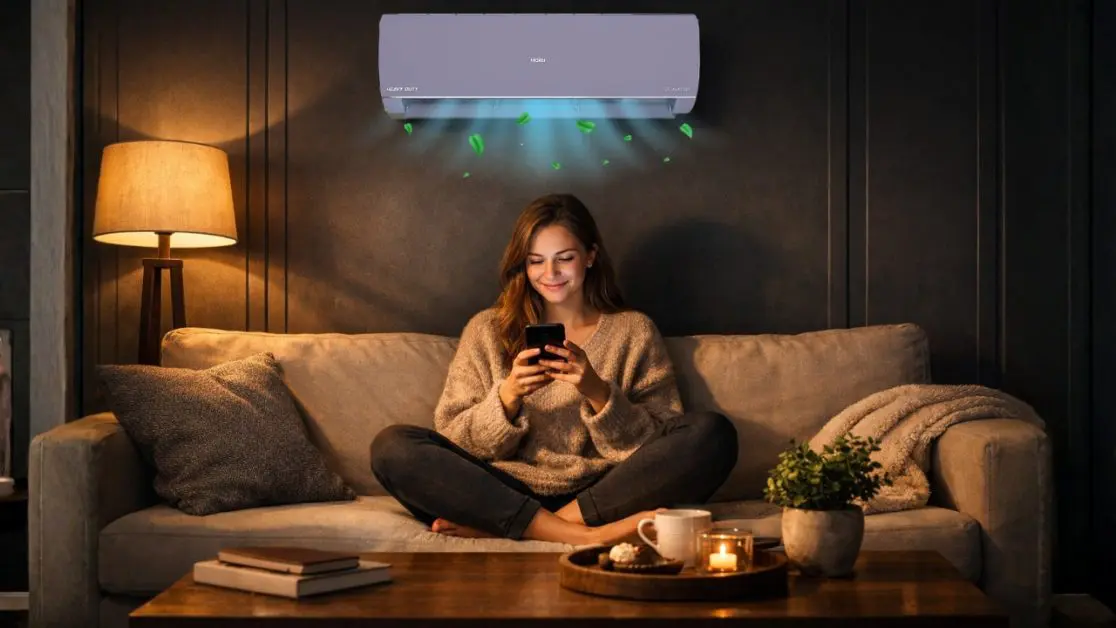
Every home runs on three invisible variables:
- Temperature outside
- Heat generated inside
- Human presence and behaviour
When these three shift, comfort shifts.
Traditional appliances respond in a straight line. Set temperature to 24°C. The machine runs until it reaches 24°C. Stop. Starts again. Repeat.
Smart technology responds in curves. They adapt. They predict. They adjust.
That is where balance lives.
A comfortable home is not the coldest home.
It is the most intelligently cooled home.
One option: Overcool for certainty
Many households follow this logic:
Set the AC to 18°C so the room cools faster. Once it feels cold, increase it.
It feels decisive.
But here is the cost-benefit reality:
- Benefit: Quick cooling sensation.
- Cost: Compressor runs at higher load.
- Cost: Electricity consumption spikes.
- Cost: Frequent temperature swings reduce comfort quality.
The Bureau of Energy Efficiency states that every 1°C increase in AC temperature can save up to 6 percent electricity. That means setting 18°C instead of 24°C can significantly increase consumption without delivering proportional comfort.
Cold is not the same as comfortable.
Second option: Timers and guesswork
Some families rely on timers.
Switch off after two hours. Turn on again at midnight. Adjust manually.
This feels economical.
But timers assume life is predictable. Indian homes rarely are.
- Guests arrive unexpectedly.
- Children move between rooms.
- Someone wakes up early.
- Someone comes home late.
Manual technology requires manual attention.
And attention is expensive.
Third option: Intelligent adjustment
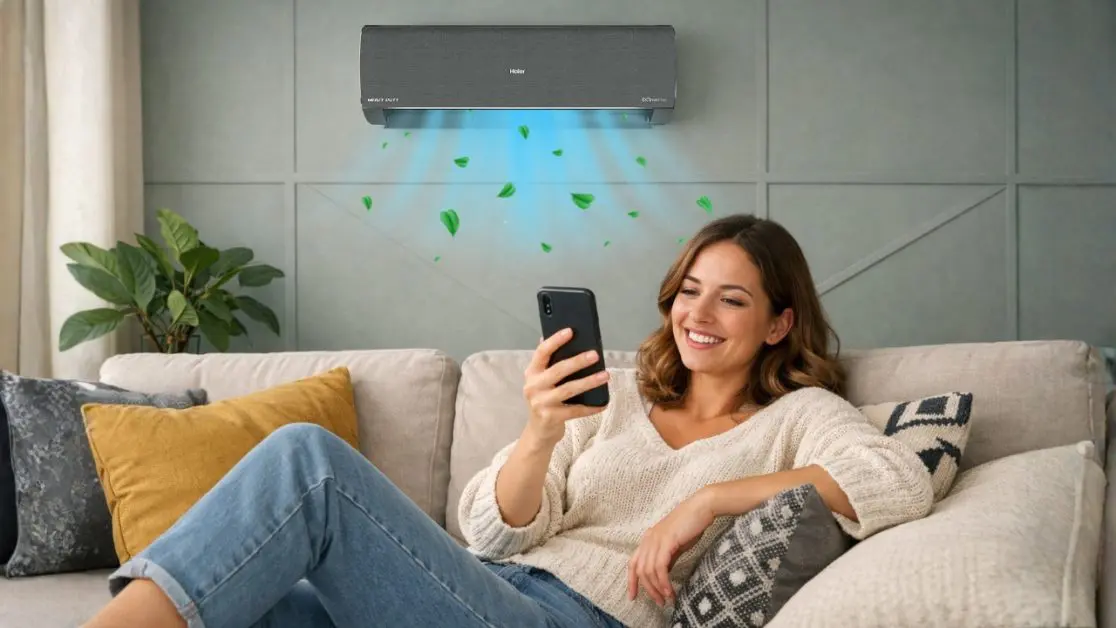
Now imagine this.
You are 100 metres from home after work. The room begins pre-cooling. Not freezing. Just preparing.
When you walk in, it feels right.
Not dramatic. Just right.
This is the logic behind AI-based climate control technology like Haier’s AI Atmox platform. It analyses environmental data, usage patterns, and even geo-location to pre-cool rooms and optimise performance without constant manual changes.
That changes the equation.
- Benefit: Comfort on arrival.
- Benefit: Reduced peak load.
- Benefit: Fewer manual adjustments.
- Cost: Initial investment in smarter technology.
The long-term savings often offset the difference.
Comfort arrives before you do.
Cooling only where needed saves more than cooling everywhere
Consider this common scenario.
One person watches TV on the sofa. Another works at the dining table. The AC blows uniformly across the room.
Half the air cools empty space.
Targeted cooling changes that.
AI-driven technology can direct airflow toward occupied zones instead of blank walls. The result is faster perceived cooling and reduced energy waste. According to product AI Atmox , targeted cooling focuses air delivery precisely where needed rather than cooling the entire room uniformly.
It sounds small.
It is not.
Cooling 60 percent of a room instead of 100 percent reduces compressor load and energy use.
Comfort becomes personal. Bills become lighter
Electricity monitoring 2.0 turns emotion into data
Here is something most households underestimate.
We guess our electricity use.
We rarely measure it.
Smart monitoring changes behaviour. When you see daily consumption in graphical form, when cost displays in currency, decisions become rational.
AI-powered Electricity monitoring 2.0 technology track duration, eco mode usage, and real-time consumption as highlighted in the AI Atmox overview.
Data removes drama.
| Habit | Without Monitoring | With Monitoring |
| AC temperature | Random changes | Stable at efficient range |
| Eco mode usage | Occasional | Consistent |
| Power off awareness | Forgotten | Automatic alerts |
Awareness reduces waste.
Not through restriction. Through clarity.
Human detection: Saving power without sacrifice
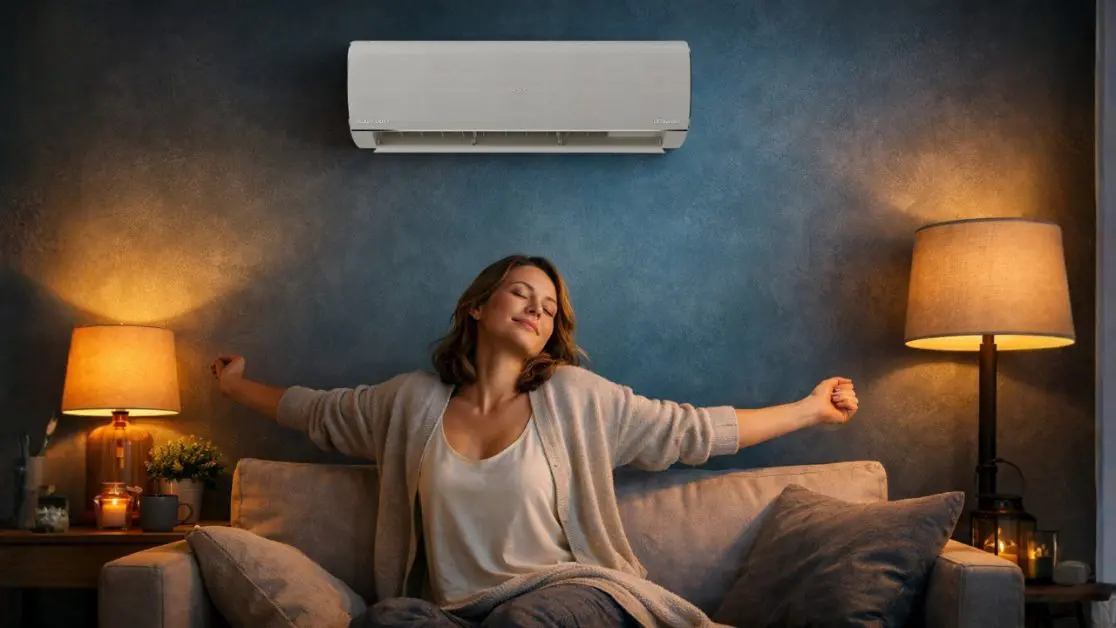
We often leave rooms without switching off the AC.
Not because we are careless. Because life moves fast.
AI Human Detection technology monitors occupancy and automatically shifts to energy-saving modes when rooms are empty. After a set duration, the system reduces load or powers off.
The benefit is simple:
- No manual effort.
- No overcooling.
- No wasted hours.
The balance between comfort and electricity savings becomes automatic.
Technology absorbs friction so families do not have to.
Eco modes are not compromise modes
There is a myth.
Eco means weaker cooling.
That used to be true.
Modern AI Eco technology adjusts based on temperature gaps. If the difference between room temperature and set temperature exceeds 3°C, it runs at higher capacity. As the gap narrows, it shifts to lower energy levels.
This layered response ensures:
- Rapid initial comfort.
- Gradual power reduction.
- Stable temperature maintenance.
Efficiency becomes dynamic.
Not rigid.
What does this mean for new homes and young buyers?
Millennials and Gen Z homeowners think differently.
They track expenses. They value sustainability. They work hybrid schedules.
Electricity in India has grown at over 6 percent annually in recent years, and urban households increasingly rely on multiple high-energy appliances.
The future home is not bigger.
It is smarter.
When couples set up their first apartment, the decision is not just about tonnage or star rating. It is about:
- How much control do we want?
- How much time do we want to spend managing machines?
- Do we prefer manual discipline or automated intelligence?
Comfort is no longer about hardware alone.
It is about software thinking.
The bigger principle: technology create balance

This conversation extends beyond air conditioners.
Refrigerators now adjust cooling based on load. Washing machines optimize water and electricity use. Televisions regulate brightness based on ambient light.
Every appliance participates in a larger ecosystem.
The system matters more than the single device.
A well-designed home behaves like a good team. Each unit responds to the others. Nothing overperforms unnecessarily. Nothing underdelivers.
Balance is not an accident.
It is engineered.
Three practical shifts that improve both comfort and savings
- Raise AC settings to 24 to 26°C.
Immediate savings without comfort loss. - Use smart monitoring weekly.
Track patterns. Adjust consciously. - Invest in adaptive technology.
Pre-cooling, target cooling, eco modes, and human detection automate discipline.
Each shift has a cost.
Each shift also reduces long-term waste.
Comfort without anxiety is the real goal
The true tension is not between cool air and lower bills.
It is between mental peace and constant adjustment.
When appliances learn, adapt, and optimize quietly, families stop negotiating with machines.
They sleep better.
They host guests confidently.
They work comfortably.
The balance between comfort and electricity savings becomes invisible.
And that is when it works best.
Because the best technology does not demand attention.
It removes it.
That is the future of Indian homes.
Not colder.
Not cheaper.
Smarter.
And once you experience that balance, you stop chasing extremes.
Frequently Asked Questions
Why does my electricity bill suddenly increase every summer even though my routine stays the same?
Your routine might feel unchanged, but summer heat dramatically increases cooling demand. Air conditioners, refrigerators, and fans run longer and harder. In many Indian homes, AC usage alone can account for nearly 40% of electricity consumption during peak summer months, which significantly increases bills.
I keep lowering my AC temperature when it feels hot. Why doesn’t that always make my room comfortable?
Lowering the temperature creates a short burst of cold air, but it often leads to uneven cooling. The room may feel too cold later, forcing constant adjustments. Comfort is not about the coldest temperature, it’s about stable cooling that adapts to conditions.
Is comfort really possible without increasing electricity usage?
Yes. Comfort and electricity savings work together when cooling is responsive rather than constant. Cooling only when needed, adjusting airflow, and maintaining efficient temperature ranges can improve comfort while lowering electricity use.
I feel like I’m always adjusting my AC settings. Is that normal?
Yes. Traditional AC systems rely on manual adjustments, which means people constantly tweak settings based on comfort changes. Smart climate systems reduce this effort by automatically adapting cooling levels based on conditions and usage patterns.
My family members all prefer different temperatures. How do I keep everyone comfortable without increasing electricity usage?
Instead of lowering the entire room temperature, targeted airflow and adaptive cooling can help. These technologies direct cooling toward occupied areas instead of empty spaces, improving comfort while reducing energy consumption.
I set my AC to 18°C so the room cools faster. Is that actually a good idea?
It may feel effective initially, but it increases electricity consumption significantly. According to India’s Bureau of Energy Efficiency, raising the AC temperature by 1°C can save up to 6% electricity. Setting the AC around 24–26°C usually provides similar comfort with far less energy use.
Why does my room feel too cold after I set the AC very low?
When the AC works at maximum load, it overshoots comfort levels. The compressor runs aggressively, causing temperature swings. Stable settings allow the system to maintain comfort rather than chase extreme temperatures.
Is colder air always equal to better comfort?
No. Comfort depends on stable airflow, humidity balance, and temperature consistency. Extremely cold air can actually make the environment uncomfortable after a short period.