
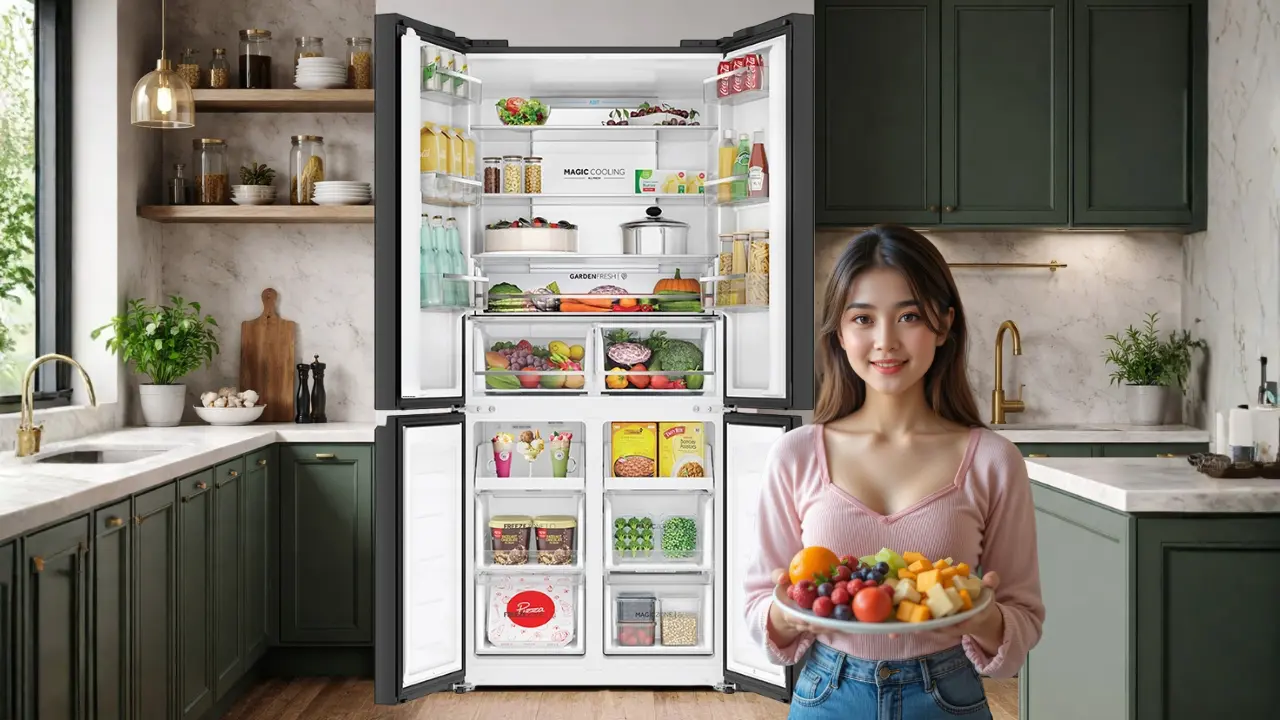

The simplest way to make groceries and leftovers last longer is this: design your storage before you start cooking.
Freshness is not luck. It is a system.
When your fridge works like a well-planned bookshelf, food stays visible, organised, and usable. When it works like a cluttered drawer, even good food goes bad.
In modern Indian homes, where grocery runs happen once a week and leftovers are tomorrow’s lunch, storage is strategy. And strategy reduces waste, saves money, and lowers daily stress.
Let us unpack that.
Why does food still go bad in a full fridge?
Open your refrigerator right now.
What do you see first?
Leftover rajma in a steel dabba. A half-cut cabbage wrapped in newspaper. Three sauce bottles hiding behind a juice carton. A forgotten bowl of sabzi pushed to the back.
India wastes nearly 40 percent* of its food annually according to estimates by the Food and Agriculture Organization. A large part of this happens at the household level.
Not because families do not care.
Because systems fail.
A fridge without zones becomes a blind spot. And blind spots create waste.
The hidden system inside your refrigerator
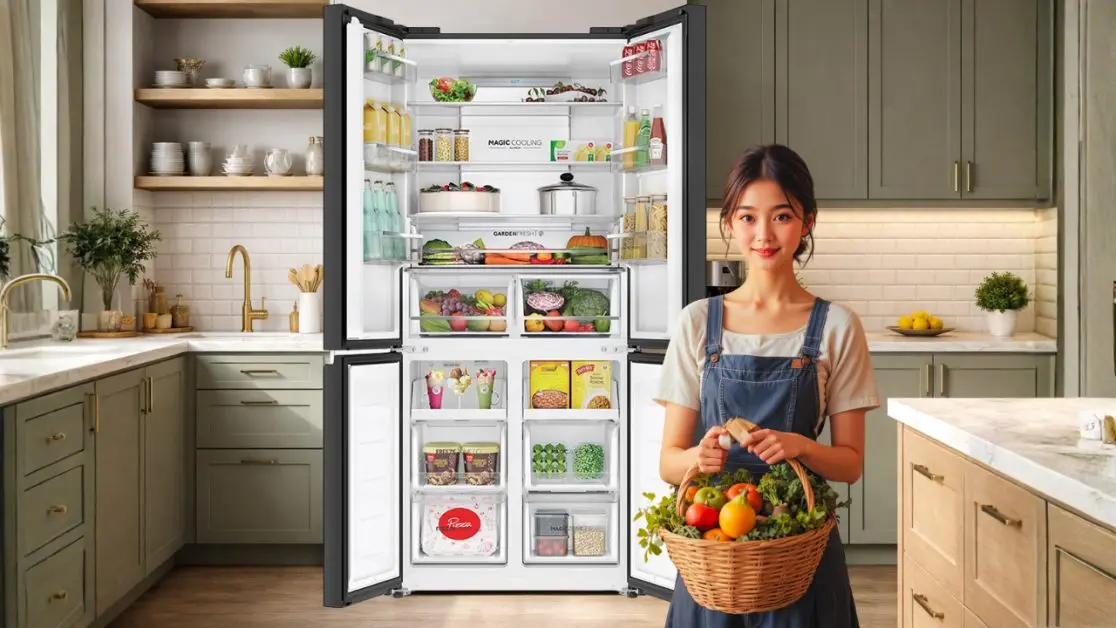
A refrigerator is not just cold storage. It is a temperature ecosystem.
- Upper shelves: Consistent cooling. Best for cooked food and dairy.
- Lower shelves: Slightly cooler. Ideal for meat or bulk groceries.
- Vegetable drawers: Controlled humidity.
- Door racks: Warmest zone. Sauces and beverages belong here.
When we ignore this design, we shorten shelf life by days.
Food lasts longer when it lives where it belongs.
That is not a kitchen tip. It is systems thinking.
One option is to buy less. The second is to store smarter. The third is to redesign the space.
Let us examine the choices clearly.
Option 1: Buy smaller quantities
Cost:
- More frequent grocery trips.
- Higher impulse purchases.
- Time spent commuting.
Benefit:
- Reduced spoilage.
- Fresher produce.
This works for solo professionals living in metro cities.
But not always for families.
Option 2: Cook less and finish fast
Cost:
- Less flexibility during busy weeks.
- Limited leftovers for next-day meals.
Benefit:
- Minimal food storage pressure.
- Cleaner fridge.
This works during calm weeks.
But festivals, office deadlines, and school exams do not always cooperate.
Option 3: Upgrade the storage system
Cost:
- One-time investment.
- Slight learning curve.
Benefit:
- Extended freshness.
- Better organisation.
- Less food waste.
- Lower stress.
This is where design matters.
And where thoughtful refrigeration becomes a silent ally.
What does smart storage actually look like in Indian homes?
Imagine Sunday afternoon.
Vegetables for the week. Paneer. Curd. Leftover biryani. A birthday cake box. Watermelon slices. Milk packets.
All need space.
The Haier Lumiere 520L 4 Door Convertible Refrigerator HRB 600RW, for instance, offers 520 litres of total capacity with fridge space.
That means up to 440 litres can function as fridge storage.
For large Indian households, this is not luxury. It is a breathing room.
The convertible 90 litre section can switch between fridge and freezer modes.
During festive weeks, convert to extra fridge space.
During bulk meat storage, switch to the freezer.
Flexibility reduces compromise.
And compromise is what causes clutter.
A quick capacity breakdown
| Feature | Why It Matters in Real Life |
| 520L total capacity | Weekly groceries fit without stacking |
| 440L fridge space | More room for fresh produce |
| 90L convertible zone | Adjust based on season or needs |
| Frost free system | No manual defrosting |
Specifications confirm frost-free operation and inverter compressor support.
Less maintenance. More consistency.
Leftovers are not wasted. They are future meals.
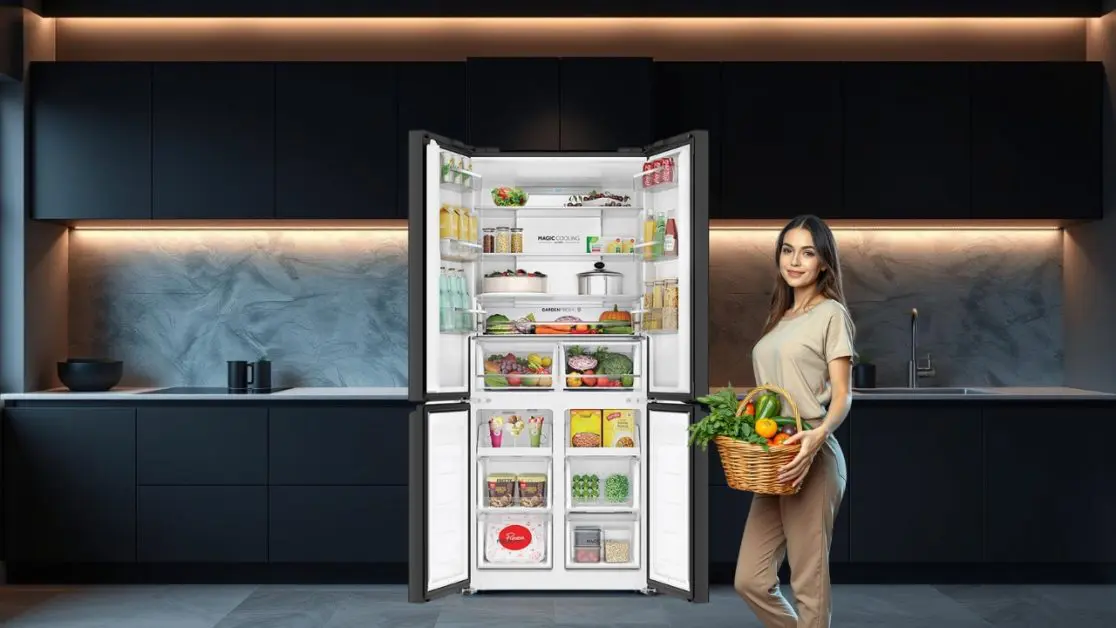
In Indian kitchens, leftovers are culture.
Rajma tastes better the next day. Sambhar deepens overnight. Chicken curry thickens beautifully.
But only if stored properly.
Three leftover rules that change everything
1. Cool before storing
Hot food raises the internal fridge temperature.
2. Use shallow containers
Faster cooling equals safer storage.
3. Label with date
Visibility prevents forgetting.
According to food safety guidelines, most cooked food remains safe for 3 to 4 days under refrigeration.
The problem is not safety.
It is a memory.
Smart food management features, like those available in the Rosette White variant with app connectivity , allow users to track storage and create shopping lists.
Not as a gimmick.
As a reminder system.
Technology becomes useful when it supports memory.
Cooling is not just about cold air. It is about even air.
Have you ever noticed ice crystals forming at the back while vegetables wilt at the front?
Uneven cooling is the culprit.
Magic Cooling with 360 degree surround cooling ensures consistent temperature across shelves.
This reduces hot spots.
The Triple Inverter compressor technology helps maintain precise temperatures while optimising energy use.
In a country where voltage fluctuations are common, this matters.
Energy consumption listed at 480 units annually gives perspective on efficiency.
Efficiency is not just electricity saved.
The vegetables are not wasted.
Organisation reduces mental load
Cluttered fridge. Cluttered mind.
When shelves are adjustable and anti-tipping , large steel vessels and heavy Indian cookware fit without balancing acts.
Toughened glass shelves support weight safely.
These details seem small.
Until a full curry vessel cracks a shelf.
Or bottles topple when doors open.
The Jhumka Mat design reduces bending strain by about 90 percent according to product visuals.
That matters for aging parents.
Storage should support posture. Not strain it.
Festive prep is the ultimate storage test
Diwali sweets. Eid biryani. Christmas plum cake. Wedding catering leftovers.
Indian festivals multiply food volume overnight.
A standard 300 litre fridge struggles.
A 520 litre, four door convertible layout divides space into zones. Up to 10 storage zones are highlighted in the Lumiere series visuals.
Zones reduce stacking.
Stacking hides food.
Hidden food expires.
Visibility is preservation.
How to redesign your refrigerator like a strategist
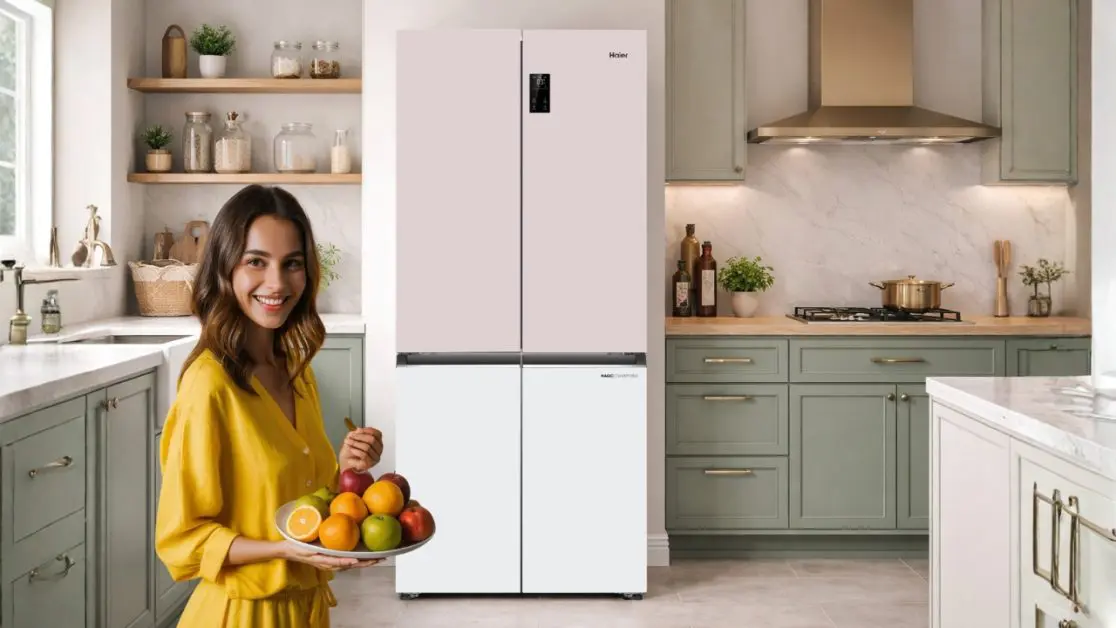
Here is a practical framework.
Step 1: Categorise
- Fresh vegetables
- Dairy
- Cooked food
- Raw meat
- Sauces
- Beverages
Assign each zone.
Step 2: Rotate
First in. First out.
Older items move forward weekly.
Step 3: Review every Sunday
Five minute audit.
Discard expired food.
Plan the next grocery list.
Smart Food Management tools help track items digitally.
But even without apps, discipline works.
Systems outperform willpower.
The larger pattern: storage shapes behaviour
Here is the bigger idea.
When storage is cramped, families buy less fresh produce.
When leftovers feel risky, they cook less in bulk.
When food spoils, grocery budgets inflate.
Storage design quietly shapes habits.
And habits shape lifestyle.
A refrigerator is not a box.
It is a behavioural nudge.
What this means for modern Indian households
Millennial couples living in apartments.
Working professionals ordering groceries online.
Parents managing school tiffins.
Everyone faces the same tension.
Time is limited. Space is limited. Expectations are not.
Thoughtful storage reduces friction.
The Haier Lumiere 520L Rosette White HRB 600RW combines convertible capacity, inverter technology, and organised storage zones.
Not to impress.
To simplify.
And simplification is power.
The memorable insight
Food waste is not about carelessness.
It is about poor systems.
Design the system.
Freshness follows.
From groceries to leftovers, simplicity is intentional
When you next open your fridge, do not just look at what is inside.
Look at how it is arranged.
Is there breathing space?
Are leftovers visible?
Can you convert space when life changes?
Homes evolve.
Festivals arrive.
Work schedules fluctuate.
Storage must adapt.
That is how groceries become meals. And leftovers become tomorrow’s comfort.
And when appliances quietly support that rhythm, life feels sorted.
Not perfect.
Just organised enough to breathe.
Frequently Asked Questions
Why does my fridge feel packed but I still feel like there’s nothing to cook?
This usually happens when food is stacked instead of organised. Items hidden behind others become invisible, so you forget they exist. Zoning your fridge vegetables, leftovers, dairy, sauces keeps everything visible and usable.
I keep buying groceries every week, but food still goes bad in my fridge. What am I doing wrong?
The issue is rarely quantity. It’s usually storage systems. When vegetables, leftovers, and sauces are mixed together without clear zones, food gets pushed to the back and forgotten.
Should I just start buying fewer groceries to reduce waste at home?
Buying less can reduce spoilage, but it may increase grocery trips and impulse purchases. A better solution for many families is improving storage organisation so weekly groceries last longer.
I feel stressed every time I open my fridge because it’s messy. How do I simplify it?
Start with three habits:
1. Assign zones (vegetables, leftovers, dairy).
2. Move older items to the front weekly.
3. Review your fridge once every Sunday for five minutes.
Is a bigger refrigerator actually helpful, or does it just create more clutter?
A larger fridge helps only if it provides structured zones. More space without organisation can still lead to clutter and hidden food waste.
I left my cooked food outside for a while before refrigerating it. Is it still safe?
Cooked food should ideally be refrigerated within two hours. If it sat longer in warm conditions, bacteria growth becomes more likely.
How long can I keep my leftovers in the fridge before they become unsafe?
Most cooked food stays safe for 3–4 days in proper refrigeration. Labeling containers with dates helps prevent accidental spoilage.
I stored hot food directly in my fridge. Did I damage anything?
Hot food raises the internal fridge temperature temporarily, which can affect nearby items. It’s best to let food cool slightly before storing.
My vegetables look wilted even though my fridge is cold. Why does this happen?
Vegetables need controlled humidity. When stored on regular shelves instead of vegetable drawers, they lose moisture faster and wilt.