
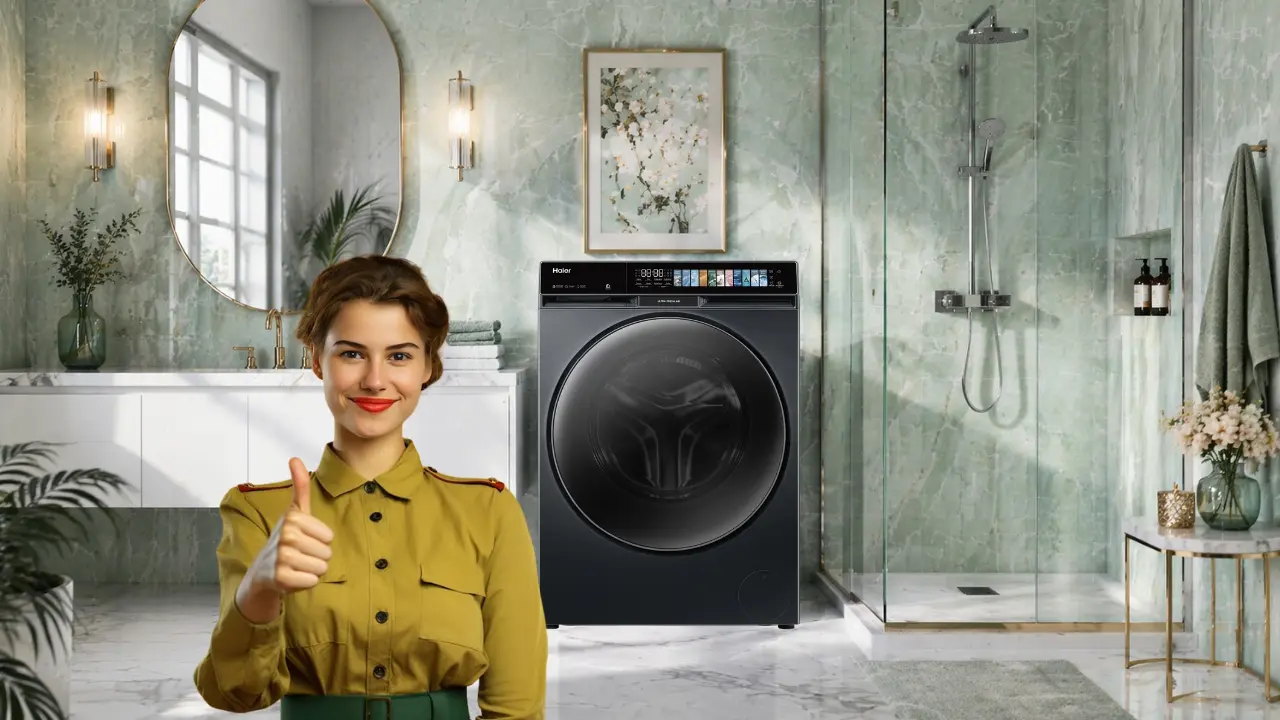

Smart display technology today is not about screens. It is about decisions made faster, easier, and without friction.
Most appliance brands offer digital displays.
Only a few make those displays think with you.
Haier stands out because its smart display technology is not just informative. It is intuitive, adaptive, and deeply aligned with how Indian homes actually function.
And that changes everything.
Why does smart display technology even matter in Indian homes?
Walk into a typical Indian household on a weekday evening.
Someone is rushing to finish laundry before dinner.
Someone else is checking cooking timings.
The doorbell rings. The phone rings. Life moves fast.
Now imagine navigating a washing machine with:
- 14 buttons
- Tiny labels
- Confusing program names
That is friction.
Now imagine:
- A colourful touch panel
- Fabric-specific icons
- One-touch decision making
That is clarity.
Technology does not win when it adds features. It wins when it removes confusion.
The hidden system behind smart displays
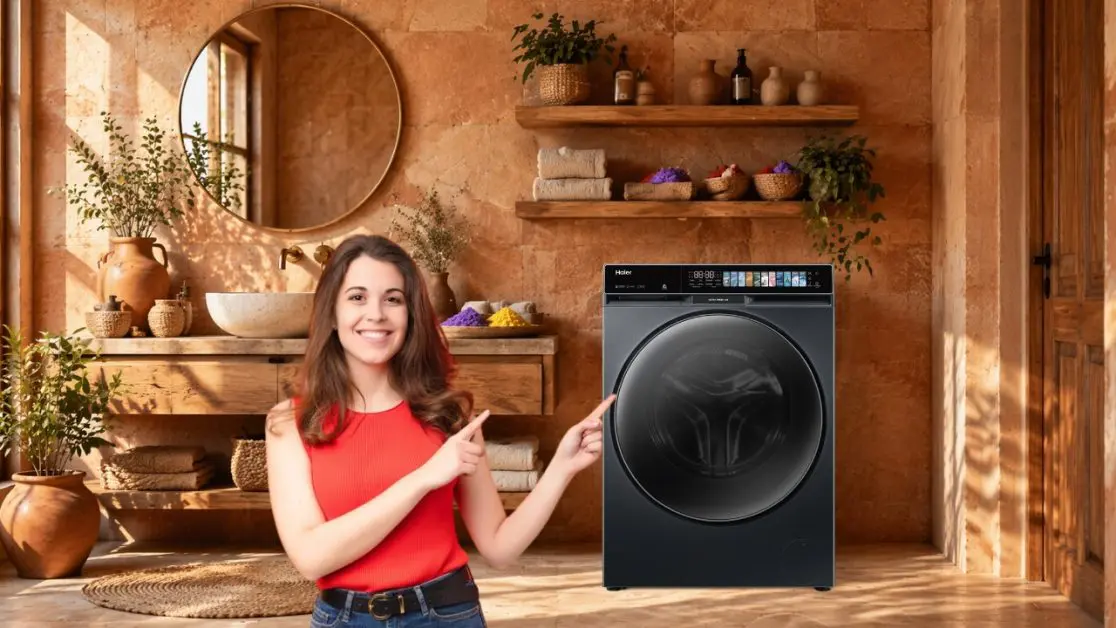
Smart displays are not just screens. They are decision systems.
Every brand builds this system differently.
One option is: Feature-heavy displays
- Packed with multiple options
- Requires manual understanding
- User does the thinking
The second option is: Minimal displays
- Simple interface
- Limited intelligence
- User still makes decisions
The third option is: Adaptive displays
- Understand context
- Suggest actions
- Reduce user effort
This is where Haier shifts the game.
What Haier does differently in smart display technology
1. It replaces buttons with understanding
Take the AI Colour Panel seen in:
- Haier 12 Kg F9 Pro Front Load Washing Machine (HW120-DM14F9PBKU1)
- Haier 10 Kg Front Load Washing Machine (HW100-DM14F9BKU1)
- Haier 12 Kg F11 Front Load Washing Machine (HW120-DM14F11BKU1)
- Haier 12 Kg F11 Front Load Washer & Dryer (HWD120-DM14F11BKU1)
It is not just a display.
It is a visual language.
- Fabric icons instead of text-heavy menus
- Colour-coded interface for clarity
- Large touch panel for quick access
As seen in the F11 series, the AI Colour Full Panel offers a vibrant, intuitive interface that makes laundry more interactive and easier to navigate
When interfaces speak your language, effort disappears.
2. It compresses decision-making into one touch
Most competitors offer multiple wash programs.
Haier asks a different question.
Why should the user decide at all?
With One Touch AI Wash available across these models:
- Detects fabric type
- Adjusts water level
- Sets time and spin automatically
From the F9 Pro to the F11 series, the system logic remains consistent.
The best interface is the one you barely need to use.
3. It combines display with intelligence, not just aesthetics
Many brands upgrade displays for visual appeal.
Haier integrates:
- AI-driven program selection
- Real-time feedback
- Smart adjustments based on load
Across both F9 and F11 series models, you also get:
- Direct Motion Motor for silent, stable performance
- Smart wash optimization
- Visual fabric-based program selection
The F11 series goes further with features like:
- Ultra Fresh Air for post-wash freshness up to 12 hours
- Smart dosing and stain-specific programs
Competitors often stop at display.
Haier connects the display with decision logic.
That difference is subtle. But powerful.
Haier vs competitors: A real-world comparison
Smart Display Comparison Table
| Feature | Traditional Competitors | Mid-tier Smart Brands | Haier Smart Display |
| Interface Type | Button-heavy | Digital screen | AI Colour Touch Panel |
| User Effort | High | Moderate | Minimal |
| Automation Level | Low | Partial | High |
| Visual Clarity | Basic | Improved | Intuitive and visual |
| Learning Curve | Steep | Medium | Almost zero |
| Adaptability | Static | Limited | Dynamic AI-based |
The difference is not technical.
It is experiential.
What most people misunderstand about smart appliances
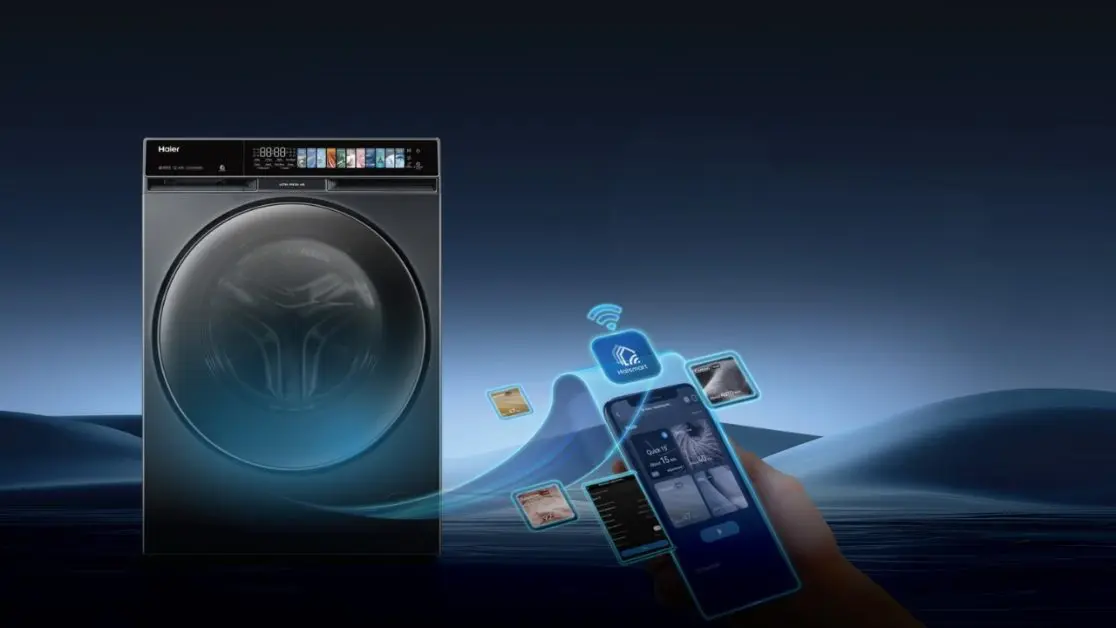
People think smart appliances are about:
- WiFi
- Apps
- Connectivity
But that is surface-level thinking.
The real shift is this:
Smart appliances reduce mental load.
Think about it like ordering food.
- Old system: Call restaurant, explain order
- Mid system: Use app, select items manually
- Smart system: App remembers preferences, suggests order
Which one feels effortless?
Haier builds appliances like that third system.
How this plays out in everyday Indian scenarios
Scenario 1: The weekday rush
You come home late. Laundry is pending.
Competitor experience:
- Scroll through programs
- Guess settings
- Adjust manually
Haier experience across F9 and F11 models:
- Tap once
- Machine handles the rest
Time saved: 5 to 10 minutes
Mental energy saved: Much more
Scenario 2: Mixed fabric loads
Indian households rarely wash one fabric type.
Competitor challenge:
- Choose wrong program
- Risk damage or poor cleaning
Haier advantage:
- AI detects load
- Adjusts automatically
Better decisions happen when systems understand context.
Scenario 3: Late-night usage
Urban homes run appliances at night.
With features like Night Wash across F9 and F11 series:
- Silent operation
- No disturbance
The display supports this with low-effort interaction.
The cost vs benefit equation of smart display technology
Cost side
- Slightly higher upfront investment
- Initial learning for first-time users
Benefit side
- Reduced decision fatigue
- Time savings every day
- Better fabric care
- Lower energy and water usage
- Flexibility across 10 Kg, 12 Kg, and washer-dryer variants
Over time, smart displays do not cost more. They waste less.
Why Haier’s approach fits Indian homes better
Indian homes are not predictable systems.
They are dynamic.
- Different fabrics
- Variable loads
- Unpredictable schedules
- Multiple users
Haier designs for this reality:
- Large families choosing 12 Kg F11 models
- Professionals choosing efficient 10 Kg variants
- Busy homes benefiting from washer-dryer combinations
A static interface struggles here.
A dynamic interface thrives.
What competitors are still optimizing for
Most brands focus on:
- Adding more programs
- Increasing screen size
- Improving aesthetics
These are visible upgrades.
But the invisible layer remains weak:
- Decision support
- Context awareness
- User simplification
More features do not mean better experience. Better decisions do.
The bigger shift: From control to collaboration
Old appliances followed commands.
Modern appliances collaborate.
Haier’s smart display technology represents this shift across:
- HW120-DM14F9PBKU1 (12 Kg F9 Pro)
- HW100-DM14F9BKU1 (10 Kg F9)
- HW120-DM14F11BKU1 (12 Kg F11)
- HWD120-DM14F11BKU1 (12 Kg F11 Washer Dryer)
It does not wait for instructions.
It anticipates needs.
That changes how we interact with machines.
So what should you actually look for when comparing smart displays?
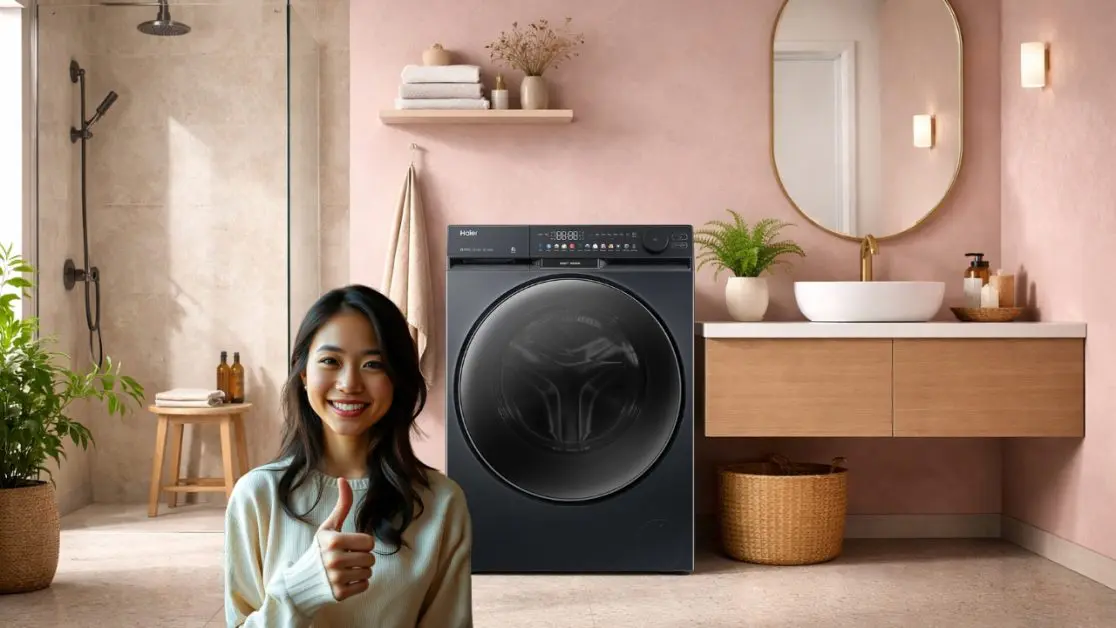
1. Does it reduce your thinking?
If you still need to decide everything, it is not smart enough.
2. Does it adapt to your usage?
Static systems age fast. Adaptive systems improve over time.
3. Does it simplify daily routines?
The goal is not control. The goal is ease.
A simple way to think about it
A good display shows information.
A great display guides decisions.
Haier builds the second.
Final thought: The smartest display is the one you forget is there
When technology works perfectly, it becomes invisible.
You do not think about settings.
You do not worry about outcomes.
You just trust the process.
That is the real competition.
Not screen vs screen.
Not feature vs feature.
It is friction vs flow.
And once you experience flow, going back feels unnecessary.
Frequently Asked Questions
Why do I feel overwhelmed using my washing machine even though it’s ‘advanced’?
Because most machines add features without reducing decisions. You’re still expected to choose fabric types, cycles, and settings manually. Systems like Haier’s AI display reduce this burden by interpreting your load and suggesting or auto-selecting the right wash.
Do I really need AI in a washing machine, or is it just marketing?
If AI reduces the number of decisions you make (like selecting fabric, water level, or time), then it’s practical, not marketing. The value lies in mental load reduction, not just automation.
Does smart display technology actually improve cleanliness?
Yes, if it’s tied to intelligent wash logic. Displays that connect with AI can optimize detergent use, cycle time, and rinsing, leading to more consistent cleaning results.
How much time can I realistically save with a smart display?
Around 5–10 minutes per wash cycle just in decision-making and setup. Over weeks, this adds up significantly.
Is WiFi the same as ‘smart’ in appliances?
No. WiFi enables connectivity. Intelligence comes from decision-making capability, like auto-detection and adaptive wash logic.
I pressed the wrong wash program. Can smart machines fix that?
Basic machines won’t. AI-enabled systems can override or adjust based on load detection, reducing the impact of wrong selections.
My parents find washing machines confusing. Will smart displays help?
Yes, especially visual, icon-based interfaces. They reduce reliance on text and make operation intuitive across age groups.