
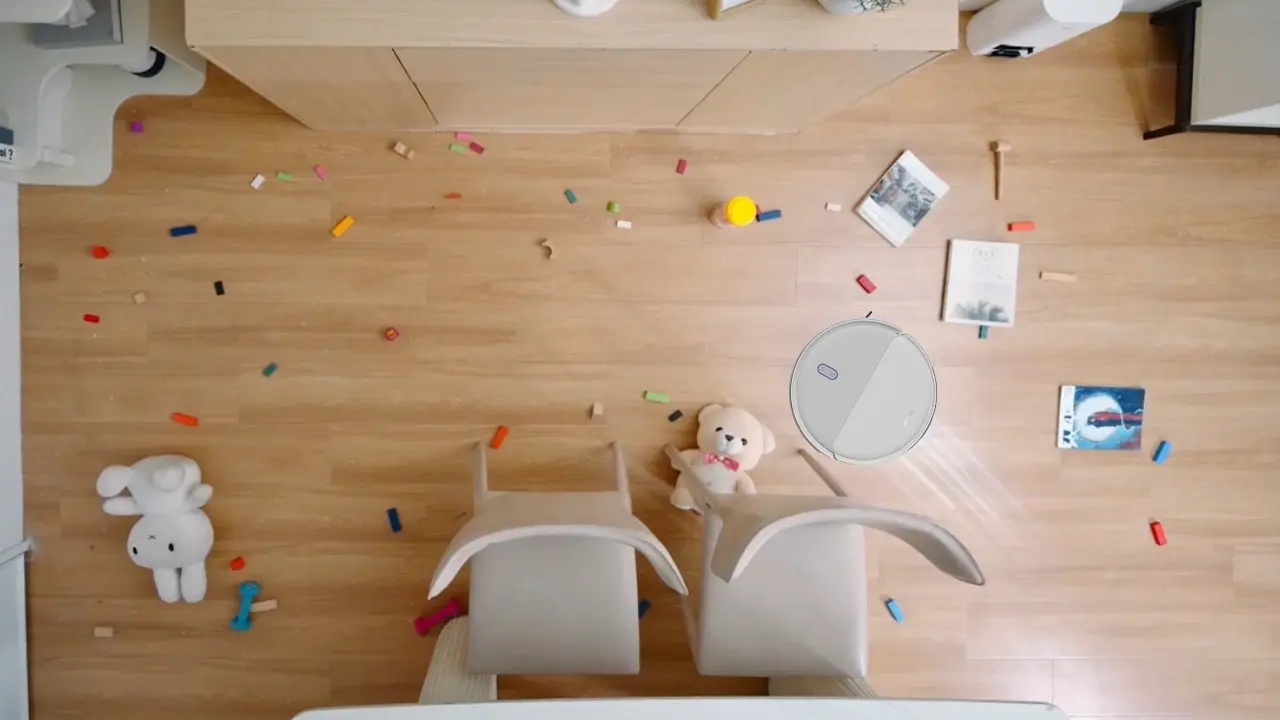

Smart robot vacuums use a mix of sensors such as laser navigation, infrared detection and cliff sensors. They also use mapping algorithms to find obstacles, avoid crashes and clean well, on their own.
These systems work together to make a picture of your home. This helps the robot move in a way not just randomly.
It all starts with a problem we all know.
It starts with a very familiar problem.
It is Sunday morning.
You finally decide to clean the house. You move chairs. Shift the table. Lift cables. Avoid hitting corners.
Cleaning is not hard.
Navigation is.
And that is exactly the problem smart robot vacuums are designed to solve.
Not cleaning.
But moving through chaos without friction.
What makes obstacle detection real intelligence?
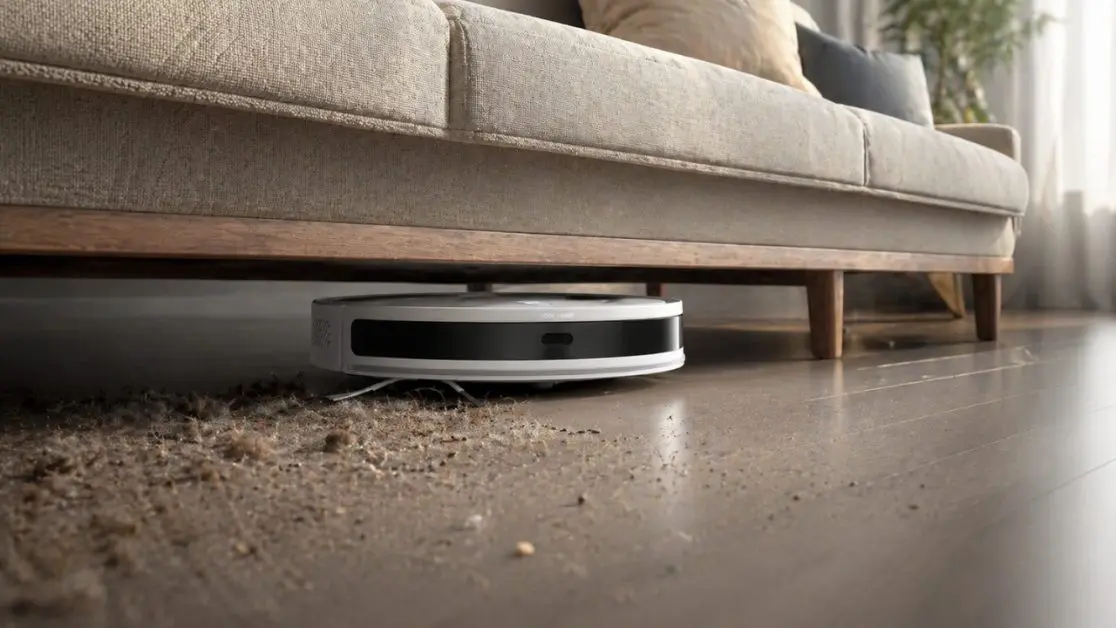
A robot vacuum without sensors is like driving blindfolded.
It will move. It will be clean. But it will bump into everything.
Modern robot vacuums solve this using a simple idea:
Don’t react to obstacles. Understand them before reaching them.
That shift changes everything.
The invisible system: How robot vacuums actually “see” your home
1. Laser navigation: Mapping before moving
Imagine walking into a dark room and turning on a torch.
That is what laser navigation does.
- It scans the room in 360 degrees
- Creates a layout of walls, furniture, and open spaces
- Updates the map in real time as objects move
In models like the Haier CIVIC X11, laser navigation ensures precise and efficient cleaning by understanding space before movement .
Insight:
The smarter the map, the fewer the mistakes.
2. Infrared sensors: Detecting objects in the path
Laser maps the big picture.
Infrared sensors handle the details.
They help the robot detect:
- Furniture legs
- Walls and corners
- Small objects in its path
This prevents direct collisions and reduces unnecessary stops.
Think of it as peripheral vision.
3. Cliff sensors: Protecting against falls
Indian homes have levels.
Steps. Balconies. Staircases.
Cliff sensors use downward-facing infrared signals to detect sudden drops.
If no surface is detected, the robot stops instantly.
Simple outcome:
- No falls from stairs
- No accidents near edges
- Safer autonomous cleaning
Safety is not a feature. It is a design assumption.
4. Bump sensors: The last line of feedback
Even with advanced sensors, not everything is predictable.
That is where bump sensors come in.
If the robot lightly touches an object:
- It registers the impact
- Adjusts direction
- Updates its path
This is not failure.
It is learning through feedback.
How these sensors work together as a system
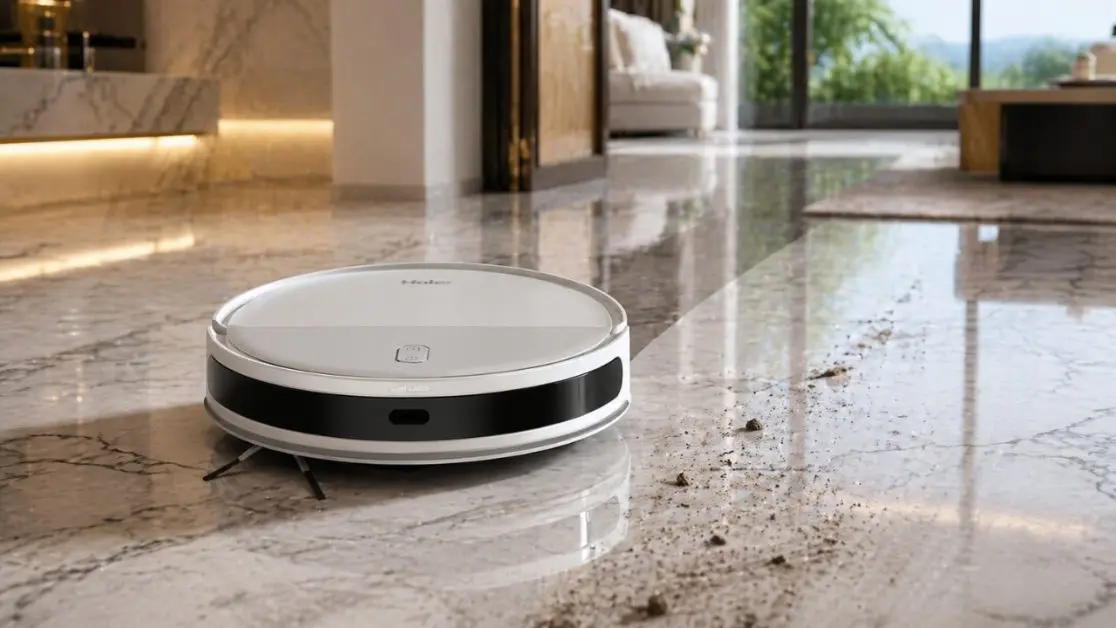
Individually, each sensor solves a small problem.
Together, they create intelligence.
| Sensor Type | What It Detects | Role in Cleaning |
| Laser Navigation | Room layout | Path planning |
| Infrared | Objects ahead | Obstacle avoidance |
| Cliff Sensors | Edges, stairs | Fall prevention |
| Bump Sensors | Physical contact | Real-time adjustment |
System insight:
Intelligence is not one feature. It is coordination.
Why mapping memory changes everything
Cleaning once is easy.
Cleaning consistently is hard.
That is where mapping memory enters.
Advanced models store multiple layouts of your home.
For example, Haier robot vacuums can store up to 5 maps, allowing them to navigate different rooms or floors intelligently .
What this enables:
- Faster cleaning over time
- No repeated scanning
- Custom cleaning zones
This is the shift from reaction to routine.
Three ways robot vacuums handle obstacles
Not all systems think the same way.
There are three distinct approaches.
One option: Random navigation
- Moves in unpredictable patterns
- Relies heavily on bump sensors
- Low cost but inefficient
Cost: Time and missed spots
Benefit: Affordable entry-level option
Second option: Sensor-based navigation
- Uses infrared and basic mapping
- Avoids major obstacles
- More structured cleaning
Cost: Moderate price
Benefit: Balanced performance
Third option: AI-powered laser navigation
- Builds detailed maps
- Predicts movement paths
- Avoids obstacles before reaching them
Cost: Higher investment
Benefit: Maximum efficiency and minimal intervention
Models like the Haier CIVIC X11 PRO combine laser navigation with intelligent obstacle detection and automated features like auto-empty dust systems for a more hands-free experience .
The real benefit is not cleaning. It is time.
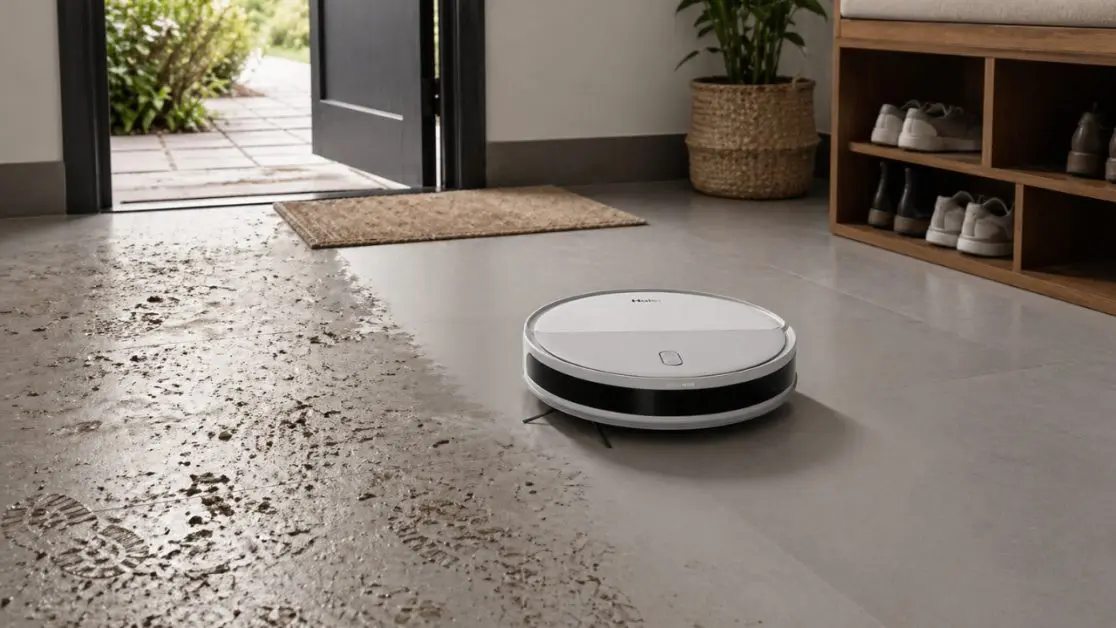
Here is what most people miss.
Robot vacuums do not just clean floors.
They remove decisions.
No planning. No moving furniture every time. No second guessing.
They turn cleaning into a background process.
And background processes are what make homes feel effortless.
Where sensors matter most in Indian homes
1. Tight spaces and furniture density
Indian homes often have:
- Compact layouts
- Multiple furniture pieces
- Narrow movement areas
Sensors ensure the robot moves without getting stuck.
2. Mixed flooring types
From tiles to carpets to marble.
High suction systems like the 5000 Pa suction in Haier robot vacuums adapt across surfaces without manual changes .
Sensors help detect transitions and adjust cleaning behaviour.
3. Dynamic environments
Kids running. Chairs moving. Pets shifting.
Static maps are not enough.
Sensors update the environment in real time.
A simple analogy that explains everything
Think of a robot vacuum like a delivery rider.
Without Google Maps, they rely on trial and error.
With maps and live traffic data, they reach faster.
Sensors are that data layer.
The cleaner is not smarter because it moves. It is smarter because it knows where not to move.
What to look for when choosing a smart robot vacuum
Not all sensors are equal.
Focus on systems, not features.
Checklist that actually matters:
- Laser navigation for accurate mapping
- Multi-map memory for different rooms
- Cliff sensors for safety
- Strong suction for real cleaning
- Smart controls via app or voice
The hidden system behind modern homes
Smart homes are not about gadgets.
They are about removing friction from everyday life.
A robot vacuum that avoids obstacles is not just efficient.
It is predictable.
And predictability is what reduces stress.
The one insight that changes how you see this
Cleaning is visible.
Navigation is invisible.
But navigation decides everything.
The better the system understands your space, the less you have to think about it.
What this means for the future of living
Homes are becoming systems.
Appliances are becoming decision-makers.
And sensors are becoming the bridge between the two.
The question is no longer:
“Can this be cleaned?”
The real question is:
“Can you think this while cleaning?”
Because the future of home appliances is not power.
It is awareness.
Explore smarter cleaning systems
If you want to see how these systems come together in real products, explore Haier’s smart robot vacuum range like the CIVIC X11 and CIVIC X11 PRO, designed with laser navigation, multi-sensor detection, and intelligent mapping for modern Indian homes.
The best technology does not demand attention. It quietly earns it by removing effort you did not realise you were spending.
Frequently Asked Questions
Do I really need laser navigation or is a basic robot vacuum enough for my home?
If your home has multiple rooms, furniture, or tight spaces, laser navigation is worth it. Basic models clean randomly and miss spots, while laser-guided vacuums map your home and clean systematically.
I feel overwhelmed choosing between features what actually matters most?
Focus on the system, not individual features. Prioritize: mapping (laser), obstacle detection (infrared), and safety (cliff sensors). These three define real performance.
Is an expensive robot vacuum actually saving me time or just adding complexity?
It saves time by removing decisions. You don’t plan cleaning anymore it happens automatically and predictably.
Can robot vacuums remember my home layout?
Advanced models store multiple maps (up to 5), useful for multi-floor homes or different room setups.
Do I need to reset mapping every time I move furniture?
No. Real-time sensors update small changes automatically. Only major layout changes require remapping.
Can I set no-go zones or specific cleaning areas?
Yes. Mapping allows you to define zones via an app.
How does it handle dynamic environments like kids or pets moving around?
Sensors continuously scan and adapt in real time, avoiding moving obstacles.