
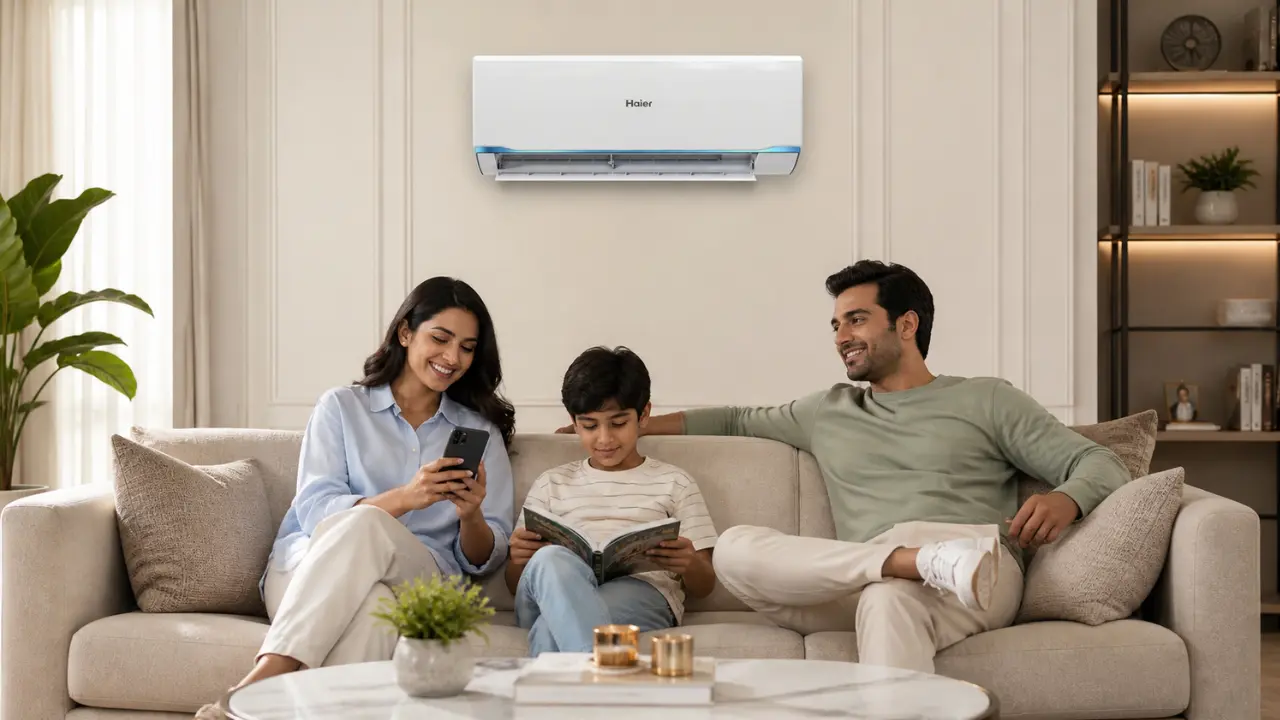

Modern air conditioners learn your daily cooling habits by tracking how and when you use them, analysing room conditions, and automatically adjusting temperature, airflow, and energy usage.
Over time, they shift from being reactive machines to predictive systems that deliver comfort without constant input.
The 10:30 PM moment that explains everything.
It is late.
You walk into your room after a long day. The heat is still trapped in the walls. You switch on the AC. Then the adjustments begin.
Lower temperature.
Increase fan speed.
Change mode.
Wait. Adjust again.
This is not cooling. This is negotiation.
Now imagine this instead.
You walk in. The room already feels right.
Not colder. Not louder. Just right.
That shift is not magic. It is a memory.
Smart air conditioners are no longer waiting for instructions. They are learning patterns.
What Does “Learning Your Cooling Habits” Actually Mean?
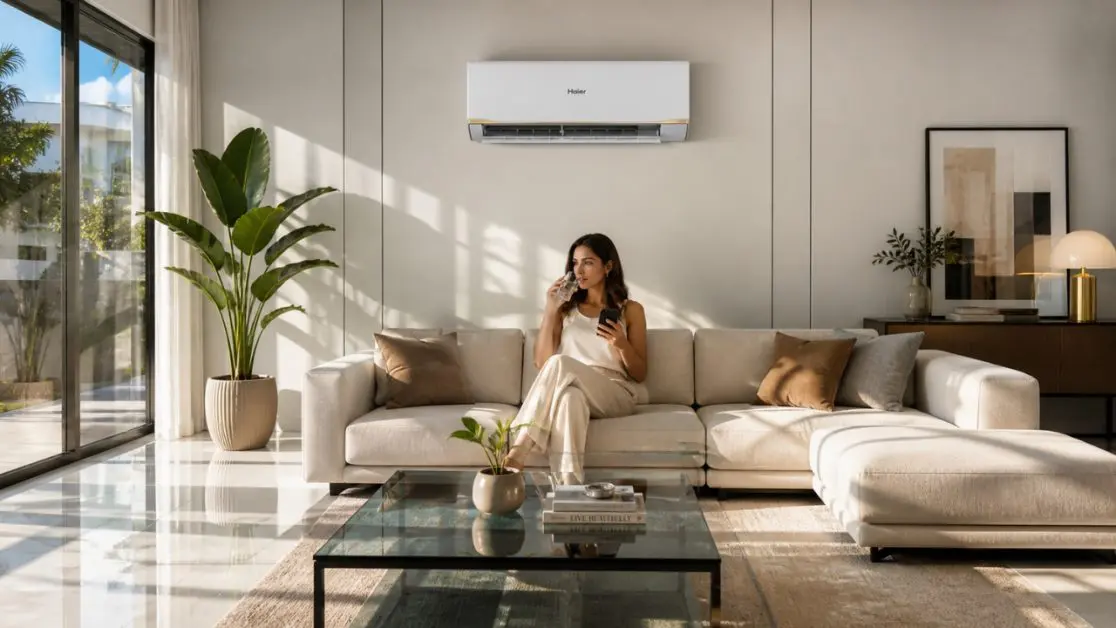
It is not guesswork. It is pattern recognition.
An AC that learns your habits observes small signals over time:
- What time you switch it on
- Which temperature you prefer at night versus afternoon
- How often you change settings
- How long the room takes to cool
- Whether someone is present in the room
These signals create a behavioural map.
And once a pattern is clear, the system stops reacting. It starts predicting.
In systems thinking, this is the shift from input-driven control to feedback-driven intelligence.
The machine stops asking. It starts anticipating.
The Invisible System Behind Smart Cooling
How does an AC actually learn?
Behind every smart AC is a simple loop:
- Observe
Sensors track temperature, humidity, occupancy, and usage behaviour - Analyse
AI systems identify recurring patterns across days and weeks - Adapt
The AC adjusts cooling modes, fan speed, and energy use automatically - Refine
Every new interaction sharpens the system’s understanding
This loop runs continuously.
That is how systems evolve quietly.
For example, in models like the Haier 1.8 Ton 5 Star Desert Rose Air Conditioner (HSA20DSD-NAI5NB-I), AI-powered systems analyse both environment and usage patterns to deliver smarter comfort and efficiency.
The Three Ways ACs Learn Your Daily Life
Not all learning looks the same. There are layers to it.
1. Time-Based Learning
Your AC understands when you need cooling.
- Starts cooling before your usual bedtime
- Reduces intensity during early morning hours
- Adjusts for weekend versus weekday patterns
Benefit: Comfort feels automatic
Cost: Requires consistent usage patterns to learn effectively
2. Behaviour-Based Learning
Your AC studies how you interact with it.
- Frequent temperature changes signal discomfort
- Stable settings indicate preference
- Manual overrides refine future predictions
Benefit: Personalised cooling without manual effort
Cost: Initial learning phase may take a few days
3. Environment-Based Learning
Your AC reads what the room needs.
- Adjusts cooling based on outside heat
- Adapts to humidity levels during monsoon
- Detects room occupancy to avoid energy waste
For instance, AI Human Detection in the Haier 1.8 Ton 5 Star Gold Desert Rose Air Conditioner (HSA20DSD-GAI5NB-I) ensures cooling happens only when someone is present, reducing unnecessary energy use.
Benefit: Efficient cooling tailored to real conditions
Cost: Requires sensor accuracy and placement
Why This Matters in Indian Homes
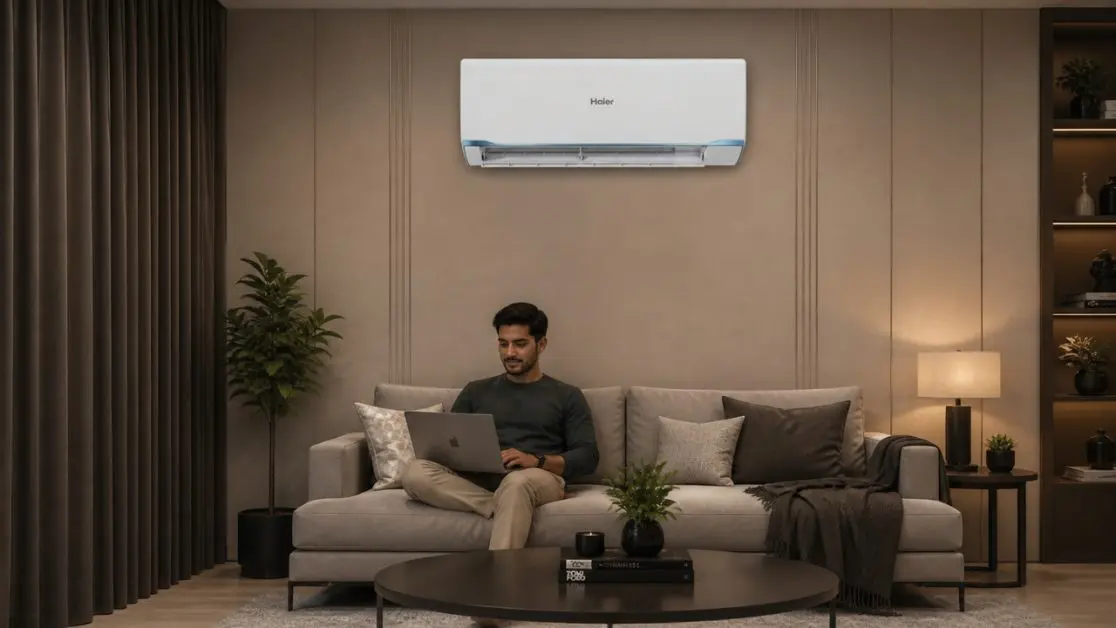
Indian households are not predictable.
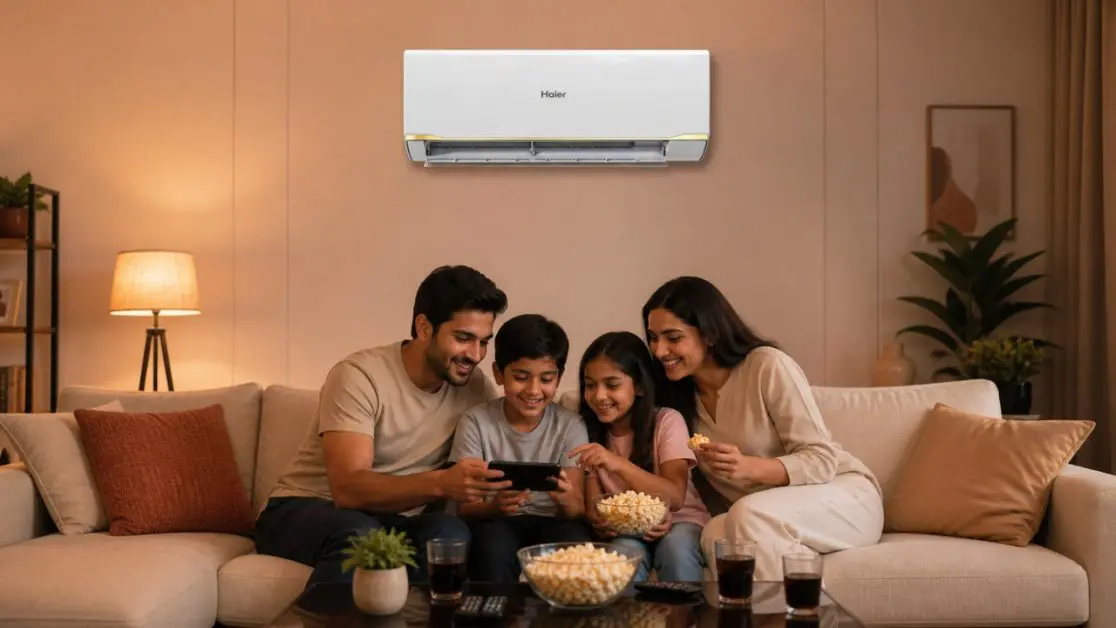
One evening, the entire family sits together watching cricket. The next day, everyone is in different rooms. Add summer heat, power bills, and unpredictable schedules.
Traditional ACs struggle here.
Because they expect consistency.
Smart ACs, on the other hand, thrive on variability.
Consider a typical day
- Afternoon heat peaks above 40°C
- Evening brings humidity
- Night demands quieter, softer cooling
An intelligent system adapts across all three.
In fact, the Haier 1.8 Ton 5 Star Desert Rose Air Conditioner (HSA20DSD-NAI5NB-I) is designed to deliver consistent cooling even at extreme temperatures up to 60°C, ensuring performance in intense Indian summers.
Comfort is no longer static. It becomes contextual.
From Cooling to Decision-Making Systems
Most people think an AC is a machine.
It is not.
It is a decision system.
Every second, it answers questions like:
- Should I cool faster or slower?
- Should I reduce power consumption?
- Should I maintain or change airflow?
Earlier, you answered these questions manually.
Now the system answers them for you.
The shift is subtle but powerful
| Old AC Thinking | Smart AC Thinking |
| User controls everything | System adapts automatically |
| Fixed cooling patterns | Dynamic, evolving patterns |
| Energy waste is common | Energy use is optimised |
| Comfort requires effort | Comfort feels effortless |
The Real Benefit Is Not Comfort. It Is Clarity.
People assume smart ACs are about better cooling.
They are not.
They are about removing decisions.
Think about it.
How many times do you adjust your AC in a week?
10 times? 20 times?
Each adjustment is a small mental load.
Multiply that across appliances, work, family, and daily life.
It adds up.
Good technology does not add features. It removes friction.
Energy Savings: The Quiet Outcome of Learning Systems
Learning is not just about comfort.
It is about efficiency.
How learning reduces energy usage
- Avoids overcooling when the room reaches desired temperature
- Turns off or reduces power when no one is present
- Switches to eco modes automatically during low activity
In systems like the Haier 1.8 Ton 5 Star Desert Rose Air Conditioner (HSA20DSD-NAI5NB-I), AI monitors energy usage patterns and can shift to optimised modes that significantly reduce wastage and improve efficiency.
The simple equation
Less guesswork = Less wastage
Less wastage = Lower electricity bills
Efficiency is not forced. It emerges naturally from understanding.
What Are Your Options as a Buyer?
Not every home needs the same level of intelligence.
So the decision becomes clearer when you look at it as choices.
One option is: Basic Inverter AC
- Maintains stable temperature
- Reduces power consumption compared to older models
Best for: Budget-conscious buyers
Limitation: No behavioural learning
The second option is: Smart App-Controlled AC
- Control via smartphone
- Scheduling features available
Best for: Remote convenience
Limitation: Still requires manual planning
The third option is: AI-Powered Learning AC
- Learns habits automatically
- Adjusts based on environment and behaviour
- Optimises comfort and energy usage
Best for: Hands-free, intelligent living
Limitation: Slightly higher upfront cost
Where Haier Fits Into This Shift
The interesting part is not the technology.
It is how quietly it integrates into life.
Systems like Haier’s AI Atmox platform focus on three things:
- Learning your habits
- Analysing real-time conditions
- Delivering optimised cooling without constant input
Combined with features in models like the Haier 1.8 Ton 5 Star Gold Desert Rose Air Conditioner (HSA20DSD-GAI5NB-I), such as convertible cooling capacity from 40% to 110%, long air throw up to 20 metres, and smart app plus voice control, the AC becomes less of a device and more of a background system.
The Hidden Pattern Most People Miss
Here is the deeper insight.
Every appliance is moving in the same direction.
From tool to system.
From control to intelligence.
From reaction to prediction.
ACs are just one example.
Refrigerators are learning storage habits.
Washing machines are optimising wash cycles.
TVs are learning viewing preferences.
The home is becoming a network of learning systems.
What This Means for How You Choose an AC
The decision is no longer just about tonnage or star rating.
It is about how much thinking you want to outsource.
Ask yourself:
- Do I want to control everything manually?
- Do I want assistance when I need it?
- Or do I want the system to learn and handle it quietly?
There is no single right answer.
But there is a clear pattern.
The more a system understands you, the less you need to manage it.
Final Thought: Comfort Should Not Feel Like Work
Most homes are full of small, invisible tasks.
Adjusting temperature.
Switching modes.
Managing power usage.
Individually, they seem small.
Collectively, they create friction.
Smart ACs remove that friction.
Not by doing more.
But by understanding better.
And once a system understands you, something interesting happens.
You stop noticing it.
Because the best technology does not demand attention.
It disappears into the background and lets life feel just a little easier.
Frequently Asked Questions
Why do I keep adjusting my AC every night? Is this normal?
Yes, it’s very common. Traditional ACs don’t “remember” your preferences, so every time you turn them on, you’re starting from scratch. You’re essentially negotiating comfort manually temperature, fan speed, mode again and again. Smart ACs reduce this by learning your patterns and automating those adjustments.
I feel like my AC settings are never “just right.” Why?
Because comfort isn’t static it changes with time of day, body temperature, and room conditions. Regular ACs don’t adapt dynamically, so you keep tweaking. AI-powered systems adjust continuously based on patterns and environment.
I left my AC running all night at a very low temperature. Is that wasteful?
Yes. Traditional ACs often overcool because they don’t adjust intelligently. Smart ACs detect when the desired temperature is reached and reduce power automatically, avoiding waste.
Does my AC actually know if I’m in the room?
In basic models, no. But advanced systems use occupancy sensors (like AI human detection) to reduce or stop cooling when no one is present, improving efficiency.
How exactly does a smart AC “learn” my habits?
It uses a continuous loop:
Observes usage (time, settings, room conditions)
Analyzes patterns over days/weeks
Adapts settings automatically
Refines with every interaction
How long does it take for an AC to learn my routine?
Usually a few days to a couple of weeks, depending on how consistent your usage patterns are.
What if my schedule changes every day? Will the AC still work well?
Yes. Smart ACs don’t rely only on fixed schedules, they adapt using real-time environmental and behavioral data, making them suitable for unpredictable routines (common in Indian households).