
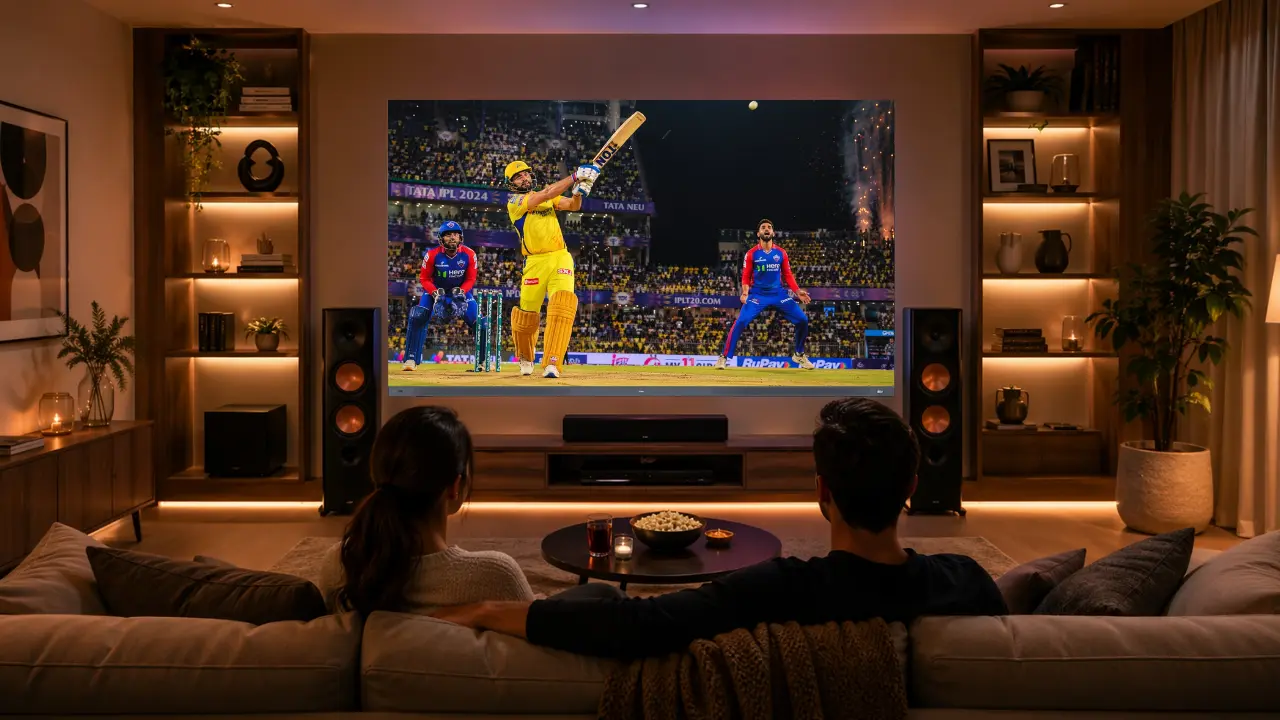

MEMC enhances IPL viewing by adding extra frames between fast-moving scenes, reducing motion blur and making every ball, shot, and replay look smoother and clearer.
The result is simple: sharper action, better tracking, and a viewing experience that feels closer to being in the stadium.
Why does IPL sometimes look blurry on your TV?
You’re watching a last-over thriller.
The bowler runs in. The camera pans quickly. The ball leaves the hand.
And suddenly, the moment that matters most feels… slightly blurred.
Not broken. Not unwatchable. Just not crisp enough.
That’s not your eyes.
That’s motion.
The hidden problem: speed vs clarity
Cricket is not a slow sport anymore.
- Ball speeds cross 140 km/h
- Camera angles switch in milliseconds
- Replays zoom into micro-movements
A standard TV shows around 60 frames per second. But your eyes expect continuity.
When frames are missing, your brain fills the gaps.
And that’s where blur creeps in.
Blur is not a defect. It’s a missing frame problem.
What exactly is MEMC and why does it matter for the IPL?
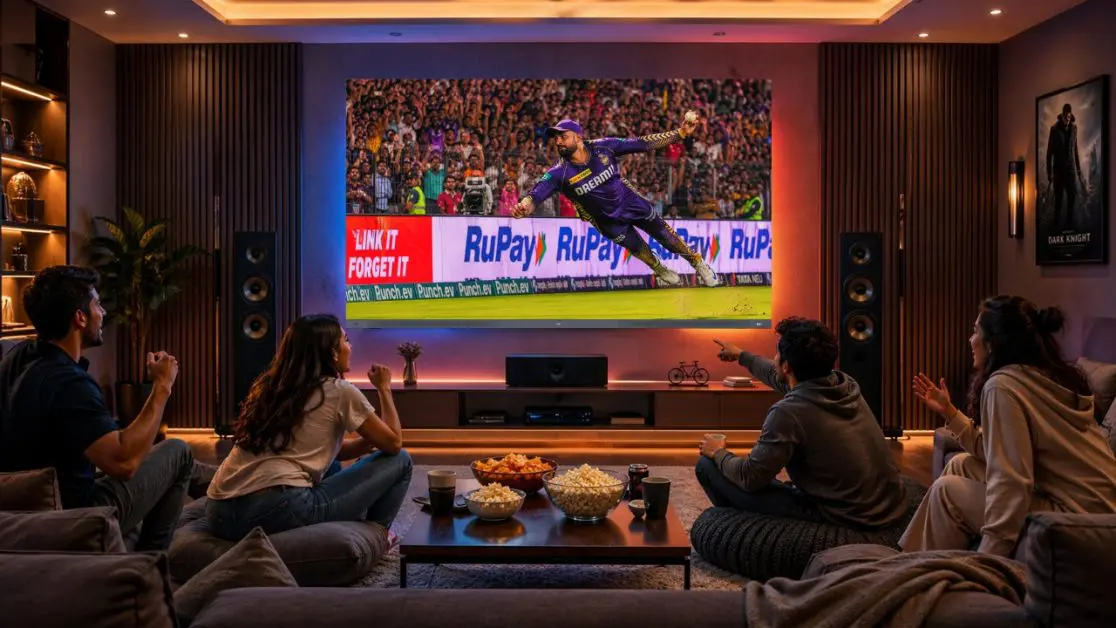
MEMC stands for Motion Estimation, Motion Compensation.
Sounds technical. It’s not.
Think of it like this
Imagine watching a flipbook.
- More pages = smoother animation
- Fewer pages = choppy motion
MEMC simply adds more “pages” between scenes.
It studies two frames and predicts what should exist in between.
Then it inserts those frames.
That’s it.
What changes when MEMC is active?
- The ball trajectory becomes clearer
- Fast camera pans look fluid
- Player movements feel natural
- Replays look cinematic, not jumpy
On TVs like the Haier M80F Mini LED 189cm (75) Google TV, MEMC works alongside motion technologies to reduce blur and improve clarity during fast scenes.
More frames. Less guesswork. Better cricket.
What does MEMC actually improve during an IPL match?
Let’s break this down using real match moments.
1. The ball release moment
This is where most TVs struggle.
- Without MEMC: slight blur, hard to track
- With MEMC: smooth release, visible seam rotation
You don’t just see the ball. You follow it.
2. Boundary shots and aerial hits
High shots travel fast and across large frames.
- Without MEMC: motion looks stretched
- With MEMC: clean arc, clear flight path
You feel the shot, not just the result.
3. Fast camera pans
Cameras move aggressively in the IPL.
- Fielding angles
- Crowd reactions
- Instant replays
MEMC stabilises these transitions.
No jitter. No visual fatigue.
4. Ultra slow-motion replays
Replays define modern cricket storytelling.
MEMC ensures:
- Frame continuity
- Sharp transitions
- Realistic slow motion
It turns replay into analysis, not just repetition.
How MEMC works with other TV technologies
MEMC alone is powerful.
But paired with the right system, it becomes transformative.
The system behind a great IPL experience
One feature solves one problem.
A system solves the experience.
On advanced TVs like the Haier M80F Mini LED series:
- Mini LED improves contrast and brightness
- Dolby Vision enhances color and depth
- KEF audio adds immersive sound
- MEMC ensures motion clarity
Each layer handles a different part of the experience.
Clarity is never one feature. It’s a collaboration.
Three ways people experience IPL viewing
Not everyone watches IPL the same way.
And that changes what MEMC means for you.
One option is casual viewing
You switch on the TV while cooking or scrolling your phone.
- You miss fine details
- Motion blur doesn’t bother you
- MEMC is a bonus, not essential
Cost: lower expectation
Benefit: low involvement
The second option is social viewing
Friends over. Snacks ready. Volume up.
- Big screens amplify motion issues
- Fast action becomes more noticeable
- MEMC improves group experience significantly
Cost: higher screen size investment
Benefit: smoother shared experience
The third option is immersive viewing
You watch every ball.
Every replay. Every angle.
- You notice motion inconsistencies
- You care about clarity
- MEMC becomes essential
Cost: higher expectations from your TV
Benefit: stadium-like immersion
Why MEMC matters more in India than you think
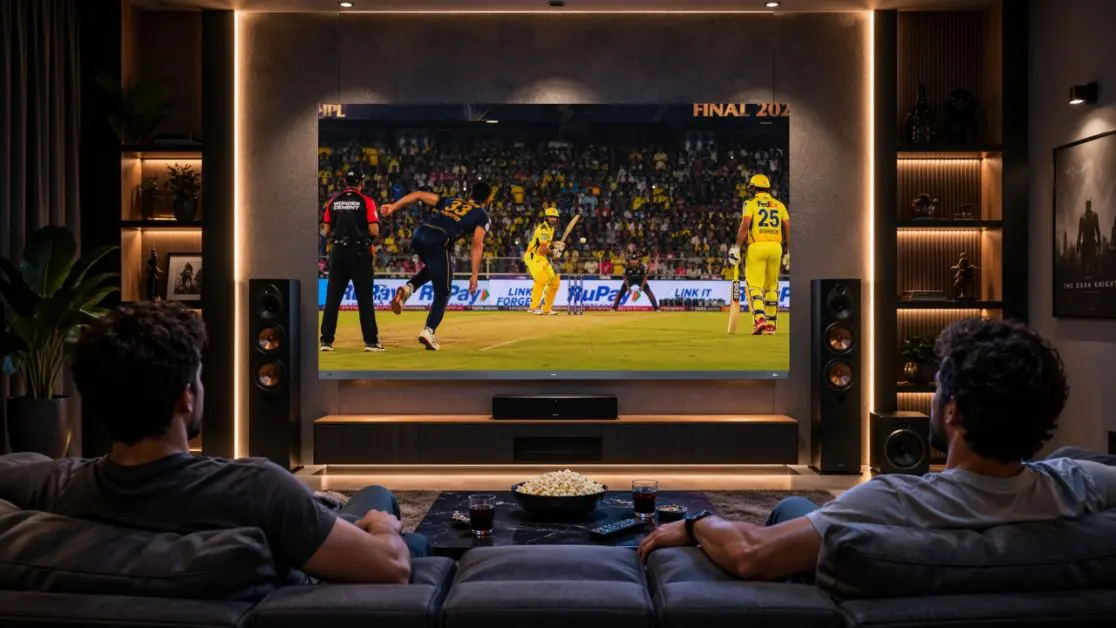
Indian homes don’t watch TV the same way as Western markets.
We watch differently.
Here’s what’s unique
- Larger families sharing one screen
- Bright living rooms during day matches
- High emotional engagement during IPL
This creates a different demand.
You don’t just need resolution.
You need clarity in chaos.
The IPL viewing environment
- Multiple viewers
- Constant movement
- Fast switching attention
MEMC helps maintain visual stability.
It reduces fatigue.
It keeps everyone engaged.
In Indian homes, clarity is a group experience.
The difference you notice instantly
Some upgrades take time to appreciate.
MEMC is not one of them.
The moment you switch it on
- Movement feels natural
- Eyes strain less
- Tracking improves instantly
It’s like adjusting focus on a camera.
Once you see it, you can’t unsee it.
What to look for when choosing a TV with MEMC
Not all MEMC implementations are equal.
Here’s what actually matters.
Key factors that shape performance
- Refresh rate compatibility
Higher refresh rates support smoother interpolation - Processor intelligence
AI processors improve frame prediction accuracy - Panel quality
Better panels reduce artifacts during motion
For example, the Haier M92 Series QD Mini LED TVs combine MEMC with AI Ultra Sense processors and high refresh rates like 144Hz for smoother sports viewing
A quick comparison: With vs Without MEMC
| Experience Element | Without MEMC | With MEMC |
| Ball tracking | Slight blur | Clear trajectory |
| Camera movement | Jerky transitions | Smooth pans |
| Replay quality | Choppy | Cinematic |
| Eye comfort | Moderate fatigue | Reduced strain |
| Group viewing | Inconsistent clarity | Consistent experience |
The real insight most people miss
People think resolution is everything.
4K. 8K. More pixels.
But here’s the truth.
The resolution shows detail. Motion shows reality.
You can have a sharp image.
But if it moves poorly, the experience breaks.
MEMC fixes that.
It doesn’t add new content.
It improves how you experience existing content.
Why this matters beyond IPL
This isn’t just about cricket.
It’s about how we consume fast-moving content.
- Action movies
- Gaming
- Live sports
- Even scrolling interfaces
Everything is moving faster.
Your screen has to keep up.
MEMC is not a feature.
It’s a response to speed.
So what does this mean for your next IPL season?
You have three choices.
One option is to ignore motion clarity
Focus only on price and size.
You’ll still enjoy matches.
But you’ll miss subtle details.
The second option is to upgrade partially
Choose a TV with better resolution and sound.
You’ll improve overall quality.
But motion may still feel off.
The third option is to optimise for experience
Look for a system that includes:
- MEMC
- High refresh rate
- AI processing
- Strong display tech
That’s where TVs like Haier’s Mini LED and QD Mini LED lineup stand out.
They don’t treat motion as an afterthought.
They build for it.
The final takeaway
Every IPL match is built on moments.
A yorker. A catch. A last-ball six.
These moments happen in fractions of a second.
Your TV decides how clearly you experience them.
MEMC does one thing well. It makes fast moments visible.
And once fast moments become clear, everything else feels more real.
Not louder.
Not brighter.
Just… right.
Frequently Asked Questions
I’m buying a new TV mainly for the IPL. Do I actually need MEMC or is it just marketing?
If you care about following the ball clearly during fast deliveries and smooth camera pans, MEMC makes a noticeable difference. Without it, motion can feel slightly choppy even on a good display.
I already have a 4K TV. Why does the IPL still not feel smooth enough?
Resolution (4K) improves detail, but not motion. MEMC improves how frames move, not how sharp they are. You need both for a complete experience.
Should I prioritize refresh rate or MEMC for sports?
Ideally both. Higher refresh rates (like 120Hz or 144Hz) create the foundation, while MEMC intelligently fills in missing frames to smooth motion further.
I don’t watch sports daily. Will MEMC still be worth it for me?
If IPL is your main concern, even occasional viewing can feel significantly better. But if you’re a casual viewer, it’s a “nice-to-have,” not essential.
Will MEMC help during slow-motion replays too?
Yes. It enhances frame continuity, making replays feel more detailed and cinematic rather than choppy.
I watch the IPL with my family in a bright room. Does MEMC still matter?
Even more. In shared, high-distraction environments, smoother motion helps maintain clarity for everyone watching.
Does MEMC work alone or with other features?
It works best as part of a system:
High refresh rate → smoother base motion
Good processor → accurate frame prediction
Display tech (like Mini LED) → better clarity overall