
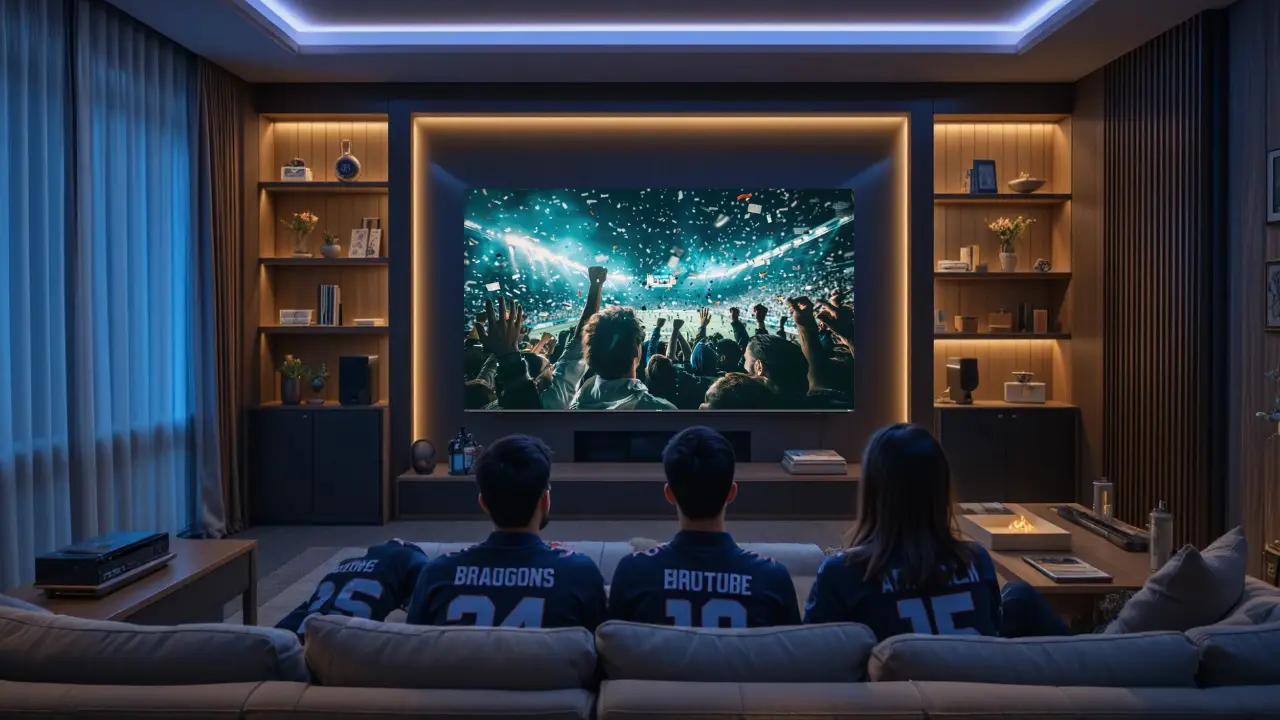

A stadium-like sound experience at home comes down to three things working together: multi-directional audio, powerful bass depth, and intelligent sound processing.
When these align, your living room stops feeling like a room and starts behaving like a space where sound surrounds, moves, and reacts.
Why does stadium sound feel so different from regular TV audio?
Think about the last time you watched a cricket match.
Not at home. In a stadium.
You didn’t just hear the shot.
You felt the crowd swell.
You sensed sound travel.
Now compare that to a regular TV setup.
Flat.
Forward.
Forgettable.
The difference isn’t loudness. Its dimension.
Sound becomes real when it stops coming from one place.
The three invisible layers behind stadium-like sound
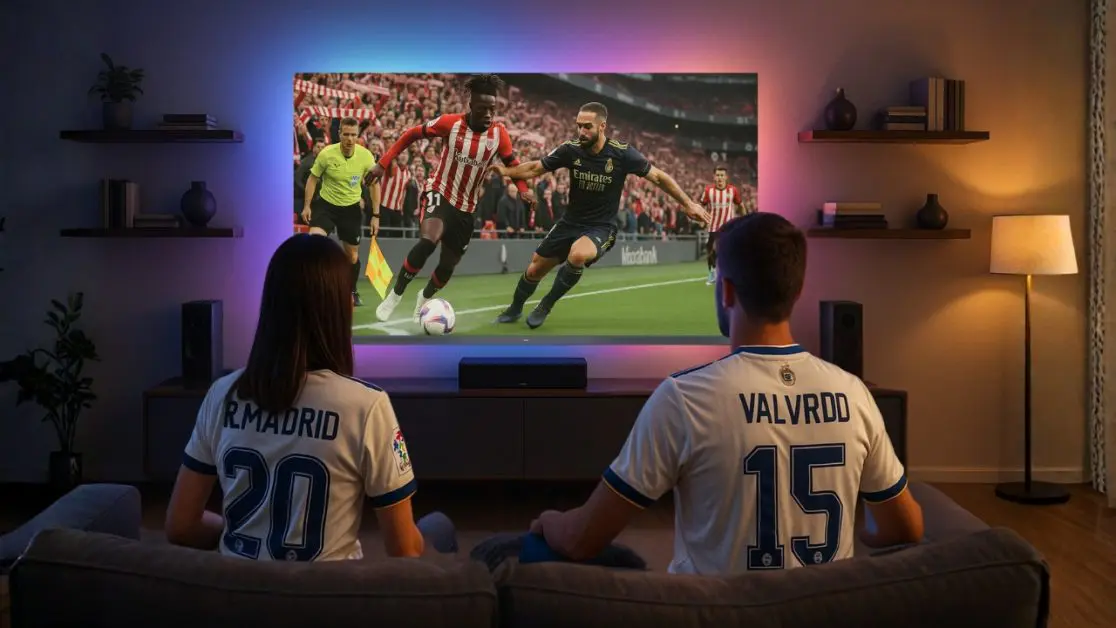
Most people assume better sound means bigger speakers.
It doesn’t.
It means smarter sound design.
1. Direction: Sound should move, not sit still
In a stadium, sound travels.
- Cheers rise from behind
- Commentary feels centered
- Action cuts through the middle
At home, traditional audio pushes everything forward.
Modern systems change that.
- Dolby Atmos creates a three-dimensional sound field, placing audio around you
Result: You don’t watch the match. You step inside it.
2. Depth: Sound you can feel
A stadium is never silent.
There is always a pulse.
That pulse is bass.
- Standard TVs lack low-frequency depth
- Better systems include 2.1 channel audio with dedicated woofer output of 50W
Result: The thud of the ball. The roar of the crowd. The tension before impact.
You don’t just hear. You feel.
3. Clarity: Every sound has its place
In a noisy stadium, clarity decides the experience.
You want to hear:
- The crack of the bat
- The shift in commentary
- The anticipation in the crowd
This is where sound engineering matters.
- Sound by KEF ensures richer, clearer, more precise audio layering
Result: Noise turns into meaning.
What actually creates a stadium effect at home?
Let’s simplify the decision.
One option is basic audio
- Standard stereo speakers
- Limited depth and direction
Cost: Low
Experience: Functional
The second option is enhanced TV audio
- Better speakers
- Moderate bass and clarity
Cost: Medium
Experience: Noticeably better
The third option is immersive engineered sound
- Dolby Atmos support
- 2.1 channel woofer system
- Precision-tuned audio
Cost: Higher upfront
Experience: Stadium-like immersion
Insight: You don’t upgrade sound to hear more. You upgrade sound to feel more.
Where modern TVs quietly change the game
Earlier, immersive sound needed external setups.
Now, it’s built in.
Here are the full model names that bring this experience together:
- Haier M80F Mini LED 140cm (55) Google TV Sound By KEF (H55M80FUX)
- Haier M80F Mini LED 165cm (65) Google TV Sound By KEF (H65M80FUX)
- Haier M80F Mini LED 189cm (75) Google TV Sound By KEF (H75M80FUX)
- Haier M80F Mini LED 215cm (85) Google TV Sound By KEF (H85M80FUX)
These aren’t just televisions.
They are integrated sound environments.
Why Indian homes are moving toward immersive sound
The role of TV has changed.
Earlier, it filled time.
Now, it defines moments.
What’s driving this shift?
- OTT platforms dominate evening routines
- Live sports remains a shared family ritual
- Gaming has gone mainstream
A single screen now serves multiple experiences.
And sound is what connects them.
The constraint that improves the experience
The stadium is large.
Your living room is not.
Yet the feeling can be replicated.
Why?
Because constraints sharpen design.
- Smaller rooms allow controlled sound reflection
- Smart processing positions sound precisely
- Integrated systems reduce distortion
A smaller space, when designed right, can feel bigger than reality.
What should you actually look for?
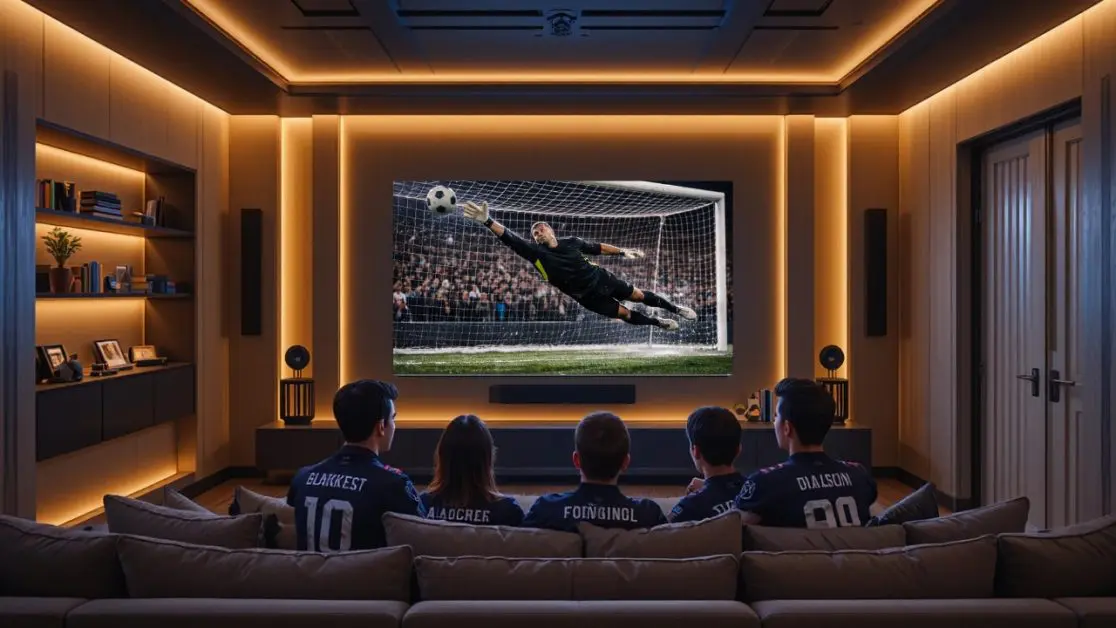
Focus on systems, not specs.
Essential elements
- Dolby Atmos support
- 2.1 channel speaker setup
- Dedicated woofer output
- KEF-tuned audio systems
- Smart sound processing
Quick checklist
- Does sound surround you?
- Can you feel bass depth?
- Are details clearly separated?
If yes, you are close to a stadium-like experience.
The bigger truth people overlook
Sound is not secondary.
It is an experience.
People chase bigger screens.
But memory is built through sound.
- The cheer after a six
- The silence before a penalty
- The music that lingers after a film
Visuals impress. Sound stays.
So what does this mean for your home?
You are not upgrading a device.
You are shaping how moments feel.
One choice gives you background noise.
Another gives you shared experiences.
And that difference shows up in everyday life.
Conclusion: The room stays the same. The experience doesn’t
A stadium is not defined by its size.
It is defined by immersion.
When sound surrounds you, moves with you, and reacts to what’s happening, everything changes.
Not the room.
The feeling.
You don’t need a stadium. You need the right sound system.
A simple next step
If you are planning your next upgrade, don’t start with screen size.
Start with sound.
Explore TVs like the Haier M80F Mini LED series with Sound by KEF, where immersive audio is built into the experience.
Because once sound feels real, everything else follows.
A good sound fills a room.
A great sound fills a moment.
Frequently Asked Questions
Do I really need a soundbar for stadium-like sound at home?
Not always. Some modern TVs, like the Haier M80F Mini LED Series with Sound by KEF, already include immersive audio features such as Dolby Atmos and a 2.1 channel woofer system.
Should I choose a bigger screen or better sound first?
Start with sound if you want a more emotional, immersive experience. A bigger screen impresses visually, but sound makes sports, movies, and games feel alive.
Is Dolby Atmos worth it for watching cricket and movies at home?
Yes. Dolby Atmos helps sound move around you instead of coming only from the front, creating a more stadium-like or theatre-like feeling.
Can my living room really feel like a stadium?
It can feel more immersive, even if it cannot physically match a stadium. Smart sound processing, bass depth, and multi-directional audio help create that effect.
I live in an apartment. Will powerful TV sound disturb others?
It depends on the volume and bass level. A good sound system can still deliver clarity and depth without needing extreme loudness.
Will stadium-like sound work in a small room?
Yes. Smaller rooms can actually help control sound reflection, making immersive audio feel more focused and realistic.
How does Dolby Atmos make the sound feel like it is moving?
Dolby Atmos creates a three-dimensional sound field, placing audio around and above you instead of keeping everything flat in front.
What does Sound by KEF mean for my TV experience?
It means the audio is tuned for richer, clearer, and more precise sound layering, so dialogue, crowd noise, music, and action feel more separated.