
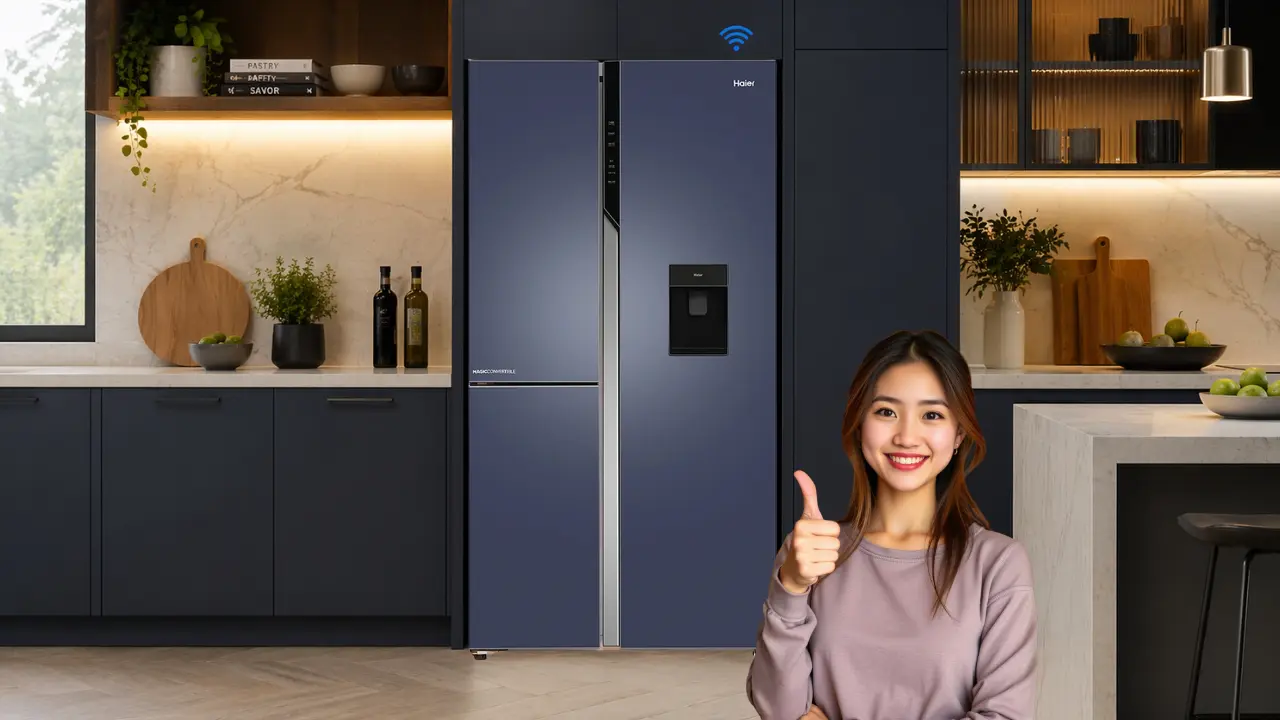

Smart water dispensers typically consume between 0.5 to 2.5 units of electricity per day, depending on usage, cooling functions, and standby efficiency.
The real difference is not just how much power they use, but how intelligently they manage it.
The real question is not “how much power” but “when and why”
It is 11:30 pm.
You walk into the kitchen. The lights are off. The house is quiet.
Cold water is instantly available.
No waiting. No refilling bottles. No refrigerator door opening again and again.
Now pause.
Where did that convenience come from?
Energy.
But not in the way most people think.
The common assumption is simple: more features mean more electricity.
The reality is different.
Smart appliances do not just consume energy. They shape when and how energy is used.
That shift changes everything.
What actually consumes energy inside a smart water dispenser?
A smart water dispenser is not one system. It is a combination of smaller systems working together.
Each one draws power differently.
The four core energy components
| Component | What it does | Energy impact |
| Cooling system | Keeps water chilled using compressor or thermoelectric technology | Moderate to high |
| Water circulation system | Maintains smooth dispensing and internal flow | Low to moderate |
| Standby system | Keeps water at ready-to-drink temperature | Continuous low usage |
| Smart controls | Sensors, WiFi, digital panels | Minimal but constant |
Here is the insight most people miss.
Energy is not consumed evenly. It spikes during active cooling and stabilises during standby periods.
That means your habits matter more than the machine itself.
Why “always ready” feels expensive but often isn’t
Think about your refrigerator.
It runs 24×7. Yet it is designed to optimize energy use through inverter technology.
For example, the Haier 598L Black White Glass 3 Door Smart Convertible SBS Refrigerator (HRT-683WISU1) uses Expert Inverter Technology to adjust power dynamically based on cooling needs, improving efficiency and reducing unnecessary consumption.
That is the same principle modern smart water dispensers follow.
Three operating modes that define energy usage
Active Cooling Mode
Chills water when temperature rises or usage increases
Highest energy draw but only during cooling cycles
Maintenance Mode
Maintains stable cold-water temperature throughout the day
Moderate but controlled consumption
Sleep or Eco Mode
Reduces cooling intensity during low-usage hours
Lowest energy consumption
Insight: The appliance does not decide your electricity bill. Your usage pattern does.
How much electricity does a smart water dispenser actually use in India?
Let’s simplify it into something real.
Typical monthly consumption breakdown
| Usage pattern | Units per month | Estimated cost (₹8/unit) |
| Low usage (eco mode, limited cooling) | 15 to 25 units | ₹120 to ₹200 |
| Moderate usage (regular chilled water use) | 25 to 45 units | ₹200 to ₹360 |
| High usage (continuous cooling, frequent dispensing) | 45 to 70 units | ₹360 to ₹560 |
Now compare this.
A geyser can use 150 to 300 units monthly.
An air conditioner can cross 200 units in peak summer.
A smart water dispenser sits quietly in the background. Useful, but not dominant.
The hidden system: standby energy vs usage spikes
Most people focus on active cooling.
But that is not where most energy goes.
The real cost sits in standby maintenance.
Keeping water cold continuously requires energy, even when no one is using it.
This is where smart systems change the game.
Two types of systems you will find
| Traditional dispensers | Smart dispensers |
| Always maintain cooling | Use timers, sensors, or AI |
| Higher idle consumption | Reduce cooling cycles based on usage |
This is similar to how smart refrigerators track usage and optimize cooling cycles.
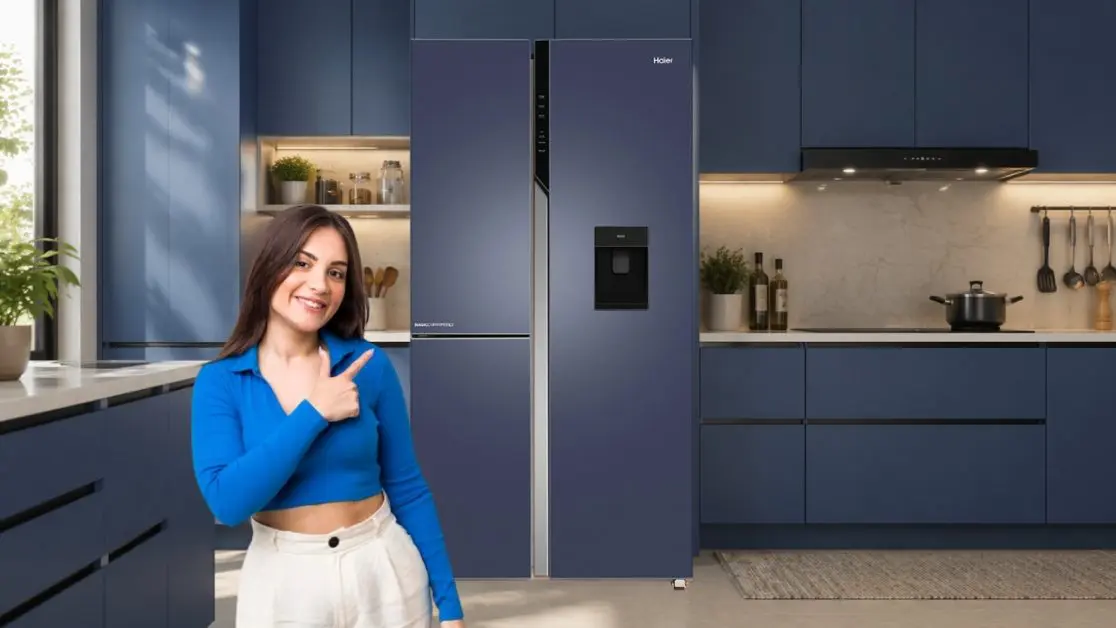
For instance, the Haier 592L Graphite Black 3 Door Smart Convertible Refrigerator (HRT-683WGKU1) integrates smart connectivity and Smart Sense AI to monitor usage and improve energy efficiency over time.
Pattern recognition reduces waste. That is the real efficiency.
What drives higher energy consumption?
Not all homes use appliances the same way.
And that is exactly why electricity bills vary.
Key factors that increase consumption
- Keeping cooling active continuously throughout the day
- High ambient temperatures in Indian summers
- Poor insulation inside the unit
- Lack of eco or timer usage
Insight: Convenience without control becomes a cost. Convenience with intelligence becomes efficiency.
Do smart features increase or reduce electricity usage?
This is where most confusion lies.
WiFi. Sensors. AI. App control.
Sounds like more electricity.
But the truth is counterintuitive.
Smart features usually reduce consumption
Because they do three things:
- Predict usage patterns
- Optimise cooling cycles based on real usage patterns instead of running continuously
- Enable remote control
- Switch off modes when you are not home
- Reduce unnecessary cooling cycles and idle energy consumption
This is not a theory. It is already visible in appliances.
Take the Haier 596L Regal Steel 2 Door Smart Convertible SBS Refrigerator (HRS-682WRSU1), which uses smart connectivity and inverter-based cooling to reduce unnecessary energy use while maintaining performance.
Water dispensers are moving in the same direction.
Technology does not increase energy use. Poor usage does.
How to reduce energy consumption without changing your lifestyle
Most people think saving electricity means sacrificing comfort.
That is outdated thinking.
You do not need to use less.
You need to be smarter.
Three simple shifts that change everything
Use timer-based cooling
Reduce intensive cooling during low-usage hours
Switch to eco or sleep mode at night
Most households use less chilled water overnight
Avoid frequent temperature adjustments
Keeping a stable cooling setting improves efficiency
What you gain
- Lower electricity bills
- Longer appliance life
- Consistent performance
Efficiency is not about restriction. It is about alignment.
Is a smart water dispenser worth the energy cost?
Let’s answer this directly.
The cost vs benefit equation
Costs
- ₹200 to ₹500 monthly electricity
- Slight increase compared to basic dispensers
Benefits
- Instant cold water
- Instant access to chilled water
- Better hygiene and controlled usage
- Lower decision fatigue
Now step back.
How often do you wait for water to cool in summer?
How often does convenience save you effort?
Insight: Time saved is also energy saved. Just in a different form.
The bigger pattern most homes are moving toward
Look around a modern Indian home.
Smart TVs adjust brightness automatically.
Air conditioners optimize cooling based on room conditions.
Refrigerators manage cooling cycles intelligently.
And now, even water dispensers are becoming adaptive systems.
This is not about luxury.
This is about removing friction from everyday life.
What this means for how we choose appliances
The decision is no longer binary.
It is not “does it consume power?”
Everything does.
The better question is:
Does it consume power intelligently?
Three ways to think about your decision
Efficiency-first mindset
Focus on inverter tech, eco modes, and insulation
Usage-first mindset
Choose based on your daily routine and family size
System-first mindset
Think about how this appliance fits into your larger home ecosystem
The one idea to remember
A smart cold-water dispenser is not energy-intensive by default.
Its efficiency depends on how intelligently it manages cooling cycles and standby usage.
And that changes how you see everything.
The future of appliances is not about adding features.
It is about removing decisions.
When a machine understands your routine, it stops wasting energy.
When it stops wasting energy, it starts saving money.
Quietly. Consistently. Invisibly.
And that is what smart living really looks like.
Frequently Asked Questions
I want instant cold water, but will a smart water dispenser make my electricity bill jump?
Usually not dramatically. Most smart water dispensers use around 0.5 to 2.5 units per day, depending on cooling use, eco mode, and standby efficiency.
I already have a fridge. Do I really need a smart water dispenser?
It depends on your routine. If your family frequently opens the fridge for cold water, a dispenser can reduce hassle and offer faster access.
Is a smart water dispenser worth it for a small family?
Yes, if you use chilled water daily. For low usage, eco mode can keep monthly electricity use closer to the lower range.
I hate managing appliances. Will a smart dispenser need constant adjustment?
No. The point of smart controls is to reduce manual decisions by using timers, sensors, and automatic cooling cycles.
Do WiFi and smart sensors increase electricity consumption?
Their power use is minimal. In many cases, they help reduce total consumption by controlling cooling more intelligently.
How does eco mode save electricity in a smart water dispenser?
It reduces cooling intensity during low-use periods, especially at night or when the home is empty.
Is AI cooling actually useful or just a marketing feature?
It is useful when it learns usage patterns and reduces unnecessary cooling cycles.
Can app control help reduce my dispenser’s power usage?
Yes. Remote control lets you switch modes or reduce cooling when you are away from home.