
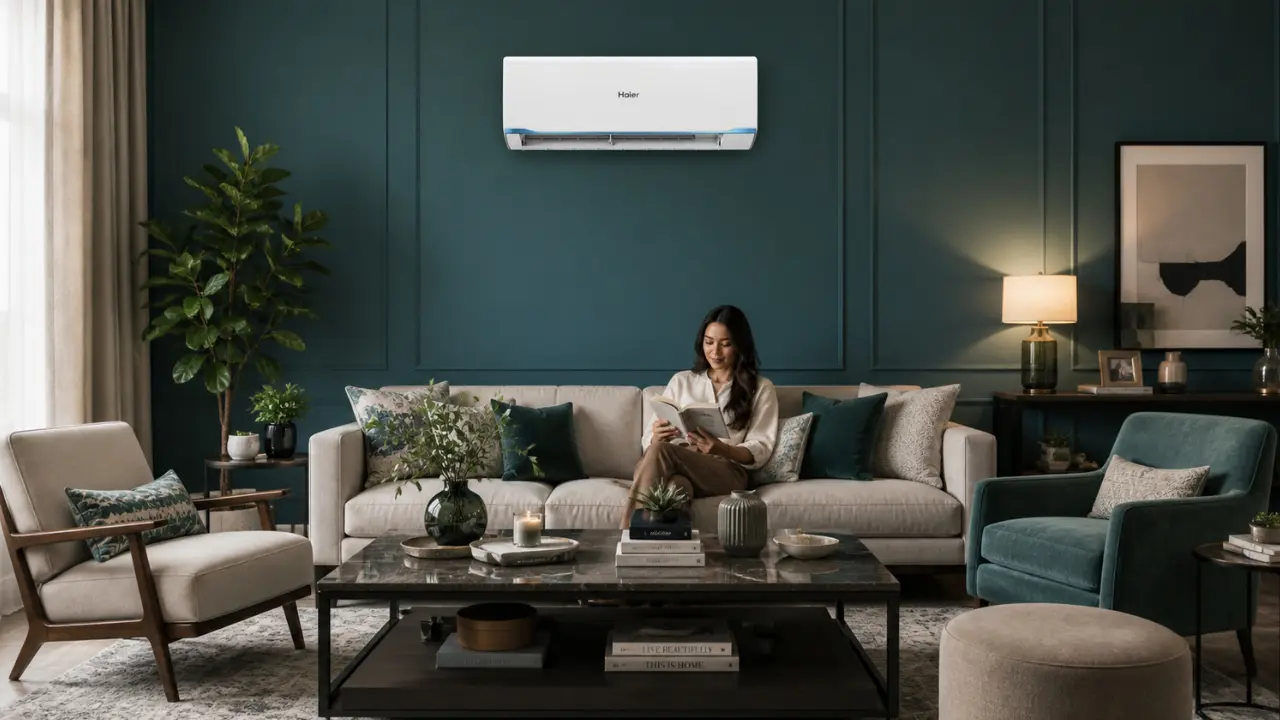

AI sensors improve comfort and efficiency by turning appliances from reactive machines into adaptive systems.
Traditional appliances wait for instructions. AI-powered appliances observe patterns, detect movement, understand environmental conditions, and adjust performance automatically. The result is simple but powerful: lower energy waste, better comfort, faster response times, and homes that feel more intuitive without demanding constant manual control.
A ceiling fan spinning in an empty room tells you everything.
So does an AC cooling a space nobody is sitting in.
Most homes lose energy in silence. Tiny inefficiencies. Repeated daily. Invisible because they feel normal.
This is where AI sensors quietly change the system.
Not by making homes futuristic.
By making them less wasteful.
Comfort is not temperature. It is timing.
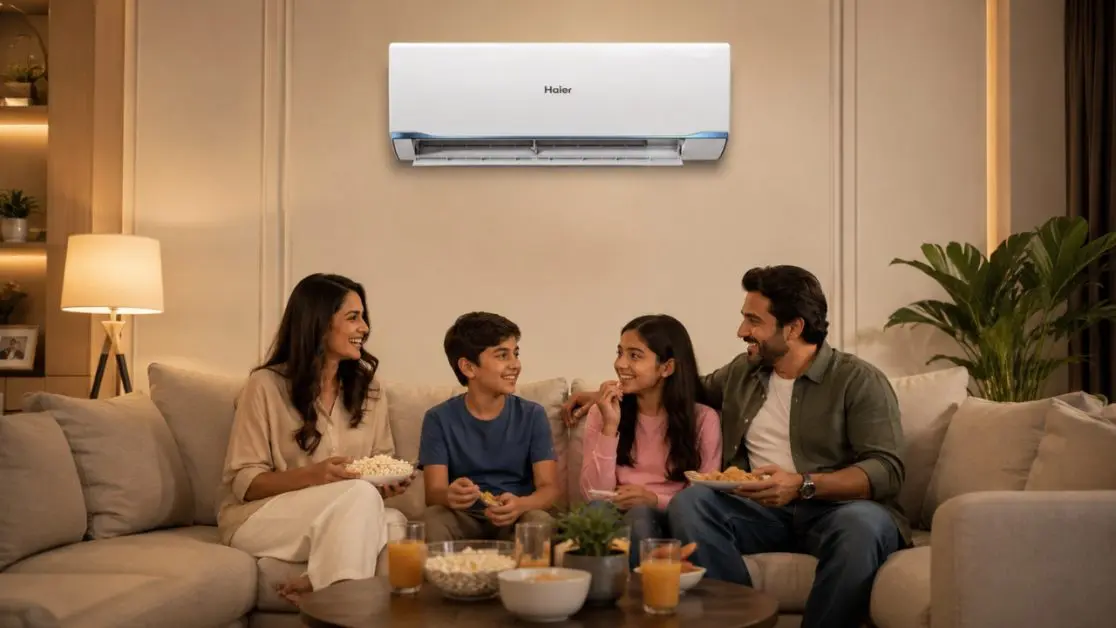
It is 7:15 pm in May.
Someone returns from work in Gurgaon traffic. The room feels trapped with afternoon heat. The AC turns on, but the cooling takes time. The room cools after the discomfort has already happened.
That delay matters more than most people realise.
Comfort is not about producing cold air.
Comfort is about delivering the right environment at the right moment.
This is the hidden shift AI sensors create.
Modern AI-powered appliances no longer operate like fixed machines. They behave more like adaptive systems.
For example, AI-enabled air conditioners such as the Haier 1.8 Ton 5 Star Desert Rose Air Conditioner (HSA20DSD-NAI5NB-I) use AI-ATMOX technology to analyse room conditions, usage habits, and occupancy patterns to optimise cooling automatically.
That sounds technical.
But the real-world outcome feels human.
The room cools before discomfort builds.
The airflow changes when people move.
The system reduces power when nobody is present.
Small adjustments. Big difference.
AI sensors remove invisible friction from daily life
Most people think smart appliances are about app control.
That is the surface layer.
The deeper value is decision reduction.
Good technology removes repeated micro-decisions.
Think about how many times households manually:
- Change AC temperature
- Reduce cooling at night
- Turn appliances off after leaving
- Adjust settings during weather shifts
- Increase cooling when guests arrive
Each decision is tiny.
Together, they create mental clutter.
AI sensors automate these invisible corrections.
Three ways AI sensors improve comfort immediately
| AI Sensor Function | What It Detects | Real-Life Benefit |
| Human Presence Detection | Occupancy and movement | Prevents cooling empty rooms |
| Climate Monitoring | Temperature and humidity | Maintains balanced comfort |
| Usage Learning | Daily habits and timing | Adjusts performance automatically |
The important thing is not automation alone.
It is context-aware automation.
A motion sensor in isolation is basic technology.
An AI sensor system that understands occupancy, weather, and behavioural patterns together becomes intelligent.
That difference changes efficiency dramatically.
The smartest homes are often the quietest ones
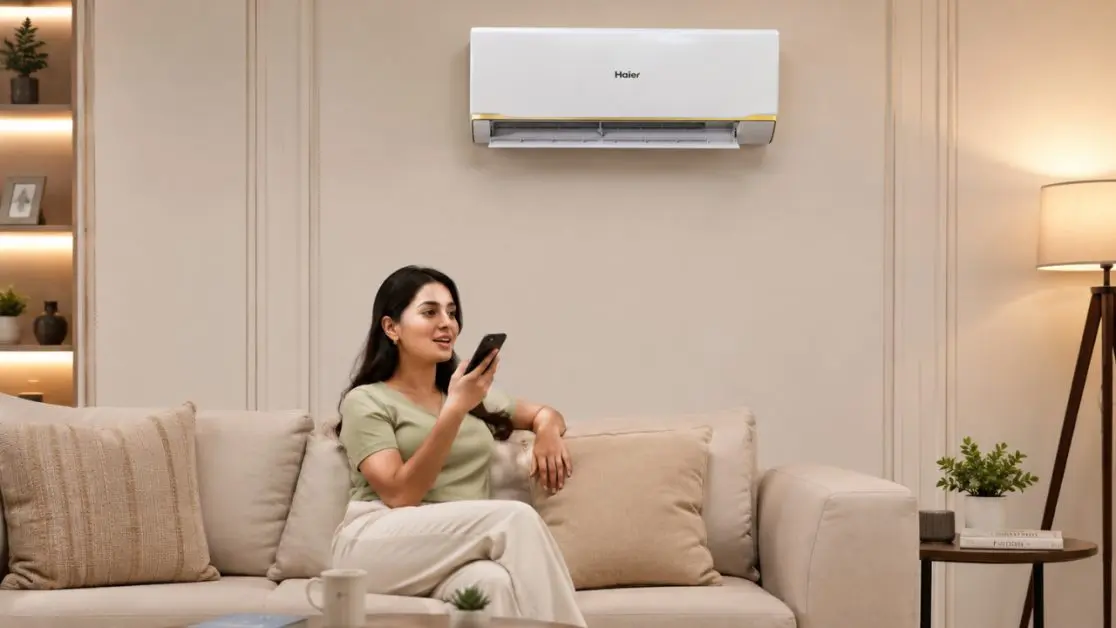
The best systems do not demand attention.
They disappear into routine.
Consider late-night cooling.
Traditional AC systems continue operating at the same intensity even after the room reaches comfort level. AI sensor systems continuously adjust airflow and cooling capacity based on room conditions and human presence.
That matters for two reasons:
- Better sleep quality
- Lower electricity usage
Haier’s AI Human Detection system focuses specifically on this principle by detecting presence accurately and reducing unnecessary energy use.
This is where efficiency becomes emotional.
Nobody celebrates a lower electricity bill emotionally.
But people absolutely notice:
- Better sleep
- Fewer midnight temperature adjustments
- Less direct airflow hitting the face
- Rooms cooling evenly
Comfort becomes memorable when it stops interrupting life.
Energy efficiency is becoming behavioural science
Older appliances followed fixed logic.
Newer AI systems study patterns.
That shift is enormous.
AI-powered appliances increasingly operate like adaptive ecosystems rather than isolated machines.
For instance, AI-enabled cooling systems now analyse:
- Indoor temperature
- Outdoor weather
- Occupancy patterns
- Time of day
- Energy usage spikes
Then they adjust automatically.
Haier’s AI For Savings system monitors energy consumption and shifts intelligently into AI ECO mode to reduce wastage, with claims of up to 56% energy savings under optimised conditions.
The key insight here is important:
Efficiency improves most when systems understand behaviour, not just hardware.
That is why AI sensors matter more than raw appliance power alone.
Indian homes create unique cooling challenges
Most global appliance conversations ignore Indian realities.
But Indian households operate differently.
One room becomes:
- Office during the day
- Bedroom at night
- Family gathering space in the evening
Usage patterns constantly shift.
Add Indian summers, power costs, humidity swings, and crowded urban environments, and efficiency becomes more complex.
This is exactly why adaptive systems matter more now.
Why fixed cooling systems struggle in Indian households
| Traditional Cooling Logic | Real Indian Usage Pattern |
| One fixed temperature | Multiple comfort preferences |
| Constant cooling | Intermittent room occupancy |
| Manual adjustment | Dynamic weather changes |
| Uniform airflow | Uneven room layouts |
AI sensors help bridge this mismatch.
Instead of forcing households to adapt to machines, machines begin adapting to households.
That reversal changes the relationship entirely.
The future of efficiency is prediction
Reactive systems always waste energy.
Predictive systems reduce waste before it happens.
That is the direction modern AI sensors are moving toward.
Take AI pre-cooling systems as an example.
Some smart AC systems now learn arrival patterns and begin cooling spaces before occupants enter the room. The Haier Desert Rose series highlights AI Pre-Cooling functionality designed around this idea.
At first glance, that sounds luxurious.
But underneath, it is actually an efficiency strategy.
Because cooling a room gradually and intelligently often consumes less energy than aggressively cooling a hot room suddenly.
This is a larger principle many industries now follow:
Prediction is cheaper than correction.
The same logic shapes:
- Traffic systems
- Smart warehouses
- Streaming recommendations
- Energy grids
And now increasingly, homes.
AI sensors are changing how appliances “think”
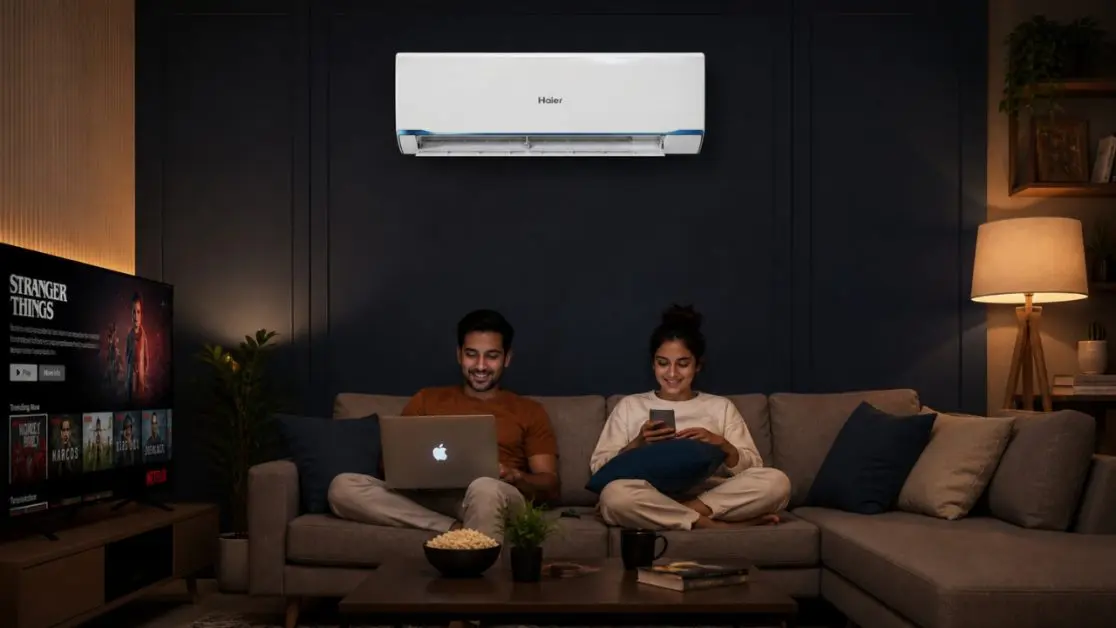
Most appliances used to operate in binary:
- On or off
- High or low
- Cool or stop
AI systems introduce nuance.
That nuance matters.
For example, Haier’s Intelli Convertible 7-in-1 cooling system adjusts cooling capacity dynamically between 40% and 110% depending on room conditions and requirements.
This reflects a larger shift happening across smart homes.
The future is not maximum performance all the time.
The future is adaptive performance.
One option is aggressive cooling during peak afternoon heat.
The second option is balanced cooling during moderate weather.
The third option is low-energy sleep optimisation overnight.
Older systems forced one mode continuously.
AI sensor systems switch intelligently between them.
That flexibility is where major efficiency gains happen.
Comfort and efficiency are no longer opposites
For years, households assumed a trade-off existed.
More comfort meant:
- Higher bills
- More electricity use
- More appliance strain
Efficiency often meant sacrificing comfort.
That assumption is becoming outdated.
AI sensors increasingly allow both outcomes simultaneously.
Better comfort.
Lower waste.
Smarter energy distribution.
The system works because the appliance stops operating blindly.
A smart AC that detects occupancy reduces unnecessary cooling.
A refrigerator that adjusts compressor intensity based on usage patterns preserves freshness while optimising power.
A washing machine that senses load size avoids wasting water and electricity.
Different appliances.
Same principle.
Intelligence scales efficiency.
The hidden value is peace of mind
People rarely buy appliances for technology itself.
They buy outcomes.
Nobody wants “AI sensors.”
They want:
- Lower bills
- Faster cooling
- Better sleep
- Less maintenance
- Cleaner air
- Fewer disruptions
Technology succeeds when it becomes invisible.
That is why the most successful smart appliances do not feel robotic. They feel natural.
Haier’s AI for Service functionality focuses on maintaining efficiency automatically through self-cleaning systems that help preserve airflow and reduce odour build-up over time.
Again, the feature matters less than the outcome.
Less manual maintenance.
Less performance drop.
Less mental load.
The appliance quietly handles itself.
That is the real luxury modern households increasingly value.
What should buyers actually look for in AI-powered appliances?
Not every “smart” label creates meaningful value.
Some features exist for marketing.
Others fundamentally improve daily life.
The difference becomes obvious when you evaluate systems instead of specifications.
Three AI features that genuinely matter
1. Human Detection
This directly impacts energy savings and comfort optimisation.
2. Adaptive Climate Control
The system adjusts cooling dynamically instead of operating at fixed intensity.
3. Predictive Learning
The appliance studies usage patterns and reduces manual adjustments over time.
Everything else is secondary unless these foundations work properly.
Because intelligence without practical adaptation becomes gimmicky fast.
The bigger shift is not technological. It is behavioural.
Homes are becoming responsive environments.
That changes how people live inside them.
The smartest appliance is not the one with the most features.
It is the one that quietly reduces friction every single day.
That is the future AI sensors are building.
Not homes filled with complexity.
Homes that feel calmer.
More balanced.
More aware.
And strangely enough, more human.
Because the best technology does not force people to think harder.
It helps them think less about things that never deserved attention in the first place.
Haier’s AI-powered Desert Rose series reflects this larger shift through features like AI Human Detection, AI For Savings, AI Pre-Cooling, and adaptive climate intelligence designed around real household behaviour rather than fixed cooling logic.
Frequently Asked Questions
Why does my room still feel uncomfortable even after my AC turns on?
Traditional AC systems react after heat builds up. AI-powered systems predict room conditions and adjust cooling earlier, which reduces the delay between discomfort and relief. Appliances like the Haier Desert Rose Air Conditioner use occupancy and climate sensing to cool spaces more intelligently before discomfort becomes noticeable.
Can AI sensors actually improve sleep quality?
Yes. AI sensors continuously monitor room conditions, airflow intensity, humidity, and human presence during the night. Instead of blasting cold air constantly, the system adjusts cooling gradually to maintain comfort without overcooling the room.
Why does direct AC airflow feel uncomfortable at night?
Most traditional systems operate at fixed airflow intensity. AI-based climate systems can reduce airflow strength or redirect cooling once the desired temperature is reached, helping avoid dry air, headaches, or cold drafts during sleep.
Do AI-powered appliances really feel different in daily life?
Usually, yes but not because they feel “high-tech.” The difference is often subtle:
Fewer manual adjustments
More stable room temperatures
Less noise fluctuation
Faster comfort response
Lower mental effort managing appliances
The goal is not more interaction. It is less friction.
How do AI sensors reduce electricity usage?
AI sensors reduce waste by understanding:
Whether anyone is in the room
Indoor and outdoor temperature
Cooling patterns
Time of day
Usage habits
Instead of running continuously at full intensity, the appliance adapts dynamically.
Will AI sensors lower my electricity bill noticeably?
They can, especially in homes where appliances run for long hours. Savings depend on:
Room occupancy habits
Weather conditions
Insulation quality
Appliance efficiency
Cooling settings
AI systems are most effective at reducing unnecessary runtime.