
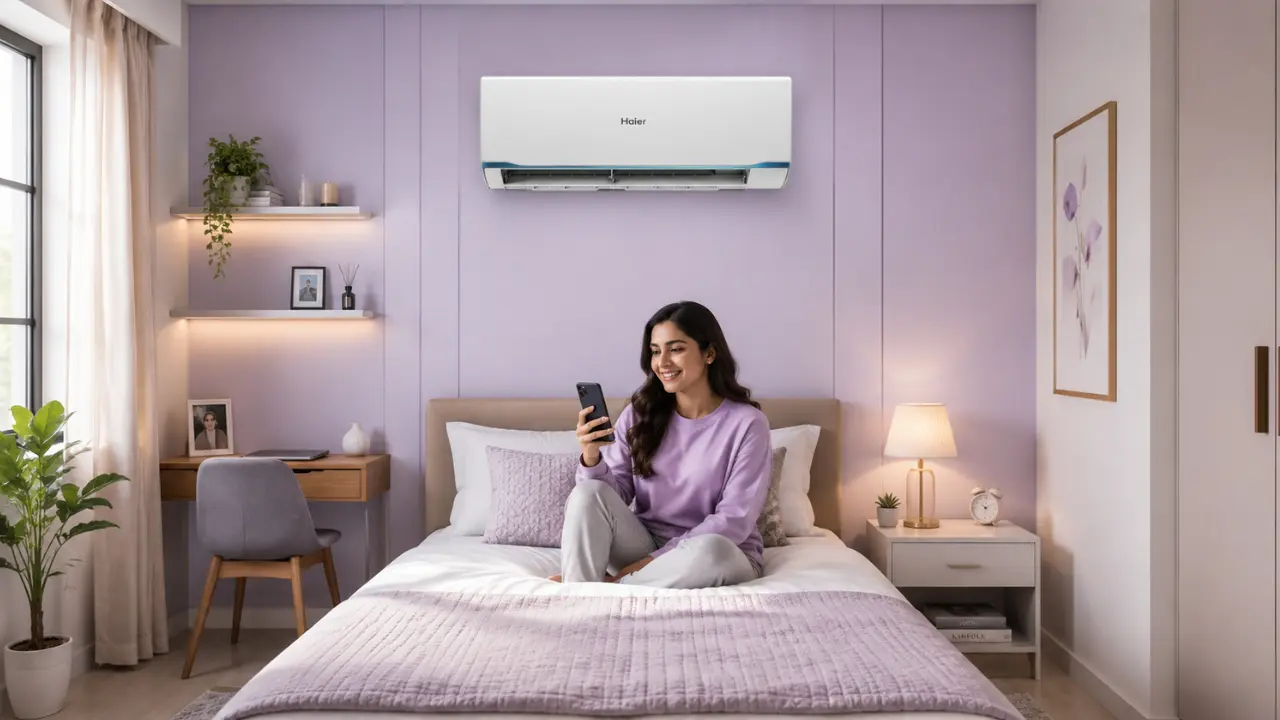

The right AC is not about tonnage alone. It is about how a room lives.
A bedroom needs quiet and consistency. A living room needs fast cooling and wider airflow. A study room needs focus without noise. The best AC buying decisions happen when you stop asking, “Which AC is best?” and start asking, “How does this room behave every day?”
Summer in India is no longer seasonal.
It stretches into late nights, humid mornings, and power bills that quietly rise month after month. And in most homes, the AC is no longer a luxury appliance sitting in one corner. It has become infrastructure. Like Wi-Fi. Like the refrigerator.
The interesting part?
Most people still buy air conditioners backwards.
They start with discounts. Then brand names. Then star ratings.
But cooling does not begin with the machine. It begins with the room.
A small bedroom with direct sunlight behaves differently from a shaded guest room. A compact studio apartment cools differently from an open-plan living room where five people gather during IPL nights.
Same city. Same weather. Completely different cooling systems.
That is the hidden system behind choosing the right AC.
Why room type changes everything
An AC does not cool square feet. It cools human behaviour.
Think about it.
A bedroom is occupied for long, uninterrupted hours. Usually at night. Comfort matters more than aggressive cooling.
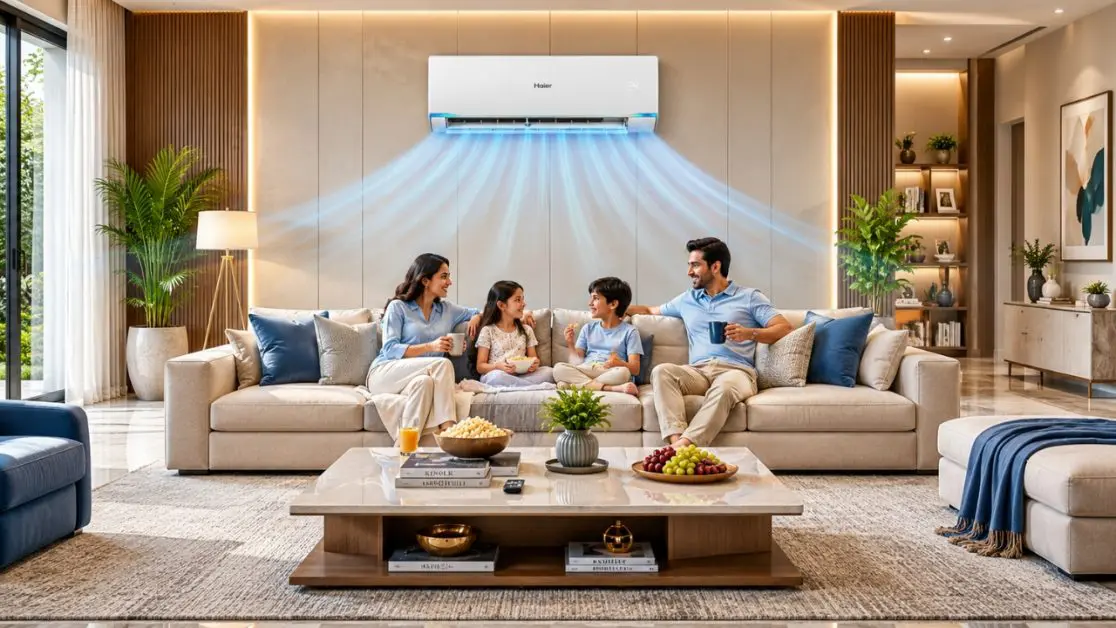
A living room behaves like a railway station. People enter. Doors open. Heat fluctuates. TVs run. Sunlight enters through balconies.
A home office has a different problem entirely. Laptops generate heat. Long sitting hours demand stable temperatures. Noise becomes distracting.
The room decides the job.
The AC simply responds to it.
According to the Bureau of Energy Efficiency, air conditioners account for a major portion of household electricity usage during peak summer months in India. Higher star ratings and inverter systems significantly reduce long-term energy consumption. Bureau of Energy Efficiency
That is why one-size-fits-all cooling usually fails.
Bedroom AC Buying Guide
Bedrooms reveal whether an AC is intelligent or merely powerful.
At 2 AM, nobody cares about turbo mode marketing. People care about uninterrupted sleep.
What matters most in a bedroom AC
- Low noise levels
- Stable overnight cooling
- Energy efficiency
- Soft airflow
- Sleep modes
One option is a 1 Ton inverter AC for compact bedrooms under 120 sq. ft.
The second option is a 1.5 Ton inverter AC for master bedrooms with larger windows or direct afternoon sunlight.
The third option is a convertible AC that adjusts capacity during changing weather conditions.
That last category matters more than people realise.
Indian summers are inconsistent now. April heat feels different from monsoon humidity. A fixed-capacity system wastes energy during moderate weather.
A convertible AC adapts.
That is why features like 7-in-1 Convertible modes are becoming practical rather than premium. Haier’s Desert Rose series, for example, allows users to adjust cooling capacity from 40% to 110% depending on room conditions.
The system learns restraint.
And restraint saves electricity.
Bedroom AC Checklist
| Bedroom Type | Recommended AC | Why It Works |
| Small bedroom | 1 Ton Inverter | Efficient for compact spaces |
| Master bedroom | 1.5 Ton Inverter | Handles larger cooling load |
| Top-floor bedroom | Convertible AC | Adjusts during extreme heat |
| Baby room | Quiet inverter AC | Stable temperatures matter |
Living Room AC Buying Guide
Living rooms expose weak AC decisions very quickly.
A bedroom can forgive undercooling.
A crowded living room cannot.
Especially during Indian summers when guests arrive, balcony doors open constantly, and the kitchen heat drifts into shared spaces.
Cooling load multiplies.
The hidden challenge in living rooms
Living rooms rarely cool evenly.
One side freezes while another feels warm. Airflow dies before reaching corners. Ceiling height changes everything.
This is where airflow distance matters more than brochures admit.
An AC with longer air throw performs better in open layouts because cold air travels deeper into the room.
For example, Haier’s AI-powered Desert Rose AC offers up to 20 metres of long air throw designed for larger spaces.
That matters in Indian apartments with dining-living combinations.
What works best for living rooms
- 1.5 Ton to 2 Ton ACs
- Higher cooling capacity
- Fast cooling modes
- Wider airflow systems
- Smart occupancy detection
A living room behaves like traffic management.
The AC must respond dynamically.
That is why AI-based cooling systems are becoming more useful in shared family spaces. Some newer ACs analyse room conditions, occupancy, and weather patterns automatically to optimize cooling.
Not because AI sounds futuristic.
Because Indian homes are unpredictable.
Study Rooms And Home Offices Need Different Cooling
The pandemic quietly changed how Indian homes function.
Bedrooms became Zoom rooms.
Dining tables became offices.
And suddenly people discovered something important.
Productivity has a temperature.
A noisy AC during meetings becomes exhausting. Uneven cooling during long work sessions affects concentration.
The best AC for a study room is usually not the most powerful one.
It is the most balanced one.
What matters in workspaces
- Quiet operation
- Stable cooling
- Smart energy usage
- Minimal temperature fluctuations
A compact inverter AC works well for most home offices.
Especially when paired with AI energy-saving modes.
Haier’s AI For Savings system, for instance, monitors energy usage and shifts automatically to AI ECO mode to reduce wastage.
Small efficiency compound.
That is how lower electricity bills happen.
Not through one dramatic change. Through hundreds of invisible adjustments.
Studio Apartments Need Flexibility
Studio apartments break traditional AC logic.
The kitchen, bed, workspace, and lounge exist inside one cooling zone.
Which means the AC must handle changing heat patterns constantly.
Morning sunlight heats one side. Cooking heats another. Night occupancy changes airflow needs again.
Static cooling struggles here.
The best approach for studio apartments
One option is a high-efficiency 1.5 Ton inverter AC.
The second option is an AI-powered convertible AC.
The third option is a smart AC connected to app controls and scheduling systems.
Smart controls sound cosmetic until you actually use them.
Imagine reaching home after Delhi traffic in May and stepping into a pre-cooled room because the AC activated before arrival.
That is not luxury anymore.
That is time management.
Some smart AC systems now support app-based pre-cooling and voice assistant integration for this exact reason.
Comfort increasingly begins before you enter the room.
Kids’ Rooms And Elderly Parents Need Predictable Cooling
Extreme cooling is easy.
Consistent cooling is harder.
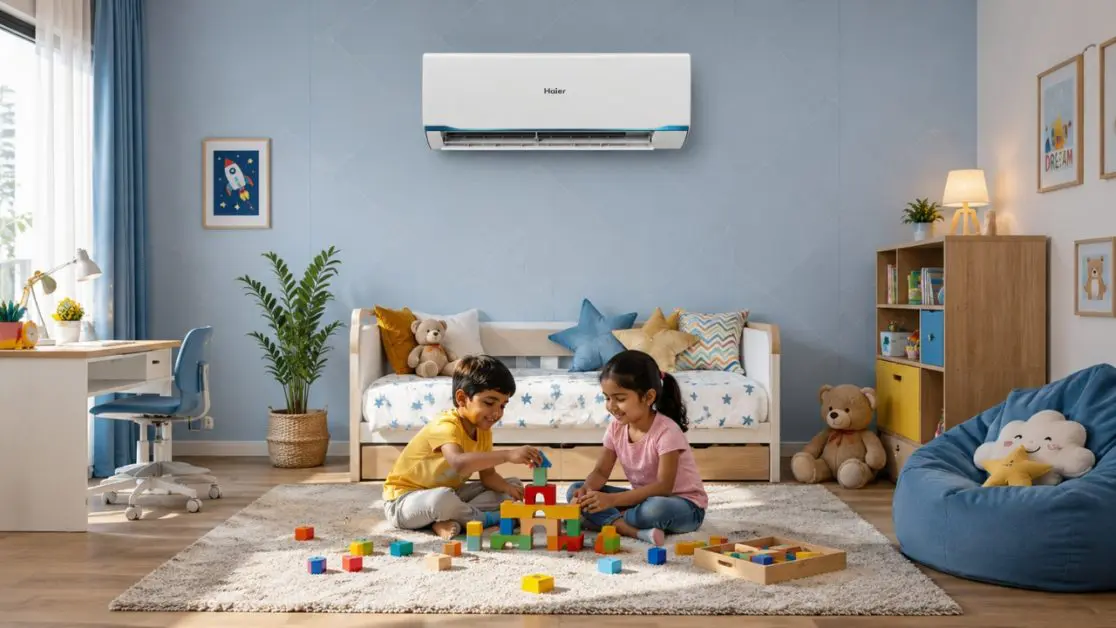
Children and elderly family members respond differently to sudden temperature swings. Harsh airflow often creates discomfort, disturbed sleep, or dryness.
This is where intelligent airflow systems matter more than raw cooling speed.
What to prioritise
- Soft airflow
- Stable overnight temperatures
- Cleaner air systems
- Sleep-friendly cooling modes
Air quality matters here too.
Many modern ACs now include anti-microbial filters and self-cleaning systems to maintain cleaner airflow over time.
Because cooling is not just temperature control anymore.
It is environmental control.
What Most Buyers Still Ignore
People obsess over tonnage.
But often ignore heat load.
A west-facing room behaves differently from a shaded north-facing room. Large windows increase heat retention. Top floors absorb more heat throughout the day.
The room’s architecture changes the cooling equation.
Here is the bigger insight:
An AC purchase is really an energy-management decision disguised as an appliance purchase.
The wrong AC runs longer.
Consume more electricity.
Delivers uneven comfort.
And quietly becomes expensive every single month.
A practical room-wise AC selection guide
| Room Type | Ideal AC Type | Key Priority |
| Bedroom | Inverter AC | Quiet comfort |
| Living Room | High airflow AC | Fast cooling |
| Study Room | Energy-efficient inverter | Low noise |
| Studio Apartment | Convertible smart AC | Flexibility |
| Kids/Elderly Room | Soft airflow AC | Stable temperatures |
Cooling systems now think ahead
Older ACs reacted.
Newer ACs predict.
That shift changes how homes feel.
AI-based air conditioners today can detect occupancy, monitor energy usage, adjust cooling automatically, and optimize airflow patterns depending on usage behaviour.
Features like AI Human Detection and AI Climate Control are designed precisely around this adaptive cooling philosophy.
The machine stops behaving like hardware.
It starts behaving like a system.
And systems shape everyday life quietly.
The best AC buying decision feels invisible
That is the real test.
Nobody talks daily about a perfectly chosen AC.
They simply sleep better.
Work comfortably.
Host guests without sweating through conversations.
Pay slightly lower electricity bills every month.
The appliance disappears into life.
That is when good design wins.
If you are choosing an AC today, stop thinking only about cooling capacity. Start thinking about room behaviour, lifestyle patterns, sunlight exposure, occupancy, and long-term energy habits.
Because the smartest AC buying decisions are rarely about the machine alone.
They are about understanding how your home actually lives.
Frequently Asked Questions
Which AC is best for my bedroom if I mostly use it only at night?
A quiet inverter AC with stable overnight cooling usually works better than a high-power model. Bedrooms need consistency more than aggressive cooling.
My bedroom gets direct afternoon sunlight. Should I buy a bigger AC?
Yes. Sunlight increases heat load significantly. A 1.5 Ton inverter AC or convertible AC is usually better for sun-facing bedrooms.
I wake up feeling cold at 3 AM even after setting the AC properly. Why?
Many fixed-speed ACs continue cooling aggressively through the night. Sleep modes and inverter systems help maintain balanced temperatures while you sleep.
Is a 1 Ton AC enough for a small bedroom in India?
Usually yes for rooms under 120 sq. ft., especially with proper insulation and limited sunlight exposure.
I want an AC that helps me sleep better, not just cool faster. What should I prioritize?
Focus on:
Low noise levels
Sleep mode
Soft airflow
Stable inverter cooling
Energy efficiency
Does a convertible AC actually save electricity in bedrooms?
Yes. Bedrooms often do not need full cooling capacity all night. Convertible modes reduce unnecessary power consumption during milder weather.