
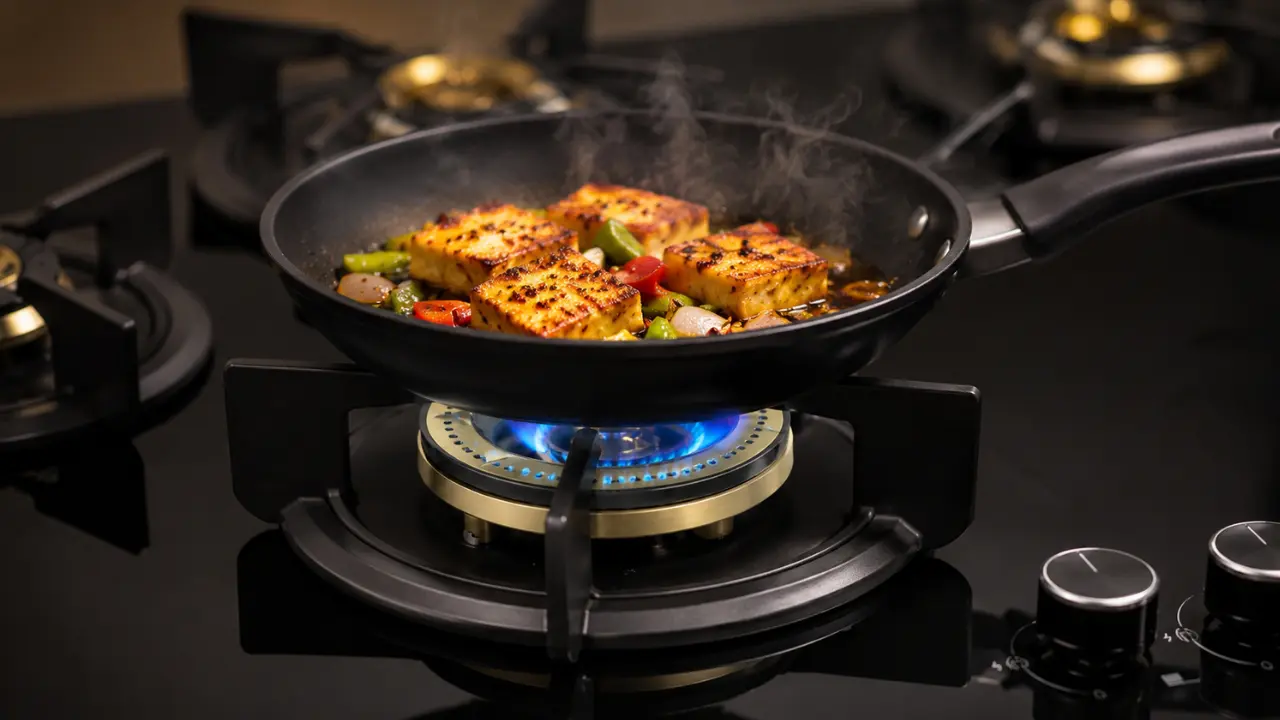

Safe cooking is not about fear. It is about rhythm.
The safest Indian kitchens are rarely the fanciest ones. They are the kitchens where habits work quietly in the background. The gas gets turned off without thinking. The oil never overheats. The chimney gets cleaned before smoke becomes normal. Safety, in most homes, is simply routine made visible.
Indian cooking is intense by design.
High flames. Deep frying. Pressure cooking. Tadka at full heat. Long festive cooking sessions. Multiple burners running together during dinner prep. The modern Indian kitchen handles more heat, oil, and multitasking than most people realize.
That changes the meaning of “safe cooking.”
It is no longer just about avoiding accidents. It is about building a kitchen system that reduces stress, improves airflow, handles heat efficiently, and helps families cook confidently every day.
A kitchen reveals how a home actually functions.
And safe kitchens almost always feel calmer.
The biggest kitchen risks are usually the quiet ones
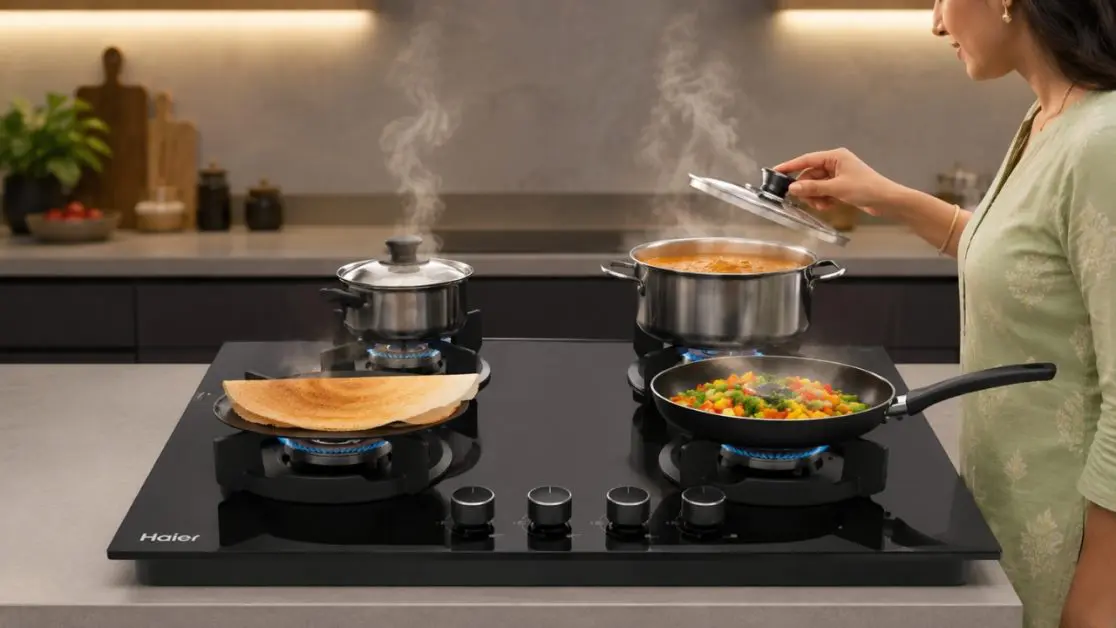
Most people imagine dramatic kitchen accidents. But Indian homes face smaller, repeated risks that slowly become normalized.
Things like:
- Oil smoke filling closed kitchens
- Loose LPG pipe connections
- Wet hands operating gas knobs
- Overcrowded countertops
- Poor ventilation during frying
- Burners left on low flame accidentally
- Children reaching hot utensils
- Grease buildup around cooktops
The problem is familiarity.
People stop noticing risks they see daily.
A smoky kitchen after frying fish feels “normal.” A slippery floor near the sink becomes “manageable.” An old lighter with inconsistent ignition becomes “usable.”
But kitchens work like pressure systems. Small inefficiencies compound.
One overlooked issue rarely creates a problem alone. Multiple ignored habits together do.
That is how most kitchen accidents happen.
Good ventilation changes everything
Indian cooking produces more airborne grease and smoke than many global cuisines.
Think about a typical Sunday lunch:
- Deep frying pooris
- Onion-tomato masala cooking at high heat
- Multiple burners active together
- Pressure cooker steam
- Spice smoke from tadka
Without proper ventilation, kitchens trap heat and residue quickly.
And here is the hidden cost most people miss:
A smoky kitchen does not just affect comfort. It changes how people behave inside the space.
People rush cooking. They avoid certain dishes. They leave windows permanently open during summers. The kitchen becomes tiring instead of functional.
That is why modern kitchen design increasingly prioritizes airflow alongside aesthetics.
One option is natural ventilation through windows and exhaust systems.
The second option is combining ventilation with efficient chimneys and structured burner layouts.
The third option is ignoring airflow entirely and accepting smoke as “part of Indian cooking.”
Only one of these scales well for modern homes.
The safest kitchens reduce friction
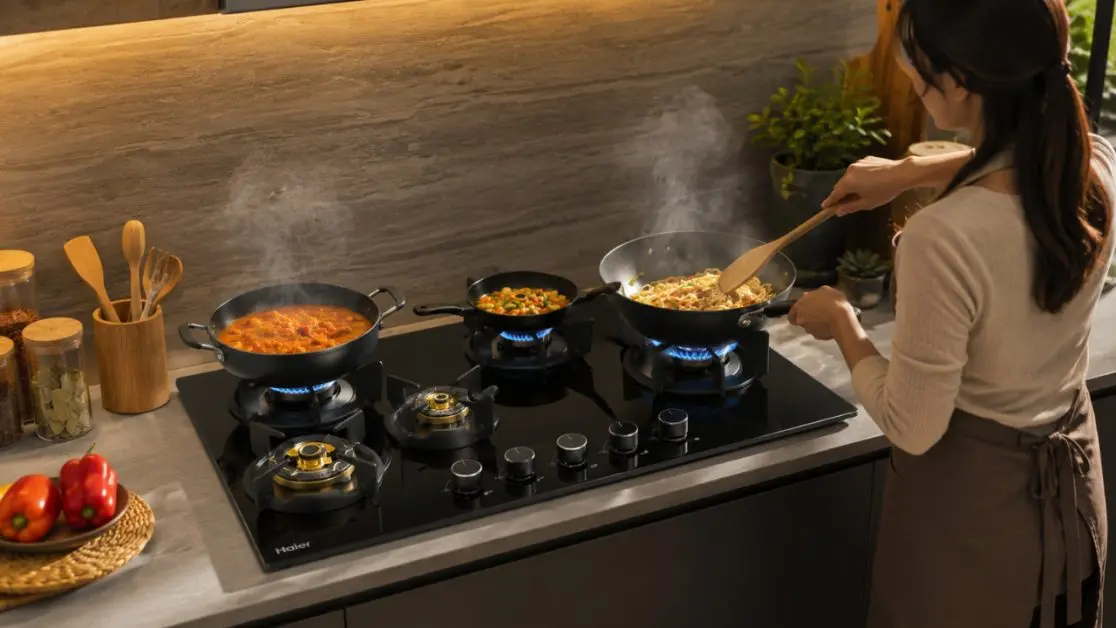
Safety improves when tasks become easier.
This sounds simple. It is not.
Consider auto ignition cooktops.
Traditional ignition methods require:
- Turning the gas on
- Reaching for a lighter
- Igniting manually
- Managing flame timing
Small process. Repeated hundreds of times monthly.
Now compare that with auto ignition systems that simplify the process into one motion.
Less friction often means fewer mistakes.
Haier’s hybrid hob range, including the Haier 4 Full Brass Burner Hybrid-Hob With Metal Knobs & Auto Ignition (HIC-Q66456F), integrates battery-operated auto ignition alongside full brass burners and toughened glass designed for durability and heat resistance.
The point is not the product alone.
The point is what good appliance design does to human behaviour.
Good systems quietly encourage safer habits.
Flame control matters more than most people think
Many Indian dishes require precision heat transitions.
High flame for tadka. Medium flame for simmering dal. Low flame for slow-cooked gravies.
Poor flame control creates two problems:
- Burnt food
- Excess heat and smoke generation
Both increase kitchen stress.
Professional chefs understand something home cooks often overlook:
Consistency creates safety.
Unstable flames increase distraction. Distraction increases mistakes.
That is why burner quality matters in daily cooking.
Full brass burners are widely preferred because they retain heat efficiently and resist corrosion better over time. Haier’s 4 Burner Hobtop With Metal Knob & Auto Ignition (HIC-Q27426-IN) uses brass burners combined with toughened black glass construction for durability in high-heat Indian cooking environments.
A kitchen should not feel unpredictable.
Reliable heat changes the cooking experience completely.
Indian kitchens are becoming multi-tasking zones
This shift matters more than people realize.
Ten years ago, one person cooked while others stayed away from the kitchen.
Now kitchens are social spaces.
Someone reheats food while another attends a work call. Children finish homework near dining counters. Couples cook together after office hours. Guests stand around islands during house parties.
The kitchen is no longer isolated.
Which means safety design now affects everyone in the home.
Especially in apartments where kitchens connect directly to living rooms.
That changes priorities.
Today, safe kitchen practices include:
Daily Kitchen Safety Habits
- Turn off the regulator before sleeping
- Wipe spills immediately after cooking
- Keep kitchen towels away from flames
- Avoid overloading electrical sockets
- Clean burners regularly for proper flame output
- Keep children away during pressure release
- Never leave frying oil unattended
- Ensure chimneys are serviced periodically
Simple habits. Massive cumulative effect.
Because systems beat intentions.
Every time.
Smoke is information
Most people treat kitchen smoke as an inconvenience.
It is actually feedback.
Excess smoke usually signals one of three things:
- Oil overheating
- Poor ventilation
- Dirty burners or filters
In other words, smoke reveals system inefficiencies.
Modern kitchens increasingly focus on preventing buildup before it starts.
That is partly why premium hobs now prioritize spill-proof trays, durable toughened glass surfaces, and layouts that make cleaning easier.
The Haier Full Brass 4 Burner Auto Ignition Hybrid-Hob With Metal Knobs (HIC-Q77456F) includes spill-proof drip tray design, full brass burners, and flame failure device support across burners for additional operational safety.
What matters here is not luxury.
It is maintainable.
Unsafe kitchens are often just poorly maintained kitchens that slowly become difficult to manage.
Festivals test kitchen systems the hardest
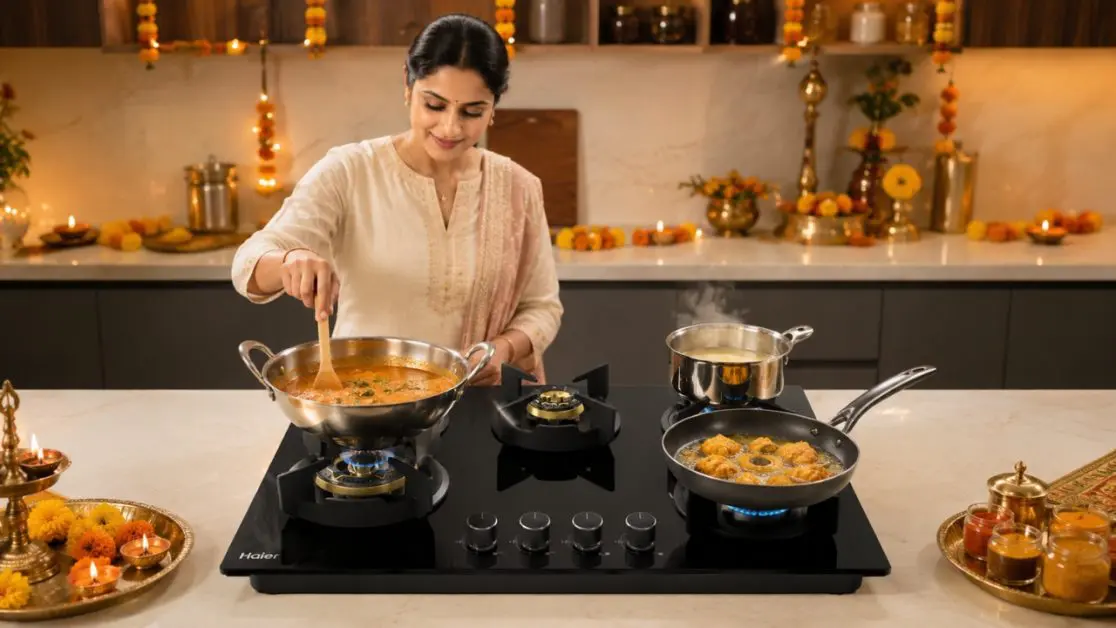
Diwali preparation. Eid feasts. Durga Puja gatherings. Wedding functions at home.
Indian festive cooking stretches kitchens beyond normal capacity.
Four burners running continuously. Heavy cookware. Extended cooking hours. Constant movement.
This is when weak systems fail.
Not during regular Tuesdays.
A safe festive kitchen usually follows three invisible rules:
1. Clear zones reduce chaos
Separate:
- Raw prep
- Frying area
- Hot utensils
- Serving space
Movement becomes smoother immediately.
2. Heat management matters
Too many active burners increase kitchen temperature rapidly.
Proper airflow becomes critical during long cooking sessions.
3. Clean-as-you-go prevents accidents
Clutter compounds stress.
Spilled oil plus rushed movement equals risk.
Professional kitchens know this already. Indian homes are slowly adapting the same logic.
Because cooking at scale requires systems, not improvisation.
Technology should disappear into the experience
The best kitchen technology does not announce itself constantly.
It simply removes small irritations.
Strong ignition. Stable burners. Durable surfaces. Easy cleaning. Better airflow.
These details seem minor individually.
Together, they change daily life.
That is the hidden pattern across modern Indian homes.
People are not chasing appliances anymore. They are chasing smoother routines.
A good kitchen appliance saves mental energy.
And mental energy is now one of the most valuable resources inside modern households.
Especially for working professionals balancing office calls, parenting, commuting, and cooking in the same day.
Safe cooking is really about attention
Not paranoia. Not perfection.
Attention.
The safest Indian kitchens are built around awareness:
- Awareness of airflow
- Awareness of heat
- Awareness of maintenance
- Awareness of routines
People often assume kitchen safety requires expensive upgrades.
Sometimes it simply requires noticing what has become invisible.
The loose pipe connection.
The smoke-filled evening kitchen.
The overloaded counter near the flame.
The burner that no longer ignites properly.
Small signals matter.
Because homes work like ecosystems.
One neglected detail rarely stays isolated for long.
And perhaps that is the larger lesson modern kitchens teach us:
Comfort is not created by decoration alone. It is created by systems that quietly protect daily life while nobody notices them working.
That is what truly makes a home feel effortless.
Frequently Asked Questions
Do I really need to think about kitchen safety every day?
Not consciously. The goal is to build simple habits turning off the regulator, cleaning spills, and checking burners that become automatic over time.
My kitchen seems fine. How do I know if there are hidden safety issues?
Look for recurring signs such as smoke buildup, greasy surfaces, unstable flames, slippery floors, or aging LPG pipes. These small issues often indicate larger maintenance gaps.
Is kitchen safety only about preventing accidents?
No. It also includes reducing stress, improving airflow, managing heat efficiently, and creating a smoother cooking experience.
Should I invest in better appliances or focus on improving habits first?
Habits come first. Better appliances can support safer routines, but regular maintenance and awareness have the biggest impact.
Is it normal for my kitchen to become smoky while frying food?
Occasional smoke can happen, but frequent smoke often indicates overheated oil, poor ventilation, or dirty filters and burners.
Why does my kitchen feel exhausting during long cooking sessions?
Poor airflow, trapped heat, and smoke buildup can make cooking physically tiring and mentally draining.